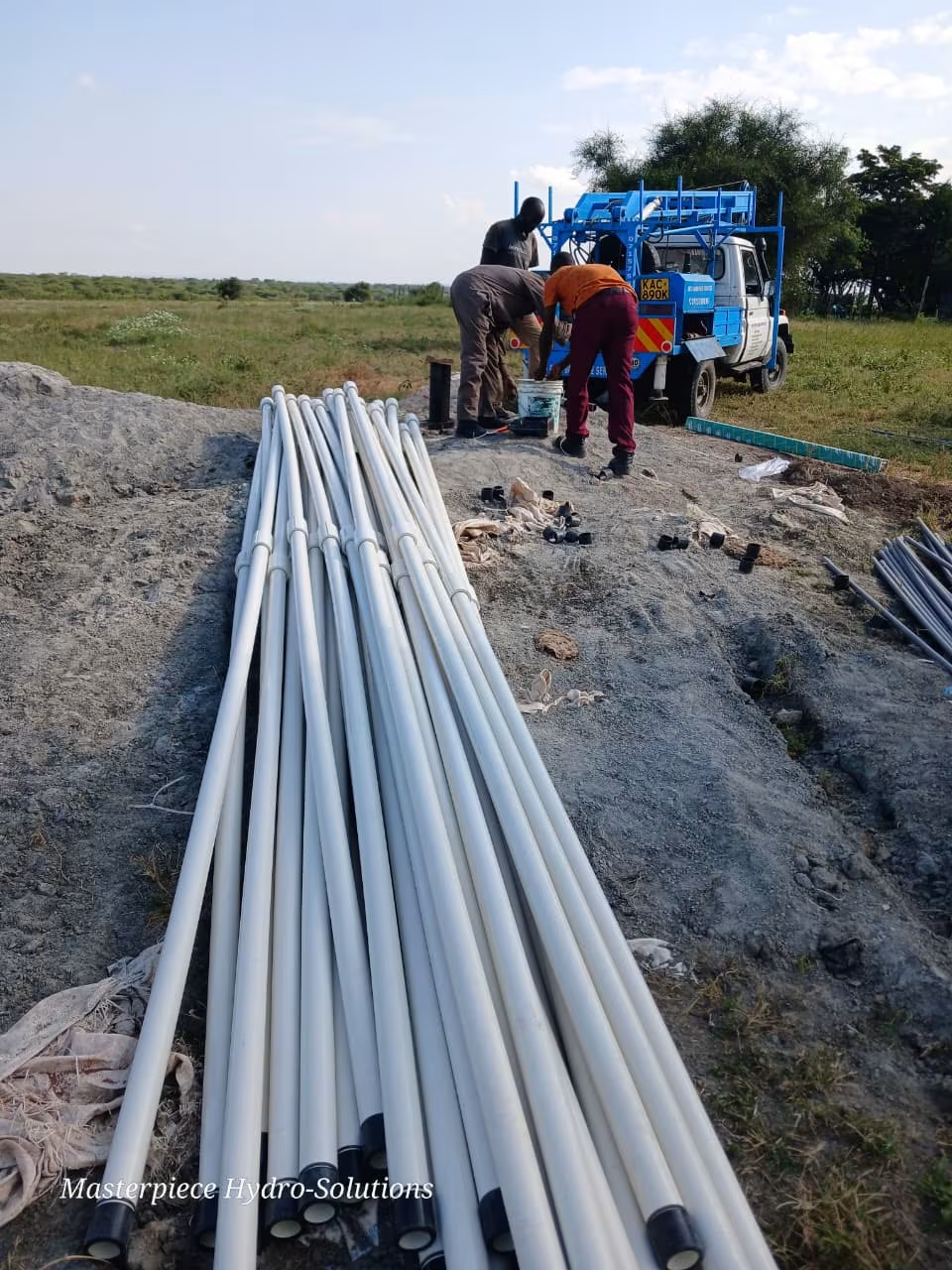
Borehole drilling contract terms help buyers understand the work, evidence and decisions behind a quotation. A short price acceptance may leave important questions unanswered. Therefore, read the proposed agreement beside the survey, access notes and drilling scope. Ask for clarification before accepting obligations you cannot explain.
Masterpiece Hydro-Solutions provides borehole drilling services. You can request a scope-based drilling proposal and discuss your available records. This guide offers buyer questions, not legal conclusions. Actual duties depend on the contract, current requirements and project circumstances.
Start borehole drilling contract terms with the site
First, confirm that the agreement identifies the correct property and proposed work location. A postal address alone may not distinguish adjoining parcels or separate entrances. Attach a location reference that both parties understand. Also, identify who may approve a change to the drilling point.
Next, compare the location with the available survey and project documents. If someone proposes moving the point, ask what assessment and authority confirmation the change requires. Avoid treating a convenient parking place as an approved substitute. The written scope should explain how location changes enter the project record.
Finally, identify the contracting parties and their authorised contacts. The person opening the gate may not hold commercial approval authority. Separate site coordination from instructions that change price or scope. This reduces confusion when decisions arise during the work.
Describe drilling scope without promising water
A useful scope explains what the contractor proposes to perform and how it records progress. Ask how the agreement describes depth, construction materials, development and testing. Avoid relying on a general promise to deliver a borehole. That phrase can hide different expectations about the completed asset.
Also, distinguish groundwater uncertainty from workmanship obligations. A survey informs planning, but it does not guarantee a usable source. Ask what evidence the contractor provides if results differ from expectations. The agreement should support a clear decision about further work rather than assume success.
For example, a reference depth may support pricing without defining an automatic instruction to continue indefinitely. Therefore, ask who reviews progress and approves additional depth. Record the decision process, relevant evidence and price implications before drilling starts.
Read borehole drilling contract terms as a scope map
| Contract topic | Buyer question | Useful attachment |
|---|---|---|
| Site access | Who confirms the route and work area? | Agreed access record |
| Drilling measurement | How will chargeable metres be recorded? | Progress and measurement format |
| Casing | What specification and quantities does the offer cover? | Itemised construction scope |
| Changes | Who can approve a revised instruction? | Written variation process |
| Testing | Which tests and reports form part of completion? | Deliverable schedule |
| Unsuccessful result | What happens to work, charges and records? | Outcome and close-out wording |
Use this map to find omissions, not to assume universal wording. Different projects need different allocations of responsibility. However, every material uncertainty deserves a clear question. If the consequences matter financially, ask a suitable adviser to review the proposed wording before signature.
Make access responsibilities specific
Confirm who arranges access permission and who assesses equipment suitability. These are related tasks, but they answer different questions. A willing landowner cannot confirm that a route suits a drilling rig. Likewise, a contractor’s inspection does not replace permission to cross another property.
Also, ask how the agreement treats changed site conditions. Construction materials, weather damage or a locked shared gate may affect arrival. The contract can identify a readiness check and communication route. Request an explanation of waiting or aborted-visit charges instead of assuming their application.
Before acceptance, discuss protection and reinstatement of existing surfaces. Record the initial condition of relevant areas with dated photographs. However, agree responsibility in the contract itself. A photograph supports evidence; it does not independently decide which party must fund repairs.
Clarify casing and material substitutions
The word casing needs supporting detail. Ask what material, specification and quantity the quotation assumes. Also, request a process for discussing changes that site findings may require. Technical suitability needs professional assessment rather than a buyer choosing solely through a headline price.
Next, clarify how the contractor records materials used. The completion information should allow you to understand the constructed borehole. Ask whether the accepted scope includes these records and when you will receive them. Keep the final documentation beside the original specification and approved changes.
If a proposed substitution appears, ask for its reason and cost effect before approval. Do not treat availability alone as evidence of equivalence. Instead, request the technical explanation relevant to your project. Qualified personnel should assess suitability and explain the change in accessible language.
Connect payments to evidence and decisions
Borehole drilling contract terms should explain when payments fall due and what supports them. Ask whether each invoice relates to mobilisation, measured work, materials or completion. Then identify the associated record. A date alone may provide little help when the scope changes.
Also, discuss the process for questioning an invoice. Request a named contact and a practical method for reconciling measured quantities. Avoid withholding or releasing funds based only on assumptions about standard practice. Your actual payment duties depend on the agreement and circumstances.
Finally, ask how the contract treats cancellation, suspension and restart. These events may affect movement, resources and unfinished work differently. Seek clear wording about records, site condition and proposed charges. Appropriate advice can help if the proposed consequences remain unclear.
A scenario involving additional drilling depth
Imagine an owner accepts a quotation using an initial planning depth. During drilling, the contractor recommends further work. The owner had expected the first figure to cover a completed water supply. Meanwhile, the supplier understood it as a measured-work quotation. The disagreement begins with different scope assumptions.
A clearer agreement would identify the review point and the evidence supporting a proposed continuation. It would also name the person authorised to decide. Next, the contractor would explain the revised quantity, associated work and uncertainty. The owner could then consider a documented instruction.
This example does not prescribe a particular depth or contract outcome. Instead, it shows why progress records and approval boundaries matter. Additional drilling does not guarantee groundwater. The decision needs the available technical evidence, the applicable requirements and an understood commercial consequence.
Assign authority tasks without promising approval
The WRA permitting page explains an application, authorisation for construction and a subsequent water permit. Therefore, ask who prepares, submits and follows up the relevant project information. Confirm current site-specific requirements directly with WRA before relying on a proposed sequence.
Also, distinguish paying for administrative support from obtaining approval. A contractor may help assemble documents without controlling the authority’s decision. The agreement should state the support included and any excluded charges. Avoid wording that treats construction authorisation as automatic permission to abstract water.
If the survey remains outstanding, discuss hydrogeological assessment before finalising the drilling scope. Identify the documents that depend on that work. A complete file helps the parties plan; it cannot guarantee approval or a particular water result.
Define completion and the handover file
Ask what marks completion of the drilling contract. The answer may differ from completion of a usable household or farm water system. Pump selection, power, storage and distribution can require later work. Therefore, identify these boundaries explicitly rather than treating every stage as included.
Next, list the promised reports and construction information. Ask which progress, testing and water quality records form part of the deliverables. Also, confirm the format and recipient. A useful handover file supports later assessment even if a different team undertakes equipping.
Before signing off, compare the file with the accepted scope and approved changes. List unresolved items and the proposed next step. Do not invent acceptance standards after the work ends. Instead, discuss the evidence and completion process when agreeing the original terms.
Use borehole drilling contract terms to identify the requested clarification precisely. For example, ask which completion record remains outstanding rather than saying the whole handover feels incomplete. A specific question gives the supplier a clearer opportunity to respond.
Questions about borehole drilling contract terms
Does a signed quotation count as the whole agreement?
That depends on the documents and circumstances. Ask which quotation, attachments and terms form the proposed agreement. Also, request clarification of conflicting versions. If the legal effect remains uncertain, obtain appropriate advice before acceptance instead of assuming the shortest document controls everything.
Must the contractor guarantee water?
Do not assume such a guarantee exists. Ask what outcome the proposal actually promises and how it treats geological uncertainty. Separate a measured work commitment from a water-supply expectation. Any disputed promise requires review of the exact wording and surrounding circumstances.
Can the contractor change materials during drilling?
Ask what the agreed change process allows. A technical reason may justify a proposal, but the commercial and approval steps still need clarity. Request the reason, suitability explanation and price effect. Keep the accepted instruction alongside the final construction record.
Who should sign progress records?
Agree the authorised people and what their signatures confirm. For example, acknowledging a measurement may differ from approving additional scope. Therefore, define the purpose of each record. Ask for clarification if a form appears to create obligations beyond the signer’s role.
What if the wording remains difficult to understand?
Request a plain-language explanation and a revised draft where necessary. However, an informal explanation may not resolve unclear written obligations. Seek a suitable professional adviser when the risk warrants it. Keep borehole drilling contract terms readable enough to use during the project.
Prepare a proposal you can review
Good borehole drilling contract terms connect the location, work, records and decision process. They make access, casing, changes and completion visible before mobilisation. Therefore, resolve missing information while the proposal remains open for discussion. This helps both parties work from the same brief.
Send Masterpiece Hydro-Solutions your project brief with the survey, site details and required handover records. Request an itemised drilling proposal and identify any wording you need explained. Review the resulting documents before committing to the work.