
Solar Borehole Pump Installation in Kenya
A Solar System Designed Around Your Borehole and Your Site
Borehole solarisation can provide a reliable power source for your borehole without the ongoing running costs of grid electricity or diesel.
We assess your project first, so the system we recommend is matched to your borehole, your site, and your water requirements.
Why Borehole Solarisation Matters
A borehole solar system involves more than adding panels to an existing setup. It has to be matched to your borehole’s depth, the rating of the submersible pump and motor, the amount of water your borehole can reliably provide, the sunlight available at your site, and the amount of water you need each day.
A poorly matched system can leave pumps underpowered in low light, storage unable to meet demand, or your home, farm, business, or institution without enough water when it is needed most. A properly matched system can power your borehole reliably for years with minimal intervention.
For this reason, solarisation is a system we design around your project, not a product we sell as a standard offering.
Is Borehole Solarisation Right for Your Project?
Solar is suitable for many boreholes, but not all.
Whether it is the right option depends on factors such as the pumping depth, the amount of water required each day, the space available at your site for installing the solar panels, and the overall demands the system will place on the solar equipment.
Establishing whether solar is the right fit requires looking at these factors together, since a project can meet one comfortably while falling short on another.
That’s why the first question is not which solar equipment to install. It’s whether solar is the right solution for your project.
We assess these factors before making a recommendation. If solar is suitable, we’ll recommend a system designed around the amount of water you need each day. If it is not, we’ll explain why and recommend the most appropriate alternative, which may include a hybrid system that combines solar with another power source.
What Happens During Borehole Solarisation?
Every borehole solarisation project follows a series of carefully planned stages:
-
Site and Borehole Assessment
We review your borehole’s technical details and your site’s conditions, including the sunlight available throughout the day.
-
Water Requirement Review
Next, we establish how much water you need and when you need it, so the system reflects your actual requirements rather than a general estimate.
-
System Design
Using this information, we determine the pump, solar array, and storage configuration that’s suited to your borehole, your site, and your water requirements.
-
Installation
Our team installs the system and tests it to confirm it’s operating correctly before handover.
-
Handover
Finally, we explain how the system operates and provide guidance on using and maintaining it for reliable long-term performance.
What Affects the Cost of Borehole Solarisation?
Because every solar system is designed around the specific project, the cost of borehole solarisation varies from one project to another. Rather than provide a single figure that may not reflect your project, we explain the main factors that influence cost so you know what to expect before requesting a quotation.
-
Pumping Depth
Deeper boreholes generally require more powerful pumps and larger solar arrays.
-
Daily Water Requirements
The amount of water you need each day and the distance the water needs to travel from the borehole influence the size and capacity of the solar system required. Depending on your water requirements, additional water storage may also be needed, which can increase the overall cost of the system.
-
Site Conditions
The amount of available sunlight and your site’s layout influence the size and positioning of the solar array.
-
Existing Borehole System
Whether your borehole is already equipped, or requires equipping alongside solarisation, affects the scope of work and the overall installation cost.
After assessing your borehole, your site, and your water requirements, we’ll prepare a quotation that’s tailored to your project and the solar system that’s right for it.
-
 View larger image
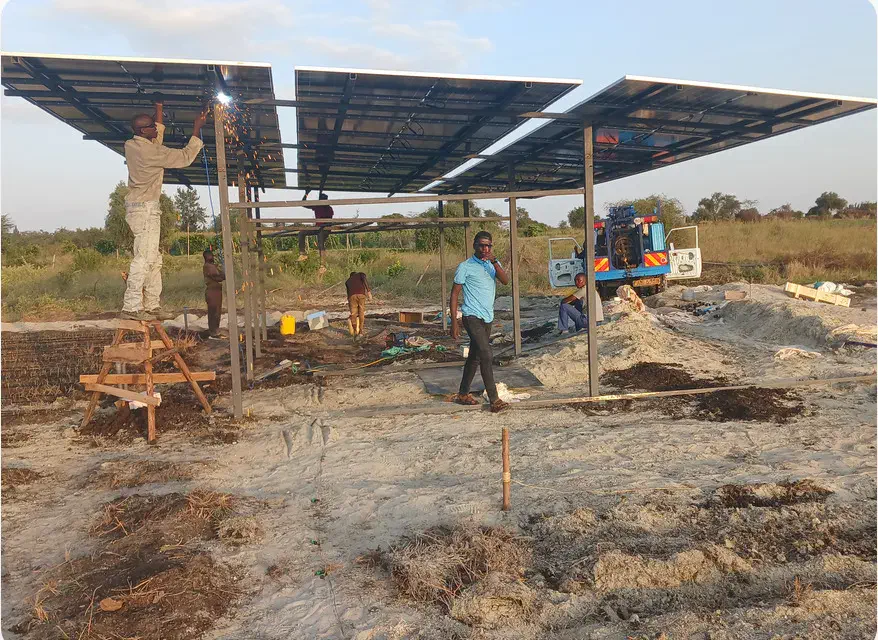
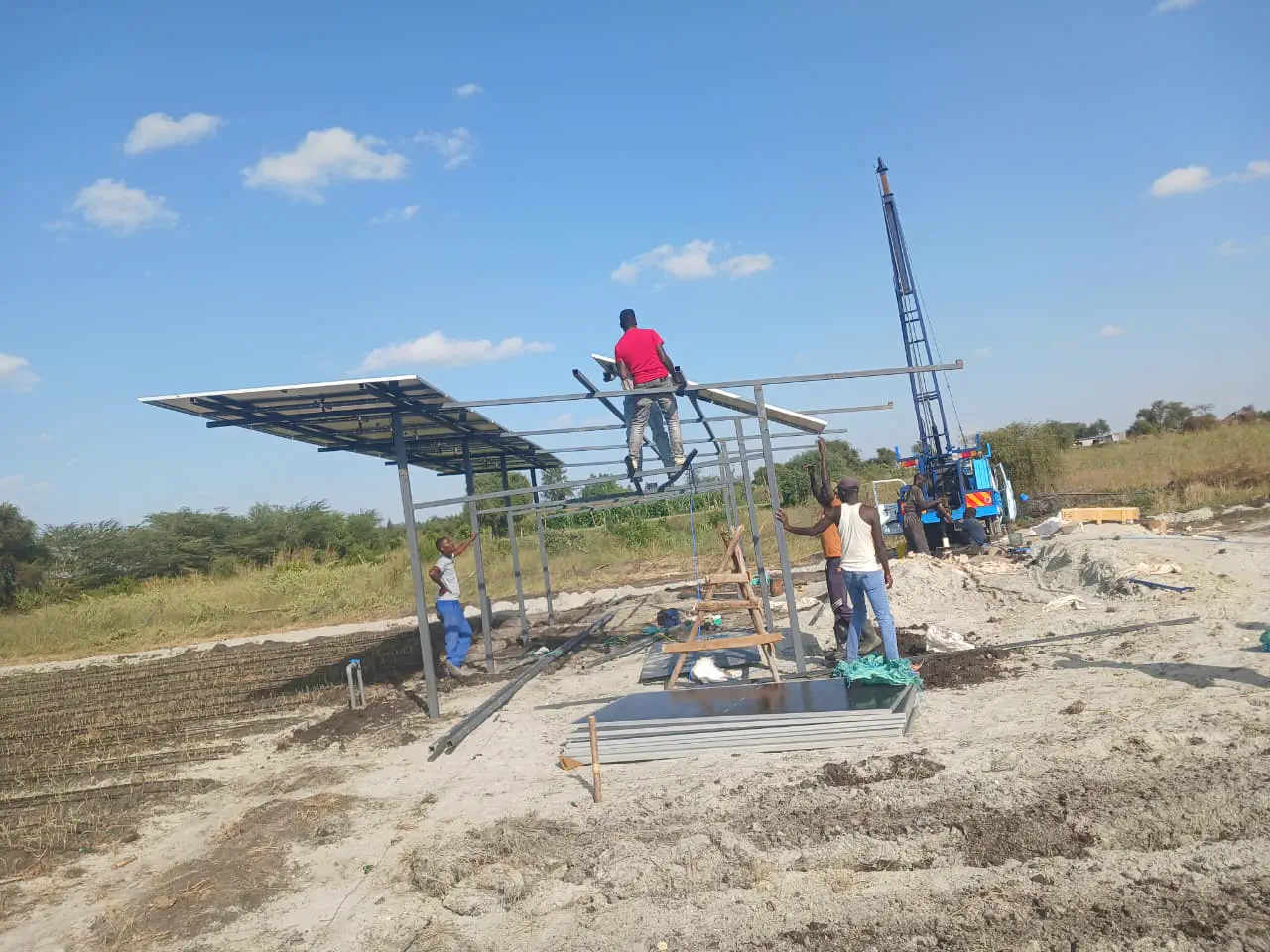
Borehole solar installation kick off at Kitengela-Kenya -
 View larger image
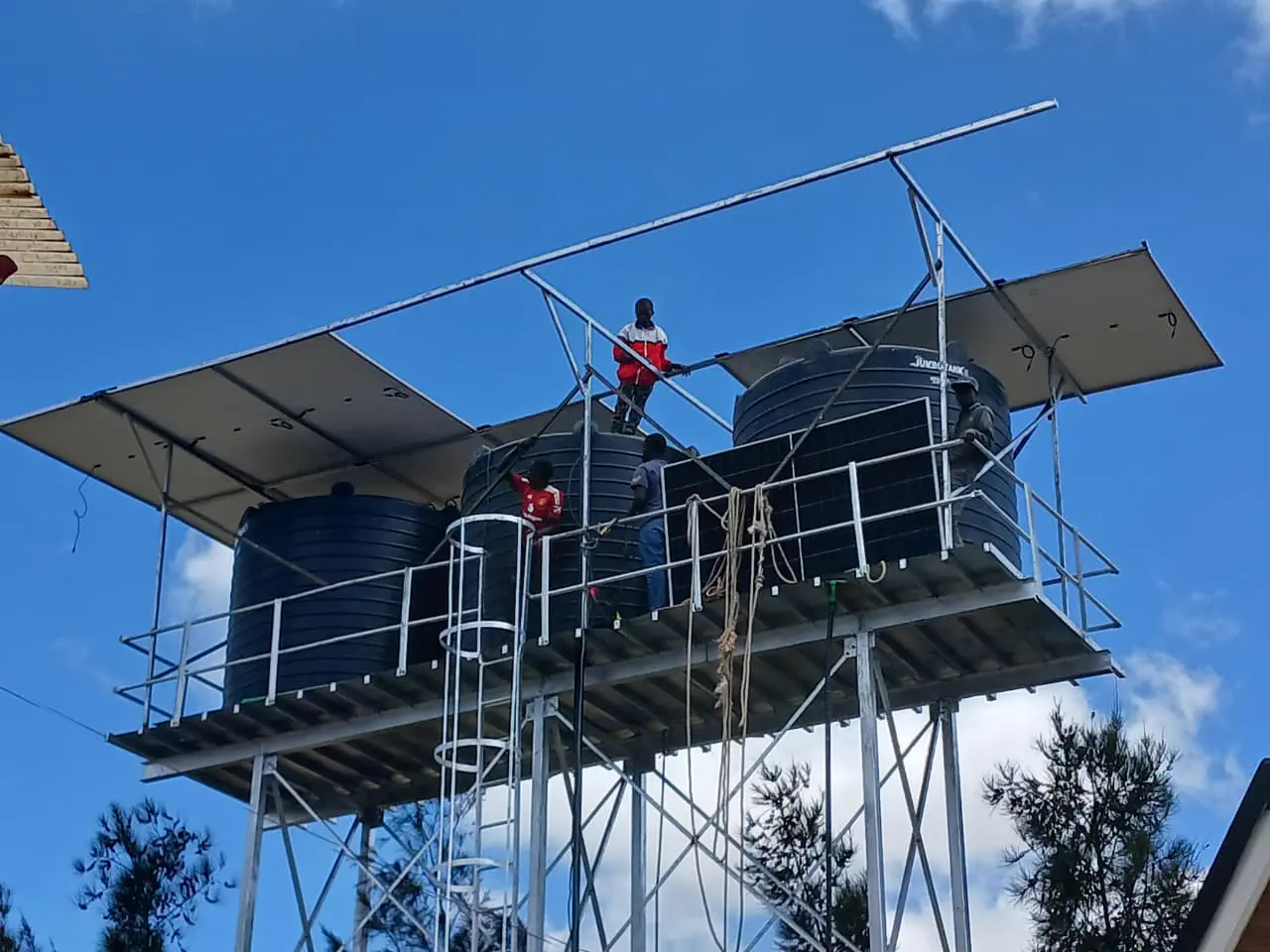
Solarisation and Tank Tower Construction in Kitengela -
 View larger image
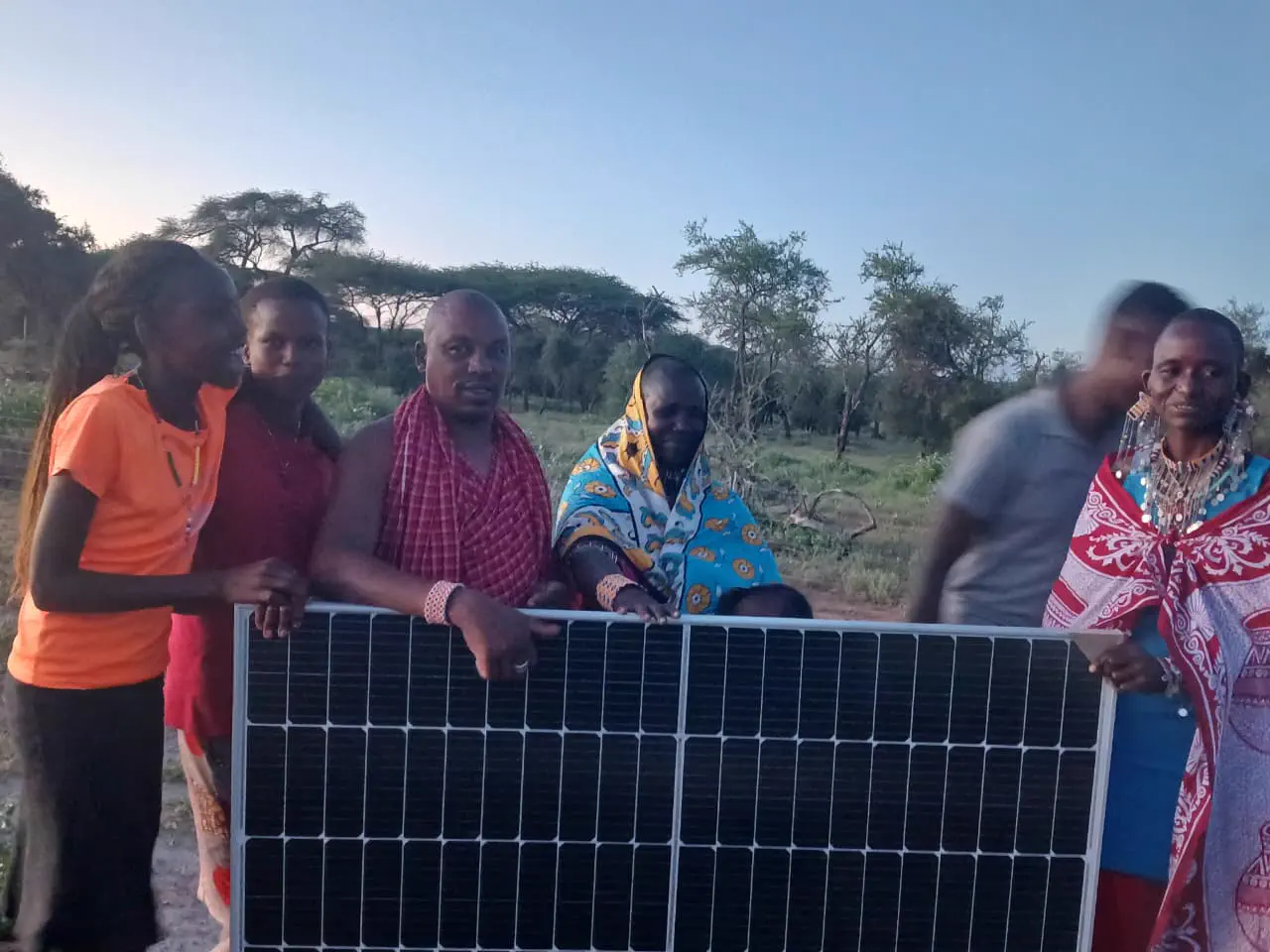
Moments with clients before solar installations -
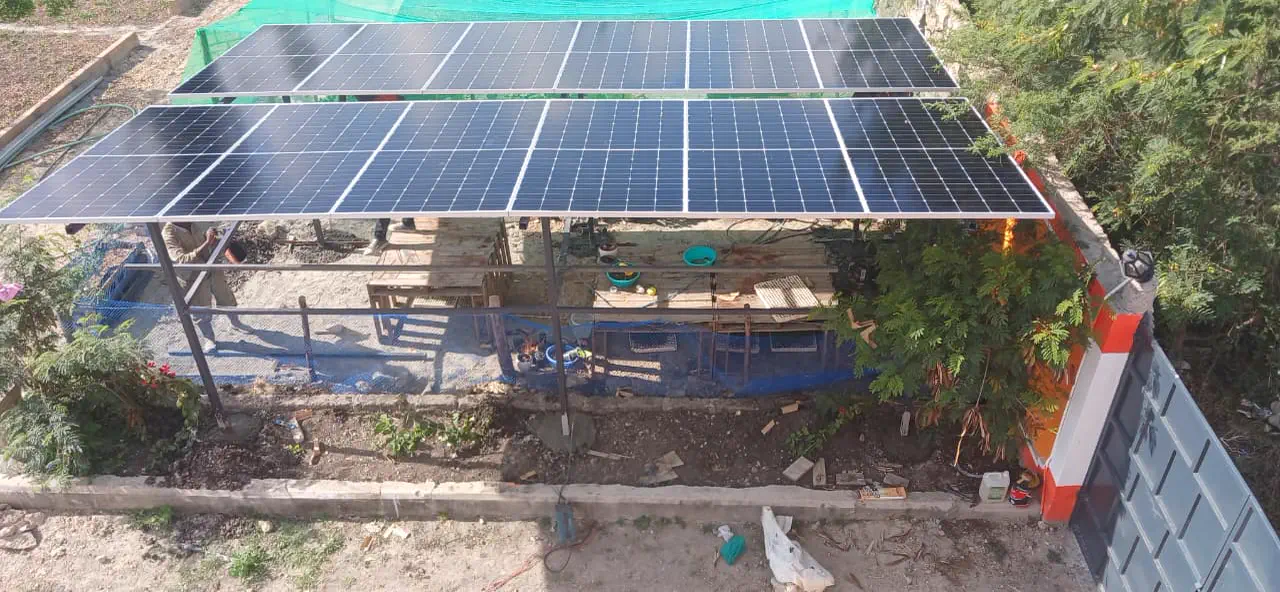 View larger image
Solar panel array mounted and ready for connection at Joska. -
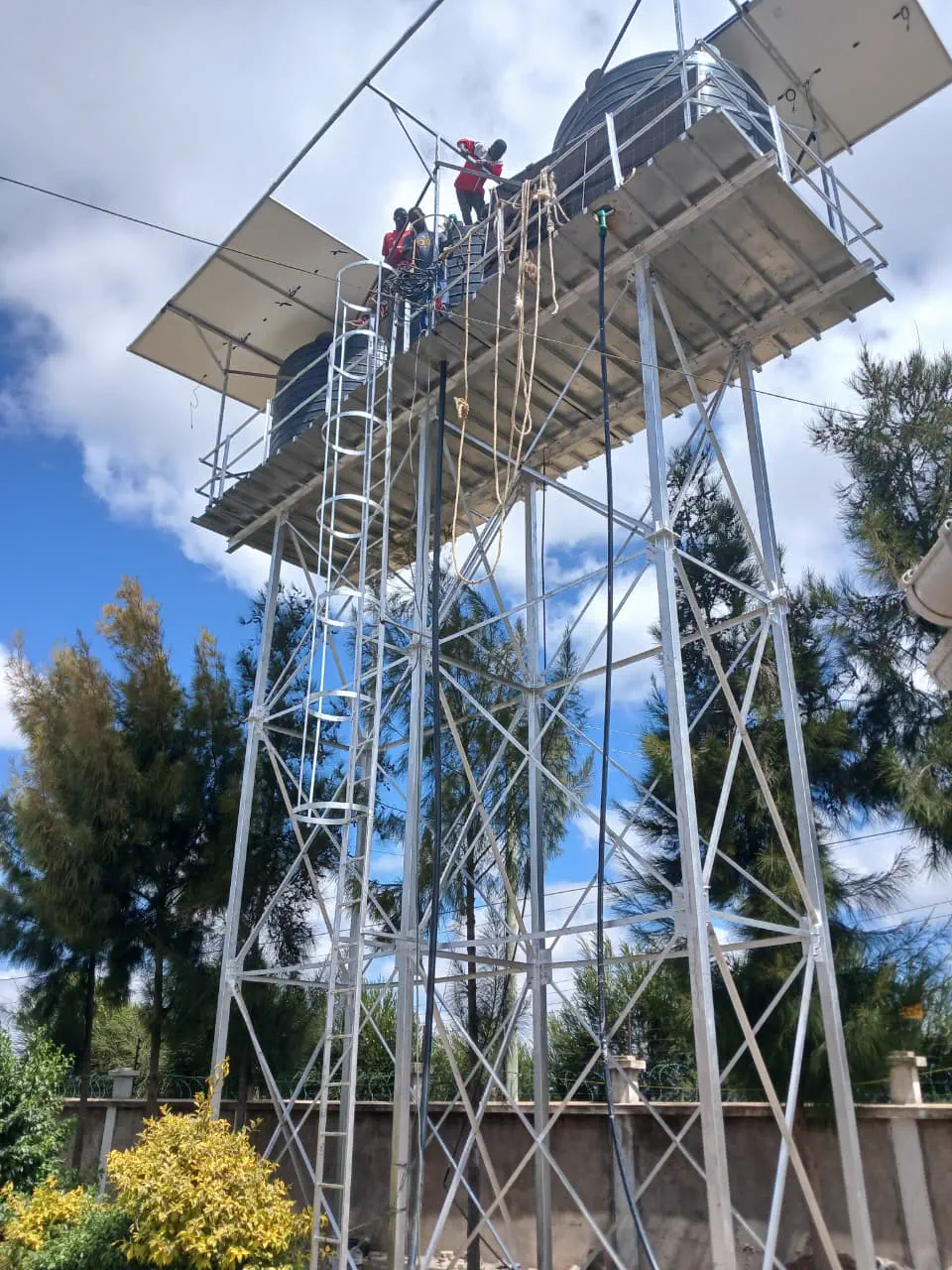 View larger image
Elevated steel tank tower constructions fitted with solar panels in progress -
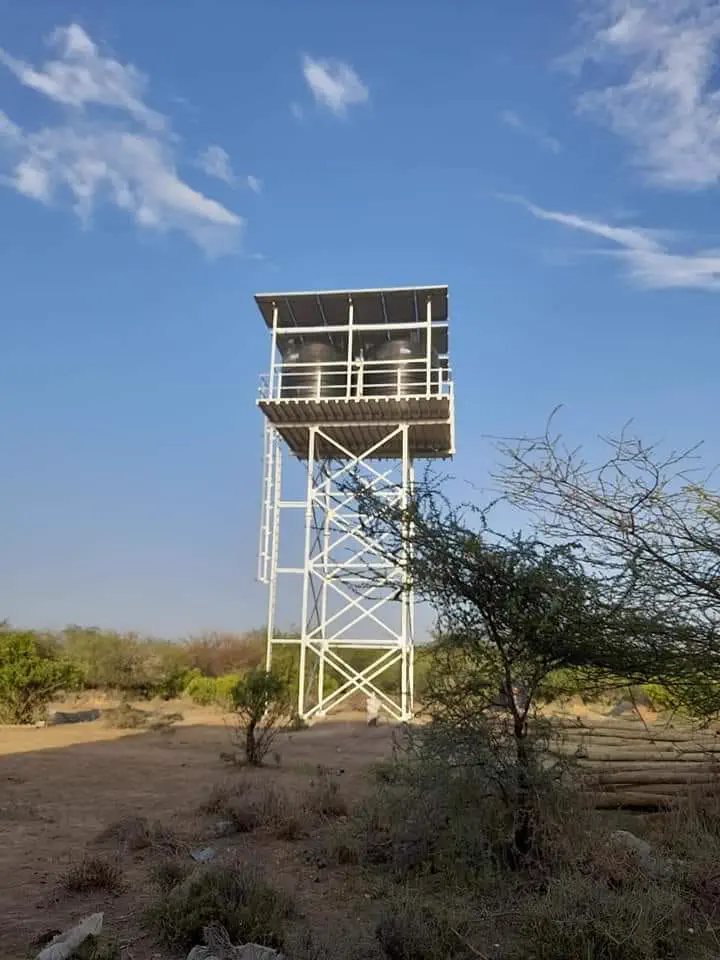 View larger image
A Completed Tank Tower with Solar Installation
Frequently Asked Questions
Is the assessment free, or does it commit me to anything?
The assessment does not commit you to proceeding with the project. Whether an assessment fee applies depends on the nature and location of your project, and we’ll explain this before arranging the assessment. If solar is suitable, we’ll use the findings to prepare an accurate quotation.
What happens if the assessment finds solar isn't right for me?
We’ll tell you and recommend the most suitable alternative for your project. Depending on your requirements, this may include a hybrid system or another suitable power source.
Can an existing borehole be solarised?
In many cases, yes. An existing, properly equipped borehole can often be converted to solar power. We’ll assess your current installation to confirm it’s suitable and identify any adjustments required before installation.
What maintenance does a solar-powered borehole require?
Solar systems generally require less ongoing maintenance than fuel-powered alternatives. Solar panels may only require periodic cleaning to remove dust and help maintain their efficiency. Periodic checks of the pump and associated equipment also help maintain reliable performance over time. We’ll provide guidance specific to your system during handover.
Can a hybrid system be used instead?
In some cases, yes. Where solar alone cannot reliably meet a project’s water requirements, we may recommend a hybrid system that combines solar with another suitable power source. This would be confirmed as part of your project assessment.
What happens during extended cloud cover or the rainy season?
Solar systems are designed with your site’s typical weather patterns in mind, including periods of reduced sunlight. Where appropriate, the system includes sufficient storage to help maintain your water supply during short periods of lower solar generation.
Ready to Find Out if Solar Is Right for Your Borehole?
Whether you’re planning a new borehole project or looking to convert an existing system to solar power, we’re here to help. Talk to our team about your project, and we’ll assess your borehole, your site, and your water requirements before recommending the most suitable solution.