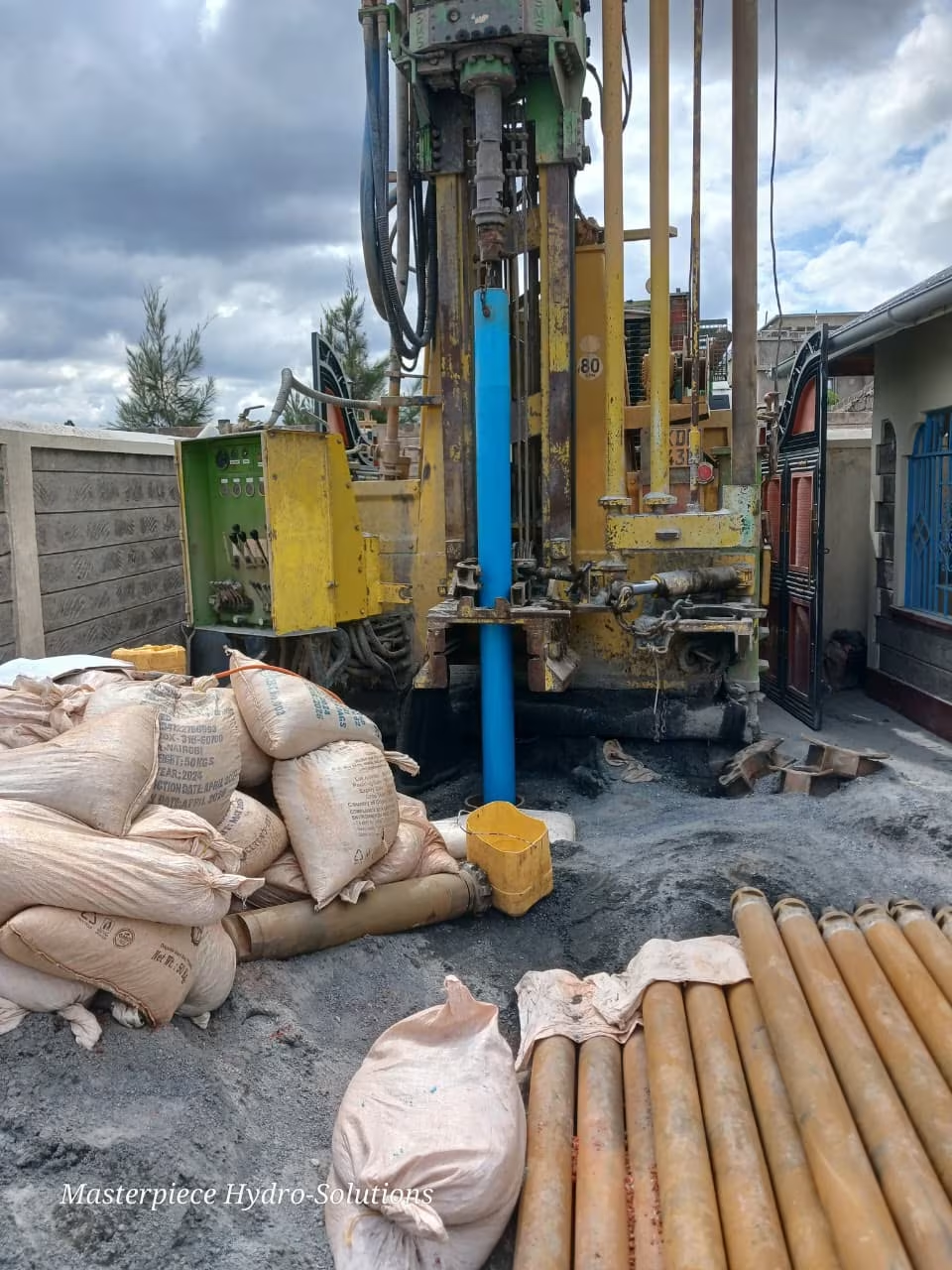
Borehole drilling timeline planning should connect the project programme to evidence, authority steps, site readiness and owner decisions. A proposed drilling date alone does not establish when useful water service will be ready. First, define the endpoint and current project stage. Then ask the responsible parties to identify dependencies and the information needed for each commitment.
Explore Masterpiece Hydro-Solutions borehole drilling services and request an assessed scope and project sequence. Provide existing records, access information and the required service brief. Ask what the programme assumes rather than rely on an unsupported universal completion period.
Define what the programme must deliver
State whether the endpoint is a drilled source, a tested borehole or an operating supply to an agreed destination. Those boundaries involve different activities and evidence. A schedule can only be useful when everyone understands which endpoint it describes.
Next, identify work already completed and its current status. A survey report, application enquiry and issued authority decision are different things. Label the actual stage so the contractor does not plan from an assumption that necessary information already exists.
Also, identify the owner representative who can make decisions. The programme may depend on a clarified scope, revised quantity or later equipment selection. A clear communication route supports progress without treating every site conversation as commercial approval.
Start borehole drilling timeline planning with dependencies
List the evidence and decisions required before each stage. Survey findings can inform the drilling brief, while source testing can inform later equipping. The sequence should explain those links rather than present every activity as if it can proceed independently.
Next, ask which tasks the parties can usefully coordinate in parallel and which require a preceding result. Qualified professionals must determine the appropriate technical sequence. The owner should understand the dependency without directing specialist methods from a general guide.
Borehole drilling timeline planning should also identify uncertainty. A preliminary date can support coordination when its conditions are clear. It should not become a guaranteed completion promise before the project resolves material scope, authority or readiness questions.
Confirm authority stages through current information
The Water Resources Authority’s permitting guidance describes an application process, authorisation to construct abstraction works and subsequent water permitting. Ask WRA to confirm the current project-specific requirements. Do not assume that one stage automatically establishes every later permission.
Next, identify who prepares, submits and follows up relevant information. Report preparation and application coordination can have different scopes. The programme should show those responsibilities instead of assume the drilling contractor manages every administrative task.
Also, obtain current advice rather than quote an unverified approval period. The project should plan its own decision and document readiness while recognising that a contractor cannot guarantee an authority’s outcome. Keep correspondence and issued documents with the programme record.
Assess site readiness before mobilisation
Share current access information and the intended working area. Also, identify other activities or construction changes that may affect readiness. The contractor must assess practical requirements; a map pin or photograph does not establish every machinery-access condition.
Next, ask what the owner must arrange before work begins. The proposal should identify responsibilities and relevant professional preparation. Owners should not undertake unassessed ground works or technical tasks simply to meet an informal target date.
Borehole drilling timeline planning needs the expected mobilisation conditions in writing. If the site changes, tell the provider before the programme relies on earlier observations. A useful readiness record connects physical conditions with the actual proposed operation.
Use a borehole drilling timeline planning schedule
The table below identifies useful programme gates without inventing calendar durations. Adapt it to the actual project and professional scopes. Each gate needs a responsible party and a current status.
| Stage | Readiness evidence | Decision or output |
|---|---|---|
| Initial assessment | Current site and water-use brief | Defined investigation and next questions |
| Authority coordination | Confirmed current requirements and relevant records | Applicable decision and responsibilities |
| Mobilisation | Assessed access and agreed site readiness | Confirmed work arrangement |
| Drilling and construction | Agreed scope and change process | Recorded work and construction information |
| Testing | Defined professional test scope | Evidence informing source and later decisions |
| Equipping and handover | Assessed duty and approved package | Commissioning record and open-item closure |
Next, identify which dates remain provisional and what confirms them. A programme should make uncertainty visible rather than hide it behind an unexplained finish date.
Plan decisions during the drilling stage
Ask how the contractor records progress and communicates findings. Actual conditions may inform the next professional decision. The owner needs an understandable explanation and a clear approval route for any commercial change.
Next, identify the information needed before the authorised representative responds. A revised scope should show its basis and implications. Do not assume a general budget reserve pre-approves additional work or that a target date justifies an undocumented commitment.
Also, ask how the parties handle delayed decisions under the actual agreement. This guide does not invent a universal waiting charge or entitlement. The programme should identify relevant dependencies and the contract should explain the applicable process.
Allow testing to inform later equipment
Source yield, pump capacity and demand remain separate. Relevant test evidence helps the practitioner assess abstraction and later selection. A schedule should not treat a desired output as a proven source result merely to order equipment earlier.
The Grundfos pump-selection resource explains why required flow and head matter together. The actual pumping level, route and destination influence the package. Drilled depth alone does not settle every equipment decision.
Borehole drilling timeline planning should therefore identify when selection becomes sufficiently supported. Preliminary procurement discussions can remain useful while the final scope stays conditional on relevant evidence. The owner should understand that gate before committing to a specific package.
Connect the programme to the itemised budget
Ask which quoted activities correspond to each programme stage. Also, identify exclusions and provisional items. A schedule may show a necessary activity that the apparent total does not include. Keep that gap visible before approving the complete project.
Next, clarify actual commercial terms for changed timing or scope. Do not invent standby, remobilisation or other cost amounts. The provider should explain relevant conditions in its proposal, while the owner retains evidence and approval records.
Also, confirm tax treatment and quotation validity. If the programme changes materially, request current price confirmation where needed. An old quotation should not appear newly available merely because its figure remains in the budget worksheet.
Use a delayed-readiness scenario
Consider an educational example where another construction activity changes the working area after an initial site assessment. No actual project or delay is implied. The earlier mobilisation assumption may no longer describe the intended visit conditions.
First, the owner informs the provider and shares the revised layout. Next, qualified personnel assess the effect on readiness and scope. The parties update the relevant programme conditions and commercial decisions through the agreed process rather than assume the old date remains unconditional.
This example shows why borehole drilling timeline planning needs current information. A programme is a coordinated set of commitments and dependencies. It should explain what changed instead of treat an initial target as proof that every later condition is ready.
Review borehole drilling timeline planning at completion
Define which records and checks establish the agreed endpoint. Qualified personnel must choose and perform technical procedures. The owner should receive understandable commissioning evidence, relevant source and construction records and a clear outstanding-item schedule.
Next, keep quality assessment separate. Clear water and successful pumping do not establish drinking-water suitability. Appropriate laboratory analysis and qualified interpretation may inform another project decision. The programme should identify that scope instead of silently omit it.
Finally, distinguish observed results from future operating assumptions. One handover visit cannot guarantee every source condition or daily volume. Retain limitations, operating instructions and service contacts so the completed project record remains useful beyond the planned finish date.
Questions about planning a drilling programme
How many days does every borehole take?
This guide does not establish a universal duration. The programme depends on the actual scope, evidence, authority position and site readiness. Ask the provider to identify its sequence, assumptions and confirmation points rather than rely on an unsupported standard period.
Does the drilling finish date equal the water-service date?
Not automatically. Testing, equipping, distribution or another required stage may remain. Define the endpoint and identify each responsibility. A schedule for one activity should not become an unexplained promise that the whole water system is ready.
Can equipment selection finish before source testing?
Ask which decisions the available evidence supports and which remain provisional. Later source information and the required duty can affect the package. The provider should explain its selection gate instead of treating missing findings as already confirmed.
What should the owner monitor?
Track readiness, decisions, issued records and agreed changes. Technical work remains with qualified personnel. The owner needs a clear communication and approval route so programme dependencies do not become undocumented assumptions or informal additional commitments.
Request a programme with explicit dependencies
Gather the current brief, records and site-readiness information. Then request an assessed project sequence from Masterpiece Hydro-Solutions. Ask for clear gates, responsibilities and quotation assumptions. Those details make the timeline useful without inventing approval periods or guaranteed completion dates.