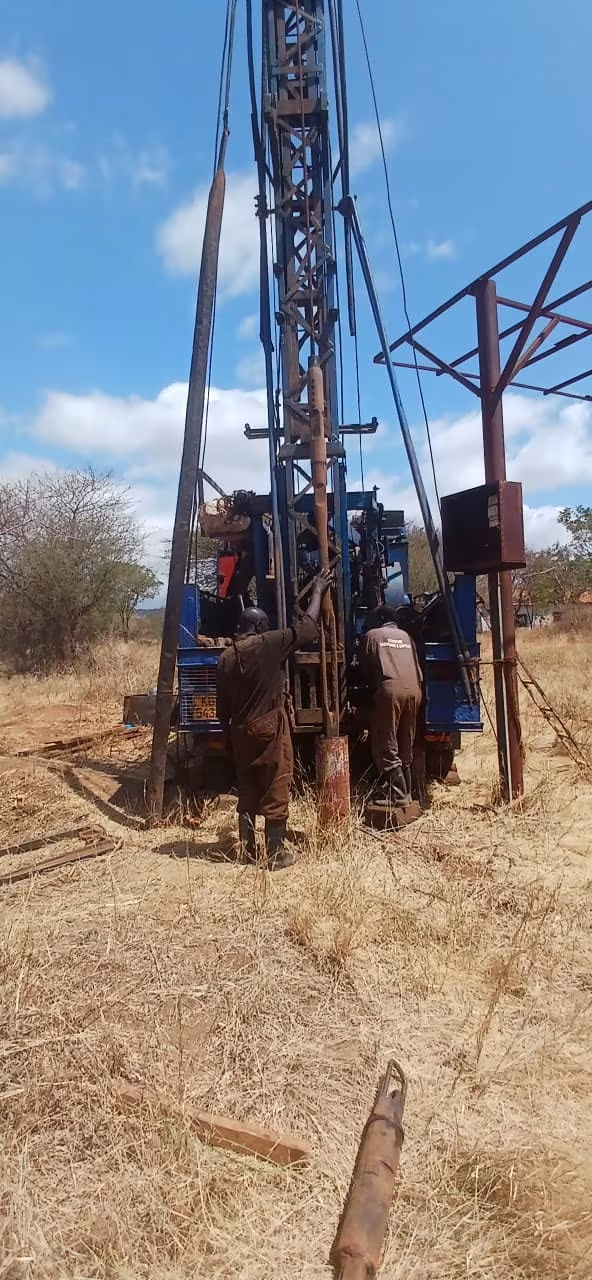
Borehole mobilisation costs cover the work of bringing drilling resources to your site. However, a transport line alone may not explain the full charge. A useful quotation identifies the equipment, journeys, access assumptions and departure arrangements behind that figure. Therefore, compare the scope before comparing the total.
Masterpiece Hydro-Solutions offers borehole drilling. To discuss movement and site requirements, request an itemised drilling assessment. Send the county, approach route, gate photographs and proposed drilling location. Also, mention any unresolved access permission or ground condition.
What borehole mobilisation costs should describe
First, ask what the contractor will bring. A drilling rig, support vehicles and other equipment may have different access needs. The quotation should identify the proposed resources rather than assume one vehicle represents the whole operation. Also, request clarification about equipment that arrives later.
Next, establish where the priced journey starts and ends. Avoid guessing a transport base from an office address. Instead, ask the supplier to state the basis of its movement allowance. A quotation can remain commercially clear without revealing private fleet arrangements or promising a particular route.
Finally, check whether departure forms part of the same line. Some proposals describe arrival and removal together; others separate them. Neither arrangement alone proves better value. However, an unexplained departure charge can make two apparently similar drilling offers difficult to compare.
Separate transport from preparing the work area
Bringing equipment to the boundary differs from creating a suitable place to operate. For example, a usable road may end before the proposed borehole point. The contractor then needs to assess the remaining route and work area. Do not assume that the transport allowance includes making that space suitable.
Also, distinguish access assessment from access works. An inspection may identify restrictions without pricing the changes they require. Ask who will arrange any professionally assessed ground preparation, vegetation management or protection of existing surfaces. Where an item remains uncertain, request a stated allowance or a separate approval step.
Record the condition of shared driveways before work begins. Dated photographs can support a practical discussion about protection and reinstatement. However, photographs do not allocate responsibility automatically. Agree the expected finish and responsibilities in writing before equipment arrives.
Compare borehole mobilisation costs consistently
| Quotation line | Question to ask | Comparison evidence |
|---|---|---|
| Equipment movement | Which resources and journeys does this cover? | Listed equipment and arrival basis |
| Access assessment | Has the actual route been checked? | Inspection findings and assumptions |
| Site preparation | What work lies outside transport? | Separate scope and responsible party |
| Waiting | What events might create a further charge? | Written triggers and approval process |
| Departure | Does the price include removing equipment? | Clear removal boundary |
| Return visit | What happens if work cannot proceed? | Rescheduling and movement terms |
Use the same questions for each supplier when comparing borehole mobilisation costs. Otherwise, a lower figure may simply exclude a journey or preparation task. Also, ask whether VAT applies and whether the stated amount includes it. Keep uncertain items visible instead of hiding them inside a general contingency.
Check the route beyond the public road
A location pin helps the team find the property, but it cannot show every obstruction. Therefore, provide photographs of turns, gates, overhead features and the final approach. Take these from safe, accessible positions. Let the contractor decide whether further measurements or specialist assessments are necessary.
For example, a broad entrance may lead into a tight courtyard. Alternatively, a straight track may cross a structure whose capacity needs assessment. Do not treat either feature as suitable merely because ordinary cars use it. The contractor must match the proposed equipment to the actual route.
Also, identify who controls shared sections. A neighbour, estate manager or institution may need to discuss access arrangements. Confirm practical permission before committing to arrival. However, ask the relevant authority or adviser about any formal approval requirements for your particular property.
Understand waiting and aborted journeys
Mobilisation can become uncertain when the site remains unready. A locked gate, unresolved route or missing document may interrupt the planned start. Therefore, ask how the proposed terms treat waiting, cancellation and return journeys. Do not assume a delay always creates a payable charge.
Instead, request the event that would trigger each charge, its calculation basis and the approval route. Also, ask what notice the contractor expects before rescheduling. Actual duties depend on the agreed contract and circumstances. For disputed obligations, obtain appropriate advice using the signed documents.
Finally, name the person who can release the site for arrival. That person should confirm access and communicate changes promptly. A clear readiness message helps both sides distinguish an agreed visit from a provisional date. Keep a written record alongside the quotation.
Keep drilling rates outside the movement comparison
A price per metre answers a different question from transport. Borehole mobilisation costs may appear separately, within another line, or through an explicit inclusion. Therefore, ask how the supplier has treated them. Do not add a movement allowance twice when comparing totals.
The Masterpiece quote estimator checked on 26 November 2026 displayed KSh 6,300 per metre for steel casing. It also displayed KSh 5,800 per metre for PVC. These are estimator inputs, not complete system prices or market averages. Ask whether VAT is included and request current site-specific figures.
For a hypothetical 100 metres, those displayed components calculate to KSh 630,000 or KSh 580,000 respectively. This illustrates arithmetic only, not a recommended depth. It does not establish mobilisation, testing, approvals or equipping costs. Keep those boundaries explicit in your comparison.
A worked comparison for a restricted entrance
Consider an imaginary property with a shared entrance and a courtyard behind the house. The owner receives two offers. One lists equipment movement only. The other also names a route inspection and departure. No monetary comparison can resolve the missing scope until both suppliers answer the same questions.
First, the owner sends photographs and the proposed borehole location to both suppliers. Next, each confirms whether it needs a site visit. The owner then requests a separate statement about the courtyard approach, surface protection and any preparation. This creates a common comparison boundary.
Finally, the owner asks both suppliers to explain a failed-access visit. The revised offers now show included journeys and unresolved conditions. Therefore, the decision can consider exposure to extra movement charges alongside the initial total. The example assumes no particular equipment size or access solution.
Confirm documents before releasing the journey
The Water Resources Authority permitting guidance describes an application, construction authorisation and a subsequent water permit. Ask WRA which current requirements apply to your project. Treat the construction stage and permission to abstract as separate matters when planning the sequence.
Also, ask who will check the relevant documents before mobilisation. This practical checkpoint can prevent a journey based on an incomplete file. However, a contractor’s availability does not establish approval. Record any dependency clearly and avoid promises about authority decisions or processing times.
If survey work remains outstanding, discuss hydrogeological survey requirements before confirming movement. The assessment and authorisation sequence should inform the project plan. Bringing equipment early does not resolve an unsuitable location or guarantee groundwater.
Build a useful mobilisation evidence folder
- Save the location pin and a simple approach description.
- Include safe photographs of the gate, turns and proposed work area.
- List shared roads, controlled entrances and the relevant contacts.
- Identify visible obstacles without trying to assess equipment clearance yourself.
- Attach the accepted movement scope and any separate preparation quotation.
- Record arrival conditions, departure scope and the rescheduling process.
- Keep the latest document checklist and readiness confirmation together.
Before issuing the readiness message, check that the photographs still represent the site. Building materials or parked vehicles may have changed the route. Also, tell the contractor about recent rain or visible deterioration. The team can then decide whether its earlier assessment still applies.
Keep the accepted borehole mobilisation costs beside that readiness record. If the route changes, ask whether the movement scope also changes. This links the commercial discussion to the conditions the contractor actually assessed.
Questions about borehole mobilisation costs
Does a per-metre drilling price include transport?
It may, but the wording must confirm that inclusion. Ask the supplier to identify the movement scope within the quotation. Otherwise, compare transport separately and request clarification before acceptance. A familiar pricing format does not prove that two offers cover identical journeys.
Can I assess access using photographs alone?
Photographs help the contractor identify questions and plan an inspection. However, they may not establish ground suitability, clearance or structural capacity. Send accurate images and disclose known restrictions. Then let qualified personnel decide what further assessment the proposed equipment needs.
Who pays if the rig cannot enter?
The answer depends on the agreed terms and actual circumstances. Therefore, discuss route approval, disclosed restrictions and aborted-visit terms before arrival. Keep the inspection record and correspondence. If a disagreement develops, seek appropriate advice rather than assuming one party always pays.
Should mobilisation have its own invoice line?
A separate line can improve visibility, although clear written inclusion can also work. The essential issue is whether you understand the scope and possible additions. Also, check the invoice against the accepted quotation. Ask for an explanation of differences before authorising payment.
Does one movement charge cover later pump installation?
Do not assume so. Drilling and later equipping may involve different resources and visits. Ask how the supplier prices those stages and their movement requirements. Borehole yield evidence and the intended duty should guide the later equipment assessment, rather than an early transport allowance.
Request a clear movement scope
Useful borehole mobilisation costs explain the journey, the site assumptions and the next decision. They also make exclusions visible before the proposed start. Review the route evidence, readiness conditions and departure arrangements together. This gives you a practical basis for comparing offers.
To move forward, send Masterpiece Hydro-Solutions your mobilisation enquiry. Include access photographs, the proposed borehole point and any existing assessment. Request an itemised scope that identifies movement, preparation, waiting conditions and unresolved items.