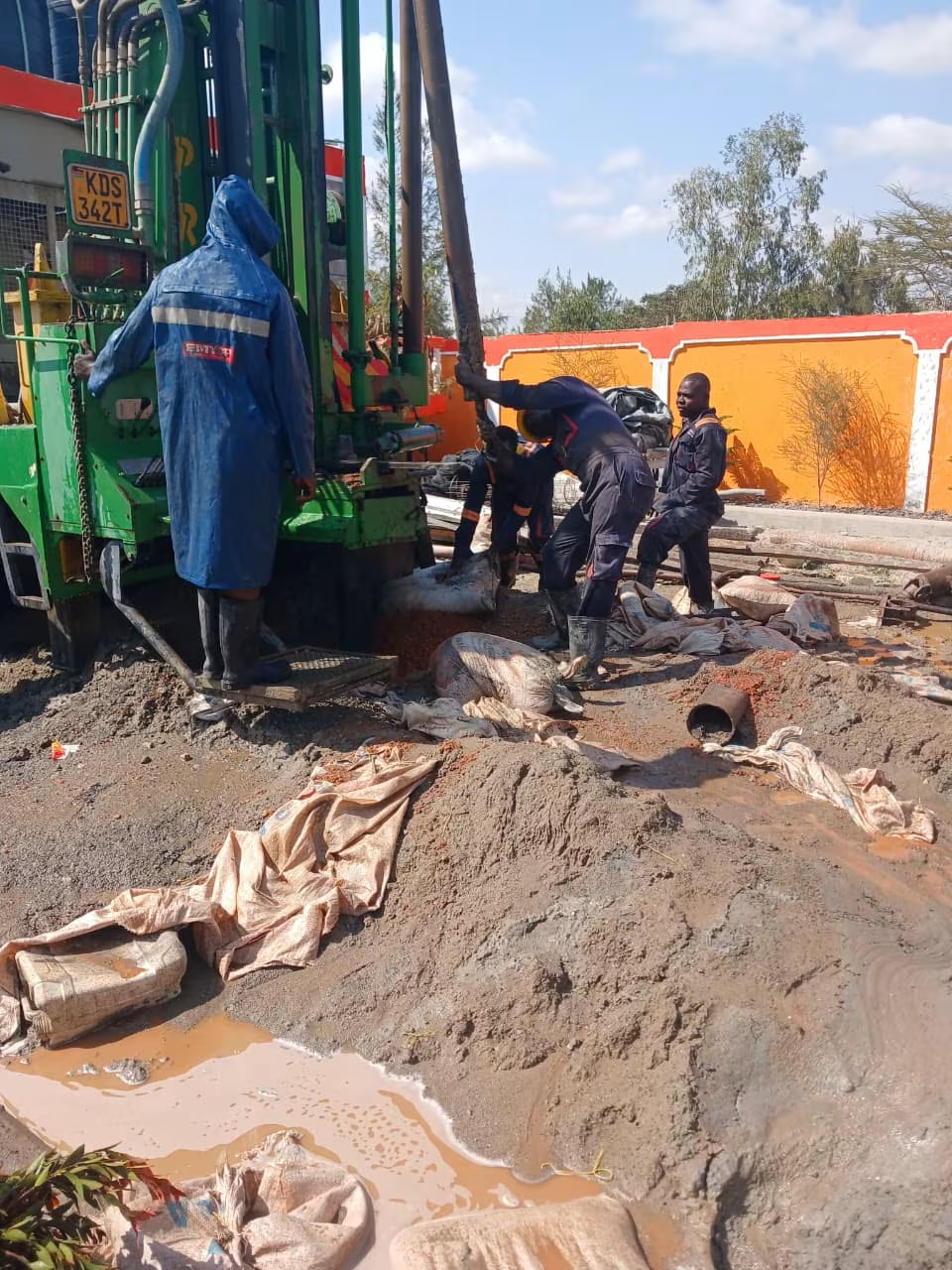
A borehole payment schedule should explain what each payment buys and which evidence supports it. However, a list of dates may leave scope changes unresolved. Before accepting an offer, connect the proposed instalments to mobilisation, measured drilling, materials and completion. Also, identify who can approve each stage.
Masterpiece Hydro-Solutions offers borehole drilling. To discuss your project, request an itemised proposal with payment milestones. This guide helps buyers ask informed questions. Actual payment duties depend on the agreed contract, current requirements and the circumstances of the work.
Build a borehole payment schedule around scope
First, establish whether the offer covers drilling alone or a wider water-supply project. Equipping, power, storage and distribution can involve separate work. Therefore, avoid reading the final drilling instalment as payment for every later component. Ask the supplier to identify the exact boundary.
Next, distinguish a price estimate from an agreed payment obligation. An estimate may use provisional quantities that change after assessment or measured progress. Ask how the supplier will confirm those quantities. Also, establish how the final account relates to the initial quotation.
Finally, name the person who receives invoices and the person who approves payment. A family member or caretaker may coordinate access without holding financial authority. Clear contacts help the supplier send evidence to the right person. They also reduce avoidable delays in resolving questions.
Understand the proposed advance
A requested advance needs a clear explanation of its purpose. Ask whether it supports equipment movement, materials, resource booking or another defined commitment. Do not assume that every deposit covers the same items. Instead, request the contractual basis and an acknowledgement of the amount received.
Also, discuss what happens if the planned start changes. Site readiness, unresolved documentation or contractor availability may affect the sequence differently. Ask how the agreement treats postponement, cancellation and any unused balance. Avoid relying on a verbal statement that all deposits follow one universal rule.
Before transferring funds, use the supplier’s verified payment instructions and confirm the quotation reference. Keep the payment acknowledgement with the accepted scope. If instructions change unexpectedly, verify them through an established contact. This practical record helps connect the transfer to the correct project.
Compare borehole payment schedule milestones
| Possible milestone | Evidence to discuss | Question before payment |
|---|---|---|
| Resource commitment | Accepted scope and written acknowledgement | What does the advance secure? |
| Mobilisation | Agreed arrival and movement record | Which journeys and resources does this cover? |
| Measured drilling | Depth and progress records | How do quantities match the invoice? |
| Construction materials | Specified materials and usage records | Are substitutions or additions approved? |
| Testing and completion | Agreed reports and outstanding-item list | Which deliverables define this stage? |
| Later equipping | Separate assessed equipment proposal | Does this belong to a different contract? |
These are discussion categories, not recommended percentages or mandatory stages. Your project may combine some items or use another arrangement. However, every payable event should have wording you understand. Ask the supplier to explain how the evidence demonstrates the event described in the agreement.
Reconcile metres without losing the construction detail
Where an invoice uses metres, ask how the contractor records the chargeable quantity. Also, check which activities the unit price includes. A drilling rate and a casing quantity may not describe identical scope. Compare the invoice with the accepted pricing basis rather than multiplying an unexplained figure.
Next, request a record of approved changes. Additional depth or revised construction can alter the account. The payment process should show the instruction, supporting explanation and price effect. Otherwise, the buyer may receive a new total without understanding how the project reached it.
Do not infer a suitable final depth from the payment budget alone. Technical assessment, progress evidence and applicable requirements should guide that decision. A larger authorised budget cannot guarantee more water. Keep the commercial approval distinct from the assessment of likely usefulness.
Use estimator arithmetic carefully
The Masterpiece quote page checked on 26 November 2026 displayed steel-casing drilling at KSh 6,300 per metre. It displayed PVC at KSh 5,800 per metre. These figures serve as estimator inputs, not complete commissioned-system quotations. VAT treatment was unspecified, so ask whether VAT is included.
For a hypothetical 100 metres, the displayed components calculate to KSh 630,000 and KSh 580,000 respectively. This example demonstrates multiplication only. It does not recommend a drilling depth, predict the final construction or include every project cost. Request a current, itemised site proposal instead.
Also, those calculations do not establish an appropriate deposit or instalment percentage. A borehole payment schedule needs the actual scope and agreed terms. Avoid borrowing percentages from an unrelated project. The same arithmetic total can sit behind very different exclusions and responsibilities.
A scenario with a changing quantity
Imagine an owner receives a proposal based on an initial planning quantity. The document describes progress payments but does not explain how further work receives approval. Later, the contractor recommends continuing. The owner worries that paying the next invoice might approve an undefined amount of additional drilling.
First, both parties separate the measured work already completed from the proposed continuation. Next, they review the supporting records and the agreed price basis. The contractor explains the further scope and uncertainty. An authorised person then considers the instruction under the contract’s change process.
Finally, the next invoice refers to the relevant record and approved instruction. This creates a traceable account without assuming that payment guarantees a water outcome. The example does not decide any party’s legal rights. It shows why the milestone and variation processes need to work together.
Account for an unsuccessful water result
A payment plan should not leave a dry or inadequate result outside the conversation. Ask how the agreement treats work already performed, testing, materials and safe close-out. Also, request the records that support the contractor’s assessment. Avoid assuming that every unsuccessful outcome automatically cancels all charges.
Equally, do not assume every claimed amount becomes payable simply because drilling took place. The accepted wording and actual circumstances matter. If the invoice conflicts with your understanding, identify the specific line and supporting record you need. Seek appropriate advice where the disagreement remains material.
Before approving a further attempt, request a separate assessment and commercial explanation. A new location, changed depth or return visit can create different work. Keep that decision distinct from settling the first attempt’s account. This helps avoid one unclear balance growing into another unclear commitment.
Keep approvals alongside the cash-flow plan
The Water Resources Authority explains its permitting sequence, including construction authorisation and a later water permit. Ask WRA for the current requirements affecting your project. Also, identify who handles the supporting information and any related administrative work in the quotation.
A payment milestone cannot replace an authority decision. Therefore, check which documents must exist before the proposed activity begins. Do not treat payment for drilling as permission to abstract water. The parties should understand the relevant dependencies before committing resources or promising dates.
If site assessment remains incomplete, discuss hydrogeological survey requirements first. That work may inform the scope and sequence you need to price. However, neither a survey payment nor an application payment guarantees groundwater or approval.
Maintain a payment evidence pack
- Keep the accepted quotation and the version of the terms you agreed.
- Record each milestone, its evidence and the authorised approver.
- Save invoices with their measured quantities and project references.
- Attach approved scope changes to the relevant account entries.
- Keep acknowledgements showing what each transfer relates to.
- List disputed items precisely, with the clarification requested.
- Reconcile the final account against completed work and agreed deliverables.
Also, maintain one running summary of invoices, transfers and remaining questions. This can prevent duplicate payment and missing acknowledgements. However, the summary should reflect the actual documents rather than replace them. Share corrections promptly so both parties work from the same account history.
Refer to the accepted borehole payment schedule when labelling each account entry. This makes it easier to see which milestone an invoice addresses. Also, retain any written explanation where the supplier combines several agreed items.
Questions about a borehole payment schedule
What deposit percentage should I accept?
There is no project-specific answer without the proposed scope and terms. Ask what commitment the advance supports and how postponement affects it. Compare the explanation with your risk and cash-flow needs. If the obligation remains unclear, obtain suitable advice before agreeing.
Should I pay only after water appears?
Do not assume that this matches the proposed contract. Drilling work, water quantity and usable water quality represent different matters. Ask how the agreement allocates outcome uncertainty and charges. Then decide whether the offered arrangement suits you before the contractor commits resources.
What evidence supports a progress invoice?
The evidence should relate to the milestone described in your agreement. For example, measured drilling needs a clear quantity record and pricing basis. Material changes need their associated approval. Ask for missing information directly rather than relying on an unexplained percentage-complete statement.
Can later pump costs join the drilling balance?
They can form part of a wider proposal if the scope clearly says so. However, pump selection needs the relevant source and duty evidence. Request a separate assessment where necessary. Also, distinguish a provisional equipping allowance from an accepted equipment supply commitment.
How do I question a final invoice?
Identify the line, quantity or missing deliverable that needs clarification. Then compare it with the accepted documents and approved changes. Keep the discussion factual and documented. Actual payment rights and duties require review of the agreement, so seek appropriate advice if needed.
Request milestones you can verify
A useful borehole payment schedule connects money with clear work and records. It also explains how additional instructions and uncertain outcomes affect the account. Before acceptance, read every milestone against the scope. Resolve unclear quantities while both parties can still revise the proposal.
Ask Masterpiece Hydro-Solutions for an itemised drilling enquiry response. Include your project documents, intended scope and payment questions. Request a borehole payment schedule that identifies evidence, approval contacts and the treatment of changes.