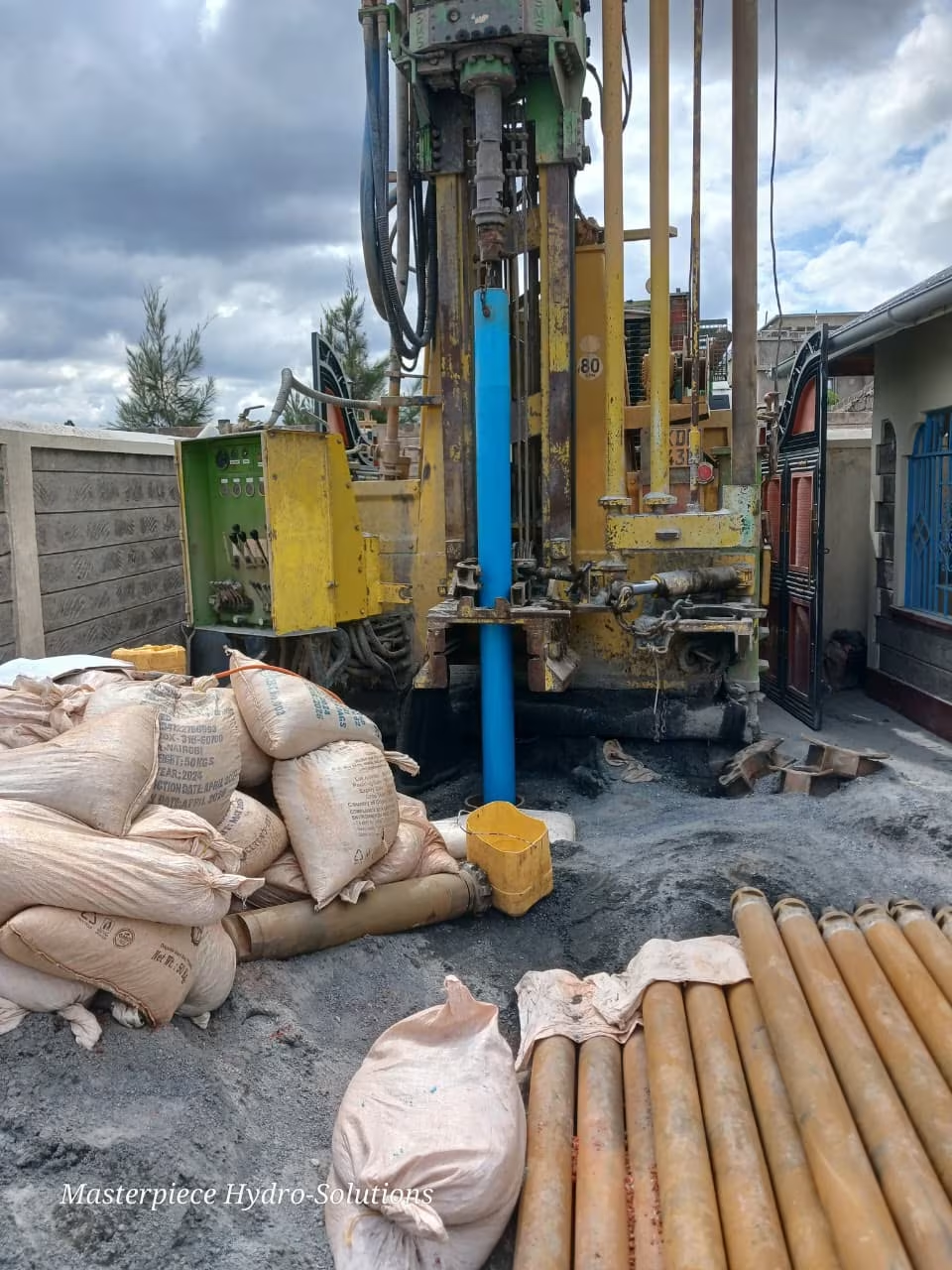
A complete borehole project budget connects every required stage to a defined scope and a dated price basis. Drilling and equipping are related parts of the project, but neither line automatically includes the other. First, define the water-service endpoint. Then build a worksheet that shows confirmed costs, provisional decisions, exclusions and owner responsibilities.
Explore Masterpiece Hydro-Solutions borehole drilling services and request an itemised project assessment and quotation. Send the site brief and existing records. Ask which stages the proposal covers now and which need later evidence before the supplier can confirm their scope and KSh amounts.
Set the endpoint before adding costs
Write down what completion means for your project. A drilled and documented source has a different boundary from an assessed water supply reaching storage or another agreed destination. The worksheet should match the intended endpoint rather than assume a package label defines it.
Next, identify work already completed and records already held. An existing survey or source may affect the next scope, but its applicability needs review. Do not count past spending again as a new contractor charge unless you deliberately show a separate whole-project history.
Also, distinguish a capital budget from ongoing operation. Both matter to the owner, but they answer different questions. Keep the initial delivery worksheet clear while identifying the later operating costs that need their own evidence and planning.
Build a complete borehole project budget by stage
List assessment, permission support, drilling, completion work, testing and equipment stages separately. Then identify storage, power and distribution where the endpoint requires them. The table should show who prices each category and which information remains outstanding.
Next, use actual dated quotations rather than an unexplained market average. A figure only becomes useful when its scope, quantity basis and tax treatment are clear. Keep an unpriced requirement visible instead of silently treating it as zero.
A complete borehole project budget can remain provisional while still being useful. The worksheet should explain what is known, what can change and what decision will confirm it. False precision provides less clarity than an honest allowance with a defined review point.
Use a complete borehole project budget worksheet
The following structure identifies cost categories without inventing prices. Add your actual quoted KSh amount and document reference in the working budget. A category may be included elsewhere, separately priced or outside the project; record that status explicitly.
| Stage or cost category | Price basis to obtain | Scope check before addition |
|---|---|---|
| Survey and initial assessment | Dated professional-service quotation | Report, visit and clarification boundaries |
| Permission coordination and related requirements | Confirmed current authority information and service scope | Owner tasks and excluded professional work |
| Mobilisation and site readiness | Contractor movement and preparation basis | Access assumptions and separately supplied work |
| Drilling and construction | Defined rates, quantities and specification | Casing scope and measurement method |
| Development and testing | Named activities and reports | Source, equipment and quality tests distinguished |
| Equipping and power | Assessed equipment and installation proposal | Retained items, controls and interfaces |
| Storage and distribution | Qualified design and relevant quotation | Actual destination and delivery boundary |
| Commissioning and handover | Agreed checks and deliverables | Records, instruction and outstanding-item process |
Next, mark each amount as confirmed, provisional or unpriced. This makes the total’s limits visible before anyone uses it to approve the entire project.
Prevent scope from appearing twice
A bundled drilling rate may already include a stated construction component. An itemised proposal may show that component separately. Ask what each line covers before combining figures from different suppliers. A more detailed worksheet should not count the same work twice.
Next, check interfaces between packages. Delivery, installation or commissioning may appear in one proposal and remain excluded in another. Assign the activity to the correct scope and retain the explanation. Silence is not evidence that the work is free or already included.
Also, identify owner-supplied items. If the owner already has a tank or power arrangement, ask who assesses suitability. Retention may avoid purchasing a new item without establishing that no additional work or professional review is required.
Keep tax treatment consistent
Ask each supplier whether its quoted figure includes VAT and any other stated tax treatment. Do not combine inclusive and exclusive amounts as though they share one basis. Retain the supplier’s written answer with the line item.
Next, show the tax basis clearly in the worksheet before calculating the total. If a package already includes the applicable tax, do not add it again. Where treatment remains unclear, mark the unresolved question rather than invent a percentage or assumption.
A complete borehole project budget needs a consistent basis across all compared proposals. The owner should understand whether a difference reflects scope, quantities or tax presentation. Ask appropriate advisers about any project-specific tax question instead of treating this guide as a tax determination.
Connect equipment costs to source evidence
Later equipping needs the source information and required duty. Explore Masterpiece borehole equipping services as a defined stage. A final pump package should not rely on the assumption that every drilled source produces the same result.
The Grundfos pump-selection resource explains why flow and head inform selection together. Source yield, pump capacity and user demand remain distinct. The worksheet should show which equipment choices depend on testing and the assessed delivery route.
Next, identify provisional equipment allowances honestly. A preliminary amount may support planning when its basis is clear. It should not become a guaranteed current price or final specification before the relevant assessment confirms the package.
Keep quality and treatment decisions evidence-led
Clear water does not establish suitability for drinking or another intended use. Appropriate laboratory analysis and qualified interpretation guide the next decision. The worksheet should distinguish analysis from any later treatment assessment or installation.
Next, ask which quality-related scope the quoted package includes. A line called testing may not cover every laboratory or interpretation requirement. Likewise, a general treatment allowance does not establish a suitable technical solution before evidence exists.
A complete borehole project budget should preserve that decision gate. Do not fill an unknown treatment requirement with a universal equipment price. Identify the assessment, responsible party and later approval needed to turn the provisional category into a confirmed scope.
Separate contingency from permission to spend
The owner may choose a reserve for uncertainty, but it needs a stated purpose and approval process. Keep it separate from the contractor’s confirmed price. A budget reserve does not automatically authorise additional work or establish that the contractor will charge the full amount.
Next, identify the uncertainties the reserve addresses. Changed quantities, further findings and an owner-revised brief are different events. The contractor should provide evidence and a defined commercial adjustment through the agreed variation route.
Also, retain a record when a provisional item becomes confirmed. Remove or reconcile the earlier allowance so it does not remain alongside the final amount. A useful worksheet tracks decisions rather than accumulate every number ever mentioned.
Use a package-reconciliation example
Consider an educational example with no actual prices. A drilling proposal includes a defined testing activity, while a separate consultant’s offer includes another assessment using similar wording. The owner cannot simply add both totals without checking what each provides.
First, the owner asks both providers to identify their deliverables and boundaries. Next, the project assigns each required activity once and marks genuinely different work separately. The revised worksheet shows actual commitments and any remaining gap without inventing a comparison amount.
This example shows why a complete borehole project budget needs scope reconciliation before arithmetic. A correct sum can still produce a misleading project total when the inputs overlap or omit a necessary stage.
Review the complete borehole project budget before approval
Check that every required category has a status, responsible party and price basis. Then total confirmed capital items on a consistent tax basis. Show provisional amounts and contingency separately so reviewers understand what the apparent total does and does not establish.
Next, check quotation validity and assumptions. A dated price may need confirmation before commitment, particularly if the scope changes. The worksheet should retain the original document reference and the current decision status rather than present old information as newly verified.
For authority information, consult the Water Resources Authority’s permitting guidance and confirm current site-specific requirements directly. Ask which services and records the project needs. Do not insert unverified fees, approval periods or administrative assumptions into a supposedly complete total.
Questions about a drilling-and-equipping budget
Can a per-metre rate establish the all-in cost?
No. It describes a defined rate component and quantity basis. The complete project may require separate assessment, mobilisation, testing, equipment and delivery work. Ask what the rate includes, then build the remaining stages from actual scope and dated quotations.
Should an unpriced requirement count as zero?
No. Mark it unpriced and identify the assessment or quotation needed. A zero can falsely imply that no cost exists. Reviewers should understand the missing category before relying on the worksheet to approve the complete service.
Does contingency belong in the contractor’s price?
Keep the contractor’s commitment and the owner’s reserve distinguishable. The contract should define how additional work is assessed and approved. A planning reserve does not itself authorise expenditure or create a contractor entitlement to the entire amount.
When can the equipping amount become final?
Ask the provider which source evidence, duty assessment and site information it needs. Some decisions depend on later testing or confirmed interfaces. The proposal should identify those dependencies and the process for turning a provisional package into an agreed specification and price.
Request a quotation that fits the worksheet
Prepare the service endpoint, available evidence and current cost categories. Then request an itemised project proposal from Masterpiece Hydro-Solutions. Ask for clear scope, dated KSh prices and explicit exclusions. Those details make the worksheet useful without presenting incomplete information as an all-in promise.