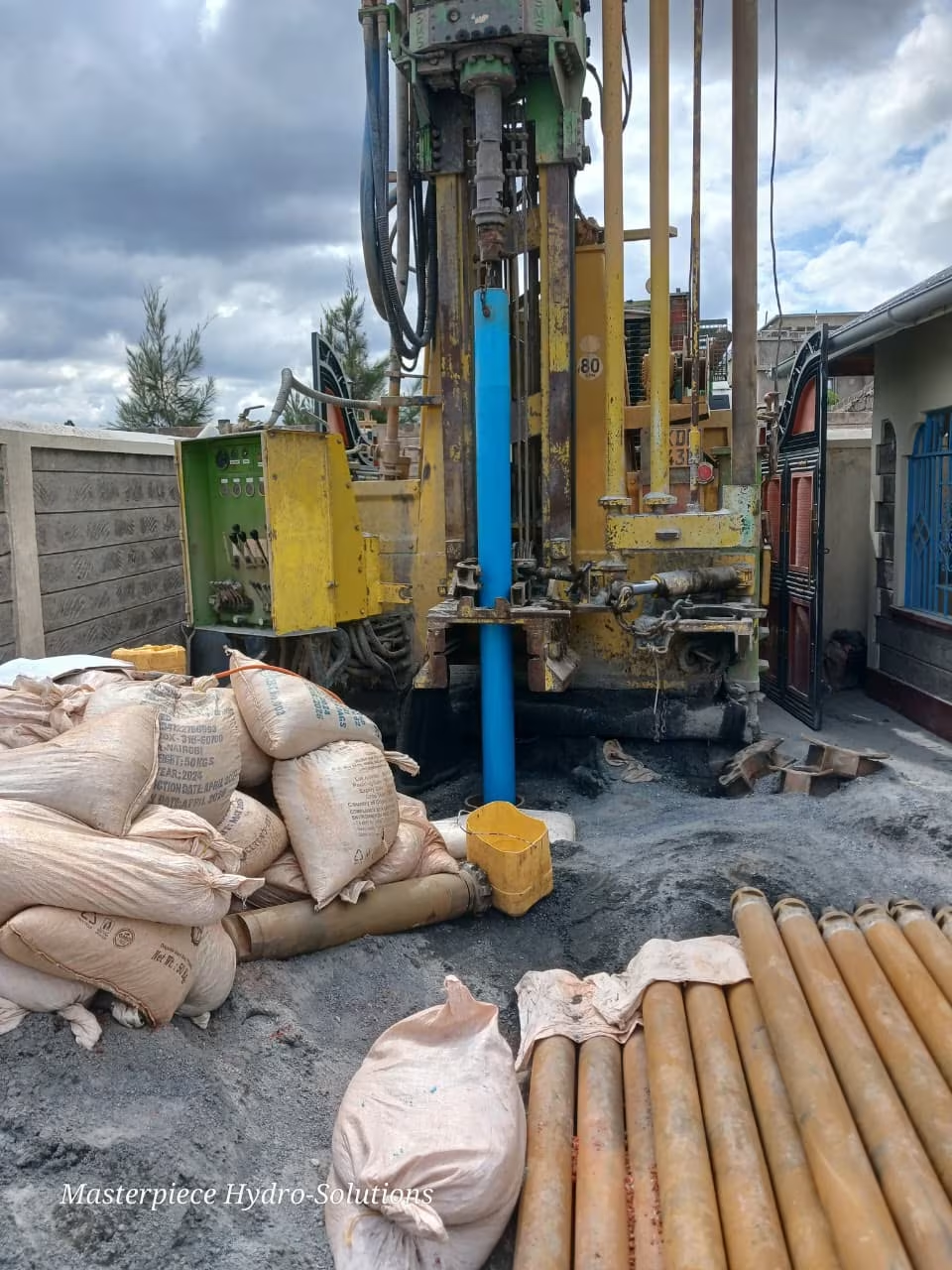
Drilling variation record review starts with the change that an invoice says occurred. When the owner cannot trace a listed variation, ask for the finding, instruction and commercial basis behind it. An absent document in one folder does not automatically settle payment rights, but an unexplained invoice line does not establish an approved change either.
Explore Masterpiece Hydro-Solutions borehole drilling services and request a project enquiry with a defined change process. Confirm the available scope. For an existing issue, identify the precise line and relevant appointment rather than asking another provider to endorse or reject a charge without its supporting records.
Read the line without deciding the dispute
Copy the invoice description and reference into a review note. Ask the issuer what work, material or other commitment it describes. Broad wording such as additional works may need explanation before the owner can search its records effectively. Keep the original invoice intact while requesting clarification.
Then identify the accepted baseline. The first proposal may have been revised before appointment, so use the actual agreed scope and approved changes already known. A line that looks new against an obsolete quotation may have another explanation. Conversely, a later invoice should not silently redefine the accepted scope.
Record the owner’s current question neutrally. It may be whether the work occurred, whether someone authorised it or whether its price matches the agreement. Those are different issues. A clear question helps the parties supply the right evidence instead of responding to a general accusation.
Build drilling variation record review around a decision chain
Ask what event or finding led to the proposed change. The provider may refer to field evidence, a changed owner requirement or another project dependency. Request the relevant record and who supplied it. Do not assume that a technically plausible explanation proves it occurred on this project.
Next, ask for the qualified recommendation and the instruction the provider says followed. Identify who communicated it, when and within what authority. A recommendation to consider an option is not necessarily an instruction to execute it, while an owner request may still require technical assessment before work.
Finally, link the claimed commercial adjustment to that chain. The owner needs to understand the added or deleted scope, actual price basis and relevant work evidence. An amount alone cannot explain how an observation became a variation under the accepted appointment.
Ask for specific records rather than a general defence
| Part of the chain | Clarification requested | Question it helps answer |
|---|---|---|
| Trigger | Dated finding or changed requirement | Why was a change proposed? |
| Technical advice | Relevant qualified recommendation and scope | What was advised and with what limitations? |
| Instruction | Actual communication and identified representative | What does the provider say was authorised? |
| Commercial basis | Accepted terms or proposed variation amount | How was the claimed adjustment established? |
| Completed work | Applicable work or supply record | What was actually performed or provided? |
Some projects may hold several parts in one document. Others may use a series of communications. The objective is a traceable account, not a requirement invented by this article that every change must have a particular form to exist.
Check authority without inventing a signature rule
Identify who the owner authorised to make project decisions at the relevant time. A site contact may have coordinated access without being authorised to accept new expenditure. Ask the parties to explain their actual authority arrangements and the communication on which the provider relies.
Do not assume that a missing signature automatically defeats the claim or that any message from someone on site automatically approves it. The actual terms and circumstances matter. Preserve the facts and obtain appropriate professional advice where a material authority question remains disputed.
If the owner changed representatives, include the transition record. A new manager may simply lack an earlier instruction held by someone else. Recovering that record can resolve the information gap without implying misconduct. Where the record cannot be found, disclose that limitation rather than manufacture a retrospective approval.
Use drilling variation record review for technical differences
Where the variation concerns construction, ask the qualified provider to explain the relevant technical evidence. The owner should understand what changed, but should not direct drilling, lifting or other hazardous operations to recreate the issue. A later review needs its own agreed scope and qualified method.
The Water Resources Authority permitting guidance distinguishes construction authorisation from application and subsequent permitting. If the proposed or completed change affects project requirements, ask the appropriate authority or qualified adviser what current confirmation is needed. An invoice description does not establish regulatory acceptance.
Keep technical suitability separate from commercial authority. A professional may explain why an action was advisable without determining who approved its price. Likewise, a payment approval does not itself demonstrate that the technical work met the relevant project requirements.
Reconcile the amount after identifying the scope
Use the actual accepted terms or the proposed change record. Ask how the quantity, rate or lump sum relates to the described work. If the invoice uses a cumulative amount, compare prior claims so the owner’s summary does not count the same commitment twice.
Ask about deleted work and credits where the change replaces an earlier item. A variation can include both an addition and a reduction. Do not evaluate only the added line while overlooking a related adjustment elsewhere, and do not assume a credit exists without a stated basis.
Clarify VAT treatment directly if the documents do not specify it. Avoid substituting a market price, standard variation percentage or invented charge. The point is to understand the actual claim and its evidential basis, not create a more convenient price from unrelated examples.
An old instruction is missing from the new manager’s folder
Consider a hypothetical final invoice containing an additional construction line. The current project manager cannot find an approval and concludes that the charge was never discussed. The provider refers to an earlier conversation with the owner’s former representative but initially supplies no supporting record.
The useful next step is a focused request for the dated communication, stated scope and relevant work evidence. The owner can ask the former representative for its existing records through the authorised route. Neither the current manager’s missing file nor the provider’s recollection alone resolves every question.
If a clear record emerges, reconcile it with the actual amount and completed work. If the evidence remains incomplete or conflicting, summarise the established facts and seek appropriate review of the remaining issue. Do not backdate an approval or alter the old scope to conceal the gap.
Close drilling variation record review honestly
Prepare an outcome note identifying the invoice line, records reviewed and agreed corrections. State what remains disputed, such as quantity, authority or terms. A focused unresolved question is easier to review than a folder labelled variation disagreement with no account of the verified facts.
If the parties reach a commercial resolution, retain its actual wording alongside the historical evidence. Do not treat an agreed amount as proof that every technical explanation or allegation was accepted. Keep the final construction file accurate regardless of how the financial discussion ends.
Use the experience to clarify future change routes. Name the authorised decision-maker and required information for the actual project arrangements. A clear process improves traceability without inventing a guarantee that no future scope question will arise.
Questions about an untraced variation
Should the owner reject a line it cannot find in its file?
First request the specific supporting records and compare them with the accepted scope. A missing owner copy is an information gap rather than a complete determination of entitlement. Preserve the disputed status while the evidence is clarified, and obtain appropriate advice where obligations remain contested.
Does a technical need prove commercial approval?
No. Technical reasoning and owner authority are separate questions. Ask what the qualified practitioner recommended and what instruction the provider says it received. The actual agreement and circumstances determine how those facts affect the parties’ obligations.
Can a later signature fix the historical record?
A current clarification or agreement should carry its real date and describe what it confirms. Do not present it as an original approval made earlier. Transparent record recovery preserves the difference between contemporaneous evidence and a later resolution.
What if only part of the claimed work can be verified?
Separate the verified and unresolved elements. Ask the provider to explain the remaining quantity or scope rather than treating the whole claim as one indivisible fact. A technical review should state its evidence limits and avoid inventing completed work to fill the gap.
Who should perform an independent review?
Choose an appropriately qualified reviewer for the actual question and verify the relevant credentials and scope. Technical interpretation, quantity reconciliation and contractual advice are different tasks. Define the evidence, output and actual charge basis before appointment rather than requesting an unlimited verdict.
Does a variation affect the promised water outcome?
Ask the qualified provider to explain any revised technical assumptions. Do not infer that additional expenditure guarantees source yield, pump capacity or water quality. Those matters remain distinct and require appropriate evidence within the relevant service scope.
For drilling variation record review, trace the claimed change from finding to instruction and completed work. Request a defined drilling enquiry or evidence review and keep unresolved commercial questions tied to the actual agreement and appropriate professional advice.