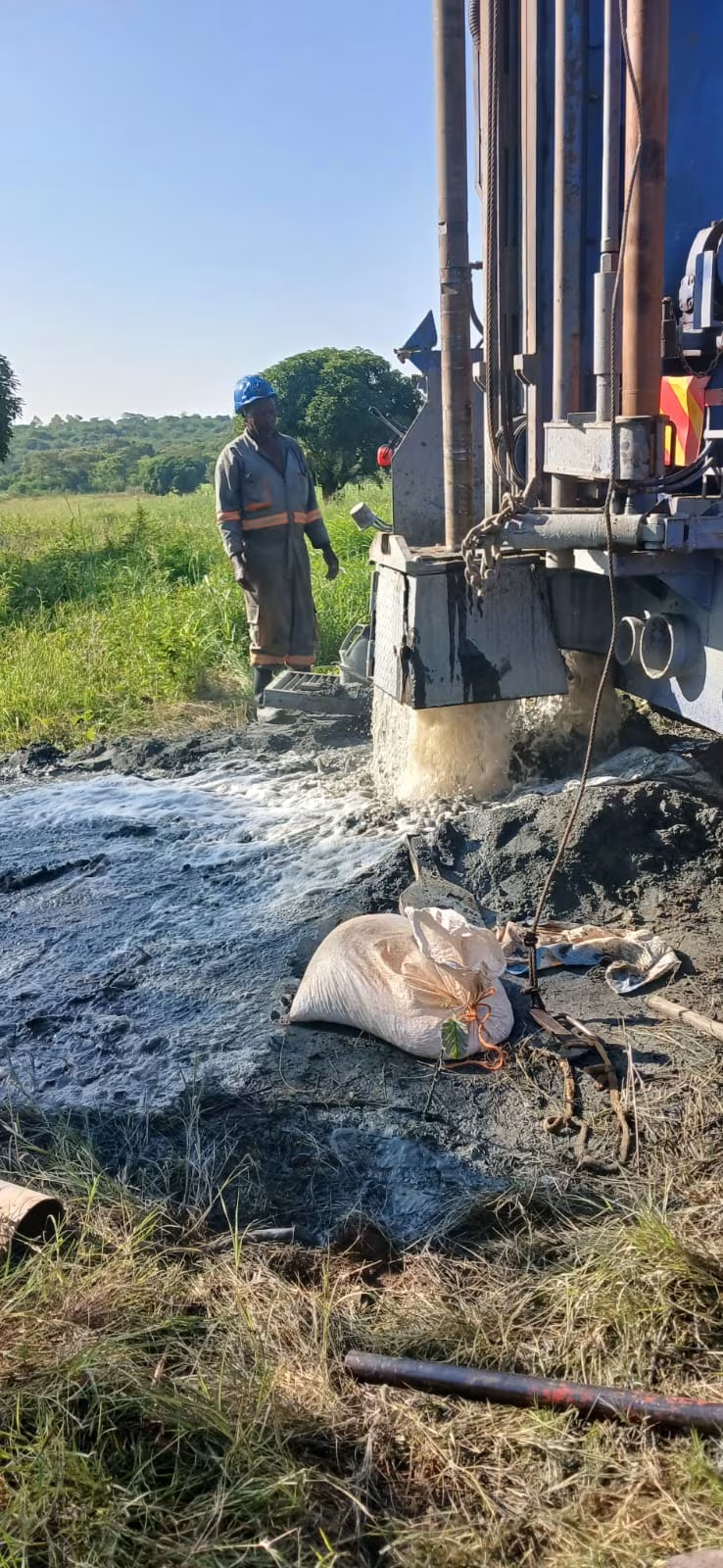
Dry borehole payment responsibility depends on the agreement and the circumstances of the work. A disappointing water result does not answer every payment question by itself. Therefore, buyers should discuss unsuccessful outcomes before drilling begins. Separate the promised work, expected evidence and proposed charges in the contract.
Masterpiece Hydro-Solutions offers borehole drilling. To discuss outcome uncertainty, request a drilling scope with clear unsuccessful-outcome terms. This guide provides practical buyer questions. It does not decide legal liability or replace advice on a particular signed agreement.
Define dry borehole payment responsibility early
First, ask what the proposed agreement means by an unsuccessful result. No observed water, inadequate measured yield and unsuitable water quality are different situations. The contractor should explain which assessment supports each description. Otherwise, both parties may use the word dry for very different findings.
Next, identify what the supplier promises to deliver. A measured drilling service differs from a commitment to a specified water outcome. Also, examine any exclusions or qualifications beside that promise. Do not infer a guarantee from a confident conversation or a broad heading alone.
Finally, ask how the parties will record the result and decide what happens next. The process should identify the relevant reports and authorised contacts. A clear decision record helps separate technical findings from commercial expectations when the project does not meet the original hope.
Distinguish effort from the promised outcome
Drilling involves work even where groundwater proves unsuitable for the intended purpose. However, that observation alone does not establish which charges apply. The contract may describe measured work, particular deliverables or outcome conditions. Read those provisions together rather than selecting a single sentence.
Also, distinguish geological uncertainty from a concern about workmanship or compliance with the agreed scope. These questions may need different evidence. Ask the contractor to address the precise concern. For example, an allegation about missing records differs from disappointment with the measured source capacity.
If a disagreement concerns a technical finding, consider an appropriate independent professional assessment. If it concerns contractual duties, seek suitable advice using the signed documents. Avoid making a payment decision from a general internet rule that every dry borehole has the same financial outcome.
Map dry borehole payment responsibility by question
| Situation | Evidence to request | Contract question |
|---|---|---|
| No useful water result | Progress records and outcome assessment | What unsuccessful-outcome wording applies? |
| Yield below intended demand | Relevant testing and demand brief | Was any specific performance promised? |
| Water quality concern | Suitable laboratory findings | Which testing or treatment scope was included? |
| Proposed further depth | Technical reason and revised scope | Who may approve extra work and cost? |
| Second location | Fresh assessment and site requirements | Does this need a separate agreement? |
| Project close-out | Completion records and site condition plan | Which remaining tasks and charges apply? |
This table organises the discussion without assigning liability. Actual obligations need the contract and facts. Therefore, keep each question separate when requesting clarification. A single demand for a refund may obscure the particular work, promise or record that needs review.
Ask what the survey does and does not establish
A hydrogeological assessment informs the choice and planning of a potential groundwater project. However, it cannot guarantee a particular yield or water quality. Ask which findings supported the proposed location and what uncertainties remained. Keep the actual report rather than a summary remembered from a call.
Also, confirm how the drilling team uses the assessment and records any proposed departure from it. A changed location or work plan needs a clear explanation. Ask who approves the change and whether further authority confirmation applies. Avoid treating a different point as automatically equivalent.
For an assessment enquiry, see Masterpiece Hydro-Solutions hydrogeological surveys. Discuss the intended water use and available site information. The resulting scope should communicate uncertainty honestly rather than frame the survey as insurance against every unsuccessful result.
Read unsuccessful-outcome charges before arrival
Dry borehole payment responsibility can involve several cost categories. Ask separately about mobilisation, measured drilling, construction materials, testing and close-out. A proposal may treat those items differently. Therefore, request a written explanation of what remains payable under the stated unsuccessful-outcome conditions.
Next, clarify the point at which the contractor pauses for a decision. If further work could create extra charges, identify who may authorise it. Also, ask how the supplier communicates the evidence and price effect. An owner should not discover the continuation process through an unexpected invoice.
Do not assume that continuing always improves the chance of a useful result. Qualified personnel need to assess the available findings. Likewise, stopping work does not automatically resolve the account. The technical decision and contractual consequences require separate, clearly documented discussions.
A scenario involving inadequate household supply
Imagine a household seeks water for domestic use and a large garden. The completed source produces some water, but the owner believes it cannot meet both demands. The owner calls the borehole dry. Meanwhile, the contractor points to observed water and says the drilling scope is complete.
First, the parties need the actual demand brief and source evidence. Next, they should check whether the agreement promised a particular measured outcome. Some water appearing during drilling cannot settle the supply question alone. Equally, unmet expectations do not automatically prove a contractual breach.
The owner can then ask a qualified assessor to explain the findings and possible options. Those options may affect storage, demand or later equipment decisions. However, none should erase the need to review the original account properly. The example illustrates an evidence process, not a legal outcome.
Keep water quality distinct from water quantity
Clear water does not establish suitability for drinking. Therefore, ask which laboratory analysis fits the intended use and who arranges it. Keep the findings alongside the quantity evidence. A water quality problem may require a different assessment from an inadequate source yield.
Also, check whether the contract includes sampling, analysis or any later treatment assessment. Do not assume a drilling price includes a treatment system. If the water needs further evaluation, request a separate scope. Avoid buying equipment based only on appearance or an informal description of quality.
Dry borehole payment responsibility should not become shorthand for every disappointing outcome. Use the exact finding when communicating with the contractor. This makes it easier to identify the relevant promise, deliverable or exclusion. It also helps advisers assess the actual issue.
Discuss safe close-out and authority requirements
The WRA permitting guidance distinguishes construction authorisation from a subsequent water permit. Ask WRA which current requirements apply to an unsuccessful or changed project. Also, clarify who will provide the necessary completion information and communicate the outcome.
Site close-out requires professional attention even if the owner stops pursuing the source. Ask the contractor to explain the proposed site condition, protection and records. Do not attempt borehole closure or other construction work yourself. Qualified personnel should assess the appropriate actions for the actual site.
Finally, ask how the accepted scope treats those tasks commercially. The owner needs a clear list of remaining work and proposed charges. If further authority direction changes the plan, request an updated explanation. Avoid assuming that leaving the site ends every obligation.
Prepare evidence before disputing an account
- Gather the signed quotation, agreement and relevant attachments.
- Keep the survey and the location actually used.
- List the outcome that the proposal expressly described.
- Collect progress, construction and testing records.
- Save written instructions approving further work or changed materials.
- Separate paid invoices from amounts still under discussion.
- Describe the specific charge, missing record or disputed promise.
- Ask for a written response and appropriate advice where necessary.
Present the timeline clearly and avoid unsupported accusations. For example, explain when the contractor recommended continuation and who responded. Also, preserve original messages and document versions. A concise evidence pack helps a professional adviser understand the issue without relying on conflicting memories.
Questions about dry borehole payment responsibility
Does a dry result automatically mean I pay nothing?
No general answer settles your particular agreement. Ask which work and outcome the contract describes, then review the unsuccessful-result wording. The relevant records and circumstances also matter. Obtain suitable advice if the proposed charge conflicts with your understanding of the accepted terms.
Can a survey guarantee a successful borehole?
A survey informs groundwater planning, but it cannot guarantee a specific water result. Ask about the findings and remaining uncertainty before proceeding. Also, keep the report with the drilling proposal. Any special commercial promise needs clear wording rather than an assumed survey guarantee.
Should I approve another attempt immediately?
First, request an explanation of the first attempt and the reason for a new proposal. Then review the required assessment, authority matters and revised scope. Keep the second decision separate from the first account. A further attempt creates uncertainty rather than a guaranteed remedy.
Who decides whether the result counts as unsuccessful?
Ask how the agreement defines the outcome and what evidence supports that definition. Technical findings may need qualified interpretation. Contractual consequences may need separate advice. Avoid relying only on an informal label such as dry, successful or complete without the underlying records.
What if the contractor and I disagree?
Identify the exact issue, exchange the relevant evidence and use the agreement’s stated process. If that does not resolve matters, seek appropriate professional advice. Dry borehole payment responsibility needs a case-specific review. A generic claim about all drilling projects will not settle the facts.
Make the outcome discussion part of your enquiry
Discussing dry borehole payment responsibility early helps expose different expectations. Ask about measured work, outcome uncertainty, continuation decisions and close-out. Keep the explanation with the accepted quotation. This gives you a more useful reference if the actual source differs from the original hope.
Send Masterpiece Hydro-Solutions your drilling enquiry with your intended use and available assessment. Request clear scope boundaries and unsuccessful-outcome questions in the proposal. Review the terms and seek appropriate advice before accepting material obligations.