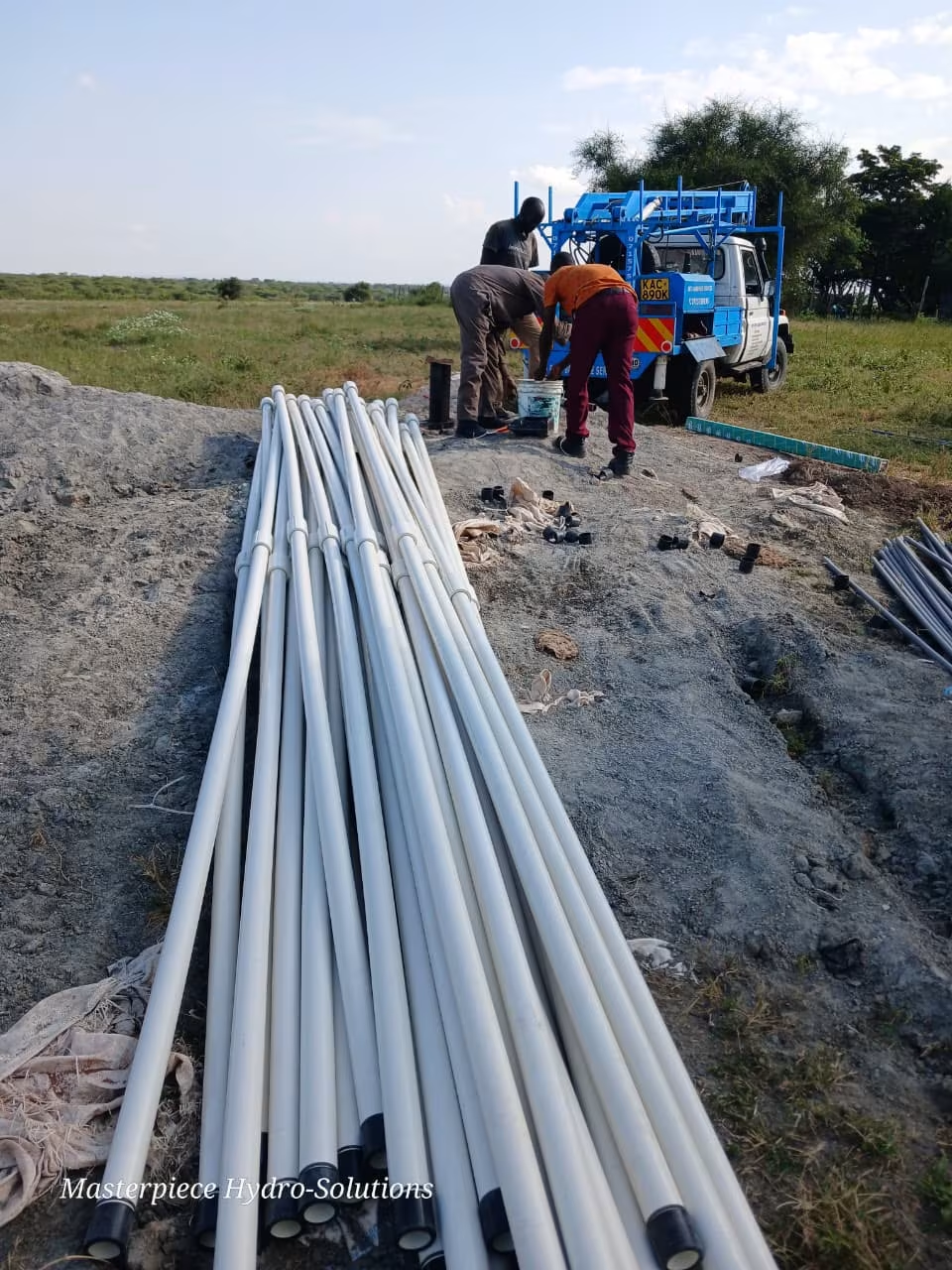
Eldama Ravine drilling readiness needs a clear distinction between a promising enquiry and a released construction instruction. A site can have funding while important documents or physical questions remain unresolved. Therefore, gather the current project evidence before confirming mobilisation. Ask Masterpiece Hydro-Solutions whether an appropriate assessment is available for the exact site and proposed scope.
For the wider location enquiry, use the Baringo county project page. See the borehole drilling service and request a site-specific scope review. This guide focuses on readiness decisions, without claiming local geology, guaranteed water or a confirmed response time.
Start Eldama Ravine drilling readiness with one current brief
First, identify the intended water service and proposed location. The survey, quotation and owner’s instructions should address the same project. If demand or the layout changed, explain that change. A supplier cannot reliably assess readiness from several inconsistent versions.
Next, distinguish confirmed information from planning assumptions. The project may have a proposed drilling point without a final access assessment. It may also have a funding allowance without an accepted work scope. Label those states clearly rather than using ready as a general description.
Also, name the person coordinating the file. That person should gather questions without automatically authorising every commercial instruction. Identify the actual approval route. Clear roles help the contractor understand who can confirm the next stage and who can only provide site information.
Review document readiness separately
Gather the current assessment report, relevant project documents and proposed construction scope. Ask the responsible professionals what each document establishes. A favourable survey recommendation cannot guarantee groundwater. It also does not automatically answer every authority or access question.
The WRA permitting guidance describes an application, construction authorisation and a subsequent water permit. Ask WRA about current requirements for the actual project. Do not treat a construction-stage document as permission to abstract water or promise a processing duration.
Next, identify who checks the file before a proposed drilling activity begins. The contractor’s availability cannot establish approval by itself. Keep unresolved matters visible and assign follow-up responsibility. An internal target date should not silently become a declaration that every requirement is satisfied.
Organise Eldama Ravine drilling readiness checks
| Readiness area | Question to resolve | Evidence for the decision |
|---|---|---|
| Project identity | Do all parties mean the same site and point? | Current location reference and brief |
| Assessment | What recommendation and uncertainty apply? | Current report and clarifications |
| Requirements | What authority confirmation is relevant now? | Current documents and responsible contact |
| Access | What must the proposed resources assess? | Route information and qualified findings |
| Commercial scope | What work and changes can the parties authorise? | Accepted proposal and instruction process |
| Release | Who confirms the agreed conditions are met? | Recorded readiness discussion |
The checks organise buyer questions rather than certify compliance or technical suitability. Ask the appropriate professionals to explain the actual requirements. Some matters may need further assessment. A completed owner checklist cannot replace qualified judgement or the authority’s role.
Confirm the proposed point without casual changes
Compare the report map, written reference and current site layout. If the point appears unclear, request clarification before anyone selects a convenient alternative. An empty area may suit parking without matching the assessed proposal. The location decision needs its own evidence.
Next, disclose new buildings, services or stored materials affecting the proposed area. Do not move the point informally to avoid them. Ask the relevant professionals and authority what review a change requires. The resulting instruction should identify the current location and remaining limits.
Eldama Ravine drilling readiness should preserve that location history. Keep the original report and any controlled update together. Future teams may need to understand why the point changed. A short message saying use the other corner cannot provide the same traceability.
Assess physical readiness for the proposed resources
Provide safe photographs of the complete approach and intended work area. Include known restrictions, controlled entrances and visible overhead features. The contractor should decide what further inspection it needs. Do not claim suitability from ordinary vehicle use or an earlier visit by different equipment.
Also, disclose uncertainty about crossings, ground conditions and buried services. Available records may help identify questions without proving current suitability. Qualified personnel should assess the relevant issues. Owners should not excavate, alter structures or prepare a platform from general drilling guidance.
Next, discuss how occupied-site movement will work. Residents, staff or visitors may need an agreed route outside the operation. The contractor should explain its site arrangements. Practical readiness includes understanding those boundaries, not simply clearing a space around the proposed opening.
A scenario with documents ready and access unresolved
Imagine an owner has assembled a report and relevant project paperwork for an Eldama Ravine enquiry. Funding is also available. The owner describes the site as ready, but the final approach crosses a structure whose suitability has not received assessment. The drilling proposal still treats access as conditional.
First, the owner separates document status from physical access status. Next, the contractor identifies the assessment the proposed resources need. The relevant parties address permission and technical questions through their appropriate processes. Only then can the readiness discussion consider a confirmed movement instruction.
The example does not describe a local road or actual project. It shows why Eldama Ravine drilling readiness needs separate evidence categories. Funding and paperwork cannot prove a route suitable. Likewise, a usable approach does not establish the project’s authority status or groundwater outcome.
Read the commercial scope before release
Ask the proposal to identify drilling, construction materials, testing and completion records clearly. Also, clarify mobilisation and departure boundaries. A broad promise to drill a borehole may leave different expectations about the completed stage. The owner should understand the scope before authorising resources.
Next, discuss measured quantities and further-work decisions. If the project needs a review point, identify who receives evidence and may approve continuation. Do not assume an initial planning depth instructs unlimited work. Actual commercial obligations depend on the accepted documents and circumstances.
Also, ask about waiting, postponement and an unsuccessful result. Request the actual proposed terms rather than rely on a supposed universal industry rule. Seek suitable advice where material consequences remain unclear. Readiness includes understanding the commitment, not merely choosing a convenient date.
Keep later equipment outside assumed completion
A completed drilling stage may need further testing and equipment assessment before a working supply exists. Ask what source information the contractor will provide. Drilled depth, pumping water level and pump setting are different. Preserve those labels clearly in the file.
The Grundfos selection learning resource explains required flow, head and the duty point. A planning depth cannot replace those inputs. Equipment selection should use relevant source evidence and the actual delivery brief.
Eldama Ravine drilling readiness should therefore identify later stages as separate decisions where appropriate. Do not treat equipment affordability as proof of suitability. Aquifer yield, pump capacity and demand remain distinct. More pumping power cannot guarantee a source meets the intended service.
Prepare the release discussion record
- Identify the current brief, report and location reference.
- List document questions resolved and those still outstanding.
- Record the contractor’s access assessment assumptions.
- Identify the accepted work scope and exclusions.
- Name the person authorised to approve changes.
- Clarify communication if conditions change before arrival.
- Retain the agreed deliverables and completion process.
- Keep later testing, quality and equipping decisions visible.
For a related assessment enquiry, see hydrogeological surveys. Ask whether the proposed scope addresses your current uncertainty. A reviewable next step is more useful than declaring the whole project ready while important questions remain unanswered.
The readiness note should also identify the date of the latest discussion. A later change may affect only one condition rather than the whole file. Record that change and ask who needs to review it. This keeps the next instruction connected to current information.
Questions about Eldama Ravine drilling readiness
Does available funding mean the site is ready?
No funding record establishes every technical, access or authority condition. Separate those matters and ask the relevant professionals what remains necessary. The project can have money available while a proposed stage remains conditional. A clear readiness discussion should explain that distinction.
Can the contractor confirm local availability immediately?
Ask about your exact location, proposed work and current timing. Do not infer a promise from a county page or general service description. Send the relevant site information. The actual response should state the assessment or service the provider can offer.
May I move the drilling point for easier access?
Do not assume a nearby alternative has the same assessed basis. Ask the relevant professionals and authority what review the change requires. Keep any updated instruction with the report. A convenient operating area cannot replace the groundwater and project-location assessment.
Does authorisation to construct allow abstraction?
WRA’s guidance distinguishes construction authorisation from the later water permit. Ask the authority about current requirements for your project. Do not treat a movement booking, contractor availability or completed drilling stage as permission to use water automatically.
What should remain unresolved at the first enquiry?
Any genuinely unknown detail should remain clearly labelled. You can ask what assessment would address it. Do not invent depth, access suitability or approval status to appear prepared. Honest gaps help the provider define a more appropriate next scope.
Request a readiness review for the next stage
Useful Eldama Ravine drilling readiness separates documents, physical conditions and commercial instructions. It keeps the proposed point and remaining uncertainty traceable. Gather the current file before confirming movement. Then request a clearly defined assessment and availability response for the actual site.
Send Masterpiece Hydro-Solutions your Eldama Ravine drilling enquiry. Include the location, current report and access information. Ask which readiness questions need assessment before a confirmed construction proposal or mobilisation instruction.