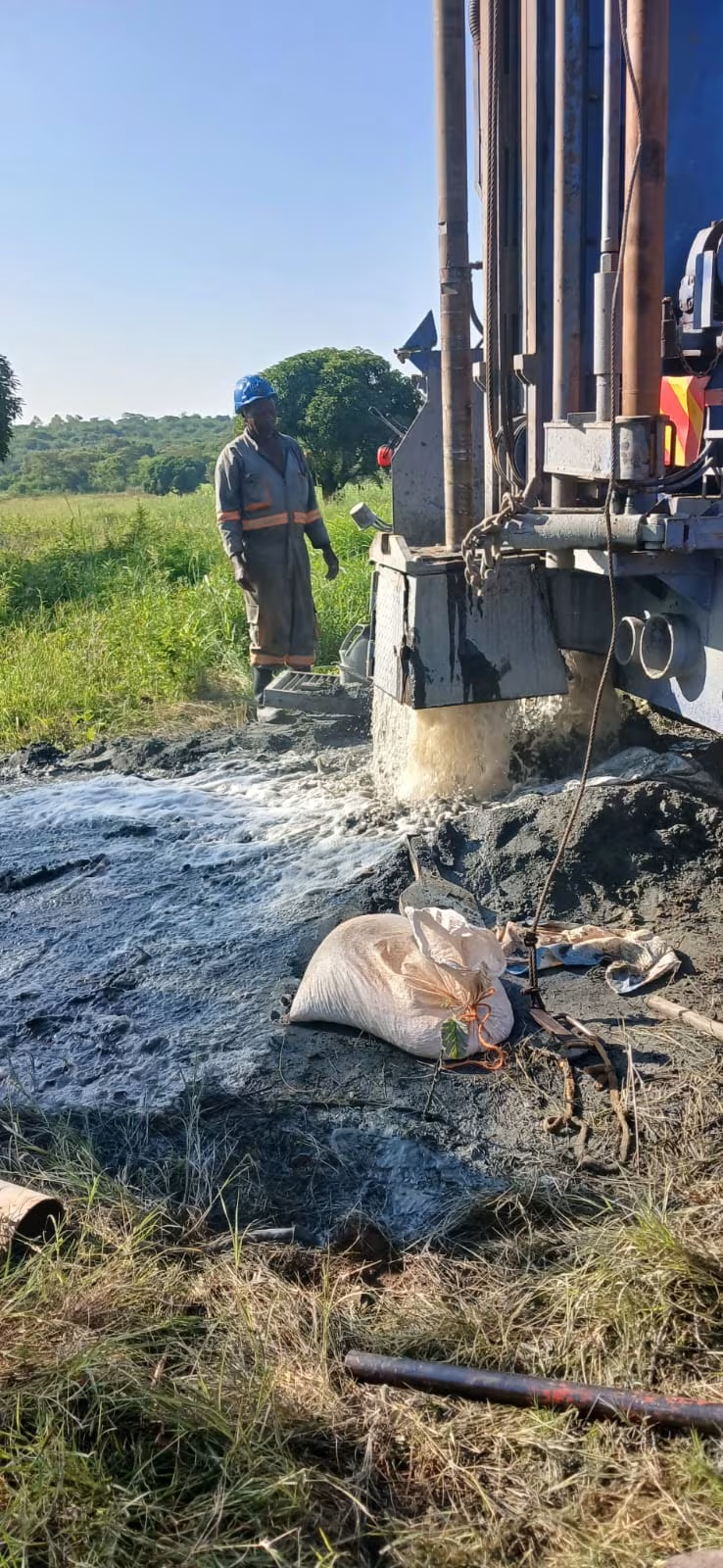
Estate borehole planning should start with the shared water requirement and the people responsible for managing it. A completed drilled hole does not by itself establish a reliable estate supply. The source, pumping arrangement, storage and distribution must work together under clear operating and ownership responsibilities.
This guide helps Kenyan estate managers and developers prepare a drilling brief and review the proposed handover. For the service, see Masterpiece Hydro-Solutions borehole drilling or request an estate water-project assessment. Share the site’s current occupancy and development plans.
Define the estate’s actual supply boundary
First, describe what the proposed project must deliver. It may involve a new source supplying existing storage or a wider installation serving several buildings. Identify the delivery point and any distribution work outside the contractor’s scope. A general promise to provide estate water can hide important gaps.
Also, distinguish domestic use, common-area cleaning, landscaping and other intended uses. These activities may have different priorities during a shortfall. The owner should explain which requirements are essential and which can change temporarily.
Next, identify the property-management contact, technical adviser and person authorised to approve expenditure. Clear roles help the contractor obtain decisions without assuming that every site contact has authority to change the scope.
Use occupancy evidence for estate borehole planning
Occupancy and daily water demand are related, but a unit count alone is not a measured consumption figure. Gather available bulk-meter readings, tank logs and records of unusual demand. Also, explain whether the estate is occupied, partly occupied or still under construction.
Separate current demand from expected later occupancy. For example, a development may have one occupied phase while another is planned. Ask the assessor to distinguish the present supply obligation from expansion scenarios. This makes early equipment decisions easier to review.
If records are incomplete, label estimates clearly. Do not turn an assumed use figure into a guaranteed borehole requirement without checking the source evidence. The assessment should explain both demand uncertainty and groundwater uncertainty.
Assess the source before committing to pumping equipment
A hydrogeological assessment supports informed decisions before drilling, but it does not guarantee groundwater quantity or quality. Ask which evidence informs the proposed location and recommendations. Also, identify the limitations and what drilling and testing will need to establish.
For this stage, review hydrogeological survey services. Keep the survey brief separate from equipment selection. A projected drilling depth does not establish the final pumping water level, sustainable abstraction or suitable pump model.
Estate borehole planning should provide a clear decision point after source testing. The owner can then review the available yield and delivery requirement before confirming the equipping and power arrangement.
Review approvals and site responsibilities
WRA’s permitting guidance distinguishes authorisation to construct abstraction works from the subsequent water permit process. Ask the authority to confirm current requirements for the site and project stage. Do not assume that drilling documents alone settle every water-use question.
Also, identify who gathers the relevant records and manages each submission or authority enquiry. The contractor’s scope should state what assistance is included, while the owner keeps unresolved responsibilities visible. Avoid relying on an unsupported promise of automatic approval.
Keep estate access arrangements and authority questions distinct. Permission from a property manager to enter the site does not by itself establish all applicable project approvals or ownership decisions.
Plan access within an occupied development
Explain vehicle routes, gates, overhead constraints and areas that must remain available to residents. The drilling team should assess access and working-space requirements rather than relying on a broad description of the plot. Also, identify nearby services and ask how their positions will be confirmed.
Next, agree how the work area will be controlled and how residents receive practical information about planned disruption. The contractor should explain its site arrangements and dependencies. Avoid promising a work duration before the actual scope and conditions are assessed.
Include waste, runoff, material storage and reinstatement responsibilities in the discussion. A compact estate site can create interfaces with parking, footpaths and existing drainage that need a written plan.
Connect the source with storage and distribution
A borehole pump supplying a tank faces a different duty from a distribution system serving outlets. Ask the designer to explain the boundary between those functions. Pumping water level, delivery elevation, friction and outlet pressure must use consistent reference points.
For equipment selection principles, Grundfos explains required flow and head. A motor rating or drilled depth alone cannot establish useful delivery through the estate’s system.
Also, assess useful storage and refill patterns. A larger tank can manage timing or temporary interruptions, but it cannot solve a continuing production deficit. Estate borehole planning should explain how reserves recover after use.
Use a phased-demand example
Consider an illustrative estate with an occupied phase and a later phase still under review. Assume current measured use is 18 cubic metres daily, while a separate planning scenario considers 28 cubic metres. These are educational assumptions, not occupancy-based standards or predictions.
First, ask how the current requirement compares with source test evidence. Next, identify what additional evidence or infrastructure the later scenario would require. The contractor should distinguish equipment installed now from provisions that merely allow a future assessment.
Do not describe the later volume as guaranteed capacity simply because the proposed pump can have a high rated flow. The source, operating pattern, storage and distribution all need to support the scenario.
Agree estate borehole planning milestones
Link project decisions to clear deliverables. A staged approach makes uncertainties visible before later commitments. Also, explain who reviews each document so that technical evidence does not sit unread while equipment orders proceed.
| Stage | Decision evidence | Owner’s question |
|---|---|---|
| Initial assessment | Demand brief and survey scope | Which requirements and uncertainties are recorded? |
| Drilling preparation | Agreed scope, access plan and authority position | What must be confirmed before mobilisation? |
| Source completion | Construction records and relevant tests | What has the completed source actually established? |
| Equipping selection | Proposed duty and equipment schedule | How does the design meet the assessed supply brief? |
| Acceptance | Commissioning records and outstanding-items list | Which obligations are complete and which remain open? |
Define quality evidence for the intended use
Water appearance does not establish suitability for drinking or another estate use. Request appropriate laboratory evidence and professional interpretation. Also, identify who plans sampling and how sample identity links to the actual source and test date.
If treatment is proposed, ask how the identified water-quality requirements inform that recommendation. Do not assume that a new borehole or clear water automatically removes the need for assessment. Any treatment scope needs its own responsibilities and acceptance evidence.
Estate borehole planning should keep quality records accessible to the responsible manager. A future change in management should not mean that the basis for the water-use decision disappears.
Prepare the operating and ownership handover
Identify who owns the equipment, who operates the supply and who handles support enquiries. These roles may involve different parties. Record them clearly in the project and estate-management documents without assuming one universal legal arrangement applies.
At handover, request equipment identities, available as-built information, commissioning records, warranties and operator guidance. Also, define authorised controls and fault escalation. Qualified personnel should handle technical adjustments and repairs.
A simple daily log can track production, tank condition, unusual demand and faults. The purpose is to make changes visible, not to turn unverified observations into a diagnosis. Share relevant trends with the responsible contractor.
Compare complete quotations and aftercare
Ask each bidder to price the same written boundary. Drilling, testing, equipping, storage and distribution can form different contracts, so identify every necessary work package and responsible party. For equipment scope, see borehole equipping services.
Confirm inclusions, exclusions, VAT treatment and quote validity. Also, explain how additional work will be authorised and priced. A low initial total may leave important tasks outside the contract, while a higher total still needs a clear scope justification.
Finally, compare warranty and support responsibilities. Ask who investigates a problem that crosses pumping, storage and distribution boundaries. Any response-time commitment should appear in the written agreement.
Frequently asked estate questions
Can one borehole supply every unit?
That depends on assessed source performance, demand and the complete system. Unit count alone cannot establish the answer. Ask for evidence that connects the current and planned water requirements with source tests, storage and the delivery arrangement.
Should equipment be chosen before drilling?
Early planning can identify requirements and possible options. However, final selection needs relevant source and delivery evidence. Keep provisional assumptions explicit and agree when the owner will review actual results before committing to equipment.
Can construction water and residential demand share the source?
That possibility needs an assessed demand and operating plan. Define priorities, timing and responsibilities rather than assuming both uses fit within a single estimate. Also, confirm applicable water-use requirements with the relevant authority.
Who should keep the completed project records?
Name the responsible owner or manager and agree a handover process. Keep accessible copies of source, equipment and commissioning information. Clear ownership of the record set helps when contractors or property managers change.
What should an estate send with an enquiry?
Provide the county, occupancy stage, intended uses and available consumption records. Also, include a site layout, existing storage details and any source reports. Label missing information so the contractor can explain the next assessment step.
Request a shared-supply project brief
Useful estate borehole planning links source uncertainty with measured demand and clear responsibilities. First, define the supply boundary and occupancy scenarios. Next, agree staged decisions and operating priorities. Finally, specify the evidence needed for acceptance and ongoing management.
Request an estate borehole assessment from Masterpiece Hydro-Solutions. Share what exists, who the supply will serve and what remains uncertain. The next step is an assessed scope with practical responsibilities and reviewable deliverables.