Estate borehole rehabilitation planning needs a clear distinction between source delivery and the water service residents experience. A low roof tank, a distant outlet complaint and a measured source change may require different evidence. First, map the shared arrangement. Then ask qualified professionals whether an identified source concern supports rehabilitation assessment or another investigation.
Explore Masterpiece Hydro-Solutions borehole rehabilitation and request an estate assessment enquiry. Ask whether an appropriate assessment is available for the site. This guide helps managers coordinate records and decisions without promising that work inside the borehole will resolve every resident complaint.
Start estate borehole rehabilitation planning with the supply map
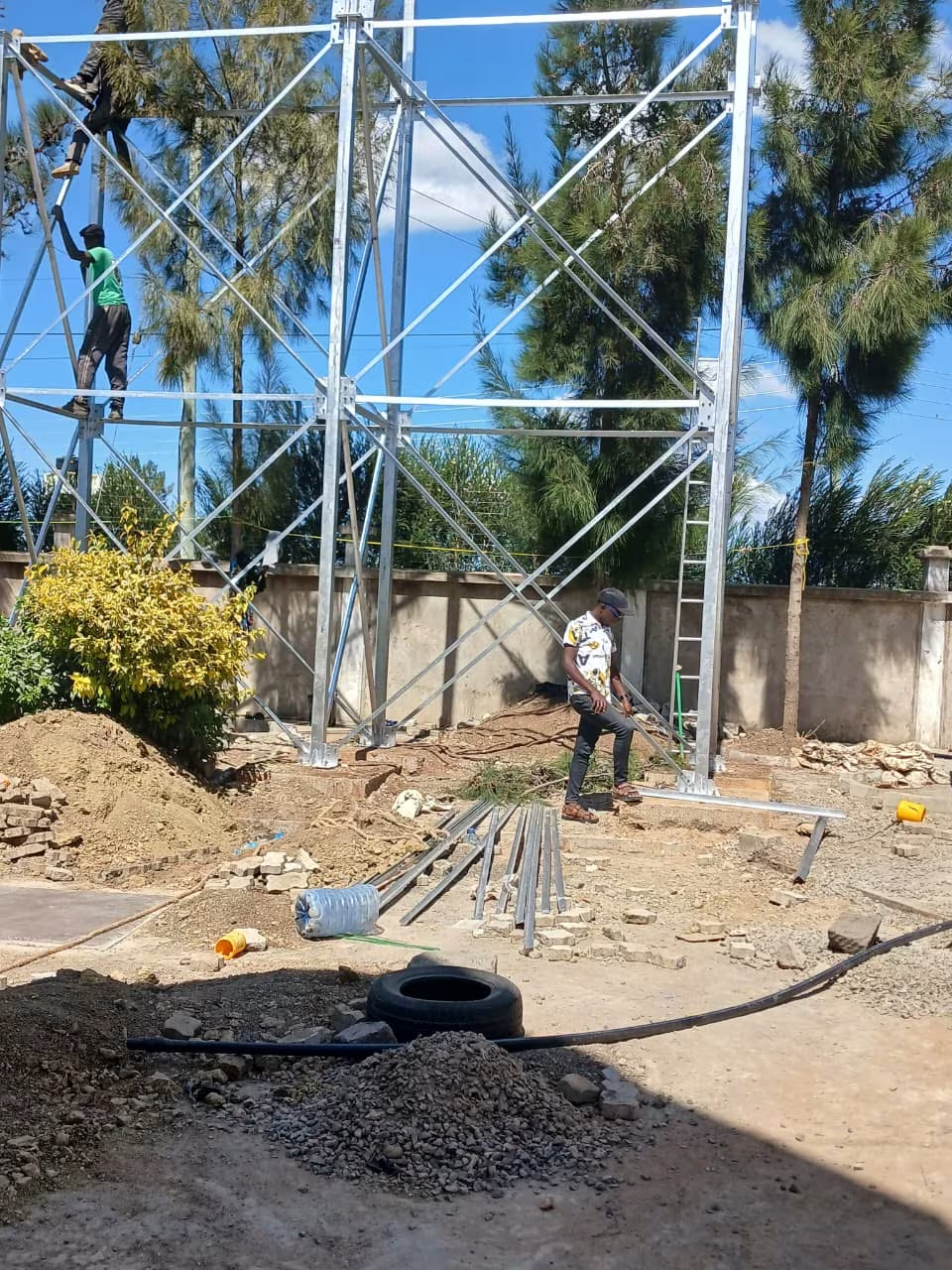
Identify the borehole, storage destinations and blocks each tank serves. Also, show supplementary sources entering the arrangement. The assessor needs to understand where the reported concern sits. A complaint at an upper-floor outlet may involve a different boundary from the source-to-tank service described in the original equipment scope.
Next, name the people who know daily operation and those who approve work. A caretaker may hold useful observations while a committee controls procurement. Bring both roles into the assessment brief. Otherwise, technical findings can reach a decision-maker who lacks the context behind the concern.
Compare occupancy and demand with the reported decline
Record occupied units, shared uses and major changes during the concern period. Include changes in alternative supply where relevant. A tank that no longer recovers may reflect a new demand pattern rather than lower source production. Ask the professional which evidence can distinguish those questions before assuming rehabilitation is necessary.
Estate borehole rehabilitation planning should separate present demand from future occupancy. Mark estimates clearly. An old source test cannot establish the daily requirement of a newly occupied block. The owner needs both a current demand brief and appropriate evidence about the source-supported operating arrangement.
Recover a source-to-tank baseline
Gather completion records, tests, commissioning observations and relevant service history. Also, identify the tank destination and operating conditions behind each delivery figure. A comparison becomes difficult if the original record concerns one route while the current complaint concerns another. Ask the assessor to explain the significance of those differences.
If earlier readings are unreliable, state that limitation. Qualified personnel can explain what present assessment would help. Do not turn a former caretaker’s recollection into an exact historic yield. The committee should understand whether the project compares measured conditions or establishes a first usable baseline.
Use an estate borehole rehabilitation planning responsibility table
The table links evidence with management decisions. It does not assign a technical cause from a resident report. Ask the qualified team to identify which items the actual investigation needs. Also, give each missing record a person who can obtain or clarify it.
| Management area | Evidence needed | Responsibility to agree |
|---|---|---|
| Resident concern | Location, timing and factual description | Who consolidates reports without diagnosing them? |
| Demand context | Occupancy and shared-use changes | Who confirms the present service brief? |
| Source baseline | Relevant tests and delivery records | Who explains comparability and gaps? |
| Condition question | Focused assessment and interpreted findings | Who defines any further investigation? |
| Continuity | Essential uses and usable reserve | Who arranges and communicates temporary measures? |
| Acceptance | Outcome evidence and remaining limitations | Who retains records for future management? |
Work through an illustrative occupied-block change
Consider an educational estate with an assumed daily requirement of 16 cubic metres. A newly occupied section increases the requirement to 22 cubic metres. If assessed source production remains 16 cubic metres, the gap becomes six cubic metres, or 6,000 litres. These assumptions are not unit allowances or results from an actual estate.
The gap alone does not prove source deterioration. The committee needs a plan for the expanded requirement. A rehabilitation proposal cannot promise the extra volume without supporting evidence. Conversely, a documented delivery decline against an unchanged brief would create a different investigation question.
Estate borehole rehabilitation planning should explain which case the evidence supports. This helps the committee avoid announcing a guaranteed supply improvement before the assessor has identified the constraint. Residents benefit from a clear account of the project’s purpose and the limitations that remain.
Keep equipment and distribution questions in view
Ask whether the pump still suits the current destination and demand. The Grundfos selection resource explains why required flow and head matter together. A changed tank or route may alter the duty independently of internal source condition.
The borehole equipping service provides a relevant assessment route for equipment questions. Also, identify who reviews distribution beyond storage. A full tank does not establish adequate service at every outlet, and rehabilitation should not carry an undefined responsibility for all building plumbing.
Define the role of a condition investigation
If an internal question could affect the proposed work, ask the professional which evidence would address it. A focused inspection may contribute useful observations where feasible. The report should explain actual coverage and distinguish visible findings from interpretation. Unknown areas should remain explicit rather than disappear inside a general favourable conclusion.
Estate borehole rehabilitation planning should connect the finding with a proposed next decision. A camera observation cannot establish sustainable daily yield, water quality or structural strength by itself. Ask what other evidence supports the recommendation before approving an intervention attached to a selected image.
Plan continuity and resident communication before scheduling
Describe essential demand, usable reserve and the consequence of an interruption. Ask the provider to explain the programme and uncertainties. Also, identify which separate temporary supply tasks belong to management. An enquiry should not become a promise that a specialist task is confirmed or that restoration will finish within a fixed period.
Nominate one person to issue factual service notices. Explain the agreed assessment purpose and access arrangements without promising outcomes beyond the scope. Qualified personnel should manage technical preparation and work areas. Residents and caretakers should not attempt electrical adjustments, chemical preparation or equipment handling to accelerate the project.
Agree outcome evidence the committee can review
Before work, identify the baseline and proposed post-work checks. Record destination, relevant conditions and important equipment changes. Also, ask how the final explanation will handle combined work packages. If the project changes the pump and source condition together, the committee should not attribute every observed difference to one task without justification.
Request a clear list of achieved observations, remaining limitations and further actions. A demonstration on one day cannot guarantee every future demand or source condition. Estate borehole rehabilitation planning should leave a reviewable record that a new committee or manager can understand without the original team present.
Keep quality and authority questions separate
Arrange appropriate water analysis and advice for intended use. Improved flow or clearer appearance does not establish drinking-water suitability. Also, identify who coordinates quality follow-up if it sits outside the proposed work. The committee should not assume an intervention supplies every evidence item required for the wider water project.
Use WRA’s official guidance to frame current site-specific authority questions. Ask the relevant advisers which requirements apply to the proposed scope. A contractor’s work report cannot replace authority confirmation, and an old document should not be treated as an answer to every changed use.
Questions estate managers commonly ask
Will rehabilitation fix low pressure in every block?
First, identify the source-to-tank and downstream boundaries. The complaint may need a separate distribution assessment. Estate borehole rehabilitation planning should explain the actual constraint rather than promise an internal-source remedy for every outlet concern. A full tank and suitable building service remain different observations.
Can the committee compare quotes from resident complaints alone?
Complaints provide a starting point, but the provider needs factual context and relevant records. Consolidate location, timing and changes in use. Ask which assessment can clarify the issue. Equivalent briefs help providers explain scope differences without pretending the cause is already confirmed.
Should work happen while most residents are away?
Discuss practical access and essential demand with the qualified team. A quieter period may help coordination, but low demand should not replace the occupied service brief. Agree how outcome checks relate to ordinary use and what ongoing records management will keep afterwards.
Does improved delivery guarantee safe drinking water?
No. Quality needs appropriate laboratory evidence and advice for intended use. Keep those records separate from flow and condition findings. The project should identify who coordinates missing quality tasks rather than infer suitability from appearance or successful pumping.
What should accompany the first enquiry?
Send the supply map, source records, equipment history and current occupancy information. Include factual complaints and known changes. Finally, explain reserve needs and the site contact. This helps the provider define an appropriate assessment before discussing intervention scope.
Request a shared-supply decision with clear boundaries
Use estate borehole rehabilitation planning to connect source evidence with demand, distribution and continuity responsibilities. Ask for a justified scope and measurable outcome record. Finally, retain the file for future managers. A useful proposal explains what the project addresses and which wider service questions remain.
Request an estate rehabilitation assessment enquiry from Masterpiece Hydro-Solutions. Share the present brief and available evidence. Ask whether an appropriate assessment is available and how its findings would support any later work and acceptance decision.