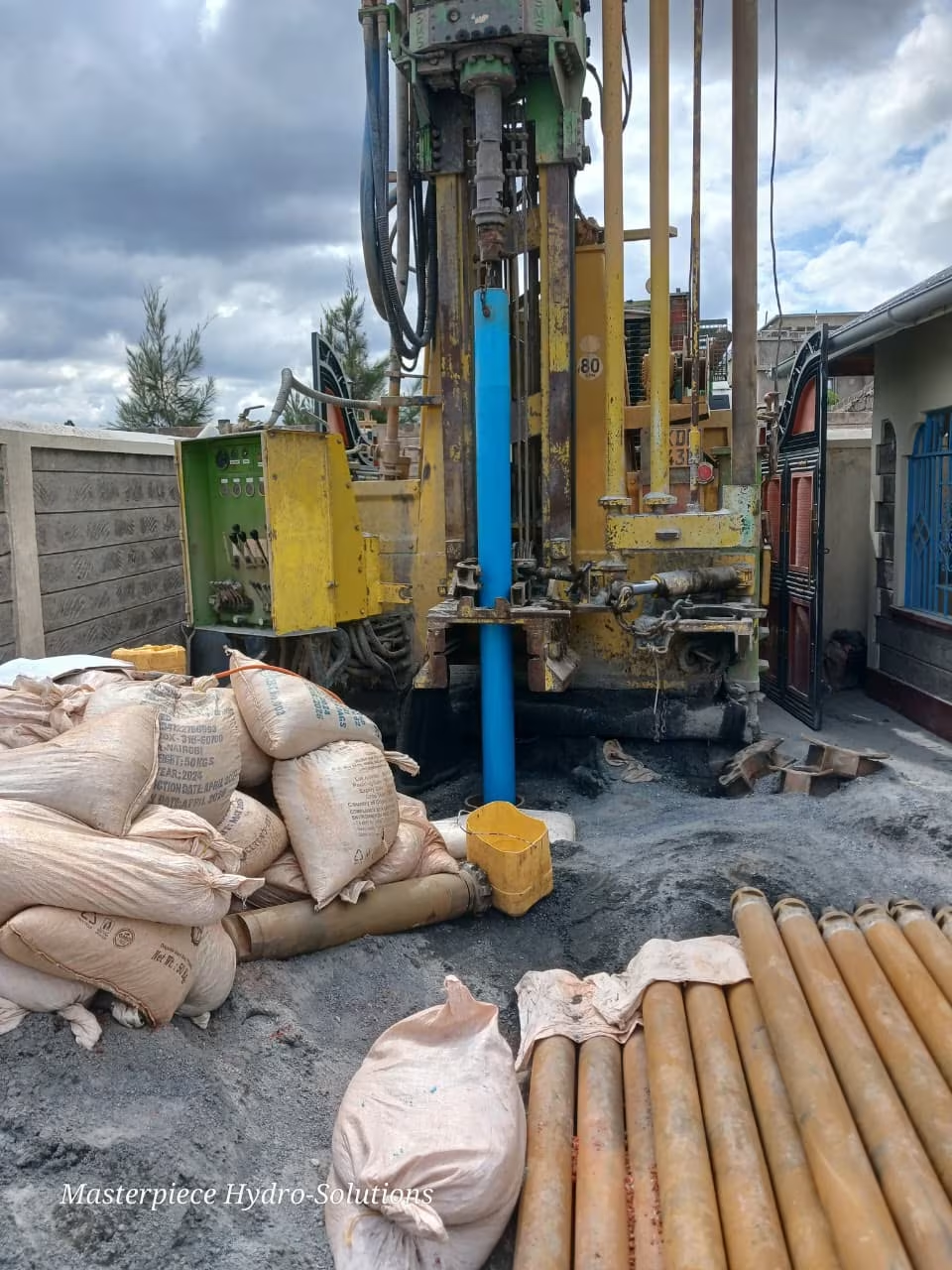
Farm borehole drilling should begin with a seasonal water plan, a source assessment and a clear project boundary. Drilling a hole and installing a large pump do not automatically establish a useful farm supply. Demand, source performance, storage and the delivery arrangement need to work together.
This guide helps Kenyan farm owners prepare a practical brief before comparing contractors. See Masterpiece Hydro-Solutions borehole drilling or request a farm water-project assessment. Explain the intended uses, development stage and available records, including information that remains uncertain.
Separate the farm’s different water uses
First, list irrigation, livestock, cleaning, staff use and any other activities the supply should serve. These uses may have different timing, quality and continuity requirements. Do not combine them into one unexplained daily figure without showing how the estimate was built.
Also, identify which demand is essential and which can move to another period. The operating plan for an irrigation block may have flexibility that a critical cleaning or domestic requirement does not. Those priorities affect storage and backup discussions.
Where specialist water requirements apply, ask the relevant agricultural or technical adviser to define them. A drilling contractor should receive a clear use brief rather than be expected to infer crop, animal or process requirements from the farm’s size alone.
Prepare seasonal evidence for farm borehole drilling
Record how demand changes through the year and across the production cycle. Available meter readings, irrigation schedules and existing supply records provide useful context. Also, explain whether the farm is operating now or planning a new activity.
Separate measured use from estimates. If an intended crop area or production unit has not started, label its demand as a scenario for assessment. Avoid presenting an early business plan as proof that the source must or will deliver a particular quantity.
Farm borehole drilling decisions should also distinguish current operations from later expansion. Ask the assessor to explain which early infrastructure choices could support another phase and which decisions require fresh evidence later.
Investigate the source before promising production
A hydrogeological assessment helps inform the drilling decision and proposed location. However, it does not guarantee groundwater quantity, quality or a successful commercial outcome. Ask which evidence informs the recommendations and what limitations remain.
Review hydrogeological survey services before confirming the drilling scope. Available local records can provide context, but a neighbouring borehole’s performance is not proof of the result on your plot.
Next, agree what drilling and testing will need to establish. The project should include a decision point for reviewing actual source evidence before confirming a final pump and delivery arrangement. This keeps equipment selection separate from an early depth recommendation.
Review the site and water-use position
Ask the relevant authority to confirm current requirements for the site, project stage and intended use. WRA’s permitting guidance distinguishes authorisation to construct abstraction works from the subsequent water permit process.
Also, identify who gathers supporting records and manages each authority enquiry or submission. If the contractor offers assistance, define what the scope includes. Do not assume that an equipment or drilling package guarantees approval or a particular processing period.
Keep the intended use accurate. An early discussion about one activity should not silently become a proposal for several expanded uses. Farm borehole drilling needs the applicable water-use questions to remain connected to the actual development plan.
Plan access around farm operations
Describe the route from the main access point to the proposed work area. Gates, turns, overhead constraints and ground conditions need assessment by the contractor. Also, explain seasonal access problems rather than assuming that a route available today will remain suitable at mobilisation.
Identify working areas that must remain available for livestock movement, vehicles or crop activities. Ask the contractor how materials, equipment and exclusion areas will be organised. Qualified personnel should assess site-specific access and working-space requirements.
Next, agree responsibility for runoff, waste and reinstatement. The brief should address how the work interfaces with existing drainage and productive areas. A site visit can help identify tasks that a generic drilling quote might otherwise leave unresolved.
Map delivery points before choosing a pump
A source at one part of the farm may need to serve storage or users at different elevations. Provide a simple labelled layout and identify known pipe routes. Also, distinguish water entering a tank from the pressure required farther along an irrigation or distribution system.
Grundfos’s pump-selection guidance explains why flow and total head must be considered together. Drilled depth alone does not define the equipment duty.
For later installation scope, review borehole equipping services. Final selection should use relevant pumping water levels, source evidence and delivery conditions rather than a broad request for a powerful farm pump.
Use a phased-farm example
Consider an illustrative farm developing two irrigation blocks at different times. Assume the initial planning scenario needs 14 cubic metres daily, while a later scenario considers 24 cubic metres. These figures are educational assumptions, not crop-water requirements or predictions for a particular source.
First, assess the present scenario against the source evidence. Next, identify the additional information and infrastructure needed to evaluate the later phase. The owner should know which capabilities are installed now and which remain options requiring another decision.
Do not treat a future-capable pipe route or a large tank as proof of future source capacity. Farm borehole drilling should provide clear stage boundaries so that one investment does not depend on an unverified later yield.
Agree the records needed at each stage
A clear record set makes the drilling and equipping decisions easier to review. Ask for the agreed deliverables in the quotation and identify who receives them. Also, keep the site identity consistent across reports, photographs and equipment records.
| Stage | Useful record | Decision it supports |
|---|---|---|
| Before drilling | Demand brief, survey information and authority position | Whether the proposed scope and location are ready to proceed |
| During construction | Progress, formation and material records | Understanding completed work and proposed variations |
| After source completion | Completion information and relevant test results | What the source evidence supports |
| Before equipping | Duty point and equipment schedule | How the proposed system serves the delivery brief |
| At handover | Commissioning evidence and operating guidance | Acceptance, maintenance planning and fault reporting |
Assess quality for each intended use
Clear-looking groundwater does not establish suitability for every farm activity. Request appropriate laboratory analysis and interpretation for the intended use. Irrigation, livestock, domestic use and particular processes can raise different questions that need suitable professional input.
Also, ask who plans sampling, how sample identity links to the source and which limitations apply to the report. If treatment is proposed, the recommendation should follow relevant evidence rather than a generic assumption that every borehole needs the same solution.
Keep water-quality decisions separate from a pump’s delivery performance. A useful flow demonstration cannot prove suitability for drinking or another specialised use.
Compare complete scope and operational costs
A farm borehole drilling quotation should identify mobilisation, drilling, construction materials, testing and completion records as applicable. Ask which tasks are included, excluded or still provisional. Also, distinguish the source-development price from the later equipping and power arrangement.
Confirm VAT treatment, quote validity and how variations will be authorised. Existing site conditions or revised quantities may affect the work, so the agreement should explain the evidence and approval process for a change.
For ongoing operation, compare suitable power and storage options using the assessed duty. Do not accept unsupported fuel-saving or payback claims as a substitute for a water-supply plan. The useful result is delivered water under agreed conditions.
Prepare the farm’s operating handover
Identify who will operate the supply and who approves technical or scope changes. Seasonal staff or a change of farm manager can otherwise make important knowledge disappear. Keep the operating guidance and records accessible to the responsible owner.
Ask the contractor to explain normal controls, useful observations and faults requiring qualified support. Owners should not bypass protection or attempt electrical, lifting or chemical work without appropriate competence. Routine records can instead help a contractor understand changes.
Also, agree a plan for interruptions. Useful storage, demand priorities and an alternative assessed supply can matter during maintenance. Record actual support commitments rather than assuming immediate attendance is part of every warranty.
Frequently asked farm questions
Can acreage alone determine the borehole size?
No. Intended activities, seasonal demand, source evidence and delivery conditions all matter. Ask the relevant advisers to define use requirements, then compare them with the assessed source. Farm area alone does not establish sustainable yield or suitable pump capacity.
Should I select solar equipment before drilling?
You can discuss possible operating arrangements early. However, final selection needs relevant source and delivery evidence. Keep initial assumptions explicit and review test results before committing to the final equipment duty and package.
Does a productive neighbouring borehole guarantee success?
No. Neighbouring records can provide context, but they do not guarantee the conditions on your site. Ask the surveyor to explain how available evidence informs the recommendation and what uncertainties drilling and testing must still resolve.
Can the project support later farm expansion?
That requires a separate assessed scenario. Identify which infrastructure provisions may be useful now, while keeping future source performance and demand uncertain until supported by evidence. Do not convert a possible expansion into a guaranteed capacity claim.
What should I send with my first enquiry?
Provide the county, farm activities, seasonal water-use information and a simple layout. Also, include available survey or existing source records. Label unknowns so that the contractor can explain the next assessment stage and the scope of a useful quote.
Request a staged farm water plan
Useful farm borehole drilling links the production plan with source uncertainty, delivery conditions and clear responsibilities. First, describe current and seasonal demand. Next, agree assessment and construction deliverables. Finally, review actual source evidence before selecting the pumping arrangement.
Request a farm borehole assessment from Masterpiece Hydro-Solutions. Share the activities the supply should support and the records already available. The aim is a site-specific project brief with reviewable decisions and practical acceptance conditions.