Farm borehole rehabilitation planning should begin with the recorded supply concern and the crop calendar. A new irrigation requirement can expose a shortfall without proving that the source needs rehabilitation. First, separate changing demand from measured deterioration. Then ask qualified professionals which evidence supports work and how its result would serve the farm’s actual timetable.
Explore Masterpiece Hydro-Solutions borehole rehabilitation and request a farm rehabilitation assessment enquiry. Ask whether an appropriate assessment is available for your situation. This guide concerns the existing source, continuity and outcome evidence rather than crop-water prescriptions or a guaranteed production increase.
Start farm borehole rehabilitation planning with the service change
Describe which field activity now lacks water and when the problem appears. Record whether the concern involves lower measured delivery, less operating time or storage that no longer recovers. Also, identify changes in planted area and other farm uses. A broad statement that irrigation is difficult does not locate the constraint.
Next, gather earlier observations that genuinely describe a comparable arrangement. The same tank, route and equipment conditions matter to the discussion. Mark uncertain recollections clearly. Qualified personnel should explain what the evidence supports before anyone presents rehabilitation as the established answer to the farm’s water concern.
Put the cropping timetable beside the source record
List when each planted block needs its assessed water service. Obtain suitable agronomic advice for demand assumptions rather than copy a universal allowance. Also, show livestock, staff or processing uses sharing the source. The water-project assessor needs the whole brief, even where the immediate complaint comes from one field.
Separate the present planted area from expansion. If the owner adds a new block, the changed daily requirement should appear as a separate scenario. Farm borehole rehabilitation planning should not describe an inability to supply that expansion as proof that the borehole lost its former capacity. The source evidence and new demand need comparison.
Check source condition and equipment questions separately
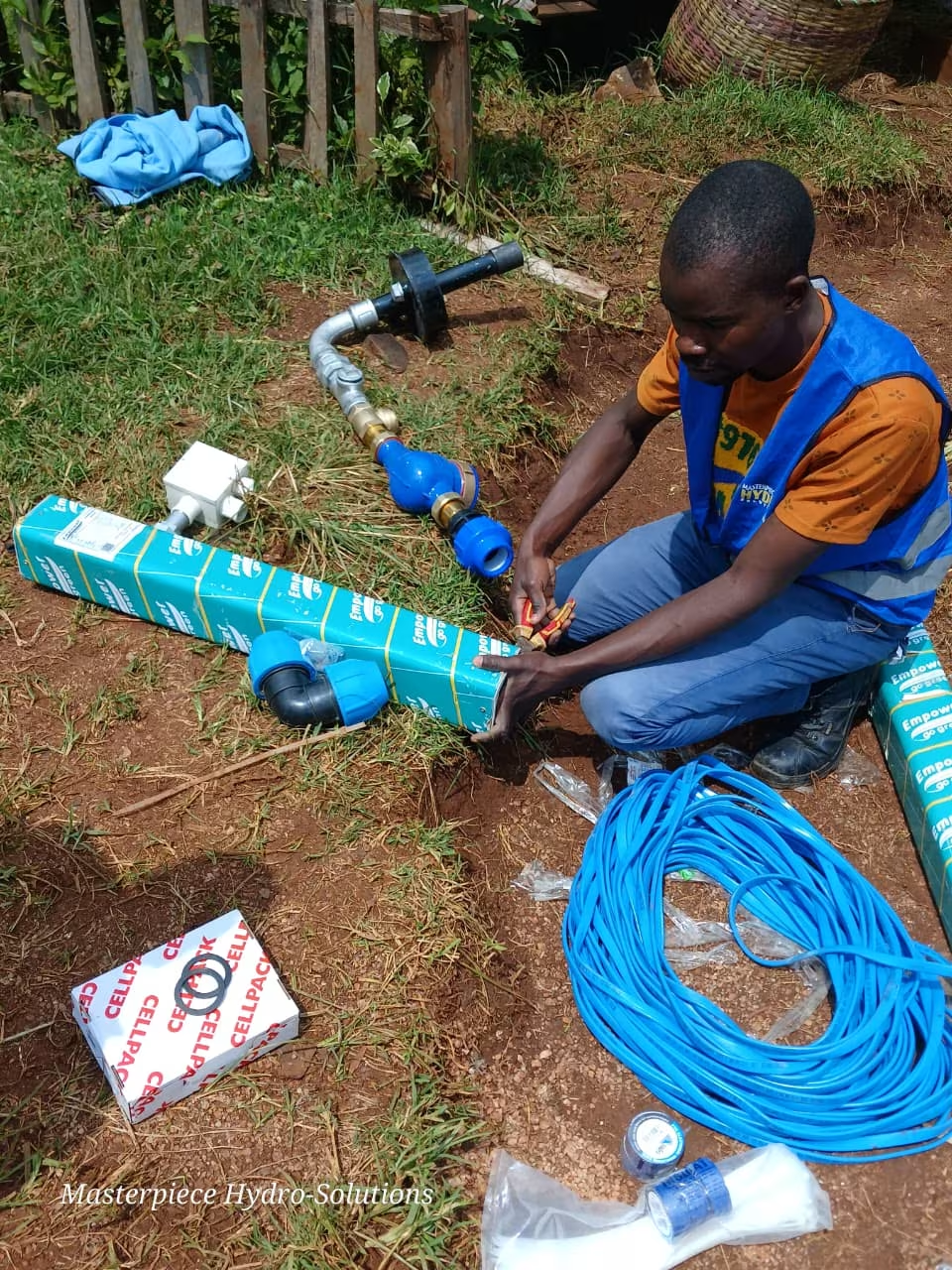
Provide the completion record, test-pumping report and relevant equipment history. Ask what further assessment could distinguish the source concern from the delivery arrangement. The Grundfos pump-selection resource explains the relationship between required flow and head. A changed destination may affect the equipment duty without establishing a source defect.
Keep pumping water level separate from drilled and setting depths. The delivery assessment also considers elevation, route losses and required outlet pressure. Qualified personnel should confirm relevant inputs. An intervention proposal needs to address the identified constraint, rather than assume that every water shortage requires work inside the borehole.
Use a farm borehole rehabilitation planning table
Use this table to connect the production calendar with the investigation. It does not prescribe a field operating method. Ask the responsible professionals which evidence and decisions apply to the actual farm. Also, identify the person who can supply each missing record before the scope becomes final.
| Farm question | Evidence to bring | Decision before work |
|---|---|---|
| Which service changed? | Dated delivery and interruption records | Is there a comparable baseline? |
| Did planted demand increase? | Current and previous crop plans | Does the concern involve decline or expansion? |
| Which uses need continuity? | Essential-use and reserve brief | Who arranges separate temporary supply? |
| What condition finding supports intervention? | Interpreted inspection or other assessment | What uncertainty must the next task resolve? |
| What result would benefit the farm? | Defined delivery objective and timing | How will post-work evidence show the outcome? |
Work through an illustrative irrigation expansion
Consider an educational farm whose ordinary requirement increases from 12 to 18 cubic metres daily. Assume the source arrangement still provides 12 cubic metres under the assessed conditions. The gap becomes six cubic metres, or 6,000 litres. These values are arbitrary assumptions, not crop allowances or findings from a real farm.
The gap does not demonstrate a decline. It shows that the assumed requirement changed. The assessor must consider whether the source can support another arrangement or whether the farm needs a different water plan. A rehabilitation proposal cannot responsibly promise to create the missing volume simply because the owner has expanded planting.
Now imagine reliable records show lower delivery against an unchanged brief. That creates a different investigation question. Farm borehole rehabilitation planning should preserve this distinction so the professional can select relevant condition and performance checks. The owner can then judge whether proposed work addresses the recorded issue.
Identify when a visual investigation could help
If an internal-condition question matters, ask what camera evidence could add. The borehole inspection service offers a relevant enquiry route. Ask for the intended question, practical coverage and reporting limitations. A video visit should not become a default purchase detached from the concern.
The report should distinguish observations from professional interpretation and unknown areas. Images cannot establish sustainable yield or certify water quality. A visible feature may support further assessment without proving the cause of the farm’s shortfall. The proposed intervention should follow the joined evidence rather than one selected image.
Schedule around continuity rather than an assumed quick recovery
Discuss the farm’s critical periods and available usable reserve. The contractor should explain the proposed sequence and its uncertainties. Also, identify who coordinates separate temporary water arrangements where needed. An assessment enquiry does not establish an exact restoration period or confirm every narrower task will be available.
Do not use the urgency of a crop stage to bypass the evidence discussion. Qualified personnel need to assess methods and access. Owners should not attempt chemical treatment, equipment handling or control changes. A clear continuity plan allows the project to consider necessary decisions without turning urgency into unsupported technical assumptions.
Agree the outcome comparison before authorising intervention
Ask what the team will measure before and after work. Record operating conditions, relevant equipment and the destination served. Also, identify changes that could affect comparability. If the project alters the pump or delivery route alongside rehabilitation, the final explanation should acknowledge that combined scope rather than attribute every change to one task.
The owner should understand whether the evidence demonstrates the agreed service, an improvement under stated conditions or an inconclusive result. None automatically proves a permanent year-round outcome. Farm borehole rehabilitation planning benefits from clear acceptance wording and a named route for reviewing unresolved questions.
Keep irrigation quality and source limits visible
Ask appropriate advisers which water-quality evidence the intended farm uses need. Clear appearance and restored delivery do not establish suitability for every crop, animal or household use. Also, identify whether laboratory assessment sits within or outside the proposed work. The owner should arrange missing tasks explicitly.
Source yield, installed pump capacity and demand remain distinct after work. A larger motor cannot create groundwater, and storage cannot cure a continuing daily deficit. Keep these limits in the operating brief. If the farm changes planting again, update the requirement before expecting the assessed arrangement to support it.
Retain records where future farm decisions happen
Keep the accepted scope, baseline, work record and outcome evidence together. Include the relevant crop plan and demand assumptions. Also, record later equipment or destination changes. This gives the next manager a practical account of what the project addressed rather than a general statement that the borehole received rehabilitation.
Nominate someone to retain ordinary delivery and interruption notes. Qualified professionals can explain which observations help later assessment. The operator should report changes through the support route without altering technical settings. A usable record helps distinguish another demand increase from a new service concern.
Questions farm owners ask before work
Does missed irrigation prove the borehole needs rehabilitation?
No. Compare demand, operating time, delivery and source evidence first. Farm borehole rehabilitation planning should identify the actual constraint before selecting a response. A new field or changed route can create a different requirement without proving that the source deteriorated.
Should work wait until after harvest?
Discuss timing with the qualified team and relevant farm advisers. The appropriate programme depends on the concern, essential uses and available continuity. Do not infer a universal seasonal rule or guaranteed work duration. The owner needs a project-specific sequence and clear responsibilities.
Can rehabilitation guarantee enough water for more land?
No universal guarantee follows. The source must support the proposed abstraction, and the delivery arrangement must fit the duty. Present expansion separately and ask what evidence supports it. A desired planting area cannot establish sustainable groundwater or the outcome of an intervention.
What should the contractor measure afterwards?
Agree evidence related to the stated objective before work. It may involve delivery observations under recorded conditions alongside relevant condition findings. The professional should explain limitations and comparability. A completed invoice alone does not demonstrate the farm’s intended supply outcome.
What information helps an initial enquiry?
Send source records, equipment history, the observed change and current crop timetable. Include other shared uses, usable storage and access constraints. Finally, mark missing measurements. This helps the provider define an appropriate assessment before discussing specific intervention scope.
Request a crop-aware evidence brief
Use farm borehole rehabilitation planning to separate decline from changed demand and define a realistic outcome comparison. Keep continuity and quality decisions alongside the technical assessment. A useful proposal explains what evidence supports work and what the farm must still resolve beyond that scope.
Request a farm rehabilitation assessment enquiry from Masterpiece Hydro-Solutions. Share the current timetable and source evidence. Ask whether an appropriate assessment is available and what baseline, work boundaries and post-work records the proposed project would require.