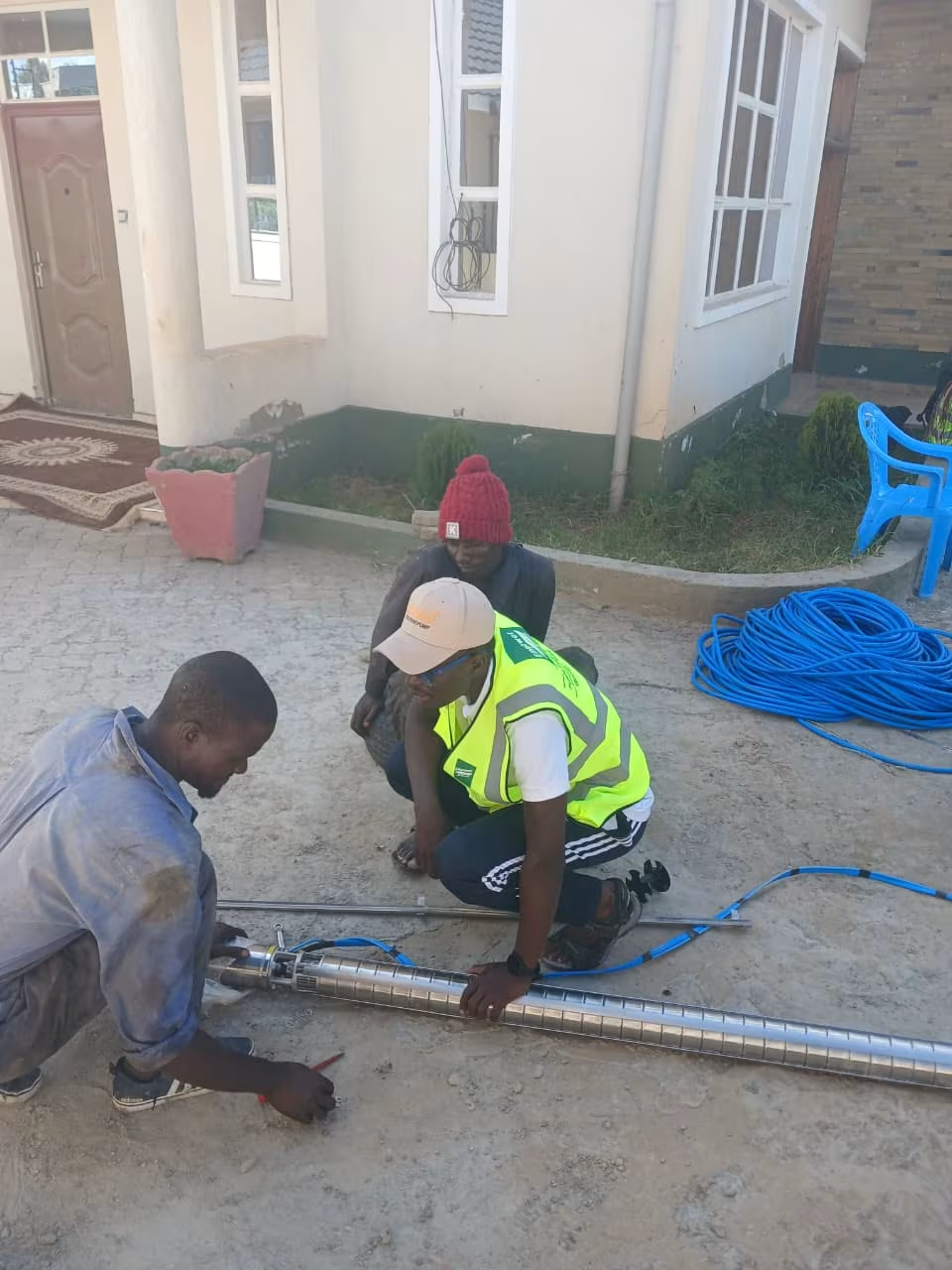
Lost borehole equipment evidence should help a qualified investigator understand what may be present, where information is uncertain and which decision the inspection needs to support. A reported loss does not establish a recoverable position. Owners should preserve the chronology and available identities before requesting an assessed investigation or separate retrieval proposal.
Explore Masterpiece Hydro-Solutions borehole inspection and enquire about investigating reported lost equipment. Explain the known circumstances without attempting further access. Confirm which specialist scope may be available rather than assume a camera visit includes recovery or guarantees that the object can be reached.
Establish what is reported missing
Gather available product names, identifiable records and relevant photographs obtained before the loss. Label estimates and recollections clearly. A description such as metal tool may communicate concern, but a qualified provider needs to know what evidence supports the item’s proposed identity.
Distinguish an entire assembly from a component reported as detached. Ask the relevant original parties for factual records where appropriate. The owner should not invent a complete equipment description by combining assumptions from unrelated invoices or images.
Also identify what remains in the borehole according to the available records. Installed equipment can affect the investigation question and access assessment. A missing-item enquiry should not silently assume an empty, unobstructed path simply because the owner knows the drilled depth.
Build lost borehole equipment evidence around chronology
Record when the item was last known to be accounted for, when the loss was reported and who supplied each account. Preserve the distinction between observed events and later interpretation. A confident retelling should not replace the original person’s more limited statement.
Include any subsequent professional activity and the records available for it. An attempted investigation or repair may have changed the evidence. Do not describe a proposed intervention as completed unless an attributable record supports that statement.
Keep unresolved gaps explicit. The owner may know that an item is missing without knowing whether it entered the borehole or its current position. The appropriate provider should explain how that uncertainty affects the investigation rather than price a recovery promise around an assumed location.
Ask what visual investigation can establish
The EPA borehole-camera overview describes visual examination and possible support for investigations involving lost items. It also identifies viewing constraints. This gives context for a targeted scope, not a guarantee that a particular object will be visible, identifiable or recoverable.
Ask the inspection provider which information it needs to assess feasibility. Existing equipment, condition and access may require qualified review. Owners should not open components, lower objects or remove equipment personally to help the camera reach its target.
Request a distinction between seeing an obstruction and confirming its identity. A visible shape may support a hypothesis without proving the exact product or material. The report should explain the evidence and level of certainty relevant to the next decision.
Use an investigation-brief table
| Brief item | Available owner evidence | Question for the qualified provider |
|---|---|---|
| Reported item | Product records, previous images and attributed accounts | How confidently can identity be established? |
| Event history | Known chronology and subsequent activity | Which gaps affect the investigation? |
| Existing installation | Construction and equipment records | What access constraints need assessment? |
| Position | Reported location with stated source and uncertainty | What reference could an inspection support? |
| Next intervention | The owner’s decision purpose | What separate scope and evidence would be required? |
Use the table to organise an enquiry rather than design retrieval. The qualified team should determine suitable methods, equipment and safe procedures. The owner needs a clearly bounded decision package without selecting fishing tools or attempting an improvised recovery.
Keep position evidence carefully referenced
A reported equipment setting does not automatically identify the current location of a lost item. Ask the provider to distinguish historical installation information from an observed position. The report should explain the reference used and any limitation affecting location confidence.
Similarly, a camera’s achieved extent does not establish that the object lies immediately beyond it. If access stops before the target is seen, record what was observed and what remains unknown. An unviewed interval should not become an invented location.
Ask for relevant video or report references within the agreed scope. A selected still needs context and attribution. The owner should be able to connect the position discussion with the actual observation rather than rely on a number forwarded without explanation.
Consider a presumed-location example
Imagine a hypothetical owner reporting that a component must be at the former pump setting because it went missing during related work. The available chronology does not confirm its final position. An inspection quotation based on that assumption could leave both feasibility and the investigation target misunderstood.
A more useful enquiry labels the reported setting as historical information and states what is actually known about the event. The qualified provider can assess the investigation needs and explain which findings would support a later proposal. The owner avoids turning a plausible guess into a confirmed depth.
This example does not identify a retrieval method or decide whether recovery is possible. It shows why position confidence belongs in the evidence record. Actual intervention decisions require the responsible professionals’ assessment of current conditions.
Keep lost borehole equipment evidence separate from retrieval approval
An inspection can inform a retrieval discussion without including the intervention. Ask the provider to identify separate technical, commercial and access requirements. Confirm availability of any necessary specialist work rather than assume the inspection team will perform it during the same visit.
Request a reasoned proposal if follow-up is recommended. It should identify the findings relied upon, intended purpose and important uncertainty. A visible object does not guarantee that it can be safely removed or that the borehole will be unaffected.
Keep owner approval of expenditure separate from technical responsibility. The owner should not select a tool, lifting arrangement or method to secure a fixed price. Qualified parties need to determine suitability and safe limits for the actual intervention.
Stop informal attempts from obscuring the evidence
Owners should not lower additional items, pull on unidentified components or improvise access to test a theory. Relevant work involves specialist hazards and needs an assessed scope. Use the agreed professional contact and preserve the information available.
If other activity has already occurred, report what is known without concealment or unsupported blame. The chronology may matter to the assessment. Ask the responsible parties for records rather than reconstruct an account designed to make one explanation appear certain.
Also keep unauthorised visitors outside controlled areas. A curious observer should not approach an opening or lifting operation to obtain a photograph. The qualified provider should explain safe documentation arrangements within its actual scope.
Assess the complete follow-up decision
Ask what the proposed action aims to achieve and how the result would be evaluated. Removing one item, restoring access and returning the supply to intended use are different milestones. The owner should not treat the first as automatic proof of the last.
Source performance may require appropriate testing and professional interpretation after relevant work. Water quality is separate again. A recovered object or clear-looking discharge does not establish sustainable yield or drinking-water suitability.
Where recovery remains uncertain, ask the appropriate advisers to explain realistic next options and their evidence needs. The scope should preserve limitations rather than promise a result simply because the owner urgently needs water. This guide supplies no costs or guaranteed outcome.
Retain a factual completion record
Request the achieved inspection coverage, attributable observations and unresolved questions. If later work occurs, keep its findings and changes linked to the original enquiry. A final statement saying issue resolved should identify exactly which question the evidence answered.
Record accepted equipment identities and any changes to the installation where relevant. Future providers need the current arrangement and its history. Do not leave an original construction schedule appearing current if a later intervention altered the configuration.
Keep the report and agreed original recording accessible to the owner. Respect appropriate privacy and permitted sharing arrangements. An organised evidence pack supports future professional review without turning uncertainty into an invented account of the loss.
Questions about reported lost items
Will a camera always find the object?
No. Ask the qualified provider about access, visibility and the evidence available for the actual installation. The method may inform a targeted question without reaching or identifying every reported item.
Does seeing the item guarantee recovery?
No. Retrieval requires its own assessed scope, competent parties and relevant limits. A visual finding can support planning without establishing that removal will be possible or that the complete supply can immediately return to service.
Can I try a simple retrieval first?
No. Avoid improvised lifting, lowering objects or handling unidentified components. Request qualified assessment and preserve the chronology. An informal attempt can create hazards and leave the professional team with a changed, poorly documented situation.
What if I cannot identify the item?
Provide the available records and state the uncertainty. Ask which evidence could improve the assessment. A responsible report should distinguish a visible observation from a confirmed identity rather than invent a product description.
Request a targeted investigation enquiry
Useful lost borehole equipment evidence connects the reported item with an honest chronology and a defined decision. Send original records, available images and known gaps. Ask the provider to identify what the inspection can establish before discussing a separately assessed intervention.
Enquire about inspecting a borehole with reported lost equipment. Confirm which specialist scope may be available and what remains uncertain. A clear investigation supports informed next steps without retrieval instructions or guaranteed recovery claims.