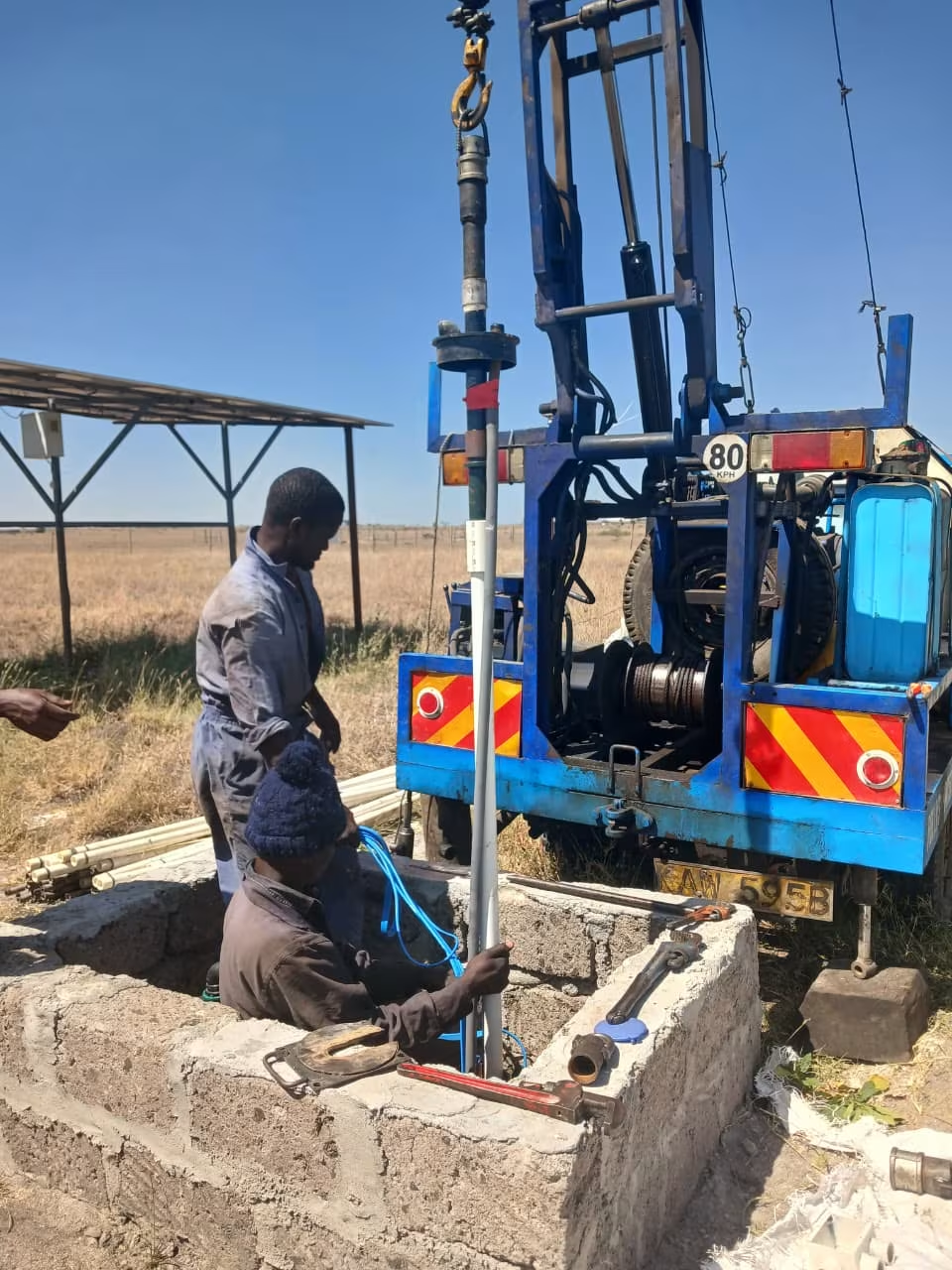
An old borehole restoration assessment should examine the existing asset and present water requirement before choosing work. Age alone cannot identify the right intervention or the amount of water available. First, recover the records you can verify. Then ask qualified professionals which condition and performance questions need investigation before a restoration proposal becomes specific.
Explore Masterpiece Hydro-Solutions borehole rehabilitation and request an older-source assessment enquiry. Explain whether the borehole remains in use and what has changed. Ask whether an appropriate assessment is available rather than assume every older installation has the same restoration options.
Start the old borehole restoration assessment with a history map
List the known construction date, major equipment changes and previous interventions. Also, mark which events have supporting documents. The owner’s memory can provide useful context, but it should not become a precise construction record. Keep uncertain dates and descriptions visibly uncertain so the assessor understands the evidence quality.
Next, separate the original borehole from later equipment. A recently fitted pump does not make all construction recent. Similarly, an old completion report does not describe every later modification. The history map should help the professional identify what remains in place and which records may concern an earlier arrangement.
Identify the present service concern
Explain whether the project concerns lower delivery, recurring interruptions, a condition finding or a planned change of use. These questions may need different assessments. Also, identify the destination and users affected. A general statement that the source is old gives the provider less useful information than a dated account of the current concern.
Distinguish restoration of a recorded service from expansion beyond it. A source that once served a small building does not automatically support a larger development. Old borehole restoration assessment should preserve that difference. The team needs the owner’s present demand without treating it as proof that the source previously supplied the same volume.
Compare the record with the asset that exists today
Gather construction, testing, equipment and maintenance information. Ask the assessor to identify contradictions or missing links. For example, an equipment invoice may name a model that differs from a later service report. Neither record should quietly replace the other without explanation. A traceable clarification helps future decisions as well as the immediate enquiry.
If historical information is absent, ask what present assessment could establish. Some details may remain unknown. The professional should distinguish observed current condition from reconstructed assumptions. An honest gap list is more useful than a polished new file that appears to certify construction nobody has verified.
Use an old borehole restoration assessment evidence table
The table supports discussion with the responsible professionals. It does not prescribe a repair or determine feasibility from age. First, identify each question relevant to your source. Then ask which evidence the team needs before it can explain a defensible next stage.
| Older-source question | Evidence to discuss | Decision it informs |
|---|---|---|
| What construction does the record describe? | Completion information and approved changes | Which current features need clarification? |
| What service did the source previously provide? | Dated tests and operating records | Is the desired comparison supported? |
| What equipment now remains? | Identities, service history and qualified inspection | Which components merit separate assessment? |
| What internal condition needs investigation? | Focused visual scope and interpreted findings | Could another assessment alter the proposed work? |
| What does the owner need now? | Current demand, destination and continuity brief | Does the project concern restoration or expansion? |
| What would establish the outcome? | Agreed baseline and post-work evidence | How will the owner judge the completed scope? |
Give inspection findings a bounded role
Ask whether a camera assessment could answer an identified internal-condition question. The US EPA borehole-camera overview describes visual examination inside boreholes. The provider should explain its actual scope, accessible extent and limits, rather than promise that an older source can always receive a complete inspection.
The borehole inspection service provides a relevant enquiry route. Request a distinction between visible findings, interpretation and unknown areas. Images cannot certify structural strength, establish sustainable yield or prove drinking-water suitability. Each of those questions needs appropriate evidence beyond appearance.
Work through a fictional inherited-source file
Consider an educational owner who acquires responsibility for an older operating borehole. The file contains an original completion report, several later invoices and no clear record of one equipment change. The owner reports slower recovery of a storage tank. These assumptions illustrate evidence planning, not a real project or confirmed restoration need.
First, the assessor separates construction history from current equipment and demand. Next, the owner identifies whether tank use increased during the period of concern. A focused condition investigation may help if a specific visual question remains. However, neither the source’s age nor the incomplete file establishes the cause of slower tank recovery.
The old borehole restoration assessment then defines the evidence needed for a present baseline. It may support a limited further task, an equipment review or a restoration discussion. The useful result is a reasoned next decision, not an automatic intervention attached to an old construction date.
Check the equipment duty before attributing decline
A changed tank, route or use can affect the water service expected from retained equipment. Required flow and head belong together, as the Grundfos pump-selection resource explains. Ask the equipment assessor to identify the current duty rather than assume the original pump selection still fits.
Keep drilled depth, pumping water level and pump setting depth distinct. Total dynamic head also considers delivery elevation, pipe losses and required outlet pressure. An older record may inform these questions without settling present measurements. The assessor should explain what it can confirm and what requires further work.
Compare staged restoration decisions
Request a sequence that separates assessment, proposed intervention and outcome verification. The owner should know what can be approved now and what depends on later findings. Also, ask how another finding changes the scope. A staged proposal is useful when the record contains genuine uncertainty about the existing asset.
Old borehole restoration assessment should not imply that more work always offers more water. If the source-supported supply does not match demand, a different water-plan decision may remain necessary. Pump capacity, source yield and user requirement are distinct. A larger motor cannot replace evidence about available groundwater.
Set a present baseline when history is incomplete
Ask qualified personnel which observations will support the proposed comparison. Record destination, operating conditions and relevant equipment identities. Also, retain limitations. A present baseline cannot prove undocumented former performance, but it can provide an honest reference for assessing subsequent work and future changes.
Agree how the post-work record will connect with that baseline. A broad statement that the borehole received restoration does not show the achieved service. Ask which outcome the professional can measure and what remains uncertain. Avoid turning a remembered historic yield into an unsupported acceptance guarantee.
Keep practical continuity and quality responsibilities clear
Describe essential uses, reserve storage and access restrictions before scheduling assessment. Qualified personnel should plan technical preparation and equipment handling. The owner should not attempt lifting, electrical changes or chemical work. Also, identify who communicates interruptions and arranges any separate temporary supply the site requires.
Water quality needs appropriate laboratory analysis and advice for intended use. A clearer appearance or improved delivery does not establish drinking-water suitability. Keep relevant authority questions separate too. Ask the responsible advisers what current requirements apply to the existing source and proposed work rather than infer permission from an old document.
Questions owners ask about older boreholes
Does age alone make restoration necessary?
No. Age provides context, while current condition and performance need evidence. Ask what service concern the proposed work addresses. An old borehole restoration assessment should identify the actual problem and uncertainty rather than treat every older source as a candidate for the same intervention.
Can missing history be recreated accurately?
Some current facts may be established through appropriate assessment, while others remain uncertain. Ask the professional to distinguish observation from assumption. Do not present a reconstructed account as the original construction record. Preserve gaps so later readers understand the basis of each conclusion.
Should all old equipment be replaced?
Ask for a qualified condition and compatibility assessment. Retention and replacement each need a reason against the current duty. A working component is not automatically suitable, but age alone does not explain every proposed purchase. Request a clear schedule of findings and responsibilities.
Can restoration guarantee the source’s original output?
No universal guarantee follows from the work label. Ask what the old record established and whether it supports comparison today. Agree a measurable objective with limitations. The current source and operating arrangement may differ from conditions behind an earlier observation.
What should accompany an enquiry?
Send known construction and service history, present equipment details and the observed concern. Include current demand and tank information. Finally, identify uncertain records and the site contact. A clear account helps the provider propose an appropriate assessment without inventing missing history.
Request a present-tense restoration decision
Use old borehole restoration assessment to understand the asset that exists now and the service it needs to support. Keep history, observations and assumptions distinct. Finally, agree staged decisions and outcome records. A useful proposal respects the uncertainty without assuming that age decides the remedy.
Request an older-borehole assessment enquiry from Masterpiece Hydro-Solutions. Share the records available and explain the present requirement. Ask whether an appropriate assessment is available and which evidence would support a justified restoration discussion.