Qualified borehole contractor selection should match relevant people and evidence with the work the project actually needs. A company name or one certificate cannot establish competence for every project stage. First, define the tasks and responsibilities. Then verify material claims through the appropriate current records and authorities before relying on a general statement that a team is qualified.
Explore Masterpiece Hydro-Solutions hydrogeological surveys and request a project-specific assessment enquiry. Ask which professional scope may be available. This guide provides evaluation questions rather than rank companies, assert unverified credentials or invent one universal licence covering every borehole-related task.
Start qualified borehole contractor selection with the work map
Identify the project stage and intended decision. Surveying, construction, equipment, electrical work and a condition investigation may involve different responsibilities. Also, distinguish technical assessment from authority decisions or administrative support. The owner should understand which tasks are proposed before asking whether a provider has suitable people for them.
Next, identify the scope boundary and interfaces with other contractors. One provider may coordinate several tasks while another supplies a focused service. Neither label establishes the actual responsibility. Ask for an explicit account of who assesses, performs, reviews and documents the proposed work.
Ask who takes professional responsibility
Request the names or clearly identified roles responsible for the relevant work. A salesperson may organise the enquiry without performing technical interpretation or installation. Also, ask how the proposed team handles subcontracted tasks. The invoice and scope should leave an understandable route for questions after the visit or installation ends.
Qualified borehole contractor selection should connect those roles with relevant current evidence. Ask the appropriate issuing authority or professional adviser what verification applies to each actual task. Do not infer a qualification from a logo, an equipment photograph or a broad job title detached from the proposed responsibility.
Use official sources for task-specific checks
For solar-related work, EPRA’s renewable-energy information provides official licensing and register context. Verify material claims and applicability directly. Do not treat a solar credential as evidence for every other groundwater task or assume that a particular company holds one without current verification.
Where environmental assessment work is proposed, NEMA’s expert-registration information provides a relevant official starting point. Check current status and scope rather than rely only on a dated list. This guide assigns no universal credential requirement to every borehole enquiry.
Use a qualified borehole contractor selection table
The table frames evaluation questions without creating an official qualification schedule. Ask the relevant authorities and qualified advisers which evidence applies to the actual scope. Also, identify who can clarify a claim if the owner’s records and the provider’s description appear inconsistent.
| Proposed responsibility | Evidence question | Selection boundary |
|---|---|---|
| Source assessment | Who interprets findings and issues the report? | Ask what relevant competence and current verification apply |
| Construction work | Who takes responsibility for the assessed methods and records? | A photograph alone does not prove a completed scope |
| Equipment selection | Who defines duty and compatible components? | Motor size is not the complete design basis |
| Electrical or solar work | Who performs and verifies the technical tasks? | Check relevant current evidence for the actual role |
| Environmental assessment | Which responsible professional prepares the work? | Confirm applicable scope through relevant official sources |
| Authority support | What information or communication is actually offered? | A provider cannot promise the authority’s decision |
Compare explanations of method and limits
Ask each provider how its proposed approach addresses the project question. The owner does not need a specialist method statement to understand purpose, evidence and limitations. Also, identify assumptions that remain unverified. A clear explanation can reveal more about a proposal’s usefulness than an impressive equipment list without context.
Qualified borehole contractor selection should recognise honest uncertainty while still requiring accountable work. A survey cannot guarantee groundwater, and a camera cannot establish every hidden condition. Ask what the provider can demonstrate and which separate assessment remains necessary. Confidence alone cannot remove a limitation of the evidence.
Work through a fictional mixed-team proposal
Consider an educational owner comparing a proposal that names only a sales contact with another that identifies responsibility for assessment, installation and handover. The second proposal still leaves one subcontracted task unclear. These assumptions illustrate evaluation, not a ranking of real companies or a conclusion that either provider is competent or unsuitable.
First, the owner asks both providers to explain the missing roles against the same work brief. Next, relevant claims receive appropriate verification. The owner also checks how each team will issue records and respond to concerns. Neither an attractive document nor a familiar company name settles those questions automatically.
Qualified borehole contractor selection now has a reviewable basis. The owner can identify confirmed responsibilities and remaining gaps. A useful decision record explains why the proposal fits the task without inventing qualifications or treating one credential as proof of every capability.
Review references and examples with permission
Ask whether the provider can share a relevant reference or anonymised reporting example appropriately. Focus on communication, evidence delivery and the similarity of the work scope. Also, respect client consent and confidentiality. Another source’s findings should not become an unsupported prediction for the owner’s own project.
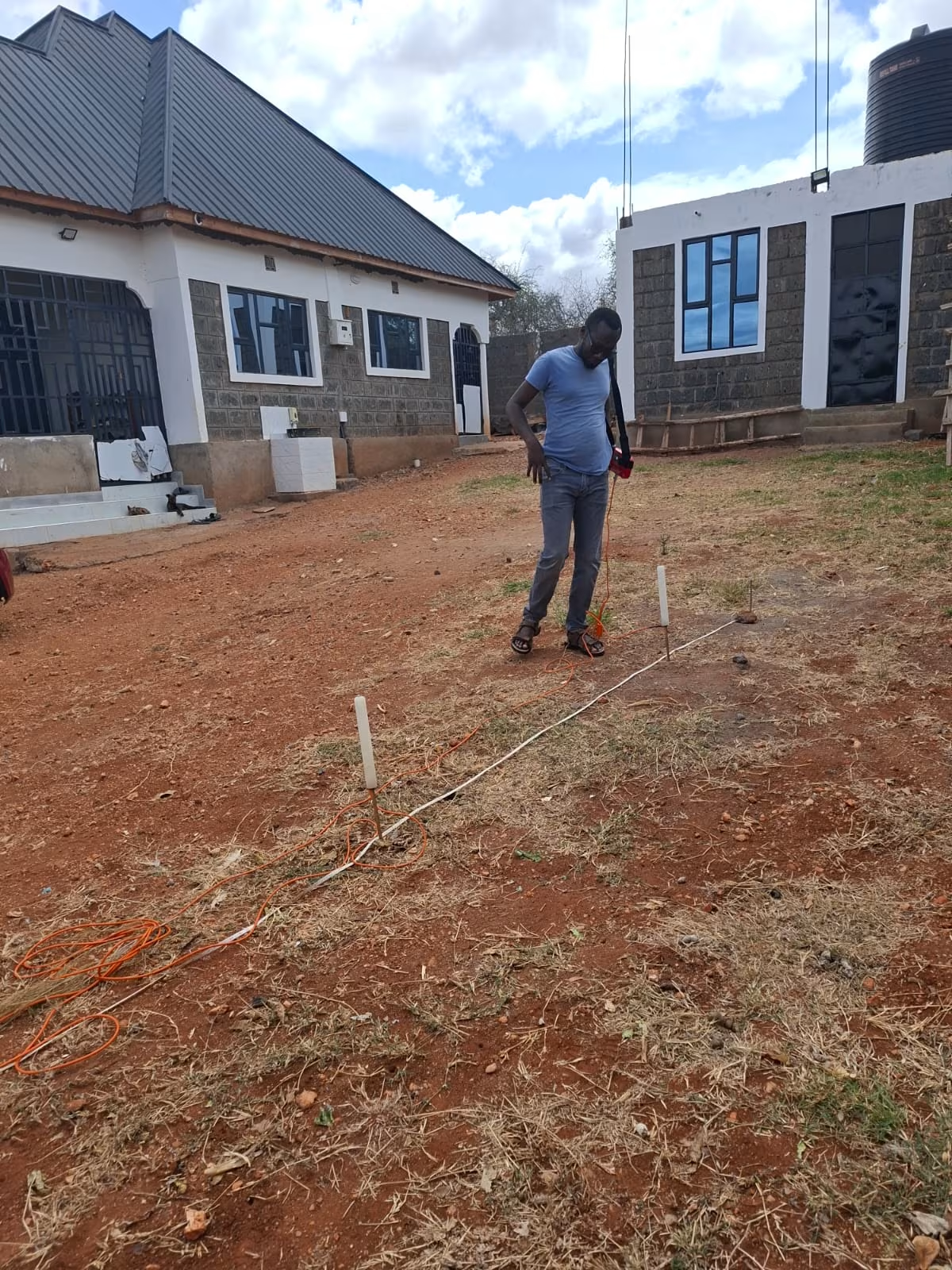
A photograph can illustrate field activity without proving depth, yield or commissioning performance. Ask which records connect an example with its stated outcome. This guide makes no claim that a supplied image depicts a verified case study. Provider evaluation should remain grounded in the actual proposed scope and evidence.
Check equipment reasoning where that work is included
Ask who defines required flow and total dynamic head for the intended destination. The Grundfos selection resource explains their relationship. A larger motor or a general deep-well label cannot establish a suitable equipment arrangement for the actual source and route.
The borehole equipping service offers a separate assessment enquiry route. Keep source yield, pump capacity and demand distinct. A provider should explain how the proposal respects source limits rather than promise that more equipment creates sustainable groundwater.
Keep commercial and authority boundaries clear
Request supplied tasks, exclusions, tax treatment and change approval in writing. Also, ask which administrative support is actually included or available. A broad statement that everything is handled needs an explicit boundary before the owner relies on it. Material terms may need suitable advice after the provider explains them.
Use WRA’s official guidance to frame current project-specific authority questions. Confirm applicability through the relevant authority and advisers. Qualified borehole contractor selection does not transfer the authority’s decision to a salesperson or turn a professional report into permission for every proposed activity.
Agree reporting and acceptance responsibilities
Ask what evidence each stage will deliver and who explains it. Source reports, construction records and commissioning observations have different purposes. Also, identify the destination and conditions behind measured service. A useful handover should preserve limitations and outstanding actions rather than rely on a general statement that the work is complete.
Water quality requires appropriate analysis and advice for intended use. Clear appearance or successful pumping does not establish drinking-water suitability. Keep that task explicitly assigned if outside the proposed scope. The provider’s actual competence and work boundary should remain clear across all evidence types.
Questions owners ask about qualification claims
Is one certificate enough for every project stage?
Ask what role and work the evidence covers, then verify current applicability appropriately. Qualified borehole contractor selection should match responsibilities with relevant evidence. Do not infer universal competence from one document or assume every provider needs an identical credential for a different task.
Does expensive equipment prove a provider is suitable?
No. Ask who uses and interprets the equipment, why it suits the question and what records result. A photograph or instrument list cannot establish accountable reporting. The actual project scope and professional responsibilities need their own explanation and verification.
Should the owner demand a guaranteed yield?
Ask for a defensible assessment and honest explanation of uncertainty. A promise cannot create groundwater or replace source evidence. Clear work and reporting commitments remain important. The owner should compare proposed tasks and evidence rather than treat unsupported certainty as competence.
How should subcontracted work be reviewed?
Ask who carries out the task, what relevant verification applies and who remains responsible for the delivered result. Keep interfaces explicit in the scope. The owner needs a support and clarification route without assuming the main provider personally performs every specialist activity.
What should accompany an initial enquiry?
Send the project stage, location, intended decision and available records. Identify the work packages and known gaps. Finally, name the approving contact. This helps the provider explain its proposed roles and scope without implying every narrower service is confirmed.
Request role-specific evidence before selection
Use qualified borehole contractor selection to connect work, people and current relevant verification. Ask for clear method purpose, reporting and interfaces. Finally, preserve the decision record and material clarifications. A useful evaluation is specific to the project rather than a universal ranking or an unverified claim about company credentials.
Request a project-specific assessment enquiry from Masterpiece Hydro-Solutions. Explain the work and evidence needed. Ask which professional scope may be available and how the provider would identify responsibilities, relevant verification and the deliverables supporting the next decision.