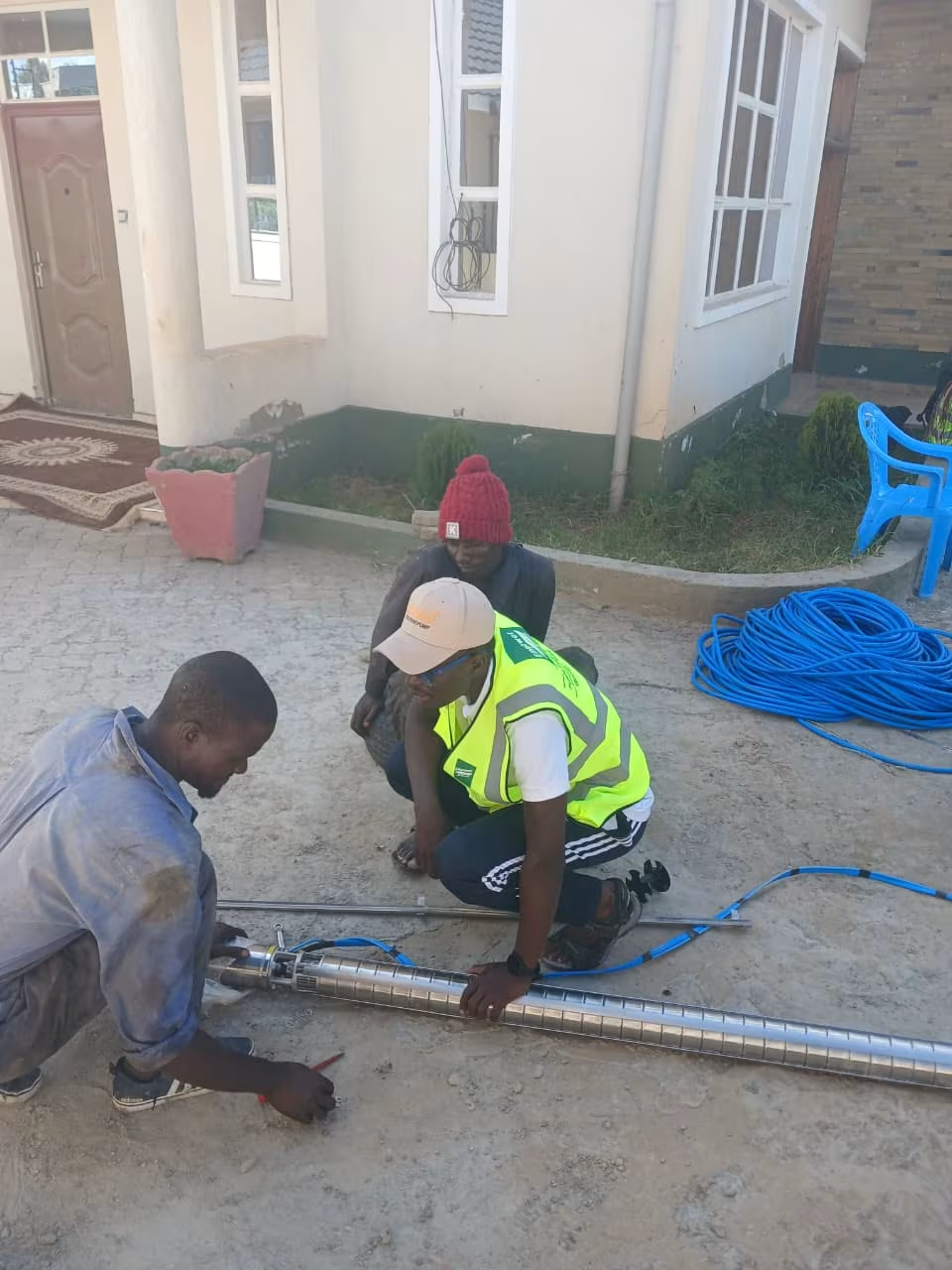
Repeated pump failure assessment should explain the pattern before the owner assumes the borehole needs rehabilitation. Several replacements do not automatically prove one recurring source defect. First, assemble the event history and confirmed findings. Then ask qualified professionals which equipment, operating and source questions remain unresolved before proposing further work.
Explore Masterpiece Hydro-Solutions borehole rehabilitation and request a recurring-failure assessment enquiry. Ask whether an appropriate assessment is available. This guide concerns evidence and decision stages, not electrical diagnosis, retrieval instructions or a promise that rehabilitation will prevent every future failure.
Start repeated pump failure assessment with individual events
Create a separate entry for each reported failure or interruption. Include the date, installed equipment identity, observed symptom and responsible assessor’s findings. Also, mark cases where the cause remained uncertain. Several events labelled pump failure may involve different conditions, and a combined summary can hide that distinction.
Next, identify which component actually changed after each event. An invoice for a replacement may show what the owner bought without proving why the earlier arrangement stopped. Retain service reports and relevant photographs alongside the invoice. The professional needs to distinguish confirmed findings from a commercial record of work.
Compare the operating context between events
Record changes in demand, storage destination, power arrangement and daily operation. Also, identify any work by other contractors between interruptions. Timing can help frame questions without proving cause. The assessment should consider the actual sequence rather than assume every event repeats the first explanation.
Repeated pump failure assessment should keep protection stops separate from confirmed equipment damage. Owners can report indicators and circumstances, but should not bypass controls or repeatedly force operation. Qualified personnel should diagnose faults and explain which records support the conclusion. An urgent supply need does not make an untested cause more certain.
Check whether the current equipment duty has changed
Ask the assessor to identify required flow and total dynamic head for the present destination. The Grundfos selection resource explains their relationship. Copying an old motor rating cannot establish a suitable present arrangement when the service requirement or delivery route has changed.
Distinguish drilled depth, pumping water level and pump setting depth. The head assessment also considers delivery elevation, pipe losses and required outlet pressure. Also, ask who verifies the available power and compatible controls. Source rehabilitation cannot substitute for a qualified assessment of those equipment and supply questions.
Use a repeated pump failure assessment matrix
The matrix helps the owner compare events without pretending to diagnose them. Give the qualified team the underlying records, not only the completed summary. Where a fact is unknown, preserve the gap. This allows the professional to define a proportionate next assessment instead of repeat an unsupported earlier assumption.
| Event detail | Record to retain | Question for the assessor |
|---|---|---|
| Equipment involved | Model identity and installation date | Did different events concern the same arrangement? |
| Observed symptom | Factual operator account and indicators | What did the observation establish? |
| Confirmed finding | Qualified assessment and stated limits | Which cause remained uncertain? |
| Changed context | Demand, route and supply history | Did the required duty or operating conditions change? |
| Work completed | Approved scope and replacement identities | What problem did the intervention address? |
| Post-work baseline | Commissioning and later observations | Was the result recorded before the next event? |
Work through a fictional recurrence file
Consider an educational owner with several replacement invoices but only one detailed fault report. The equipment models differ, and the property also changed its storage destination. These assumptions illustrate record review; they do not describe a real site or establish why any pump stopped.
First, the professional separates the events and identifies which conclusions the records actually support. Next, the owner supplies the changed demand and route information. A source-condition question may remain, but it should not become the assumed explanation for every event simply because the replacements occurred at the same borehole.
Repeated pump failure assessment can then identify the missing evidence and a focused next scope. That might involve equipment or source work, depending on findings. The useful outcome is a reasoned decision, not a universal rehabilitation package sold as protection against recurrence.
Identify when source-condition investigation is relevant
Ask what evidence points towards a specific source concern. Completion records, test-pumping evidence and relevant condition observations may inform the discussion. However, an equipment interruption alone cannot establish internal condition. The professional should explain why another investigation could change the next decision.
The borehole inspection service offers a relevant enquiry route for an identified visual question. Request actual coverage and limitations in the report. Camera footage does not diagnose every motor or supply problem, certify structural strength or establish sustainable daily yield by itself.
Keep repair, replacement and rehabilitation scopes separate
Ask each proposal to identify the problem it addresses, the findings behind it and what remains provisional. Also, distinguish retained components from new purchases. A complete scope should explain interfaces and qualified responsibilities. The owner should not need to infer who confirms compatibility between several contractors’ supplied items.
The borehole equipping service provides a separate assessment route for current equipment duty. Repeated pump failure assessment should join relevant findings without merging every task into an undefined intervention. A source issue and an equipment issue may need different evidence and acceptance records.
Define the outcome before approving another intervention
Ask what the team will document before and after work. The comparison should relate to the identified problem and actual operating arrangement. Also, record which components or settings qualified personnel change. A successful restart alone may leave the owner without a useful baseline for understanding a later concern.
Do not demand a universal guarantee that no failure can recur. Instead, require accountable scope, appropriate technical verification and clear reporting of limitations. The provider should explain what its work demonstrates and which future conditions remain outside that observation. Written warranty terms need their own review against the actual supplied work.
Preserve removed-equipment evidence and custody
Before further technical work, agree how identities and findings will enter the project record. Also, clarify who keeps removed equipment and who approves disposal. Relevant evidence can disappear when components leave the site without a clear account. Qualified personnel should manage handling; owners need a documented arrangement rather than retrieval instructions.
If warranty assessment may apply, ask which documents and items the relevant provider needs. Do not assume cover from age alone or infer exclusion from a symptom. Keep the actual terms and findings together. Repeated pump failure assessment benefits from a factual file that supports questions without inventing contractual conclusions.
Plan continuity and ordinary monitoring realistically
Describe essential uses and usable reserve while the assessment proceeds. Ask the contractor to explain the programme and its dependencies. Also, identify any separate temporary water arrangement. An initial enquiry cannot establish a guaranteed restoration period, specialist availability or successful outcome.
After agreed work, keep delivery, interruptions and significant demand changes in an ordinary operating record. Qualified personnel can explain useful observations and the escalation route. Water quality remains separate: a successful restart or clearer appearance does not establish drinking-water suitability. Arrange appropriate analysis and advice for intended use where needed.
Questions owners ask after several replacements
Do repeated failures prove the borehole needs rehabilitation?
No. The record may contain different events and incomplete diagnoses. Repeated pump failure assessment should identify confirmed findings and unresolved questions before choosing work. A source intervention needs its own evidence, while equipment and supply suitability require appropriate qualified assessment.
Should we buy a more powerful pump?
Ask the professional to establish the current duty and source-supported arrangement first. A larger rating does not explain an earlier failure or create more groundwater. Any replacement needs selection for required flow, head and compatibility rather than a general expectation of stronger performance.
Can the caretaker change controls to prevent another stop?
Technical changes belong with qualified personnel. The caretaker should record indicators and circumstances, then use the agreed support route. Do not bypass protection or experiment with settings. A useful event record can support diagnosis without creating another unassessed operating condition.
What if earlier causes were never recorded?
Mark that limitation and gather the information that remains. The professional can assess present conditions and explain which historical conclusions cannot be confirmed. Do not turn replacement invoices into proof of one repeated cause. Preserve uncertainty alongside the proposed next task.
What should accompany the enquiry?
Send the event chronology, equipment identities, service findings and available source records. Include changed demand, routes and power arrangements. Finally, identify continuity needs and the site contact. This helps the provider define a focused assessment before discussing rehabilitation or replacement.
Request a pattern-based decision
Use repeated pump failure assessment to connect individual events, current duty and source evidence. Ask which finding supports each proposed task and how its result will be recorded. A useful plan addresses the actual uncertainty without promising that one intervention prevents every future equipment concern.
Request a recurring-failure assessment enquiry from Masterpiece Hydro-Solutions. Provide the available record without guessing a single cause. Ask whether an appropriate assessment is available and how its findings would support a justified next decision.