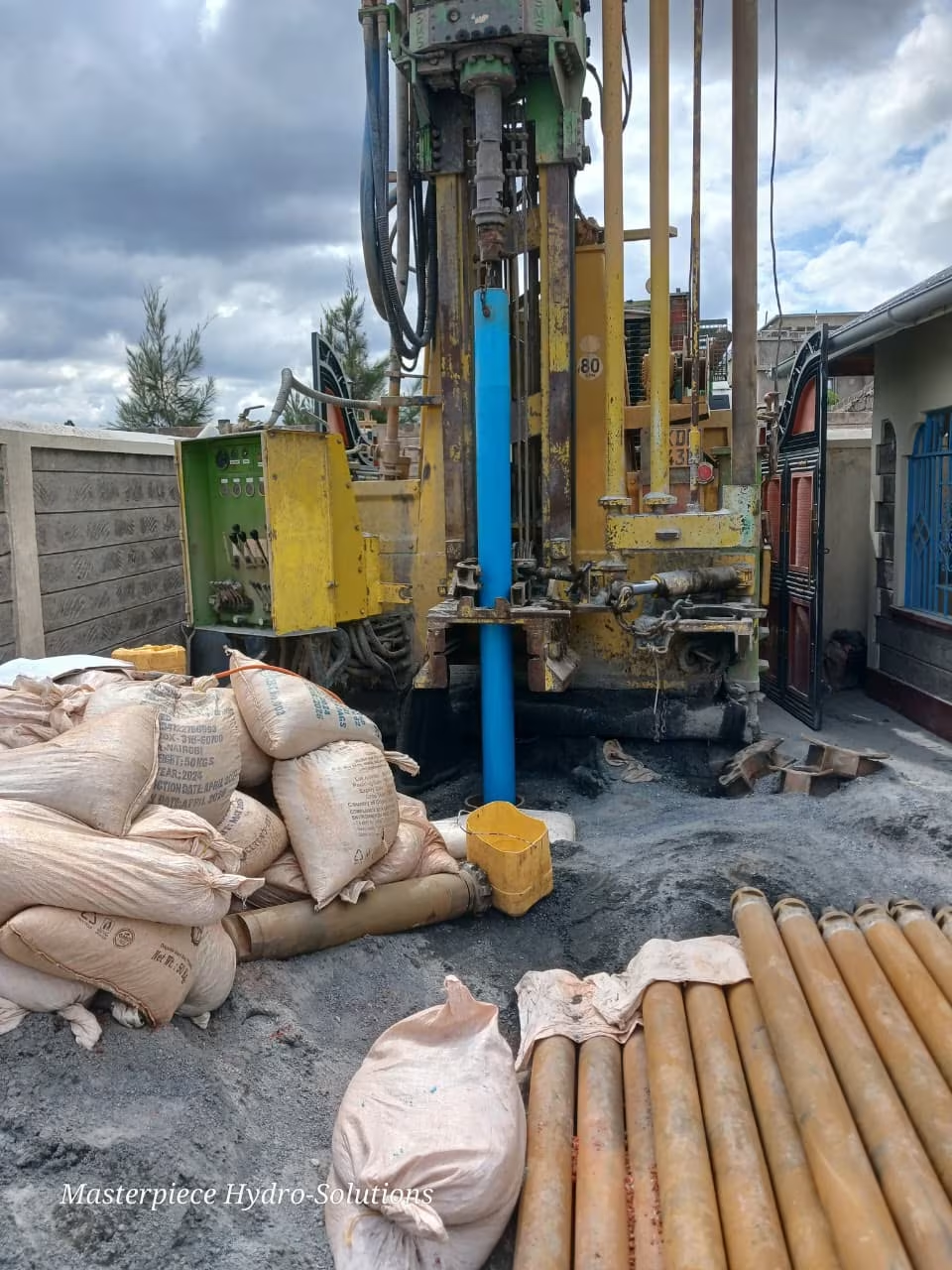
Small plot borehole planning begins with space, access and the intended water use. A compact property may still need several competing areas for people, services and construction activity. Therefore, assess the whole plot before choosing a drilling position. A convenient empty corner does not establish a suitable location.
Masterpiece Hydro-Solutions offers borehole drilling. To discuss a restricted property, request an assessment with a site layout. Include entrances, buildings, visible services and the proposed borehole point. Also, describe any access shared with neighbours.
Start small plot borehole planning with a layout
First, prepare a simple drawing showing how the property currently works. Mark the house, boundary, gate and main pedestrian routes. Add known buried services and sanitation features from reliable records. Where information remains uncertain, label it clearly rather than filling gaps with guesses.
Next, include changes you already plan. A future extension or relocated driveway could affect the borehole’s long-term accessibility. Also, identify where you hope to place storage and distribution equipment. The drilling location should form part of the property’s wider water arrangement.
The drawing does not need to become a technical design before the first enquiry. Its purpose is to help professionals ask better questions. However, do not use a sketch to confirm clearance, separation or ground suitability yourself. Those decisions require the appropriate assessment and current site-specific requirements.
Separate rig access from everyday access
A driveway that suits family cars may not suit the proposed drilling equipment. Therefore, show the entire approach from the public road to the work area. Include turns, controlled gates and overhead features. Let the contractor identify what measurements or inspections it needs.
Also, consider how residents will enter and leave during work. A compact plot may have only one practical route. Ask the contractor to explain how it proposes to separate people from operations. Keep children, visitors and pets away from the work area under the agreed site arrangements.
Do not remove structures or alter the entrance simply to make an assumed equipment layout fit. First, obtain the contractor’s assessment and any other necessary professional advice. An early design discussion can expose a constraint before the owner commits to avoidable alterations.
Compare small plot borehole planning constraints
| Space issue | Evidence to provide | Decision needing assessment |
|---|---|---|
| Narrow approach | Gate and route photographs | Whether proposed equipment can access the site |
| Busy courtyard | Normal parking and pedestrian use | How to manage temporary work arrangements |
| Existing services | Available service plans and known locations | Further locating or protection needs |
| Nearby sanitation | Accurate layout information | Applicable siting and water-quality concerns |
| Future extension | Proposed building layout | Long-term access and location compatibility |
| Limited storage space | Demand pattern and possible tank areas | Suitable assessed storage arrangement |
This comparison helps separate physical constraints from unresolved information. A small plot does not automatically fail or pass because of its area alone. Instead, the relevant professionals need to assess the actual arrangement. Ask them to explain which constraints can change and which remain decisive.
Locate services before discussing a drilling point
Buried water pipes, electrical services and drainage may cross apparently open space. Therefore, gather available drawings and ask previous contractors for reliable records where appropriate. Also, tell the assessment team about any uncertainty. An unmarked courtyard should never count as evidence that the ground contains no services.
Professionals may need further locating work before they can confirm a suitable plan. Ask who arranges that assessment and whether the quotation includes it. Do not probe, excavate or expose suspected electrical services yourself. The buyer’s useful role is to provide records and arrange qualified investigation.
Next, discuss how the proposal protects existing services during access and drilling. This includes features along the route, not only near the borehole. Keep the agreed findings with the site layout so later changes do not rely on memory.
Ask about sanitation and water quality
On a compact property, sanitation features deserve explicit attention during siting. Show known septic, drainage and waste-related infrastructure on the layout. Ask the relevant professionals and authority about the requirements that apply. Avoid relying on a distance copied from an unrelated property or online discussion.
Also, include neighbouring features where you have reliable information. Boundaries do not necessarily describe every relevant groundwater consideration. However, do not trespass or make unsupported claims about a neighbour’s installation. Explain what you know and what the assessor needs to verify.
After construction, suitable laboratory analysis remains important for the intended water use. Clear water does not prove drinking suitability. Small plot borehole planning therefore needs both location assessment and a later water-quality decision. Storage alone cannot provide that assurance.
Make temporary space part of the quote
Ask the contractor what areas it needs during the proposed works. Equipment, support activity and movement can create demands beyond the final borehole footprint. The team should explain these needs for its actual method. Do not assume a compact final opening means a similarly compact construction operation.
Next, discuss where residents can keep vehicles and essential household access. If the proposal uses shared space, identify who must agree to that arrangement. Also, request clear protection and reinstatement boundaries. Photographs of existing surfaces can support the discussion, alongside the accepted written scope.
Small plot borehole planning should expose temporary disruption before mobilisation. Ask which owner actions must happen first and who confirms readiness. A stated requirement to clear an area needs a specific location and purpose. Avoid a vague instruction to make room for the rig.
A scenario with a house and a rear courtyard
Imagine a private home with an open rear courtyard and a single side passage. The owner initially chooses the courtyard because it sits away from everyday parking. However, the approach and existing services remain uncertain. The open space alone cannot establish the feasibility of drilling there.
First, the owner sends a layout and safe photographs of the entrance and passage. Next, the contractor identifies the access questions requiring inspection. A hydrogeological assessor reviews the proposed groundwater project, while the owner gathers service records. The team can then explain the remaining constraints.
Suppose the owner also plans a future extension. That detail changes the long-term access discussion. The parties review the proposed location against both current construction access and future maintenance needs. This process may support a revised plan or show that further assessment is necessary.
Plan the household system beyond the borehole
The completed borehole needs an appropriate water-delivery arrangement. Therefore, describe daily domestic demand and when the household uses water. Also, identify possible storage locations and the intended delivery points. Do not choose a pump simply because it physically fits an available space.
Pump selection should use source evidence and the required duty. For example, delivery elevation and required outlet pressure affect the assessment. Ask the equipping team to explain its assumptions. A small garden or short pipe route does not remove the need for proper sizing.
For the later stage, discuss borehole equipping after the necessary drilling and testing information becomes available. Keep that scope separate where it requires a new assessment. An early allowance cannot guarantee the suitability of a particular equipment package.
Check approval and lasting access requirements
The WRA permitting guidance explains an application, construction authorisation and a subsequent water permit. Ask WRA about current requirements for your specific property. Do not assume that a private home or small plot creates an automatic exemption.
Also, discuss how future inspection, maintenance or equipment work will reach the borehole. New walls, permanent roofs or landscaping can change access. Ask qualified personnel what access the proposed arrangement needs. Then include those considerations in the property’s future plans.
Finally, retain the construction and location records for later owners or contractors. A small plot can change substantially over time. Reliable records make later assessment easier, although they do not replace inspection. Store the final layout alongside the relevant approvals and testing information.
Questions about small plot borehole planning
Is there one minimum plot size for every project?
Do not assume a universal area answers the question. Access, siting, services, groundwater assessment and current authority requirements all matter. Provide the actual layout and ask for a site-specific assessment. The size label alone cannot confirm whether the proposed works are suitable.
Can drilling equipment enter through a narrow gate?
The answer depends on the proposed equipment and the complete route. Send photographs and available dimensions, then ask the contractor what it needs to inspect. Do not alter the gate based on a guess. The approach beyond it may create another constraint.
Can I put the borehole under a future extension?
Ask the relevant professionals to assess the proposed relationship and future access needs. Do not assume that current drilling access establishes long-term suitability. Share the extension plan before the location decision. Structural, maintenance and authority questions need proper consideration.
Will a small tank solve limited space?
Tank suitability depends on demand, production and the wider delivery arrangement. A physically small tank may not provide the reserve you need. Therefore, describe actual use and ask for an assessed storage plan. Water storage also does not establish drinking-water quality.
What should I send with the first enquiry?
Include the county, location pin, simple layout and safe access photographs. Add available service plans, assessment reports and future building intentions. Also, state which details remain unknown. This makes small plot borehole planning more productive without pretending the first enquiry contains a finished design.
Assess the layout before committing
Useful small plot borehole planning considers the approach, work area and lasting water system together. It also exposes missing service information and future building conflicts. Start with accurate records, then let the appropriate assessments shape the decision. Avoid committing resources because one corner looks available.
Send Masterpiece Hydro-Solutions your compact-site enquiry. Include the layout, entrance photographs and intended water use. Request a proposal that identifies access assumptions, required assessments and the scope of any further site visit.