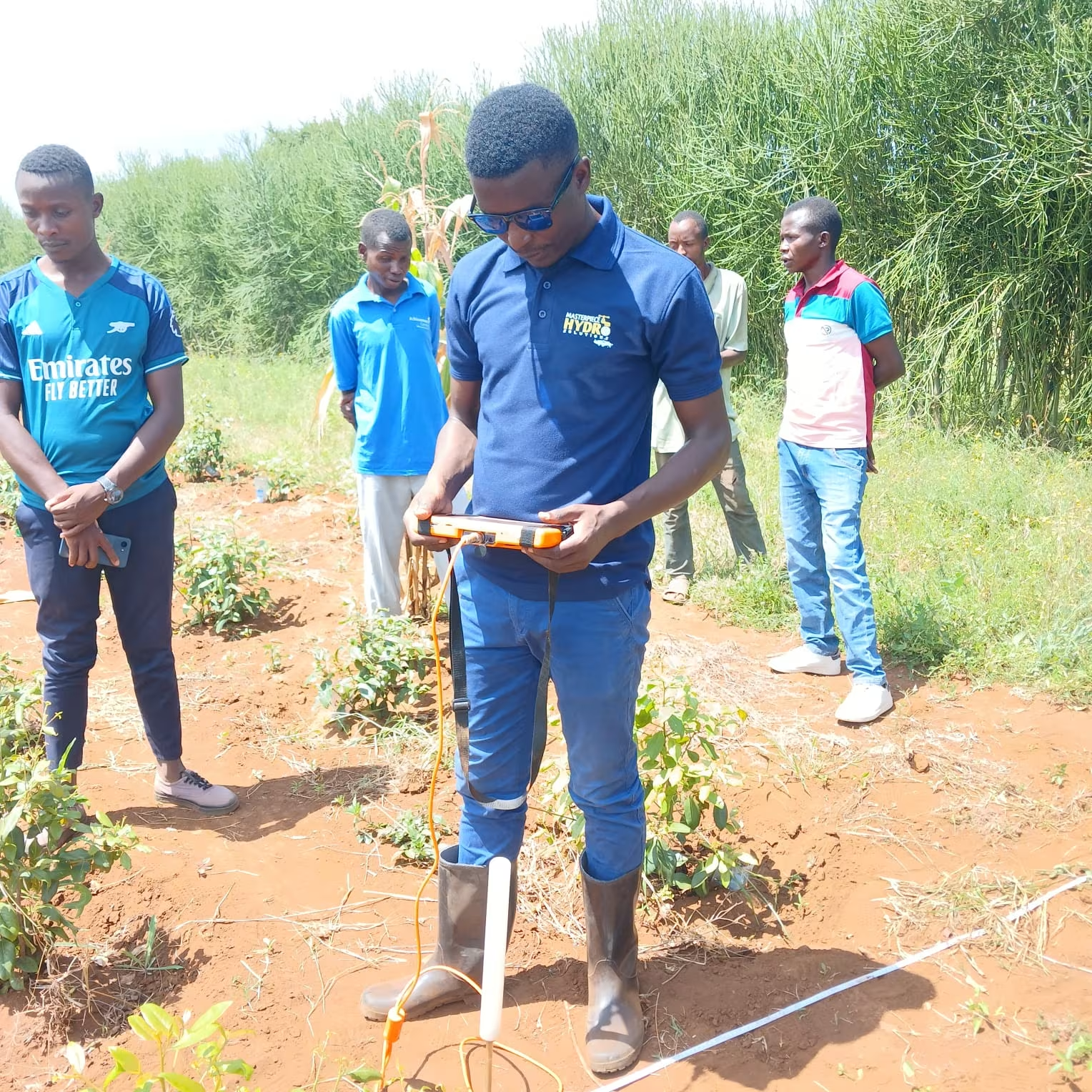
Survey drilling evidence addendum decisions arise when later borehole records become available after the original assessment. The owner needs a file that preserves the prediction and adds what was subsequently observed. Do not rewrite a recommendation as though it measured the completed source. Ask the qualified author whether a defined addendum or separate review would help the next decision.
Explore Masterpiece Hydro-Solutions hydrogeological survey services and request an enquiry about the original assessment and later records. Confirm the available review scope. Supply complete relevant files with their dates and asset references so the provider can distinguish old interpretation from new evidence.
Identify the purpose of adding the records
The owner may want to understand how drilling findings compare with the survey, explain a changed recommendation or prepare information for a separate equipment provider. State the decision first. Attaching every later document to the old report may create a large folder without answering the actual question.
Ask which qualified professional can address that purpose. The survey author may explain its original reasoning, while another practitioner owns the construction or testing findings. Do not assume either person can amend or certify the other’s original observations without an appropriate basis.
Keep the original report unchanged while the task is scoped. A later review can explain or revise an interpretation under its own date. It should not conceal what the owner and providers knew before drilling.
Prepare survey drilling evidence addendum inputs
Provide the current issued survey and relevant attachments. Then identify the later construction, source-assessment or quality records actually available. Keep each linked to the correct borehole, author and attendance. A summary message may not carry the conditions needed for comparison.
Ask the relevant record owners to explain unclear units, references or scope. Do not treat every figure in a project folder as directly comparable. A proposed target depth, an actual construction entry and a later observation may describe different things.
Disclose missing records and uncertainty. A review can state that some questions remain unanswered. It should not invent a field measurement or reconstruct an unrecorded result merely to make the original prediction and later evidence appear consistent.
Compare prediction and observation carefully
| Evidence category | What to preserve | Question for the review |
|---|---|---|
| Original survey | Commissioned brief, recommendation and limitations | What did the available evidence support at that time? |
| Construction records | Qualified account of the actual works | Does the record concern the recommended location and scope? |
| Source assessment | Observed conditions, findings and qualifications | What does it establish about source performance? |
| Quality evidence | Relevant sampling and analysis context | Which use-specific questions does it address? |
| Later interpretation | Author, date and evidence considered | What conclusion changes and why? |
The comparison should not force every category into a single success or failure label. Ask the qualified reviewers to explain the meaningful relationships and limits. Different evidence types can answer different parts of the owner’s next decision.
Keep chronology truthful
A later observation cannot have informed a report issued before it existed. If the owner wants the professional to reassess its earlier interpretation, the new output should state that it uses subsequent information. That transparency makes the evidence more useful rather than weakening the file.
Do not change the original report’s date or wording to imply that a measured depth, result or quality finding was predicted exactly. Likewise, do not remove a genuine earlier qualification because later conditions happened to be favourable. The history should reflect what was known and uncertain at each stage.
If an original factual error is identified, distinguish its correction from learning gained through drilling. A clerical amendment, revised professional interpretation and entirely new assessment are different outputs. Ask the author to label the actual task clearly.
Use survey drilling evidence addendum review to understand differences
The US Geological Survey groundwater-geophysics manual discusses method capabilities, limitations and non-unique interpretation. That context supports asking how later direct evidence informs an earlier interpreted model. It does not excuse every discrepancy or establish that the first recommendation was necessarily correct.
Ask the author to identify which differences are material and what explanations the available evidence supports. If several explanations remain possible, keep them labelled as such. Do not select one solely because it avoids a commercial disagreement.
Where the owner wants independent review, define the technical question, records and output. A reviewer should disclose its scope and evidence limits. Technical findings should remain separate from legal conclusions about negligence, liability or payment entitlement.
Decide whether an addendum serves the next provider
A pump installer may need the actual source evidence and operating brief rather than a rewritten survey narrative. Ask the receiving provider what information it requires. An addendum can be useful when it explains a relevant relationship, but it should not become a substitute for the underlying records.
Keep source yield distinct from selected pump capacity. A later pump proposal does not prove a source result, and an owner’s demand increase does not change historical observations. The receiving qualified practitioner should explain how it uses the actual evidence for its selection scope.
Likewise, quality findings need their own appropriate context. An addendum should not convert an appearance observation or a general statement that water was found into proof of suitability for use. Preserve sampling, analysis and qualified interpretation where those records exist.
A completed borehole differs from an early expectation
Consider a hypothetical owner whose survey supported a target recommendation under stated uncertainty. Later construction and source records describe conditions different from an informal expectation repeated during procurement. The owner asks the assessor to update the original report so every document shows the final result.
The useful response is a separately dated review identifying the original evidence and later findings. Ask what the report actually predicted, what the subsequent records establish and whether the new information changes a relevant interpretation. Do not treat a remembered sales expectation as the professional report’s precise conclusion without checking.
Retain the comparison even if a disagreement remains. The owner may need technical clarification, another assessment or appropriate contractual advice. None requires altering the historical record to suggest that the later result was known from the beginning.
Clarify scope, price and intended project use
Ask the provider for the actual proposed review output and commercial basis. An explanatory addendum differs from a new field commission or a comprehensive audit. Define the question before accepting an open-ended instruction to update everything.
The Water Resources Authority permitting guidance distinguishes construction and later permitting with relevant project evidence. Ask the appropriate authority or qualified adviser whether a proposed addendum affects current requirements. A professional supplement does not automatically update another submission or guarantee its acceptance.
Identify who will communicate material revisions to affected providers. Use the authorised project route and preserve the author’s actual conclusion. Do not let an administrative summary remove qualifications that matter to the next technical decision.
Close survey drilling evidence addendum work with an indexed history
Keep the original report, later source records and any authored review together. State which document describes each stage and which current conclusion the owner will use. A clear index can prevent a future manager from confusing prediction, observation and retrospective explanation.
Record unresolved questions honestly. A completed addendum can explain the evidence without resolving every source uncertainty or contractual dispute. The next task should follow the actual remaining question rather than a general desire for a file containing no qualifications.
Questions about adding later drilling findings
Should the original report be rewritten with actual results?
Preserve the original issued report and add a traceable later output where useful. Actual drilling evidence can inform a new interpretation, but it should not appear as an observation available before drilling. Keep dates, authors and document relationships truthful.
Does a difference prove the survey failed?
Ask what the report actually recommended and with what limitations, then compare the relevant later evidence through qualified review. An observed difference deserves explanation, but a broad verdict requires more than a mismatch between unrelated or informal figures.
Can the survey author alter the drilling record?
Material construction questions should go to the qualified record owner or an appropriately commissioned reviewer. A survey addendum can discuss supplied evidence while identifying its source. It should not silently replace another professional’s original observations.
Must an addendum include new field work?
Not automatically. Ask what the existing files can establish and what uncertainty remains. A document-based explanation should be labelled accordingly. If new work is justified, define its purpose, output and actual charge basis separately.
Can the addendum guarantee a new pump will meet demand?
That is a separate qualified selection and operating question. The installer needs relevant source evidence, flow and head requirements, power arrangement and intended demand. An addendum should not promise performance outside its actual assessment scope.
Who should receive a material revised conclusion?
Identify affected project recipients and use the authorised sharing route. Ask them about consequences for their own commitments. Retain earlier versions as clearly labelled history rather than assume a new attachment automatically updates every provider’s scope or instruction.
For survey drilling evidence addendum decisions, preserve the original prediction and add later facts transparently. Request a scoped hydrogeological review enquiry tied to the specific comparison or next-stage decision your project needs.