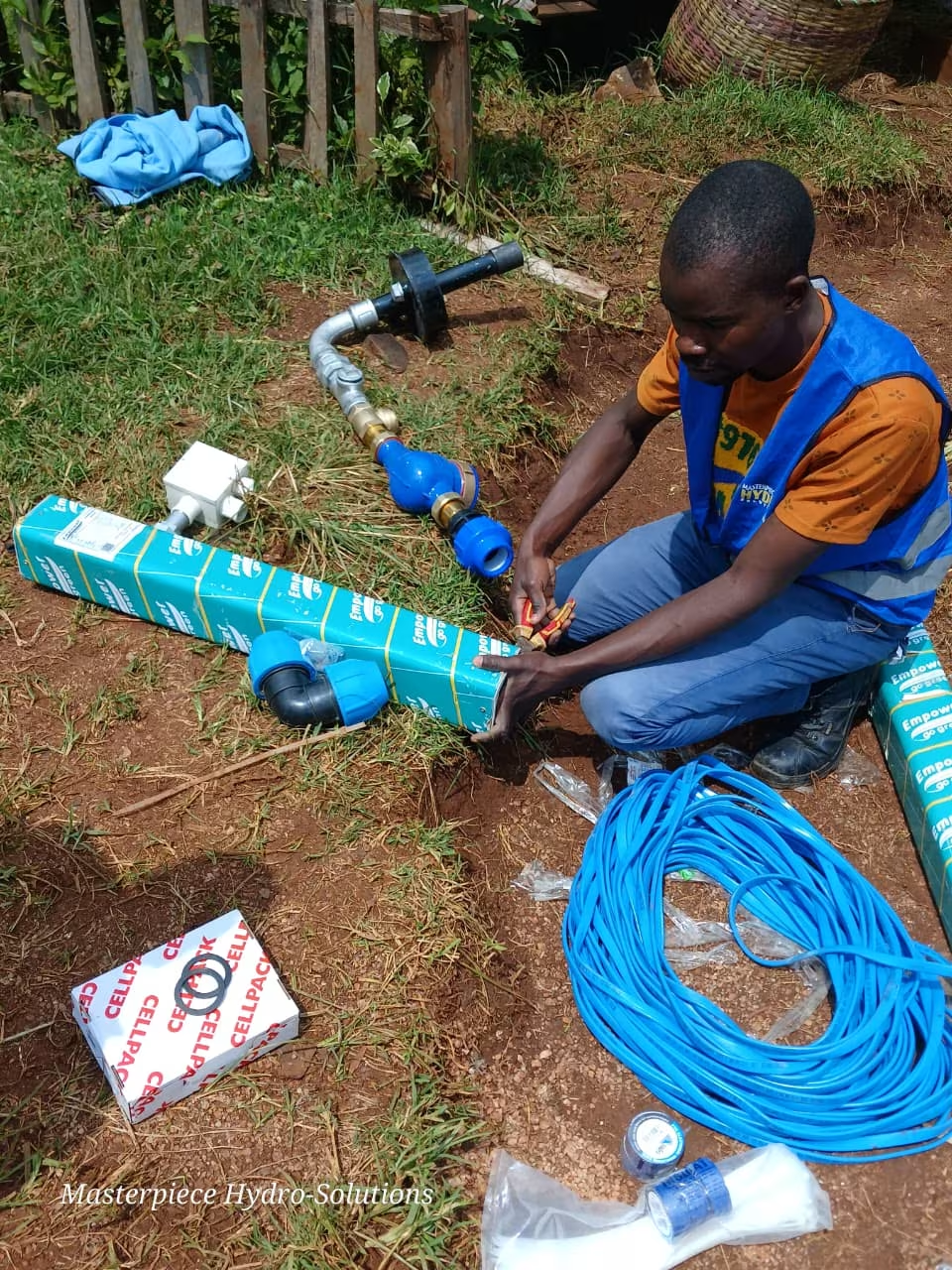
Uasin Gishu pump duty evidence should explain why proposed borehole equipment suits the actual source and delivery service. A motor rating or depth label alone cannot provide that basis. Therefore, gather testing and destination records before comparing packages. Ask Masterpiece Hydro-Solutions whether an appropriate assessment is available for your exact site and proposed work.
Use the Uasin Gishu county project page for the wider enquiry. See borehole equipping and request a duty-based equipment assessment. This guide explains selection evidence without claiming local source conditions, a suitable universal pump or confirmed installation timing.
Start Uasin Gishu pump duty review with the service
First, identify the destination the proposed pump must serve. Filling storage differs from supplying a pressure-dependent outlet arrangement. The quotation should name its endpoint. Otherwise, the owner and supplier may compare equipment while assuming different water services.
Next, describe current uses, volume records and timing. Separate future expansion from measured demand. A short peak at several outlets does not establish the whole daily requirement. Storage and distribution may change how the demand reaches the borehole.
Also, state whether the project involves new equipment, replacement or retained components. Existing pipes, tanks and power equipment need relevant assessment. Their presence does not establish suitability. The provider should identify which parts it will consider and which remain outside the scope.
Gather the source evidence before reading equipment labels
Provide the test-pumping report and measured water levels where available. Also, include construction and commissioning information. An installed pump’s advertised capacity cannot replace source-performance evidence. Qualified personnel should explain which records support the proposed operation and what remains uncertain.
Next, distinguish drilled depth, static water level, pumping water level and pump setting. These quantities have different meanings. Ask the assessor to identify the reference used in each record. A figure copied without its label can distort the selection discussion.
Where evidence is missing, label the gap. Do not invent a yield or pumping level to complete the enquiry. Ask what further assessment the decision needs. A conditional estimate can support planning if it clearly identifies assumptions and the information required before final selection.
Organise Uasin Gishu pump duty inputs
| Input | Evidence to provide | Selection question |
|---|---|---|
| Required flow | Actual service brief and relevant demand records | What rate does the accepted arrangement need? |
| Pumping lift | Relevant measured water levels and references | Which operating condition informs the assessment? |
| Delivery elevation | Reliable destination and available level information | What further measurement is necessary? |
| Route | Known delivery path and retained components | Which friction assumptions need professional review? |
| Outlet requirement | Intended service after the delivery boundary | What pressure question does the scope address? |
| Source limitation | Relevant testing findings and uncertainty | How does proposed operation respect the source? |
Use the table to organise information rather than calculate a site design. Qualified personnel must obtain and interpret the relevant measurements. Owners should not undertake pressure testing, electrical measurements or downhole investigation. The useful buyer task is to identify the service and missing evidence.
Ask for the flow and head explanation
The Grundfos selection learning resource explains required flow, head and the duty point. Ask the provider to connect those principles with the proposal. A catalogue headline should not replace an explanation of why the selected model addresses your actual requirement.
Total dynamic head considers pumping lift, delivery elevation, friction and required outlet pressure. Therefore, neither drilled depth nor visible pipe distance answers the whole question. Ask for consistent reference levels and an understandable statement of assumptions. The explanation should match the current destination.
Also, do not request invented performance curves to complete a comparison. The supplier should provide applicable manufacturer information for the actual proposed equipment where relevant. A generic chart cannot prove suitability. Qualified interpretation must relate the evidence to the required duty.
If the supplier offers an alternative model, request the same selection explanation for that option. The comparison should not leave one package supported by assessed inputs while another relies only on a description or a more attractive headline rating.
Keep capacity and demand separate
Aquifer yield, pump capacity and user demand are different quantities. A desired volume cannot establish sustainable groundwater availability. Likewise, a larger pump cannot create water the source lacks. The assessment should explain the limitation rather than hide it behind equipment size.
Next, ask how the proposal treats a requirement beyond the available evidence. Further investigation or a revised service brief may be necessary. Do not assume every shortfall has a simple equipment remedy. The owner needs a supported next decision and clearly stated uncertainty.
Uasin Gishu pump duty records should preserve those distinctions in the final file. A future assessor needs to know what the design intended and which source evidence informed it. One pump rating cannot explain the entire system history or guarantee later performance.
A scenario with an attractive motor rating
Imagine an owner comparing equipment for a Uasin Gishu site receives two offers with different motor ratings. One quotation gives little selection context. The other states its destination and required duty assumptions. The owner initially assumes the larger label guarantees more useful water.
First, the owner supplies the same source records and delivery brief to both providers. Next, each explains the proposed duty and applicable equipment evidence. Any missing assessment remains visible. The owner can then compare understood proposals rather than rank motors by size alone.
The Uasin Gishu pump duty example is hypothetical and describes no completed local project. It does not select either offer. A larger rating may address a different assumption without proving the better service. The decision needs the actual source, destination and equipment assessment.
Define power compatibility without owner wiring
Describe the available power arrangement and any intended change. Ask qualified personnel which compatibility checks the proposal requires. Do not assume a pump can operate from every supply or retrofit package. Existing electrical equipment needs appropriate assessment before inclusion.
Also, request a clear boundary for controls, protection and connections. A pump-only supply may exclude work necessary for a commissioned arrangement. The quotation should explain that boundary. Owners should not choose cable sizes, alter settings or improvise switching from general guidance.
If solar power forms part of the plan, see borehole solarisation and request an appropriate assessment. Output varies through the day and season. A panel count cannot establish a guaranteed daily volume or remove source capacity limits.
Agree commissioning evidence for the stated duty
Ask which qualified checks demonstrate the agreed delivery arrangement. The report should identify relevant conditions and actual equipment. A brief flow observation at another point may not answer the accepted brief. Request the commissioning scope before accepting the installation proposal.
Next, identify who receives the records and support documents. Retain equipment identity, applicable terms and outstanding-item information together. Do not assume one warranty covers every related cost or visit. Ask the actual provider to explain its commitments in writing.
Uasin Gishu pump duty information should remain traceable if the destination or equipment changes. Keep approved substitutions and revised assumptions with the final record. Future assessment becomes easier when the file explains why the arrangement was selected instead of merely stating that it worked.
Confirm availability and separate quality decisions
Ask Masterpiece about the exact location, proposed scope and available assessment resources. The county page does not promise every narrow task or date. Provide safe access information and disclose installed equipment. The actual response should state what the provider can assess or offer.
Also, keep water quality distinct from delivery performance. Clear water does not establish drinking suitability. Ask which laboratory analysis fits the intended use and obtain appropriate interpretation. A suitable pump duty cannot provide a quality guarantee by itself.
The WRA permitting guidance distinguishes construction authorisation from a subsequent water permit. Ask WRA about current project-specific requirements. Equipment selection and installation availability cannot replace that authority confirmation or automatically authorise abstraction.
Questions about Uasin Gishu pump duty
Can drilled depth select the pump?
No single drilled-depth figure establishes the complete duty. Provide relevant water levels, source testing and the delivery brief. Qualified personnel should explain the required flow and head. A common depth-based package is not automatically a site-specific selection.
Does higher motor power mean more useful supply?
Not without the actual source and duty assessment. A rating can reflect different assumptions or operating requirements. It cannot create sustainable groundwater. Ask the provider to explain suitability using applicable equipment information and the same current service brief.
Do I need to calculate friction myself?
No buyer calculation should replace qualified design. Provide the route and available component information. The professional should assess relevant losses and explain assumptions. Do not change pipework or undertake pressure tests to fill an enquiry form.
What if the tank location changes?
Tell the assessor before relying on the original proposal. A changed destination can alter the duty and installation scope. Request a clear review and retain the resulting update. The borehole staying in one place does not make every delivery arrangement equivalent.
What should the quote contain?
Request the assessed duty, actual equipment and work boundary. Also, identify assumptions, exclusions and commissioning evidence. Clarify VAT treatment and support terms. Confirm site availability before treating an early estimate as a final installation commitment.
Request selection evidence for the actual service
Useful Uasin Gishu pump duty evidence connects source records, delivery conditions and equipment selection. It keeps labels and reference levels clear. Gather the current file before comparing packages. Then request an assessed proposal that explains the intended operating point and remaining limits.
Send Masterpiece Hydro-Solutions your Uasin Gishu equipping enquiry. Include the source report, measured levels and destination information. Ask for availability confirmation and the assessment needed before choosing equipment for the proposed service.