Unused borehole recommissioning needs a staged assessment before the owner relies on the source again. A dormant installation may have incomplete history and an uncertain present condition. First, establish what remains and why use stopped. Then separate condition, equipment, performance and water-quality questions before approving a return-to-service plan.
Explore Masterpiece Hydro-Solutions borehole rehabilitation and request a dormant-source assessment enquiry. Ask whether an appropriate assessment is available. This guide helps owners define evidence and decision stages; it does not provide instructions for starting, cleaning or modifying an unused installation.
Begin unused borehole recommissioning with the period of non-use
Record when ordinary use stopped and what the available documents say about the reason. Equipment work, a changed property use and an unexplained interruption can leave different questions. Also, distinguish a recorded decision from a later recollection. The assessor needs the history without an unsupported assumption that dormancy proves one particular defect.
Next, identify any work carried out during the unused period. Someone may have removed equipment, changed controls or altered access. Include names of responsible contractors where records identify them, without inventing missing details. The present arrangement may differ from the last operating report, so the assessment should not assume every listed component remains installed.
Confirm the source identity and current responsibilities
Locate available construction, test and equipment records for the correct borehole. Also, identify who controls the site and can authorise assessment. A dormant source may pass between managers whose files contain different parts of its history. Bring those records together before a provider relies on one apparently complete description.
Nominate a site contact and an approving contact if those roles differ. Qualified personnel should assess technical access and equipment handling. Owners should provide information and coordinate entry, rather than attempt to inspect inside electrical equipment or operate an unfamiliar installation simply to prepare the enquiry.
Define unused borehole recommissioning as separate decisions
The project needs more than an instruction to switch the pump on. Ask the professional to identify the assessment stages and what each result permits the team to consider next. Also, distinguish an investigation from a proposed intervention. The owner should understand where another approval or specialist input becomes necessary.
| Decision stage | Evidence to discuss | Question before advancing |
|---|---|---|
| History and identity | Construction file and non-use timeline | Do records describe the present source? |
| Condition review | Qualified assessment and relevant inspection findings | Which uncertainty needs further work? |
| Equipment assessment | Identities, condition and compatibility | What can remain in the proposed arrangement? |
| Performance brief | Appropriate source evidence and current demand | What operating service does the evidence support? |
| Quality decision | Appropriate laboratory analysis and interpretation | Does the assessed water suit its intended use? |
| Return-to-service handover | Commissioning observations and operating responsibilities | What has the team demonstrated and what remains open? |
Describe the water service needed now
Explain intended users, daily volume and important demand periods. The present project may differ from the one that originally used the borehole. Also, identify future expansion separately. An old successful test provides context but cannot by itself confirm enough supply for a new activity or a larger occupied property.
Unused borehole recommissioning should keep available source supply, pump capacity and demand distinct. A retained pump does not prove sustainable output. Likewise, storage cannot cure a continuing production deficit. Ask the assessor to identify what further evidence supports the current water balance before the owner relies on the source.
Use inspection to answer a specific condition question
If a visual assessment could help, define the internal question it would address. The US EPA borehole-camera overview describes visual examination of borehole interiors. Ask which relevant areas the provider can reasonably assess and how coverage limits will appear in the report.
The borehole inspection service offers a relevant enquiry route. A useful report distinguishes observations, professional interpretation and unknown areas. It does not certify structural strength, sustainable yield or drinking-water suitability from images alone. The proposed next task should follow the evidence rather than the fact that a visit occurred.
Work through a fictional dormant-site enquiry
Consider an educational owner who plans to reuse an installation after a period without ordinary operation. The file contains a completion report and an old equipment invoice, but no clear account of why use stopped. The planned activity also differs from the earlier one. These assumptions do not describe a verified site.
First, the assessor identifies the missing history and present equipment questions. Next, the owner supplies the new demand brief and storage destination. The professional proposes assessment stages rather than promise immediate service. Some findings may support further condition investigation, while others concern the equipment arrangement or intended water use.
Unused borehole recommissioning becomes a reviewable project because each stage answers a defined question. The owner can approve the next task with its limits visible. A successful initial observation does not remove the need for separate performance, quality and final operating records.
Reassess equipment against the present destination
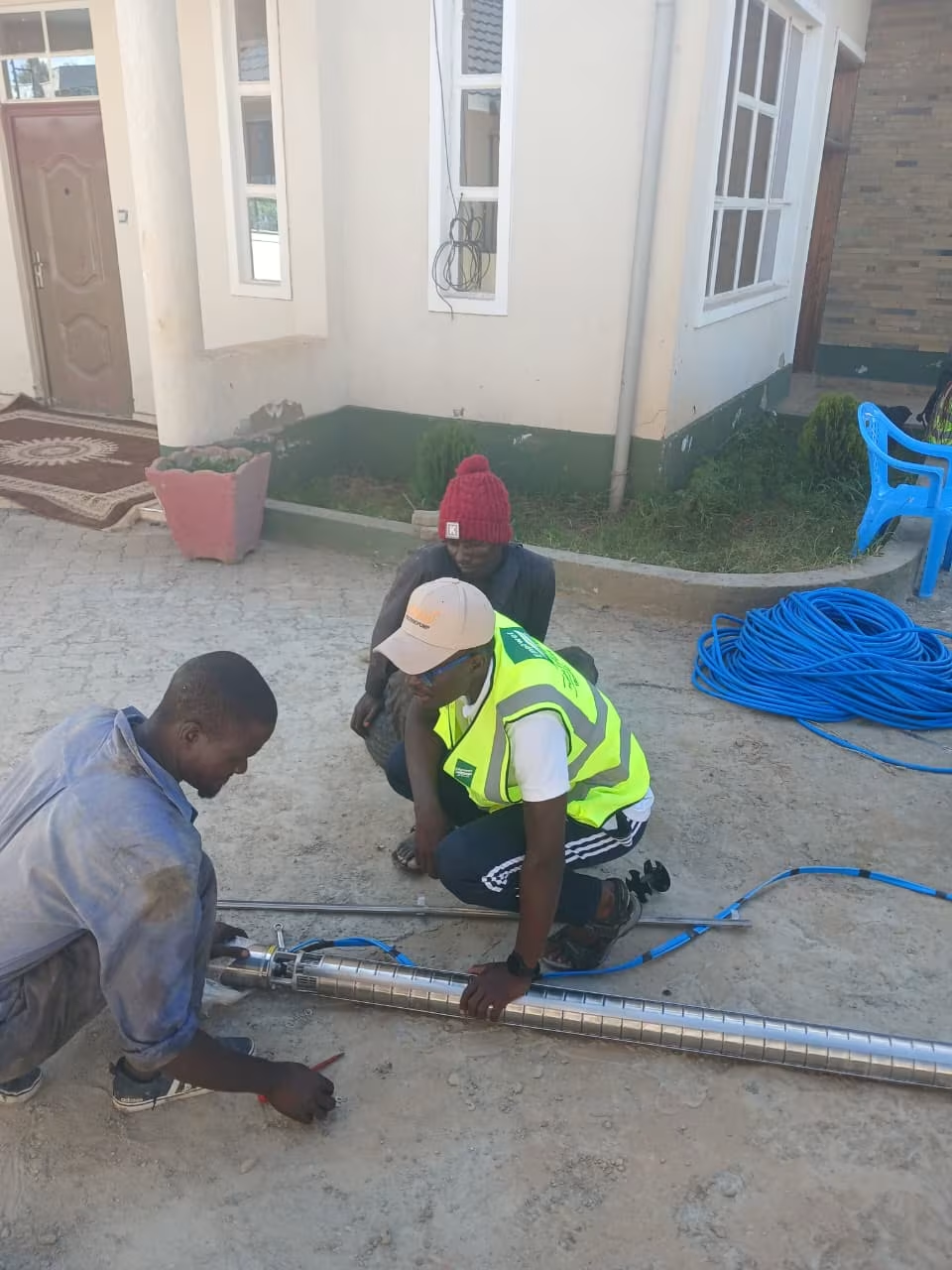
Ask whether retained components suit the proposed water duty and available supply. Required flow and head belong together in pump selection, as the Grundfos selection resource explains. A pump that served the old arrangement may need reassessment if the tank or intended use changes.
Distinguish drilled depth, pumping water level and pump setting depth. The delivery assessment also considers elevation, pipe losses and required outlet pressure. Qualified personnel should confirm relevant measurements and compatibility. The owner should request an understandable selection basis rather than copy the old motor rating into an equipment order.
Keep quality evidence separate from successful operation
Water appearing at a tank does not establish suitability for drinking or another use. Arrange appropriate laboratory analysis and professional interpretation for the intended activity. Also, identify who coordinates that work and how the result enters the return-to-service decision. Clear appearance is not a substitute for relevant evidence.
Unused borehole recommissioning should not include owner-directed chemical recipes or improvised cleaning. Qualified professionals need to assess any intervention and its appropriate verification. Ask for purpose, scope and limits. A change in appearance after work does not answer every quality or performance question.
Confirm authority questions for the present project
Use WRA’s official water-use guidance to frame current site-specific enquiries. Explain the existing source, period of non-use and proposed activity. Ask the authority and relevant advisers which requirements apply. Do not assume an old document resolves every question about the current arrangement.
Also, distinguish professional assessment from authority confirmation. A contractor’s report can support a project file without replacing the relevant decision. Keep correspondence and requested actions together. The owner should know which stage remains outstanding before describing the source as ready for the intended service.
Agree a new operating baseline at handover
Request equipment identities, measured delivery and relevant operating conditions at the agreed destination. Ask qualified personnel to demonstrate normal controls and explain protection indicators. Also, record outstanding limitations. The handover should show what the team actually observed, not imply a permanent guarantee across every future condition.
Nominate an operator and a second responsible contact. Keep commissioning evidence, support details and relevant source records together. Unused borehole recommissioning should end with understandable operating responsibilities and reporting duties. A restart event alone leaves too little information for later management or fault assessment.
Questions owners ask about dormant sources
Can we start the existing equipment to see what happens?
Ask qualified personnel to assess the appropriate first step. The present arrangement and condition may be uncertain. Owners should not operate unfamiliar equipment or bypass controls to test a theory. Provide records and observations so the professional can define a suitable assessment scope.
Does long non-use prove the borehole needs rehabilitation?
No universal conclusion follows from time alone. Ask which findings support any proposed intervention. Unused borehole recommissioning should separate history, current condition and the new service requirement. The evidence may identify several assessment tasks rather than one automatic remedy.
Can we rely on an old water-quality report?
Ask the relevant professional whether it answers the present intended-use question. A historical result describes its own sampling context. The current project may need further evidence. Do not infer drinking-water suitability from a past report, clear appearance or successful pumping alone.
Should every retained component be replaced?
Condition and compatibility need qualified assessment. Request a clear retain-or-replace explanation against the current duty. A component’s presence does not prove suitability, but replacement still needs a reason. The owner should understand which findings support each proposed purchase.
What information helps the enquiry?
Send the source identity, available records, non-use timeline and current demand. Include known equipment changes and storage details. Finally, explain missing information and name the site contact. This helps the provider define stages before proposing a return-to-service arrangement.
Request a staged return-to-service discussion
Use unused borehole recommissioning to organise history, present condition and the intended service. Ask which evidence supports each next stage and what remains unresolved. Finally, preserve the new baseline and operating responsibilities. A useful plan respects uncertainty instead of treating the first water flow as complete acceptance.
Request a dormant-borehole assessment enquiry from Masterpiece Hydro-Solutions. Share what you know and ask whether an appropriate assessment is available. Request clear stage boundaries, qualified responsibilities and the evidence needed before the source returns to its intended use.