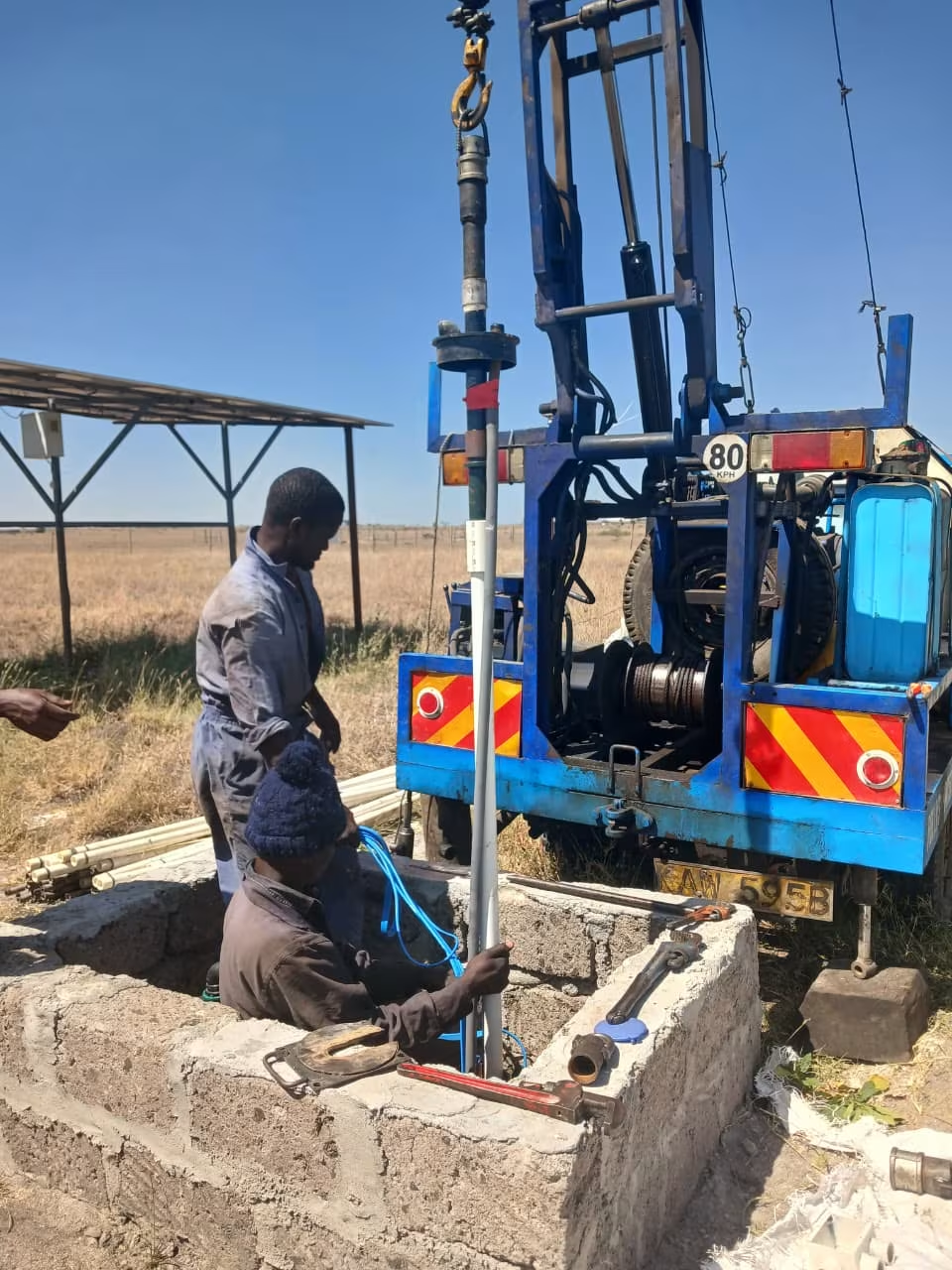
Boarding school borehole supply needs a brief that reflects the full campus day. Dormitories, kitchens, sanitation and staff activities can create different water-service requirements. First, identify the actual routines and demand evidence. Then ask qualified practitioners to assess source production, storage, delivery duty and the responsibilities needed for normal operation.
Explore Masterpiece Hydro-Solutions borehole equipping services and enquire about a boarding-school supply assessment. Confirm the proposed scope and availability for the campus. Send existing source records and the current service brief before asking the provider to recommend equipment or a continuity package.
Brief boarding school borehole supply for term-time operation
Describe the occupied campus during an ordinary school term. Also, identify activities that continue at night or outside teaching hours. A boarding school needs more context than a daytime pupil count. The appropriate project professionals should establish relevant demand assumptions rather than the pump supplier inventing them.
Next, distinguish current operation from planned dormitories, kitchens or staff facilities. Those additions may affect a future brief without representing measured present use. Label the assumptions and identify the decision point before the school relies on them.
Boarding school borehole supply should remain connected to the actual term-time evidence. A holiday observation can inform the assessment, but it should not silently become proof of service during full occupation. Ask the provider to explain the context of every important figure.
Divide the campus day into useful demand categories
Identify accommodation, kitchens, cleaning and other shared uses separately. Also, describe which routines overlap. The project needs the daily volume and relevant short-period duties. One average figure may not explain the service the campus expects during busy routines.
Next, gather available consumption or delivery records and identify their boundaries. A source total may include activities outside the boarding operation. A single building’s record may omit the rest of the campus. Ask the professionals to reconcile those differences before equipment selection.
Also, name who confirms the brief. School management, facilities staff and a governing committee may hold different information. The supplier should receive an agreed requirement and clear decision contact instead of several informal instructions with conflicting assumptions.
Check the groundwater production basis
Share relevant test-pumping information and water-level records. Ask the practitioner what abstraction basis they support and where uncertainty remains. Source yield, pump capacity and campus demand are different. A larger motor cannot establish groundwater available for additional boarders or facilities.
Next, identify known changes since testing. An older report may remain useful while requiring professional review for the current operation. If the evidence does not support the intended commitment, ask what further assessment would improve the decision.
Boarding school borehole supply should not turn a desired daily total into a guaranteed source result. The project can define what it needs while keeping available production tied to evidence. That distinction matters before the school purchases equipment or expands a water-dependent service.
Assess destinations and downstream service
Provide a current plan showing storage and intended delivery destinations. Also, identify elevation information and known route constraints. A borehole-to-tank duty may differ from service to the dormitories or kitchens. The project needs clear boundaries around both.
The Grundfos pump-selection resource explains why flow and head matter together. Ask the practitioner to assess pumping lift, delivery elevation, route losses and any required outlet service. Drilled depth alone does not specify the complete arrangement.
Next, identify which specialist owns downstream distribution. A successful tank-filling demonstration does not automatically establish every campus outlet requirement. The handover should state where the contractor’s commitment ends and how the other interfaces will be assessed.
Coordinate boarding school borehole supply interfaces
Use the following table to assign project responsibilities. It does not prescribe school water quantities or a universal operating standard. The relevant qualified professionals should assess the actual campus and intended uses.
| Interface | Question to agree | Evidence to retain |
|---|---|---|
| School operation to demand brief | Who confirms term-time activities and future assumptions? | Dated occupancy and service information |
| Source to equipment | What yield and duty basis supports selection? | Relevant test records and manufacturer explanation |
| Storage to campus buildings | Who assesses downstream service? | Defined delivery interfaces |
| Water to intended use | Who arranges and interprets quality evidence? | Appropriate laboratory records and advice |
| Interruption to school response | Who monitors reserve and contacts service? | Named responsibilities and continuity assumptions |
Next, resolve any gap before ordering equipment. Separate suppliers can complete their own packages while leaving the campus service dependent on an unowned task.
Place quality within the wider school water plan
WHO’s guidance on water, sanitation and hygiene in schools treats water as part of a wider school environment and management question. Use that principle to involve the appropriate school and water professionals. A borehole installation alone is not the complete campus water plan.
Also, clear groundwater does not establish drinking-water suitability. Appropriate laboratory analysis and qualified interpretation for the intended use guide that decision. Ask which quality-related work the proposal includes and who arranges any further assessment.
Next, retain the decision and evidence with the school’s records. A favourable result at one point should not become an unsupported promise about every later condition. The responsible team needs a clear process for reviewing concerns and changes to the arrangement.
Plan reserve for the campus operation
Describe which interruption the school needs to manage. Power loss, equipment repair and insufficient production are different events. Ask what the proposed backup addresses and what remains. A second power source does not solve every shortage.
Next, assess useful storage against the actual routines it must support. Nominal tank volume does not automatically equal protected reserve. The practitioner should explain operating assumptions, while school management confirms priorities and any alternative arrangement.
Boarding school borehole supply also needs a practical reporting route outside ordinary office hours. Name the responsible staff and qualified service contact. Staff should report observations rather than change protective settings, attempt retrieval or perform electrical work to restore supply.
Coordinate project visits with campus management
Tell the provider about access arrangements, current activities and planned works. Qualified personnel must determine safe working requirements. School management should identify an appropriate contact and coordinate its own responsibilities. Pupils should not take part in technical water-system tasks.
Next, distinguish access for assessment from later machinery or maintenance access. The provider should explain what it needs to verify before committing to work. A plan or photograph may help the first conversation without establishing every practical condition.
Also, identify who may approve changed scope during a visit. The contractor should explain additional findings through the agreed process. A caretaker’s assistance with access should not be treated as automatic authority for new commercial commitments.
Use a new-dormitory scenario
Consider an educational example where a school proposes a new boarding block after an earlier equipment installation. No actual school or source result is implied. The existing package served the earlier campus brief, while the proposed block changes occupied demand and delivery requirements.
First, management updates the operating brief and planned occupancy. Next, the practitioners compare the revised requirement with source evidence, storage and retained equipment. They identify any changed distribution or quality question. The school then reviews the assessment before committing the new block to that supply.
This example shows why boarding school borehole supply needs a review gate for expansion. A working source does not prove spare groundwater or suitable service at every new destination. New commitments should follow evidence and a coordinated operating plan.
Review boarding school borehole supply acceptance
Ask the contractor to define commissioning evidence at the agreed interfaces. The record should identify the supplied equipment, observed delivery and relevant conditions. Qualified personnel must choose and perform technical procedures. The governing team needs understandable outcomes rather than instructions for conducting tests itself.
Next, distinguish measured operation from a forecast of future production. One visit does not guarantee every term-time day or source condition. Request limitations, open items and the next action for each. Retain normal-use information and fault-reporting contacts with the asset records.
For permission questions, consult the Water Resources Authority’s permitting guidance and confirm current site-specific requirements directly. Also, clarify exclusions, tax treatment and offered warranty terms. The commercial commitment should match the assessed scope without promising universal continuity.
Questions about boarding-school equipping
Can pupil numbers determine the whole package?
They provide context, but the project also needs the full campus routine, relevant demand evidence and source assessment. The delivery route and outlet duties matter too. Ask appropriate professionals to establish the service brief before the pumping provider finalises equipment.
Does a holiday demonstration prove occupied-term service?
It records operation under its stated conditions. Ask how that evidence relates to the full term-time brief and source basis. The provider should explain what it establishes and which assumptions remain. A quiet-period observation is not automatically a guarantee for a busier campus.
Who should arrange water-quality assessment?
The school must identify the responsible team and obtain appropriate qualified advice. The contractor should state any quality-related service it includes. Clear water and successful pumping do not establish suitability for drinking or every other campus use.
What should staff receive at handover?
Provide normal-use instructions, understandable indications and service contacts. Also, retain source records, equipment references and commissioning evidence. Staff should know which tasks require qualified personnel and who makes decisions during interruption. The system should not depend on one person’s undocumented knowledge.
Enquire with the complete campus brief
Gather term-time records, the current layout and source evidence. Then enquire about a boarding-school assessment with Masterpiece Hydro-Solutions. Confirm scope and availability for the campus. Ask for clear interfaces, realistic reserve assumptions and an operating handover the school can maintain.