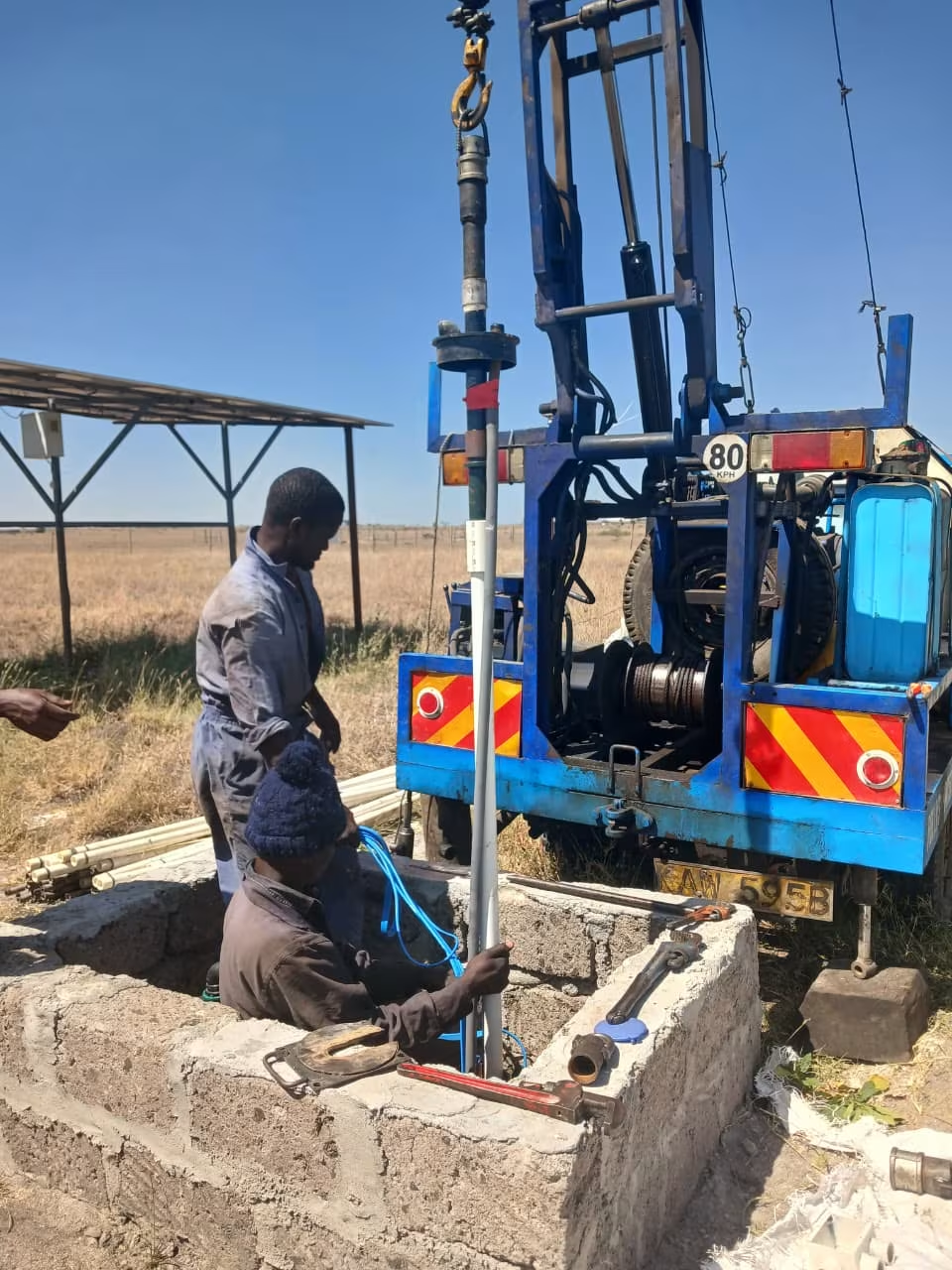
Borehole casing inspection should explain the condition actually visible and the limits of that evidence. Camera footage can help a qualified provider assess observations inside an accessible borehole. However, an image does not automatically certify remaining strength, identify every hidden defect or establish a complete repair design.
This guide helps Kenyan owners prepare a useful condition-investigation brief. See Masterpiece Hydro-Solutions borehole inspection or request a scoped casing assessment. Share available construction records and explain the concern the inspection should investigate.
Describe the question before choosing the investigation
First, explain why you want the casing assessed. There may be a record discrepancy, a proposed equipment change or observations that need professional investigation. Keep the reported symptom separate from a confirmed cause. Sand, reduced flow or repeated equipment trouble does not prove one particular casing defect.
Also, identify the decision the evidence should support. Reviewing an old installation differs from assessing a suspected obstruction or preparing a rehabilitation proposal. The provider should explain what its proposed scope can establish for that decision.
Do not ask a camera report to answer every source, equipment and quality question. A defined brief allows the contractor to distinguish useful visual observations from evidence that needs another qualified assessment.
Start borehole casing inspection with the construction record
Gather available drilling logs, completion documents and earlier inspection reports. Ask which records identify casing sections, joints and changes in construction. Also, label the source and date of the information rather than assuming an old drawing matches today’s installation.
Check that the documents refer to the same borehole. Similar site names or an unlabeled file can create confusion. The inspection report should link its observations to a clear source identity and state which historical details the provider could verify.
Borehole casing inspection becomes more useful when a reviewer can compare the planned construction with the observed accessible section. Missing records should remain an evidence gap, not be filled by an unsupported assumption.
Understand what camera observations represent
Manufacturer information from Laval Underground describes camera applications for well and casing condition. That supports using visual evidence as part of an investigation. It does not establish the result of any particular Masterpiece inspection or a manufacturer’s affiliation with the business.
Ask the provider to distinguish what is visible from what it interprets. A marked area, apparent deposit or possible change near a joint should have a traceable observation reference. Its cause and significance may require additional evidence.
Also, clarify the report’s terminology. Words such as damage, corrosion or obstruction should have an explained evidential basis. An owner should understand whether a statement is a direct observation, a provisional interpretation or a recommendation for further investigation.
Keep visibility limitations explicit
Water clarity, available light and viewing arrangement affect what an operator can observe. Laval’s lighting information explains that visibility depends on fluid clarity and illumination. The actual equipment and conditions determine the evidence available on your site.
Ask which casing sections the provider could assess clearly and which remain uncertain. An unclear image is not proof of good condition. Equally, a dark or poorly resolved area should not automatically become a confident diagnosis.
If the proposed investigation cannot establish the required detail, ask how the limitation will be reported and what next assessment may be appropriate. The scope should not promise complete coverage regardless of conditions.
Require traceable borehole casing inspection findings
Agree how observations will be located within the record. A useful report identifies the site, investigation date, measurement reference and relevant footage sections. Also, ask how interruptions or incomplete access are explained.
The owner needs enough information for another qualified reviewer to understand a finding. A still image without its location, viewing context or related notes may be difficult to interpret. Keep the original footage and report together where those are included in the scope.
Borehole casing inspection should also distinguish current observations from an earlier contractor’s account. Both may provide useful context, but their evidential status differs and the report should preserve that distinction.
Use an observation-to-decision table
Ask the provider to connect each important finding with the question it raises. This helps prevent a visual record from turning into an unsupported intervention list. Also, identify what remains unknown before agreeing further work.
| Record element | Useful question | Conclusion to avoid assuming |
|---|---|---|
| Visible surface change | What exactly can be seen and where? | The image alone proves its cause or full extent. |
| Possible joint concern | Which record and viewing context support the interpretation? | Every unseen connection has the same condition. |
| Deposit or restricted view | How does it limit the assessment? | Covered material is confirmed sound or damaged. |
| Accessible section | What prevented further coverage? | The entire borehole has been assessed. |
| Suggested follow-up | Which uncertainty will the proposed work address? | A particular repair or recovery outcome is guaranteed. |
Work through an illustrative finding
Consider an educational example where footage shows an apparent surface change in one accessible casing section. The owner also reports a recent change in pumping behaviour. These are assumed circumstances, not findings from a verified customer project.
First, the provider should locate and describe the visible observation. Next, it should explain whether the available evidence connects that observation with the operating symptom. If not, both questions should remain separate while further assessment is considered.
The owner can then ask what information would change the recommendation. This approach avoids treating two events as proof of one cause. A scoped qualified investigation should establish what is known before a particular intervention is authorised.
Do not confuse appearance with structural certification
A visual condition record and a structural assessment are different deliverables. Ask the responsible professional what the footage can support and what it cannot establish about strength or hidden conditions. The report should not imply a certification that was outside its method and scope.
Also, avoid comparing material suitability from appearance alone. Available construction specifications, water conditions and the intended work may affect the appropriate technical review. Those decisions belong to qualified personnel using relevant evidence.
Borehole casing inspection should help an owner ask better questions, not encourage a repair or material choice from a general blog article. Any proposed intervention needs its own assessment and clear acceptance conditions.
Keep performance and water-quality questions separate
Camera observations do not replace appropriate pumping evidence. A source’s sustainable production, pumping water level and delivery arrangement may need separate measurement. A visible casing finding alone does not define a suitable pump duty.
For equipment-related questions, review borehole equipping services. Ask how current installation records and qualified tests will inform the proposed next decision.
Likewise, clear-looking water does not establish suitability for drinking. Appropriate laboratory analysis and professional interpretation should address the intended use where relevant. The inspection report should not turn a visual condition statement into an unsupported quality guarantee.
Agree access and associated work responsibilities
The quote should explain what the provider assumes about wellhead access and existing equipment. Also, clarify who handles any necessary removal or associated work and what remains excluded. An owner should not attempt retrieval or alter the installation without qualified guidance.
If a condition prevents the planned investigation, ask how the limitation and any proposed next visit will be handled. The commercial terms should identify reporting deliverables, attendance limits and the process for approving additional work.
For relevant water-resource questions, WRA’s permitting guidance provides general context. Confirm current site-specific requirements with the authority rather than assuming the inspection settles every approval or intervention question.
Check the report before accepting a repair proposal
A borehole casing inspection report should separate observations, interpretations, limitations and recommendations. Request the evidence behind each important proposed action. Also, clarify whether another qualified assessment is needed before selecting an intervention.
For rehabilitation questions, see borehole rehabilitation services. Inspection can inform that discussion without guaranteeing restoration or proving that rehabilitation is preferable in every case.
Keep the original report, footage references and later proposals together. A documented decision trail helps another contractor understand why work was considered and what evidence should support its eventual acceptance.
Frequently asked casing questions
Can a camera confirm the condition of every casing section?
The answer depends on access, visibility and the actual investigation. Ask which sections were assessed clearly and which remain uncertain. The report should explain incomplete coverage rather than imply that an accessible recording proves the condition of unseen areas.
Does a visible mark prove the casing needs replacement?
Not by itself. The qualified provider should explain the observation, its significance and any further evidence required. A proposed intervention needs a reasoned assessment rather than a decision based on an isolated still image.
Can the report certify structural strength?
Ask what method and professional scope would support that conclusion. Visual observations are not automatically equivalent to structural certification. The inspection should state its actual limits and identify any appropriate further assessment.
Will inspection explain reduced water output?
It may provide relevant condition information, but source performance and equipment operation can raise separate questions. Ask how the investigation relates to the reported symptom and which tests are needed before assigning a cause.
What starts a useful enquiry?
Provide the county, available construction records, previous footage and current concerns. Also, describe existing equipment and known access limitations. Label uncertain information so the provider can define an appropriate investigation scope.
Request an evidence-led condition review
Useful borehole casing inspection makes the accessible findings traceable and the limitations clear. First, define the actual concern. Next, agree footage and reporting evidence. Finally, connect any proposed action with the observation and the further assessment it requires.
Request a casing-condition assessment from Masterpiece Hydro-Solutions. Share what is known and what the inspection needs to establish. The next step is a scoped qualified investigation with understandable conclusions.