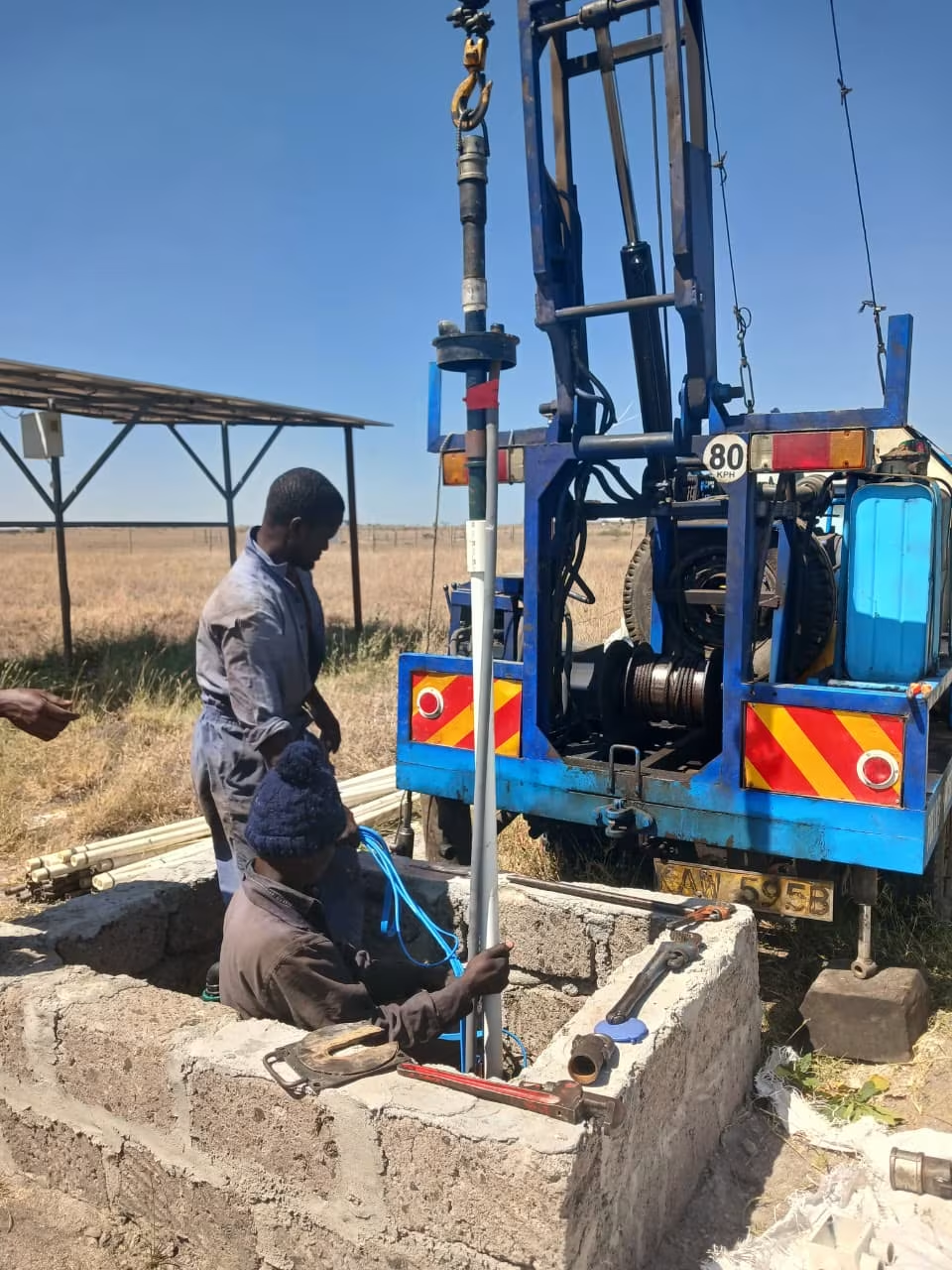
Borehole dry run protection should form part of an assessed pumping arrangement, not a promise that the source will never run short. The safeguard addresses an operating condition through a compatible detection and control method. First, understand the source evidence. Then ask a qualified practitioner how the proposed protection fits the actual equipment.
Explore Masterpiece Hydro-Solutions borehole equipping services and request a protection and operating-plan assessment. Share the pump records, available test-pumping information and fault history. Ask for a clear explanation of the proposed function and its limits before ordering a device.
Understand the condition the safeguard addresses
A borehole pump needs suitable operating conditions, including the water conditions specified for its application. Dry running can occur when those conditions no longer support normal pumping. The qualified assessor should relate the concern to the actual equipment, rather than assume every installation behaves identically.
Grundfos’s learning material on SQ and SQE protection explains dry-running risk and a protection approach within that particular range. It does not establish that another pump has the same built-in function. Ask for documentation relevant to your proposed or existing model.
Also, distinguish the protective function from the water service. A system that stops to avoid an unsuitable condition may leave the tank unfilled. Therefore, the owner needs both an equipment-protection plan and a realistic response to interrupted water delivery.
Plan borehole dry run protection from source evidence
Review available test-pumping records and the intended abstraction with the practitioner. The aquifer’s yield, the pump’s capacity and the users’ demand describe different things. If demand exceeds assessed production, a safeguard cannot create the missing groundwater.
Next, ask which water-level information supports the operating plan. Drilled depth does not equal pumping water level. Also, pump setting depth has a separate role. The assessor should explain the records clearly instead of selecting protection from a broad depth description alone.
Borehole dry run protection works within a system whose duty still needs to suit the source. Ask whether the practitioner sees a source-management issue, an equipment issue or an information gap. Those findings can require different actions, even when the owner observes a similar stop.
Check what the installed equipment already provides
Collect the pump, motor and controller model references. Also, find the original proposal and manuals if available. Some equipment includes particular monitoring functions, while other arrangements need additional assessed components. The practitioner should confirm the actual configuration rather than infer it from a brand name.
Next, ask how the proposed function interacts with existing controls. A replacement controller or pump may change the protection arrangement. The supplier should explain compatibility and identify any additional scope. Do not assume a device described as universal suits every motor and operating method.
Also, distinguish an advertised capability from an enabled, commissioned function. The owner should receive evidence that the contractor addressed the intended installation. A brochure can describe possibilities, but the handover must explain the actual arrangement and its relevant limitations.
Specify borehole dry run protection by function
Ask what condition the system monitors, how it responds and what the owner will see. The answer should describe the operating function without turning into instructions for adjusting settings. Qualified personnel must select the appropriate method and follow the relevant equipment documentation.
Also, ask what happens after a protective stop. The practitioner should explain whether the arrangement requires a particular service response or includes an assessed restart behaviour. Do not assume an automatic restart means the original cause has disappeared or that repeated interruptions are harmless.
Borehole dry run protection needs a clear relationship with fault reporting. A caretaker should know how to record the indication and contact the responsible service provider. Leave settings, electrical inspection and attempts to reproduce fault conditions to qualified personnel.
Separate the main operating questions
The following comparison helps the owner distinguish a protection purchase from a wider operating problem. It does not diagnose an installation or prescribe an electrical solution.
| Question | Evidence to request | Limit to recognise |
|---|---|---|
| Does the source support the intended abstraction? | Relevant source assessment and operating assumptions | A protective device does not increase yield |
| What function already exists? | Model-specific documentation and configuration record | A brand name does not prove the feature |
| Is additional equipment suitable? | Written compatibility and scope explanation | A generic label does not establish a match |
| What follows a stop? | Agreed indication and response description | Restarting does not diagnose the cause |
| What service continues during interruption? | Usable storage and essential-demand brief | Protection does not guarantee uninterrupted water |
Next, use unresolved answers to define the assessment rather than buying equipment to fill an information gap. The appropriate next step may involve source review, compatibility checks or investigation of another fault.
Keep repeated stops as useful evidence
If the pump repeatedly stops, record the timing, visible indication and effect on water delivery. Also, note relevant changes to demand or the delivery destination. Share these observations with the practitioner. They can support investigation without proving the cause themselves.
Do not bypass protection to keep the tank filling. Instead, ask the service provider to assess the repeated condition and explain the finding. A stop can signal a problem that needs attention, while another fault may also affect operation. The owner should not make that diagnosis from one message.
Borehole dry run protection should make the operating arrangement more understandable. If the provider cannot explain an indication or response, request clarification. A system with unexplained recurring stops still needs assessment, even if the protective function appears to operate.
Consider a demand-increase scenario
Consider an educational example where an owner adds a new water use and then observes more pump interruptions. No actual project or test result is implied. The timing creates a question about the revised demand and abstraction plan, but it does not establish the diagnosis.
First, the owner supplies the original records and describes the new use. Next, the practitioner assesses source evidence, equipment and indications. The findings may support an adjusted operating plan, further investigation or other defined work. The owner does not simply request a less sensitive safeguard.
This scenario shows why borehole dry run protection belongs alongside source and demand assessment. A protective stop cannot solve a persistent supply imbalance. The useful decision addresses the cause and the water-service requirement while preserving an appropriate equipment safeguard.
Define a commissioning demonstration safely
Ask the contractor how it will verify the agreed function using appropriate professional procedures. The demonstration must follow the actual equipment and safe working requirements. Owners should not create dry-running conditions or interfere with sensors to test a sales claim.
Next, request a record of the completed checks and any limitations. The report should identify the relevant equipment and explain the owner’s normal indications. If a check remains incomplete, ask for the reason and an agreed next step rather than assuming that silence means acceptance.
Also, keep the protective function distinct from a source test. Commissioning can assess the installed arrangement without establishing sustainable yield for every future period. The contractor should explain which evidence supports each conclusion and which assumptions remain provisional.
Review borehole dry run protection in the quotation
The quotation should identify assessment, proposed equipment and installation boundaries. Also, ask whether the scope includes compatibility review of retained components and owner instruction. A single line called “protection” may omit the information needed to compare proposals.
Next, identify exclusions and additional work that the assessment might reveal. If the provider finds a different fault, ask how it will communicate the revised scope. The owner should approve an evidence-based proposal rather than authorise undefined changes in advance.
Finally, request offered warranty terms and tax treatment in writing. Do not assume that protection creates a guarantee against every pump failure. The supplier should explain the actual commercial commitment alongside the technical function and its operating limits.
Plan the owner’s response to interrupted supply
Identify essential demand and the usable reserve available during a stop. Storage may reduce disruption, but its volume and timing need assessment. Also, explain how the site will report faults and arrange professional help. The protection proposal should not imply emergency supply services that nobody has agreed to provide.
If the existing source needs wider investigation, discuss borehole inspection assessment as a separate possible scope. The practitioner should explain which investigation fits the concern. A camera inspection or other service should not become an automatic answer without a defined question.
Keep water quality separate as well. A protected operating pump does not establish suitability for drinking or other uses. Appropriate laboratory analysis and the intended use guide those decisions. The safeguard protects an operating function; it is not a water-quality certificate.
Questions about dry-running safeguards
Does protection prove that my borehole has enough water?
No. Source capability needs its own evidence and assessment. The protection function addresses an operating condition, while yield and user demand remain separate. Ask the practitioner to explain both the source basis and the proposed operating response before treating the installation as a complete supply solution.
Can every pump use the same protection device?
Do not assume that. Ask for compatibility evidence covering the actual pump, motor and controls. Also, check which functions already exist. Qualified personnel should select and commission the arrangement using model-specific information. An identical label on two devices does not establish identical suitability or behaviour.
Should I keep resetting a recurring alarm?
Report the pattern and follow the appropriate professional advice for the installation. Do not bypass safeguards or experiment with settings. The provider needs to assess the cause. Record visible messages and timing so the investigation can distinguish source conditions, equipment issues and other possible explanations.
Does an automatic restart guarantee normal supply?
No. It describes one part of an assessed operating response. The underlying condition may persist or recur. Ask the contractor to explain the actual behaviour and the owner’s reporting responsibilities. A restart feature cannot create groundwater or prove that the site will meet its daily demand.
What should the handover explain?
Request the relevant model information, completed checks and normal indications. Also, obtain clear reporting instructions and the responsible service contact. The owner should know which tasks require qualified personnel. Any incomplete check or unresolved supply limitation should remain visible in the final record.
Request protection as part of an assessed system
Gather your equipment records, source information and interruption history. Then request a protection assessment from Masterpiece Hydro-Solutions. Ask for a compatible function, clear commissioning evidence and an understandable owner response. Those details connect the safeguard to the actual borehole instead of relying on a generic promise.