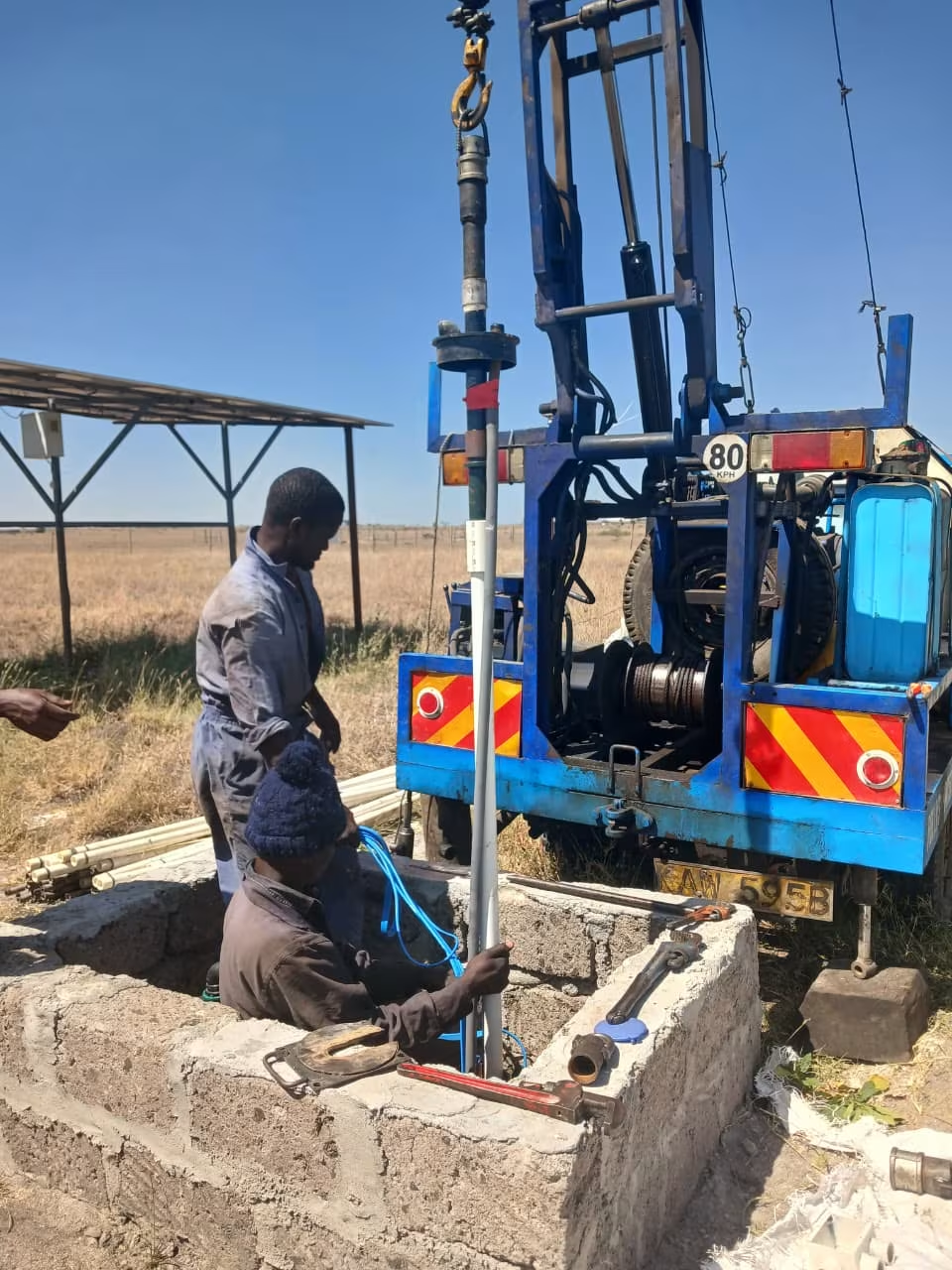
Borehole equipping cost depends on the water duty and complete installation scope, not the pump price alone. A proposal may include equipment while leaving access work, controls or commissioning elsewhere. First, establish what the site needs. Then compare the work and responsibilities behind each total before deciding which quotation offers suitable value.
Explore Masterpiece Hydro-Solutions borehole equipping and request an itemised equipment assessment. This guide explains how to compare cost boundaries. It gives no invented package prices and does not treat a drilling estimate as the price of a commissioned pumping system.
Define borehole equipping cost around one water duty
Write down the required daily volume, intended destination and important operating periods. Also, collect the completion record and test-pumping report. Those inputs help the assessor define a duty the source can support. Without a common brief, quotations may cover different flow requirements or storage routes while appearing to offer the same service.
Next, distinguish the present requirement from possible expansion. The larger future case may need a different assessment and scope. However, avoid adding an arbitrary spare-capacity allowance without explaining its purpose. Paying for a stronger pump does not establish more sustainable source water or prove that the future delivery route will suit it.
Separate drilling expenditure from equipment expenditure
Drilling creates and records the source construction. Equipping needs its own assessment of pumping requirements, equipment and installation. Therefore, a per-metre drilling figure cannot establish the completed equipment cost. Ask which earlier work has already produced useful records and which tasks remain outstanding before the equipment team can select components.
If the contractor offers several project stages together, request visible boundaries for each one. The borehole drilling service provides the relevant construction context. Also, identify testing, quality analysis, storage and downstream distribution separately where necessary. A bundled headline should not conceal unpriced work required for the owner’s actual supply arrangement.
Compare borehole equipping cost by component and task
Ask each provider to explain their equipment selection and the tasks included in its installation. The owner does not need to specify cable sizes or electrical components. Instead, request an accountable scope with named equipment and clear quantities. Then use the same categories to identify meaningful differences between proposals.
| Cost area | Scope detail to request | Question before comparing totals |
|---|---|---|
| Pump and motor | Exact equipment identity and selected duty | Do both proposals address the same required service? |
| Controls and protection | Assessed compatible arrangement and included testing | Who accepts responsibility for the complete combination? |
| Pipework and connections | Defined route, quantities and scope boundary | Where does borehole delivery end? |
| Installation work | Access assumptions and qualified tasks | Which mobilisation or handling work sits outside scope? |
| Commissioning | Measured records and control demonstrations | What evidence supports final acceptance? |
| Aftercare | Written warranty exclusions and support terms | Who handles labour, faults and replacement decisions? |
Ask why the proposed pump fits the duty
Compare required flow and total dynamic head together. The Grundfos pump-selection learning resource explains that relationship. A lower-priced pump may address a different requirement, while a larger model still needs justification. Isolated power ratings cannot settle whether two equipment proposals provide an equivalent service.
Also, check the measurement basis. Drilled depth and pump setting depth differ from pumping water level. Total dynamic head includes pumping lift, delivery elevation, pipe losses and required outlet pressure. If a quotation uses only total hole depth, ask which further assessment will establish the actual duty before the equipment decision becomes final.
Identify retained equipment and its assessment costs
An existing installation may offer components worth retaining, but condition and compatibility need assessment. Ask what the contractor can confirm from records and what requires inspection. Also, identify the cost boundary for that work. A proposal that assumes everything remains usable may appear cheaper than one that includes necessary verification.
Conversely, replacing every component needs a reason. Request a retain-or-replace explanation for important items, with findings and remaining uncertainty. Borehole equipping cost becomes easier to judge when the owner can see why each purchase appears in the scope. Convenience or a general premium-package label should not replace that reasoning.
Use an illustrative comparison without invented prices
Consider two fictional proposals for the same existing borehole and storage destination. Proposal A lists a pump, controller and basic installation. Proposal B also identifies assessment of retained components, the agreed delivery route and commissioning evidence. No monetary assumptions are necessary to see that the scopes may differ materially.
First, ask Proposal A’s provider whether those tasks sit inside its total or require separate work. Next, ask Proposal B’s provider to justify any replacement components. Both providers should answer against the same source records and water brief. The lower total may still suit the project, but the owner needs a complete comparison.
Finally, list tasks that remain for another party under either option. Storage construction or internal distribution may need separate arrangements. Borehole equipping cost should show the owner’s remaining project commitments, rather than end the comparison at a pump package that cannot yet deliver water where users need it.
Make access assumptions visible before mobilisation
Tell providers about entry restrictions, active site uses and known obstructions. Ask them to assess the working area and future maintenance access. Also, clarify whether their installation scope includes the required qualified handling work. A photograph may support initial discussion, but it cannot establish every practical site condition.
If access changes after quotation, request an explanation of any revised task and cost basis. The same principle applies when the owner moves a tank or extends a delivery route. These changes may affect both work and equipment duty. They should not become surprise charges supported only by a general additional-work clause.
Control borehole equipping cost through approved variations
Agree who can authorise changes and how the contractor will present them. A useful variation identifies the finding, proposed response, quantity and commercial basis. Also, distinguish a corrected assumption from a new owner request. This allows the project team to make timely decisions without losing the record behind extra spending.
Ask whether VAT is included, how long the quotation remains valid and which payment milestones apply. The agreement should connect payments with clearly described stages. There is no universal deposit percentage in this guide. Keep the final approved scope together so later invoices can refer to the same understanding.
Do not remove acceptance work to improve the headline total
Commissioning provides evidence about the installed arrangement. Ask for measured delivery, operating conditions, equipment identities and the destination served. Also, clarify how the team will demonstrate relevant controls. Removing these tasks may reduce quoted scope while leaving the owner unable to compare the finished system with its design basis.
The borehole equipping cost comparison should show the acceptance evidence explicitly. A successful first flow does not settle every source, distribution or daily-volume question. Qualified personnel should explain what the observations demonstrate and what needs ongoing records. This makes handover useful rather than a brief demonstration followed by an invoice.
Consider ownership responsibilities after installation
Request written warranty terms, exclusions and reporting contacts. Ask who handles assessment when a fault involves several retained and new components. Also, identify ordinary operator responsibilities without inviting unqualified electrical work. A clear reporting route can help future maintenance decisions even when no one can promise a particular fault or response time.
Water quality remains separate from pump purchase. Arrange appropriate analysis and advice for intended uses where needed. A new installation does not guarantee potability or a larger source yield. Keep these boundaries clear in the budget so the owner does not assume equipment spending resolves every requirement of the wider water project.
Questions buyers ask about equipment spending
What is the standard equipping package price?
A responsible figure needs source evidence, water duty and site scope. This guide does not claim a universal price. Request itemised proposals against the same brief. Also, identify which testing, storage and distribution tasks remain outside each quotation before comparing the payable totals.
Does a deeper borehole always cost more to equip?
Depth alone cannot establish the full equipment requirement. Actual pumping water level, delivery head, installation conditions and assessed component scope also matter. Ask the provider to explain those inputs. Avoid treating a depth-only rule as a substitute for a complete equipment assessment.
Should we choose the lowest total?
Compare equivalent work first. A lower borehole equipping cost may reflect a suitable focused scope or important exclusions. A higher figure still needs justification. Ask each provider to explain the proposed equipment and remaining owner tasks rather than judge value from the headline alone.
Can we keep pipework and controls to reduce spending?
Possibly, if their assessed condition and compatibility support the proposed arrangement. Ask for the verification scope and retain-or-replace findings. Also, confirm warranty boundaries where new equipment connects to retained components. An assumption of suitability should not quietly replace an inspection the project needs.
What information improves an initial estimate?
Provide source reports, intended daily volume, storage destination and available power information. Include existing equipment details and access restrictions. Finally, mark unknowns. These facts help the provider identify the assessment needed before turning an early allowance into a reliable site-specific proposal.
Request a complete spending decision
Compare duty, equipment, installation tasks and acceptance records together. Keep exclusions, taxes and variation approval visible. Also, identify the later work the owner still needs. This makes borehole equipping cost a decision about a defined supply arrangement rather than an isolated pump purchase.
Request an itemised equipping assessment from Masterpiece Hydro-Solutions. Share the site records and ask for a justified equipment scope. A useful quotation explains what the spending covers, why the components fit and which responsibilities remain beyond the proposed installation.