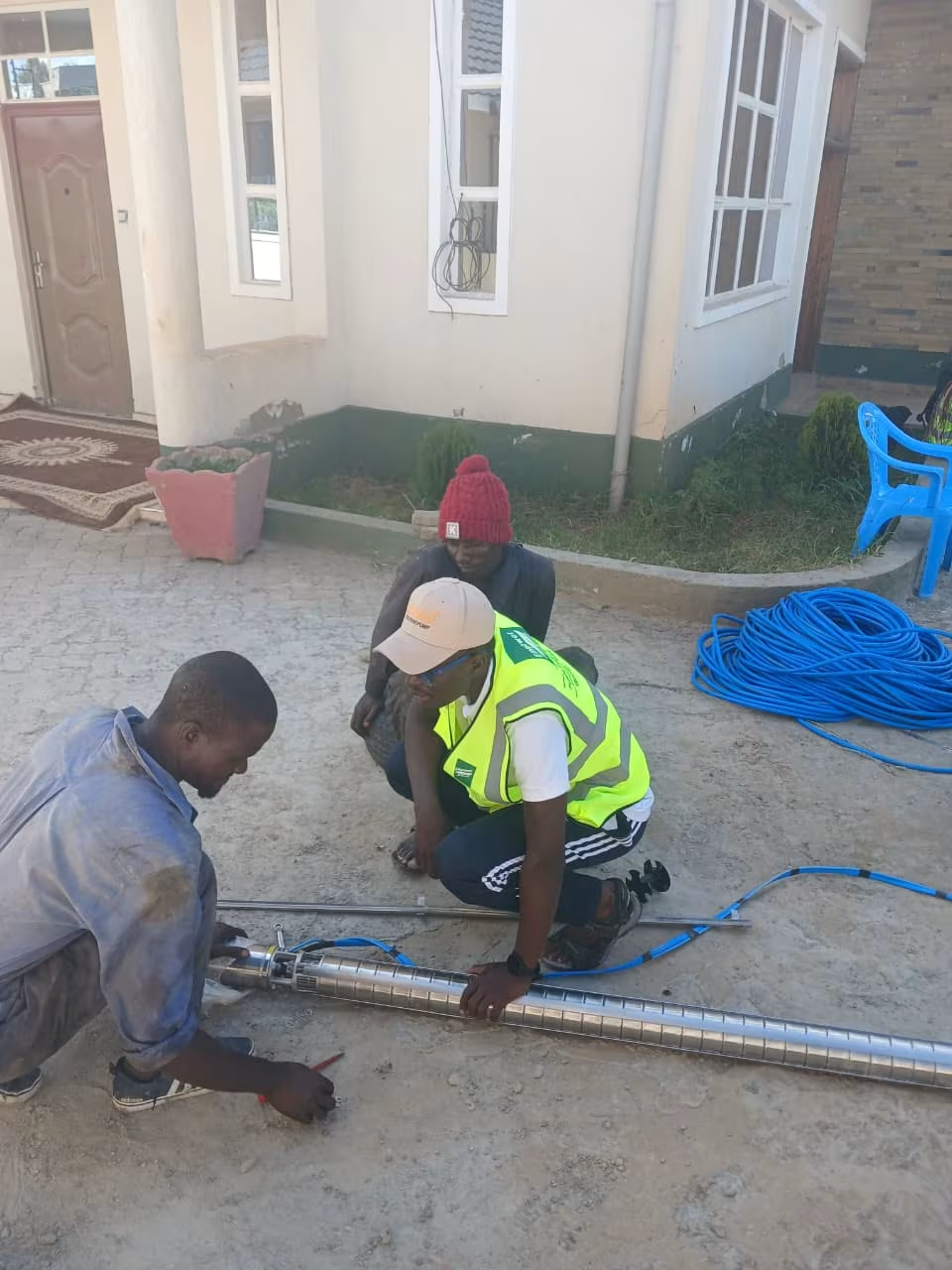
A borehole equipping quotation improves when the enquiry explains the source, intended demand and actual delivery destination. A request for a strong pump leaves the assessor guessing about the service you need. First, gather available records and identify unknowns. Then ask for a proposal that states its assumptions before it names equipment.
Explore Masterpiece Hydro-Solutions borehole equipping and request an assessed equipment proposal. This guide focuses on enquiry preparation and response checking. It helps owners describe the project without inventing measurements, prescribing technical components or treating the first returned total as a confirmed design.
Start the borehole equipping quotation with project identity
Provide the county, site location and borehole reference where available. Also, state whether the project concerns a new source, an existing installation or several boreholes. This prevents a provider from applying records for one installation to another. Nominate the person who can explain site history and arrange access for any necessary assessment.
Next, identify the person authorised to approve scope and spending. A caretaker may know daily operation while an owner or committee controls procurement. Both roles can matter. Keeping them clear helps the assessor gather useful facts without mistaking an operational conversation for approval of an equipment order.
Gather the source evidence without hiding gaps
Send the completion record and test-pumping report if available. Include dates and the site each document describes. Also, identify any later changes or concerns. A test summary may help an initial discussion, but the provider should explain whether the full record or current assessment is necessary before selection.
Mark missing information honestly. Do not copy an unverified depth or water level from a neighbour’s installation. Drilled depth, static water level and pumping water level answer different questions. An explicit gap lets the assessor propose a verification task; a confident wrong figure can misdirect the whole equipment discussion.
Describe demand for the borehole equipping quotation
State the intended daily volume and how you established it. Measured consumption, adviser input and early estimates have different confidence levels. Also, describe busy periods and essential uses. The provider needs to understand whether the source fills storage gradually or the wider project expects a particular delivery timetable.
Keep planned expansion separate from current demand. For example, another occupied building may require a later scenario rather than an unexplained extra margin. The borehole equipping quotation should show which case its selected equipment addresses. That makes future changes easier to discuss without assuming the original package supports unlimited growth.
Identify the destination and route
Explain where water must arrive. Send a simple plan or photographs that identify storage destinations and the known route. Also, distinguish confirmed elevations from estimates. The assessor should determine which measurements the selection needs. A tank described only as nearby may still leave important questions about lift, route and delivery requirements.
Clarify whether the enquiry covers only borehole-to-tank work or also distribution beyond storage. The Grundfos pump-selection resource explains why flow and head matter together. A complete delivery description helps the provider define that duty instead of choosing equipment from hole depth alone.
Use an equipment-enquiry information sheet
Send the following information in one organised file or message. If an item remains unknown, say so and ask how the assessor will resolve it. The sheet supports an initial discussion; it does not replace professional inspection or turn the owner into the designer of electrical and mechanical components.
| Enquiry item | Useful evidence | Question if missing |
|---|---|---|
| Source identity | Location and borehole records | How will the assessment confirm the correct installation? |
| Water requirement | Daily demand and busy periods | What observation will improve an early estimate? |
| Delivery destination | Tank location and route information | Which levels and route measurements need verification? |
| Power availability | Existing supply records and equipment details | Who will carry out a qualified supply assessment? |
| Existing components | Model details, service history and photographs | What inspection determines possible retention? |
| Project boundary | Included tasks and later interfaces | Who handles storage and downstream distribution? |
Describe existing power without making assumptions
Tell the provider what records you hold about the available supply. Also, state whether the site uses another power arrangement or plans a change. Photographs and documents can support discussion, but qualified personnel should confirm the relevant supply and equipment compatibility. The presence of electricity at a building does not establish suitability for every borehole motor.
A borehole equipping quotation should identify the electrical assessment and installation boundaries. Ask who takes responsibility for the controls and complete equipment combination. Owners should not specify cable sizes, alter connections or bypass protection. They need a clear scope and evidence from qualified personnel before accepting the proposed arrangement.
Work through a fictional enquiry revision
Consider an educational owner who initially asks for a pump for a deep borehole. The owner later supplies the completion report, a test record and a sketch showing an elevated storage destination. The enquiry also identifies an ordinary demand of eight cubic metres daily. These details illustrate preparation, not a real client project or a recommended allowance.
The provider now has a clearer question: assess an equipment arrangement for the recorded source and destination. If average assessed delivery were two cubic metres per hour, the assumed daily volume would need four operating hours. However, that arithmetic does not establish the actual head, sustainable yield or available operating window.
The useful improvement comes from the evidence, not the numerical example. A revised borehole equipping quotation should state which facts it confirms and which measurements remain outstanding. The owner can then compare a bounded proposal rather than an attractive package that answers an undefined request.
Explain what may stay in an existing installation
List the pump, controls and other components you know about. Include model references and service history where possible. Also, describe observed problems without presenting a guessed diagnosis as fact. A tripping control or slowly filling tank may require assessment before anyone can decide which equipment needs replacement.
Ask the provider to distinguish confirmed retention from provisional assumptions. If inspection is necessary, identify its scope and commercial treatment. The borehole inspection service offers a relevant assessment discussion when the source condition needs investigation. It should not become an automatic promise of increased yield or a substitute for equipment assessment.
Review the borehole equipping quotation against the brief
Check the site and destination first. Next, identify the proposed duty, named equipment and assumptions. Compare those with your original information. Also, look for missing installation or commissioning tasks. A response should explain deviations from the brief instead of leaving the owner to infer why a different model or boundary appears.
Ask whether the proposal includes a site assessment before final equipment confirmation. If the total remains provisional, identify what could change it. Clarify taxes, quote validity and the approval process for extra work. The final version should bring these answers together so the project does not depend on several conflicting messages.
Agree the evidence expected at handover
Request measured delivery, relevant operating conditions and equipment identities in the commissioning record. Also, ask how the team will demonstrate normal controls and protection behaviour. Those deliverables should appear in the proposal before work starts. They help the owner compare the finished installation with the agreed basis.
Confirm who receives the records and who operates the system. A clear handover includes normal indicators and support contacts. Qualified personnel remain responsible for technical checks; the owner needs an understandable reporting route. A borehole equipping quotation that omits handover responsibilities leaves an important part of the service undefined.
Questions owners ask before sending records
Can we enquire before the test report arrives?
Yes, but explain what remains outstanding. The provider can identify an initial assessment scope while keeping final selection conditional on necessary evidence. Also, avoid turning an early equipment allowance into a confirmed recommendation. The report may affect the source basis and proposed duty.
Do photographs replace model or test records?
They can help identify equipment and practical conditions, but they do not establish everything the assessor needs. Include readable records where available. Also, describe when and where each photograph was taken. The provider should explain which information needs inspection rather than guess from appearance.
Should we request the same pump from every bidder?
Give each bidder the same water brief and source evidence first. Ask them to justify the selected duty and equipment. A named model request may support a like-for-like replacement discussion, but it cannot prove that the model still suits current demand and site conditions.
What if a tank location changes after quotation?
Tell the provider before ordering or installation. A changed destination can alter total dynamic head and installation scope. Ask for reassessment and a clear revised version. Do not assume an original borehole equipping quotation remains valid for a materially different delivery arrangement.
Can the proposal guarantee water quality?
Equipment selection does not establish drinking-water suitability. Arrange appropriate laboratory analysis and advice for the intended use. Also, keep source yield separate from pump capacity. The proposal should explain equipment service and its limits rather than promise outcomes that need other evidence.
Send a brief the provider can assess
Gather source records, demand, destination, power information and access constraints. Mark estimates and identify the approving contact. Finally, ask which further assessment remains necessary. This makes a borehole equipping quotation more useful because the proposed service follows your actual information rather than an unsupported package assumption.
Request a borehole equipping assessment from Masterpiece Hydro-Solutions with that brief. Ask for a written duty basis, scope and handover deliverables. Keep the approved proposal with the supplied evidence so later decisions can refer to the same project record.