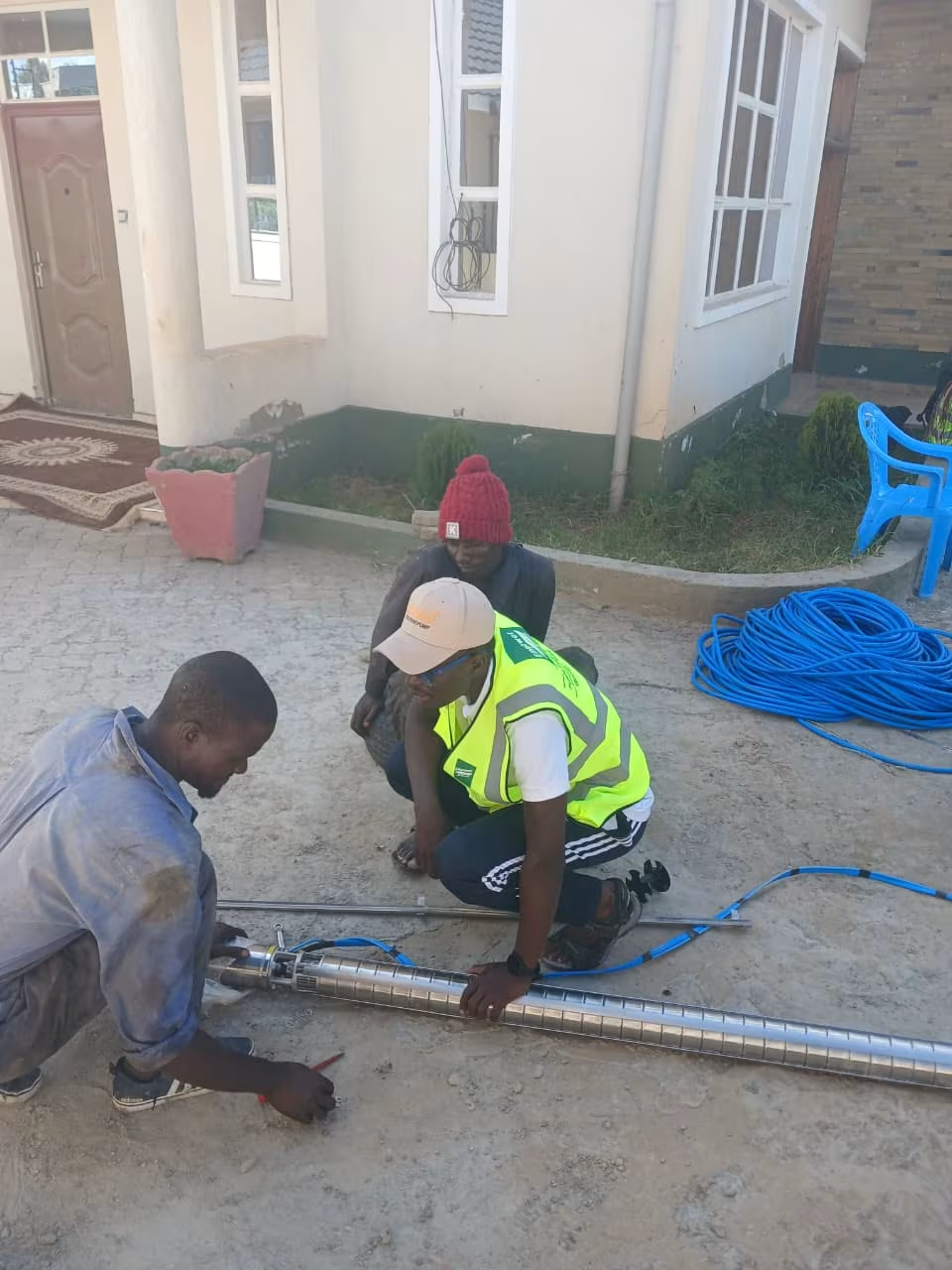
A borehole equipping readiness checklist should identify what is ready, what remains unknown and who decides next. Drilling completion does not automatically provide every input for pump selection. Therefore, review the source records before ordering equipment. A clear readiness process prevents an early estimate from becoming an unsupported installation instruction.
Masterpiece Hydro-Solutions offers borehole equipping. To discuss a recently drilled source, request an assessment with your completion and testing records. Include the intended use and tank location. State missing information clearly rather than supplying a guessed yield or pumping level.
Start the borehole equipping readiness checklist with records
First, gather the construction and completion information available from the drilling stage. Identify the actual borehole location and relevant dimensions from the records. Also, retain approved changes from the original scope. The equipping assessor needs the completed asset’s information rather than only the pre-drilling proposal.
Next, provide the test-pumping report and measured water levels. Ask whether those records support the present equipment decision or need clarification. A report title alone cannot explain every condition. Qualified personnel should interpret the measurements and their relevance to the intended operation.
Also, distinguish a document not yet received from a test not yet performed. Those gaps may need different next steps. Ask the responsible parties what evidence exists. Avoid describing an incomplete file as complete simply because drilling equipment has already left the site.
Confirm the water service you actually need
Describe the intended uses and the daily pattern. A household, institution and farm can require different delivery arrangements. Also, identify essential needs and flexible demand separately. The proposal should explain how the required service relates to the available source rather than assume every use will be achievable.
Next, identify the proposed delivery point. Tank filling and direct outlet supply involve different assessment questions. Provide the location and available elevation information without inventing a head calculation. The designer should explain the reference levels and further measurements it needs.
Finally, identify existing equipment that the proposal might retain. A tank, pipe or power supply needs appropriate assessment before inclusion. Physical presence does not prove suitability. Ask which items require inspection and which remain excluded from the initial equipping scope.
Use the borehole equipping readiness checklist as readiness gates
| Readiness gate | Evidence to discuss | Decision before proceeding |
|---|---|---|
| Source records | Construction information and actual location | Does the assessor understand the completed borehole? |
| Performance evidence | Test-pumping results and water levels | Can the proposed operation receive suitable assessment? |
| Demand brief | Uses, volume records and timing | Which service does the equipment need to provide? |
| Delivery route | Tank and outlet information | What further measurements support the required duty? |
| Power arrangement | Available supply and intended operating mode | Which qualified compatibility checks remain? |
| Acceptance plan | Proposed commissioning and handover records | What evidence demonstrates the agreed scope? |
These gates organise the enquiry rather than prescribe a technical installation method. Some assessments may proceed together, while others depend on missing evidence. Ask the supplier to explain the sequence. Do not treat a completed checklist as permission for unqualified installation work.
Keep the different depth and level figures separate
Drilled depth, static water level, pumping water level and pump setting describe different features. Therefore, ask the assessor which figure supports each decision. Do not select equipment from the drilled depth alone. The operating lift depends on conditions that a single depth number cannot establish.
Also, check the reference point used in each record. Figures measured from different positions may need professional interpretation before comparison. Tell the assessor if the records use unclear labels. A careful clarification can prevent the project from carrying a mistaken assumption into equipment selection.
The borehole equipping readiness checklist should preserve those distinctions in the project file. Ask for a plain-language explanation of any unresolved measurement. Buyers can identify missing labels without attempting their own downhole measurements. Qualified personnel should obtain and interpret the necessary evidence.
Ask how the proposed duty supports selection
The Grundfos pump selection learning resource explains selection using required flow, head and the duty point. Ask the supplier to connect those principles with your records. This helps you understand the proposal without choosing a model from motor power alone.
Total dynamic head considers pumping lift, delivery elevation, friction and required outlet pressure. Also, the required flow must relate to the intended service and source evidence. Ask the designer to state its assumptions. Avoid accepting a package justified only by the statement that it suits deep boreholes.
Next, request an explanation of the operating limitations. A pump’s nominal capacity does not establish sustainable aquifer yield. Likewise, a desired daily volume does not prove the source can supply it. Qualified assessment should identify the constraint rather than hide it behind larger equipment.
A scenario with drilling complete but records pending
Imagine an owner wants equipment installed as soon as the drilling contractor leaves. The owner knows the final drilled depth but has not received the testing report. A tank location is also undecided. Several suppliers offer equipment packages, yet they lack key inputs for the same delivery assessment.
First, the owner gathers the completed construction information and requests the available testing evidence. Next, the owner confirms the intended delivery point and use. The equipping assessor then identifies any remaining measurements or professional checks. The quotation can state a clearer duty and scope.
The borehole equipping readiness checklist has not delayed a finished design; it has exposed that no finished design yet exists. An early estimate can still support budgeting if its assumptions remain clear. However, it should not become a final equipment commitment without the relevant assessment.
Define controls, power and connection boundaries
Ask what the proposed supply includes beyond the pump. Controls, associated connections and protection need clear scope boundaries. Also, identify any excluded civil or distribution work. An equipment list may look complete while leaving essential interfaces outside the quoted installation.
Next, request qualified assessment of the intended power arrangement. Existing electrical supply or a planned solar system needs compatibility review. Do not select cable, protection settings or wiring methods from general guidance. The buyer should receive an understandable proposal from appropriately qualified personnel.
For a related solar enquiry, see Masterpiece Hydro-Solutions borehole solarisation. Solar output varies through the day and season. The system assessment should consider source evidence, demand and storage. More panels cannot correct inadequate sustainable groundwater yield.
Keep quality and authority matters on the list
Water movement does not establish water suitability. Therefore, ask which laboratory analysis fits the intended use and what decisions follow the findings. Clear water is not necessarily potable. Storage also cannot replace the required quality evidence or an appropriate treatment assessment where needed.
The WRA permitting guidance distinguishes construction authorisation from a subsequent water permit. Ask WRA about current site-specific requirements. Do not assume that drilling completion or an installed pump automatically authorises abstraction. Identify who handles the relevant project information.
A borehole equipping readiness checklist should show these items as separate decisions. A favourable pump demonstration cannot resolve all quality and authority questions. Keep the relevant documents together so the owner understands what the project has completed and what remains open.
Agree handover before accepting the proposal
- Identify the equipment and the agreed delivery boundary.
- Request the commissioning checks and records included in the scope.
- Clarify who receives the handover and support information.
- Ask for the actual warranty documents and applicable conditions.
- List unresolved items and their responsible contacts.
- Retain the accepted proposal and any approved substitutions.
- Keep the source records alongside the equipment information.
- Request safe owner observations rather than repair instructions.
Also, compare the final handover with the accepted scope. Ask for missing records and clear explanations of differences. A verbal statement that the system works may not answer those questions. Documented evidence supports later support enquiries and helps future assessors understand the installation.
Questions about a borehole equipping readiness checklist
Can I order a pump from the drilled depth?
Drilled depth alone cannot establish the required duty. Provide testing information, measured water levels and the delivery brief. Qualified personnel should explain the missing inputs. Avoid treating a common depth-based package as a site-specific selection without evidence supporting the proposal.
What if the testing report has not arrived?
Ask whether the evidence exists and when you can receive the actual record. Also, tell the equipping assessor what remains unavailable. It should explain the effect on selection. Do not replace missing measurements with informal assurances about how much water appeared during drilling.
Can the quotation remain provisional?
A preliminary estimate can support planning if the supplier clearly states its assumptions and exclusions. Ask what must change before final selection and installation. Keep the estimate’s status visible. Do not interpret a provisional package as confirmed suitability for your completed borehole.
Does equipping include household distribution?
Only the accepted scope can answer that question. Ask where the proposed work ends and which delivery connections it includes. Storage, further pumping or distribution may need separate assessment. A complete equipment list does not automatically cover the entire property water network.
Who should complete the technical checks?
Appropriately qualified personnel should assess, design, install and commission the relevant works. The owner can gather records and clarify the intended service. Do not use the checklist as a construction method. It organises decisions and evidence without replacing professional judgement.
Request an assessment from a complete brief
A useful borehole equipping readiness checklist connects source records, demand and the intended delivery arrangement. It also identifies missing evidence before equipment selection. Gather the available file and label unresolved items honestly. The supplier can then explain the next assessment and its scope.
Send Masterpiece Hydro-Solutions your new-borehole equipping enquiry. Include the construction information, test report and proposed tank location. Request an itemised response showing assumptions, professional checks and the records you should receive at handover.