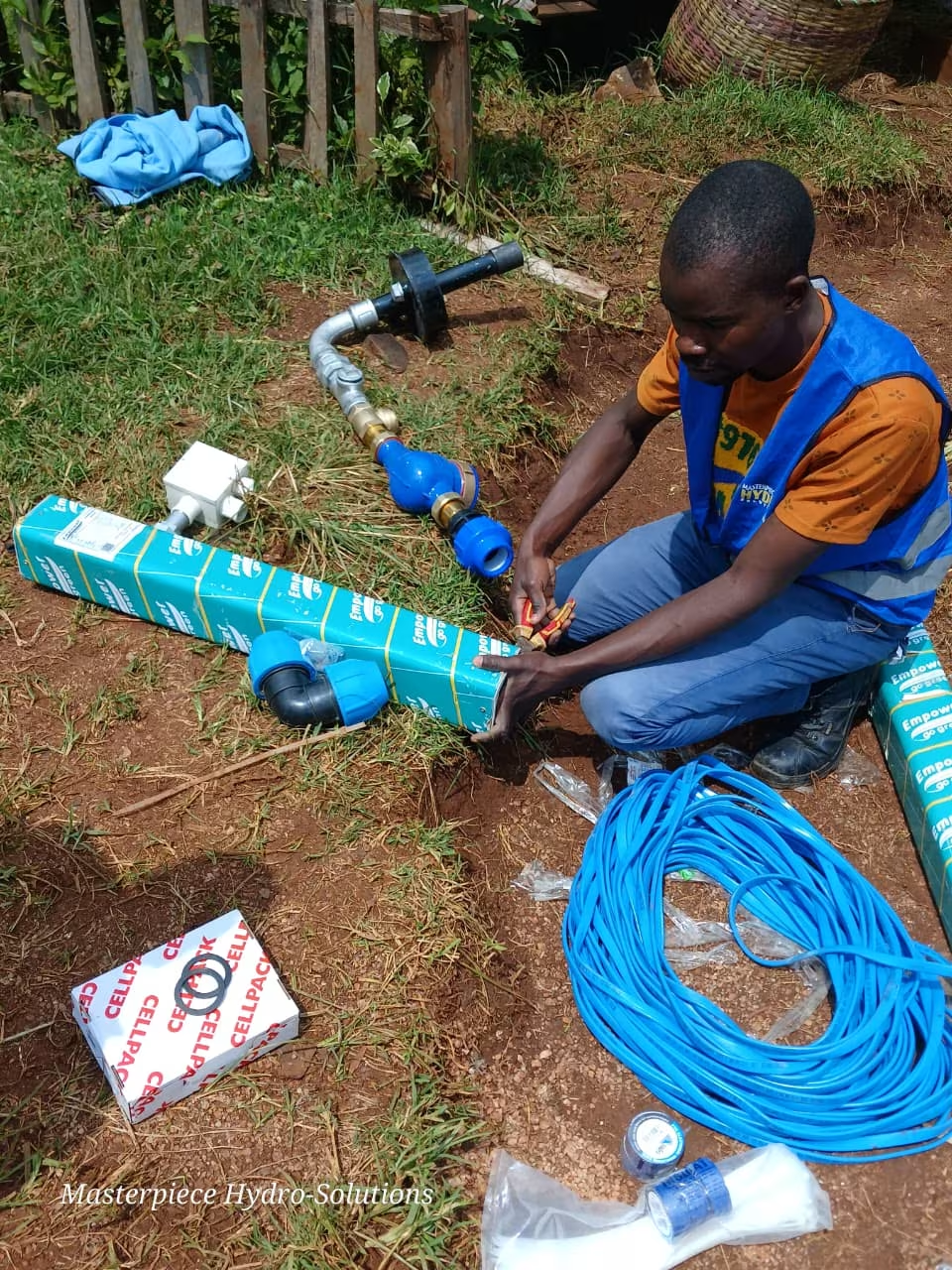
Borehole handover evidence recovery should establish what records can be found, what can be assessed now and what must remain uncertain. A complete-looking folder is not useful if it contains invented history. Owners need a decision-led recovery plan that separates original evidence, later reconstruction and current professional observations.
Explore Masterpiece Hydro-Solutions borehole equipping and enquire about missing equipment and handover records. Explain the next decision and supply the documents available. Confirm which professional review may be available before assuming every hidden detail or historical event can be recovered.
Start with the decision the missing record affects
Identify why the owner needs the information now. Equipment replacement, an intended-use review and a management transfer may require different evidence. A missing field should be prioritised through its consequence rather than a desire to fill every blank immediately.
Ask appropriate advisers which gaps materially affect the proposed work. Unknown product identity can matter differently from an unclear date on a background photograph. The owner needs a proportionate scope rather than an unqualified instruction to investigate everything.
Also identify the responsible owner representative and document custodian. Recovery can involve former contractors, suppliers or other authorised sources. The project should have a clear route for requesting and retaining records without unnecessarily distributing personal or sensitive information.
Build borehole handover evidence recovery from original sources
List documents already held and identify their authors, dates and purpose. An old quotation, invoice and final installed schedule answer different questions. Do not assume the newest file is the most authoritative or that a paid invoice proves every hidden construction detail.
Ask the relevant original parties what attributable records may still exist through appropriate consent and access arrangements. This guide does not grant access rights or prescribe a legal recovery process. Seek appropriate advice where ownership, contracts or disputed responsibilities affect the request.
Keep unsuccessful searches visible. A record not found is different from evidence that the work never happened. The owner should preserve that limitation rather than create a historical conclusion merely because the archive is incomplete.
Separate three evidence categories
Original records can describe information captured at the relevant stage, within their own limits. A later reconstructed account relies on identified sources and judgement. Current observations describe what an appropriately scoped assessment can establish now.
Each category can be useful when honestly labelled. A reconstructed drawing should identify its basis rather than resemble a contemporaneous verified record. Likewise, a present condition observation should not automatically prove when a feature appeared or who installed it.
Ask qualified reviewers to explain how the categories relate to the actual decision. The owner should understand which facts are supported and which remain assumptions. A professional-looking format cannot substitute for attribution and evidence.
Use a recovery-priority table
| Missing information | Potential source or assessment question | Limit to preserve |
|---|---|---|
| Project identity and relevant documents | Which original owner or authorised records apply? | Similar locality names may not identify the same source |
| Completion arrangement | What attributable construction evidence exists? | A quotation is not a complete installed record |
| Equipment identity | Which purchasing or safe professional records can clarify it? | A broad power label may omit the actual model |
| Performance history | Which tests or operating records have usable context? | Recollections are not measured baselines |
| Current condition | What targeted professional scope can observe? | Current evidence cannot recover every historical fact |
Use the table to prepare an enquiry rather than decide a technical method. Appropriate professionals should identify which assessments are justified. The owner should not perform hazardous access or equipment handling simply to complete an archive.
Recover equipment identities carefully
Gather available invoices, delivery information and relevant earlier photographs. Ask the qualified provider to explain which identifiers describe a model, configuration or individual item. An uncertain number should not be copied into the accepted register without context.
The Grundfos nameplate guide illustrates variation in manufacturer identification layouts. It supports requesting legible original information, not guessing another product’s identity. The owner should not open components or organise retrieval merely to obtain a label without appropriate assessment.
Where safe accessible evidence is unavailable, state the gap. The provider should explain how it affects the proposed work and whether a targeted identification scope is justified. Do not substitute a familiar model because it fits an old invoice description.
Consider an unlabelled equipment history
Imagine a hypothetical new manager finding several invoices and a photograph of equipment before installation. None clearly identifies the current arrangement after later repairs. The manager initially selects the most recent invoice as proof of what remains installed.
A useful recovery process asks what each transaction concerned and seeks attributable change records. Current professional assessment may clarify some information while leaving other history unresolved. The accepted schedule should state its basis rather than present an assumed configuration as verified.
This example does not imply that the invoices are wrong or the installation is defective. It illustrates how missing relationships can mislead a future enquiry. Qualified review should identify the evidence needed for the actual next decision.
Use borehole handover evidence recovery to frame inspection
If a visual investigation is proposed, ask which missing detail it could help assess and what its limits mean. The EPA camera resource describes visual examination and use alongside incomplete construction information. It does not promise a complete reconstruction of hidden work.
Request achieved coverage, reference information and visibility limits in the actual report. A camera can observe a feature now without proving its original installation date or every external detail. The owner should not commission a broad certainty promise the method cannot support.
Confirm availability and prerequisites separately. A missing-record enquiry does not automatically include pump removal, retrieval or every specialist assessment. Relevant electrical, lifting, pressure-related and chemical tasks require competent parties and assessed arrangements.
Keep authority and property questions appropriately advised
The WRA permitting information distinguishes construction authorisation and later water permitting. Ask responsible advisers which actual project documents and statuses matter. A recovered contractor report does not establish every authority condition or legal position.
Likewise, an equipment invoice should not be treated as a complete ownership conclusion. Property and contractual questions need the actual records and appropriate advice. The recovery plan should identify the question without making legal findings itself.
Record the source and status of advice obtained. An application, submission and decision have different roles. A folder labelled approvals should not conceal those distinctions or imply that every subsequent activity is authorised.
Rebuild current performance evidence honestly
If historical test information cannot be found, ask qualified parties what current assessment the next decision requires. A new baseline can be useful without recreating past source performance. Keep the observation date and relevant conditions clear.
Source yield, pump capacity and demand remain separate quantities. An owner’s recollection that the borehole once supplied plenty of water cannot establish a precise sustainable output. The professional should explain the appropriate evidence and interpretation.
Water quality requires its own appropriate analysis and intended-use advice. Clear appearance or a recovered old result cannot establish current drinking-water suitability. The owner should not invent a safety conclusion simply to close a missing-document task.
Create an accepted gap and revision register
List confirmed information, reconstructed accounts and unresolved questions with source links. The exact format can fit the owner. Its purpose is to make the basis of each accepted entry understandable, rather than make every field look complete.
Preserve original files and relevant corrections. A later reconciliation should identify what changed and why. Silent editing can erase uncertainty and make it appear that a final value was known from the beginning.
Assign open actions to the person able to address them. A missing original document differs from an accepted method limitation or another owner decision. Clear status helps future management avoid repeatedly seeking evidence that no available method can establish.
Make the recovered pack usable for future work
Keep a current index and accessible owner copy outside a single personal account. A new provider should receive the relevant accepted records and their limitations. Do not send a mixed folder and expect them to know which files are illustrative, superseded or uncertain.
Clarify the new provider’s review responsibility. Receiving historical records does not automatically transfer every earlier design obligation to them. The actual professional scope should identify which information they will assess and for what purpose.
Also update owner guidance when the current arrangement becomes clearer. Routine users need authorised instructions and a reporting route, without treating recovered technical records as permission to alter equipment or perform maintenance.
Questions about rebuilding handover evidence
Can missing history be recreated from memory?
A recollection can provide context when clearly attributed, but should not appear as a measured original record. Ask qualified reviewers what it supports and preserve uncertainty. Do not invent exact values to fill gaps.
Does a camera replace the completion report?
It can inform specific visible-condition questions within its limits. It cannot automatically recover every hidden detail or historical event. Ask the provider to define the targeted purpose and evidence boundary.
Should I retrieve equipment just to identify it?
Request an appropriate professional assessment of the decision need first. Retrieval involves specialist responsibilities and uncertainty. The owner should not arrange hazardous access or lifting merely to complete a register field.
Does a recovered pack certify the whole borehole?
No. The pack should identify evidence and limitations. Technical adequacy, permissions, sustainable output and water suitability require their appropriate records and qualified interpretation. A complete-looking archive is not a universal certificate.
Request a decision-led recovery scope
Useful borehole handover evidence recovery separates what can be found from what can be assessed now. Share existing records and the actual next decision. Ask the responsible professionals to prioritise material gaps and preserve uncertainty rather than invent a final history.
Enquire about missing borehole equipment and handover information. Confirm which professional scope may be available and identify separate adviser needs. A traceable record supports informed ownership without fabricated construction, unsafe access or guaranteed conclusions.