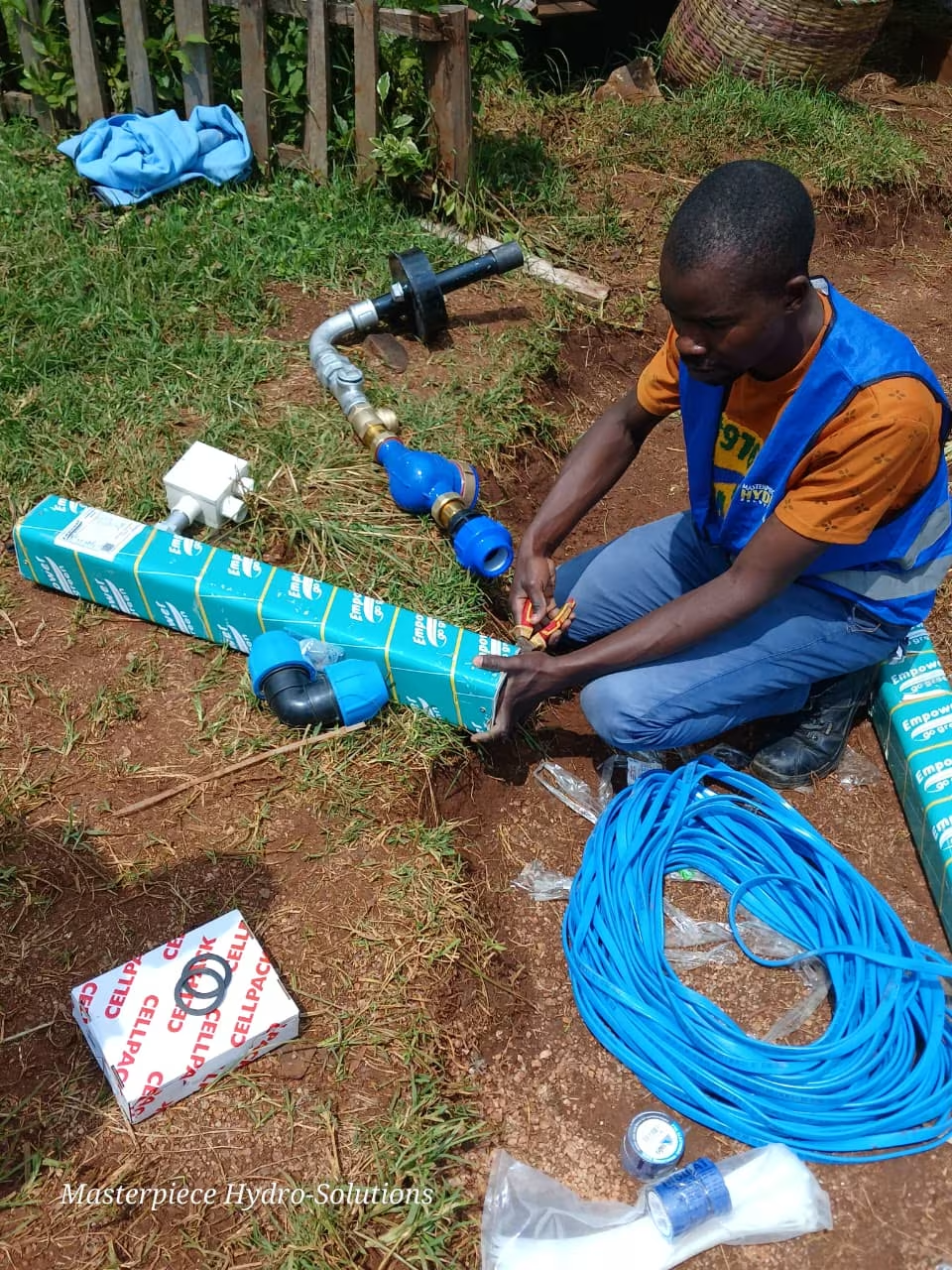
A borehole pump removal assessment should establish why removal might help before anyone commits to lifting equipment. Reduced delivery alone does not prove the pump needs retrieval. Therefore, describe the symptom and provide the available records first. Qualified personnel should decide the appropriate investigation and safe work scope.
Masterpiece Hydro-Solutions offers borehole equipping. You can enquire about assessment of an installed pump and a possible removal scope. Ask whether the proposed work suits your case. Do not assume retrieval, repair or specialist recovery forms part of every equipping enquiry.
Start the borehole pump removal assessment with the symptom
First, describe what changed and when. Slow tank filling, no delivery, unusual visible indications and repeated operating interruptions are different observations. Record what you actually know without diagnosing the cause. The assessment team can then decide which professional checks may answer the question.
Next, explain whether demand or the delivery arrangement recently changed. A relocated tank or altered pipe route may affect the operating duty. Source and power conditions may also need investigation. A single symptom cannot identify which stage of the complete system requires attention.
Also, provide any previous findings and instructions. If another team already investigated, include its records rather than relying on a verbal summary. Qualified personnel should understand what has happened before proposing further work. Missing evidence deserves a clear note, not a guessed reconstruction.
Gather the installed equipment history
Locate the pump identification, installation record and relevant construction information. Also, provide the known pump setting and associated records from qualified personnel. These details help the assessor understand the installed arrangement. Do not attempt downhole measurements or open electrical equipment to fill missing fields.
Next, gather commissioning records, available operating observations and the test-pumping report. The original duty can provide context for the present complaint. However, an old record does not guarantee current performance. Ask the assessor whether further measurements or inspection are necessary.
Also, disclose previous removal attempts, lost items or known access difficulties. Accurate information helps the team evaluate the proposed scope. Do not conceal an uncertain event because it might complicate the quotation. A clear history supports a more realistic assessment of the work.
Compare borehole pump removal assessment decisions
| Decision | Evidence to discuss | Boundary to clarify |
|---|---|---|
| Initial investigation | Symptoms and existing records | Which checks can inform whether removal is appropriate? |
| Access review | Current layout and known constraints | What professional site assessment is required? |
| Proposed removal | Installed arrangement and assessment findings | What work does the quotation actually include? |
| Condition assessment | Relevant inspection and testing findings | Who interprets the equipment’s condition? |
| Repair or replacement | Cause, suitability and proposed duty | What further decision needs owner approval? |
| Return to service | Updated installation and commissioning evidence | Which records and limitations form the handover? |
This table describes buyer decisions rather than a retrieval procedure. Removal involves mechanical and electrical hazards that need qualified teams and site-specific planning. Do not improvise lifting, pull equipment by available cables or attempt electrical disconnection. Arrange professional assessment and a clear work scope instead.
Ask whether other evidence should come first
The assessment may need source, electrical or delivery information before recommending removal. Ask which uncertainty each proposed check addresses. A buyer should understand the reason for investigation without directing its technical method. Qualified personnel must decide how to obtain the relevant evidence safely.
Also, distinguish the cost of diagnosis from the cost of a confirmed remedy. An initial visit may identify the need for further work without completing it. Request the deliverables and approval boundary for that stage. Avoid assuming every assessment price includes removal and replacement.
A borehole pump removal assessment can support a decision not to remove immediately. That outcome can still answer the enquiry if other evidence is needed first. The important issue is a justified next step. Removal should not become the default simply because the equipment sits underground.
Define access and handling responsibility professionally
Send current photographs of the borehole area and the practical approach. Include buildings, overhead features and known obstructions from safe positions. The team should assess the space and resources its proposed work needs. A previous installation visit does not prove that access remains unchanged.
Next, ask who prepares the site-specific work plan and controls the area. Keep residents, workers and visitors outside the agreed work zone. Do not ask unqualified helpers to hold equipment or assist with lifting. The contractor must determine the appropriate team and resources for the actual arrangement.
Also, ask how the scope treats unexpected difficulty or a different installed condition. The proposal should identify the point requiring further discussion and approval. It should not promise that every pump can be removed without complication. Request transparent limitations instead of an unconditional retrieval assurance.
A scenario involving an assumed failed pump
Imagine an owner reports that a borehole pump has failed because a tank fills slowly. The tank now sits at a different location, and the available operating records are incomplete. The owner asks for immediate removal. However, the symptom alone does not establish equipment condition or the cause of reduced delivery.
First, the owner provides the changed delivery layout and original equipment information. Next, qualified personnel identify the appropriate checks and explain their purpose. If the findings support removal, the contractor proposes a separate clear scope. The owner can then consider the work with better information.
The example does not diagnose a real site. It shows how a borehole pump removal assessment protects the decision process. A source, power or delivery concern may need different evidence. Removing equipment before understanding the question can leave the owner with another unresolved decision.
Request a condition report before choosing the remedy
If removal proceeds, ask what assessment will follow and who will provide the findings. The owner needs an explanation of observed condition and any appropriate testing. A photograph alone may not establish the complete cause. Qualified personnel should state the limits of their conclusions.
Next, request the proposed options and their supporting reasons. Repair, replacement or further investigation may involve different scope. Do not assume a new pump is the automatic answer. Also, ask whether the identified cause could affect replacement equipment if the wider issue remains unresolved.
Keep the commercial approval separate from the condition assessment. Ask for the repair or replacement proposal before authorising additional work. Actual obligations depend on the accepted terms and circumstances. If warranty cover may apply, review the relevant documents rather than assume all related costs are included.
Check the required duty before replacement
The Grundfos pump selection learning resource explains selection through required flow, head and the duty point. A replacement assessment should use those principles with the relevant source evidence. Copying the old motor rating may not address a changed operating requirement.
Also, distinguish drilled depth from pumping water level and pump setting. Those figures support different questions. Ask the designer to explain which measurements inform the proposed duty. Neither a larger pump nor more panels can create sustainable groundwater capacity that the source lacks.
A borehole pump removal assessment should therefore connect condition findings with the current brief. If later equipping proceeds, retain the revised scope and assumptions. The owner needs to understand why the proposed arrangement suits the evidence, not simply that the new equipment differs from the old unit.
Keep inspection and rehabilitation as separate enquiries
Some findings may suggest a visual inspection or another source assessment. For a relevant enquiry, see Masterpiece Hydro-Solutions borehole inspection. Ask what camera evidence could address and whether installed equipment limits access. Do not assume a camera will identify every cause of reduced flow.
Likewise, an observed deposit or damaged-looking feature does not establish a complete rehabilitation method. Qualified personnel should assess the finding and appropriate next step. Do not attempt chemical treatment, retrieval or construction repairs yourself. Ask for a separate proposal where further work is necessary.
Finally, agree the records required when the system returns to service. Retain the equipment findings, accepted remedy and relevant commissioning information. This creates a new reference point for later concerns. It also preserves the reason behind the final decision.
Questions about a borehole pump removal assessment
Does reduced flow prove the pump must come out?
No single symptom establishes that conclusion. Source, power and delivery conditions may need investigation alongside equipment concerns. Describe the change and provide the available records. Qualified personnel should explain whether removal is appropriate and which evidence supports that recommendation.
Can the owner help retrieve the pump?
Do not undertake lifting, electrical disconnection or retrieval work without the appropriate qualifications and site-specific arrangements. Ask a qualified contractor to assess the task and control the work area. The owner can support the enquiry by providing records and arranging safe access.
Will removal always allow a repair?
Do not assume that outcome. The actual condition and relevant testing inform the proposed remedy. Request a clear assessment report and the available options. Also, clarify the approval process before additional repair, replacement or further investigation creates a new commitment.
Should replacement match the old pump exactly?
Ask for an assessment of the current source and required duty. The original arrangement may no longer match the intended service, or its basis may remain undocumented. A familiar model is not enough evidence. Qualified selection should explain the relevant flow and head requirements.
What information should I send first?
Provide the location, symptom history, equipment details and available installation records. Include current access photographs from safe positions. Also, disclose previous work or known difficulties. Missing information should remain clearly labelled so the contractor can identify the assessment it needs.
Ask for an evidence-based removal decision
A useful borehole pump removal assessment explains the symptom, available evidence and proposed next step. It separates investigation, removal and any later remedy. Gather the records before committing to work. Then request a clear scope that qualified personnel can assess and execute safely.
Send Masterpiece Hydro-Solutions your installed-pump assessment enquiry. Include the operating concern and known equipment history. Ask whether an appropriate assessment is available and what information it needs before proposing any removal work.