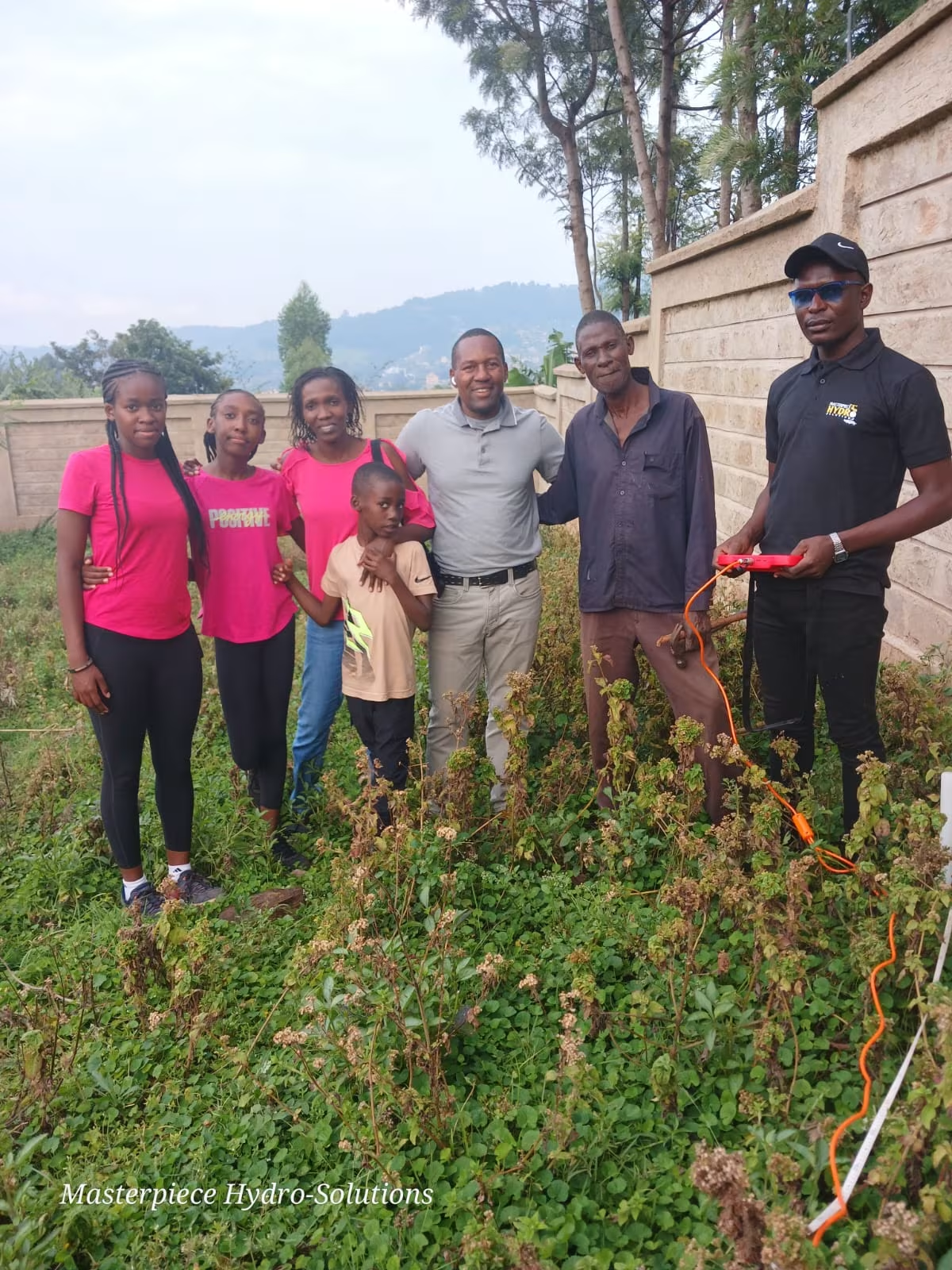
Borehole quality result interpretation needs the sample context, intended use and a qualified explanation of the report’s scope. A favourable-looking value does not answer every water-suitability question. First, identify what the laboratory assessed and when. Then ask the laboratory and relevant advisers what the findings support, what remains uncertain and which follow-up the actual use requires.
Explore Masterpiece Hydro-Solutions hydrogeological surveys and request a source-assessment enquiry. Ask which professional scope may be available. This guide supports report questions; it does not diagnose contamination, certify drinking safety or provide treatment and chemical instructions.
Start borehole quality result interpretation with sample identity
Confirm the source, collection location, date and report reference. Also, distinguish a borehole sample from one associated with storage or a user outlet. Those contexts may concern different questions. Ask the responsible laboratory or professional to explain any unclear reference before drawing conclusions from a detached copy.
Keep the collection and reporting records together. A result describes the sample and scope actually assessed, not every possible location in the wider arrangement. The owner should understand which evidence belongs to the current intended-use question rather than assume that any report labelled water analysis concerns the same conditions.
Identify the intended use before reading a conclusion
State whether the project concerns drinking, another household activity, irrigation, livestock or a different purpose. Ask relevant qualified advisers which requirements and interpretation apply. The owner’s intended use may differ from the purpose behind an older report or an earlier project stage.
Borehole quality result interpretation should preserve that distinction. A report prepared for one question should not silently become a certificate for every use. Clear appearance and successful pumping cannot establish drinking-water suitability. Where suitability remains unresolved, ask qualified advisers about appropriate restrictions and further evidence instead of guessing from appearance.
Read the scope before selecting individual values
Ask which analysis the report includes and what sits outside its scope. Also, identify any limitations or qualifications the laboratory states. A small selection of favourable figures cannot answer an untested question. The professional should explain how the assessed parameters relate to the actual enquiry.
WHO’s drinking-water quality guidelines provide a risk-management framework. Their existence does not establish a personal safety conclusion from an incomplete report. Ask relevant advisers how current local requirements, sample context and the intended use affect the interpretation needed for your project.
Organise borehole quality result interpretation questions
The table helps owners prepare a discussion with the laboratory and qualified advisers. It gives no health thresholds or instructions for personal diagnosis. Ask which questions the actual report raises and record the explanation. Keep unresolved items explicit rather than reduce the document to a single pass label.
| Report question | Evidence to check | Interpretation boundary |
|---|---|---|
| What sample was assessed? | Identity, location, date and reference | Another location may not share the same context |
| What use did the enquiry concern? | Original brief and current intended activity | One purpose does not answer every later use |
| What analysis appears in the report? | Scope, units and stated limitations | Untested questions remain unresolved |
| Who explains the result? | Laboratory and appropriate qualified adviser | Owners should not diagnose from selected numbers |
| What follow-up is required? | Reasoned professional recommendations | A treatment proposal needs its own assessed scope |
| What record should be retained? | Issued report and relevant explanations | A detached summary can omit material context |
Ask about laboratory status and relevant scope
KENAS’s status directory supports checks of accreditation and its scope. Ask the laboratory how relevant current evidence applies to the analysis. Do not infer coverage from a logo alone. Also, identify which organisation issued the result if another provider arranged the work.
This guide does not select a laboratory or claim that any business holds an unverified credential. The owner needs an accountable explanation tied to the actual report. If a material competence or scope question remains unclear, seek confirmation through the relevant official and professional channels before relying on an assumption.
Work through a fictional detached-summary case
Consider an educational owner who receives a short message saying results are fine, without the complete issued report. The current intended use differs from the purpose mentioned in an older enquiry. These assumptions illustrate evidence handling, not an actual water-quality finding or a safety recommendation.
First, the owner requests the full report and sample context. Next, the laboratory and relevant adviser explain what was assessed and which question the evidence addresses. The owner identifies the current use and asks about any remaining uncertainty. The message remains a summary rather than substitute proof of suitability.
Borehole quality result interpretation now supports a qualified decision because context and limits are visible. The outcome may require clarification, another assessment or a separately defined follow-up. It should not become a personal safety conclusion based on an informal favourable phrase.
Keep unclear units and report qualifications visible
If a term or unit is unfamiliar, ask the laboratory to explain it in the report’s context. Do not compare differently expressed figures or remove qualifying notes to make a summary simpler. The owner should retain the original values and professional explanation rather than create an informal alternative report.
If the provider identifies an error, ask for a traceable issued correction. Keep the reason and current version with the file. Borehole quality result interpretation depends on knowing which record is authoritative for the discussion, especially when several people circulate extracts or photographs of selected pages.
Define follow-up before choosing equipment or treatment
Ask the qualified adviser which next question the findings raise and why the proposed task addresses it. A recommendation needs a defined purpose, responsibilities and limits. Owners should not choose chemical doses, microbiological methods or treatment equipment from a general article or another source’s result.
WRA’s laboratory-services information provides an official starting point for relevant analysis enquiries. Confirm current scope and arrangements directly. A source-assessment provider should explain what it actually offers without implying that every laboratory, collection or treatment service forms part of its ordinary scope.
Keep quantity and quality conclusions distinct
A report about water quality does not establish sustainable source yield or select the pump. Those decisions need appropriate source and equipment evidence. Conversely, a full tank or increased flow cannot establish quality. The project file can connect these records while preserving the different questions they answer.
Source supply, installed capacity and demand remain separate quantities. An owner may have enough measured volume while still needing quality clarification for the intended use. Borehole quality result interpretation should not let a favourable finding in one part of the project erase an unresolved question in another.
Maintain the report within an ongoing project record
Keep sample arrangements, the issued report and qualified explanations together. Record relevant changes in use, source arrangement or later work. Also, identify who coordinates future questions. A report should remain traceable to its original context rather than circulate indefinitely as a permanent certificate for every later circumstance.
Ask relevant advisers what follow-up records and timing the actual project needs. This guide gives no universal testing interval or fixed validity period. Applicable requirements and changing circumstances need qualified review. The owner should seek current advice instead of assume an old report remains sufficient without question.
Questions owners ask before using borehole water
Can clear water be assumed suitable for drinking?
No. Appearance does not establish suitability. Arrange appropriate laboratory evidence and qualified advice for the intended use. Borehole quality result interpretation should keep that boundary clear rather than turn a visual impression or successful pump demonstration into a safety conclusion.
Does one favourable result answer every quality question?
Ask what the report’s actual scope and sample context support. Untested questions remain unresolved. The laboratory and qualified advisers should explain relevance to the intended use. Owners should not diagnose suitability from selected numbers or an informal summary detached from the issued report.
Should the owner interpret limits from an online table?
Use qualified professional interpretation of the actual report and applicable requirements. A general table may omit context or address another purpose. The owner can ask informed questions without making personal safety conclusions or selecting treatment methods from isolated values.
Can a contractor promise a treatment outcome immediately?
Ask what evidence supports the proposal, who is qualified to assess it and how the result would be verified. A treatment task needs its own clear scope and limitations. Do not infer that every source-assessment enquiry confirms specialist treatment availability or suitability.
What should accompany a report enquiry?
Send the full issued report, sample context, original enquiry and current intended use. Identify unclear terms, missing information and relevant changes. Finally, name the responsible contact. This helps the laboratory and advisers define the appropriate explanation and further evidence.
Request a qualified interpretation with context
Use borehole quality result interpretation to connect sample identity, scope and intended use with professional advice. Keep unresolved questions and follow-up responsibilities explicit. Finally, preserve the complete evidence file. A useful discussion supports an appropriate decision without replacing it with an unsupported safety label.
Request a source-assessment enquiry from Masterpiece Hydro-Solutions. Explain the report and question you need addressed. Ask which professional scope may be available and which laboratory or qualified adviser should separately confirm the intended-use interpretation.