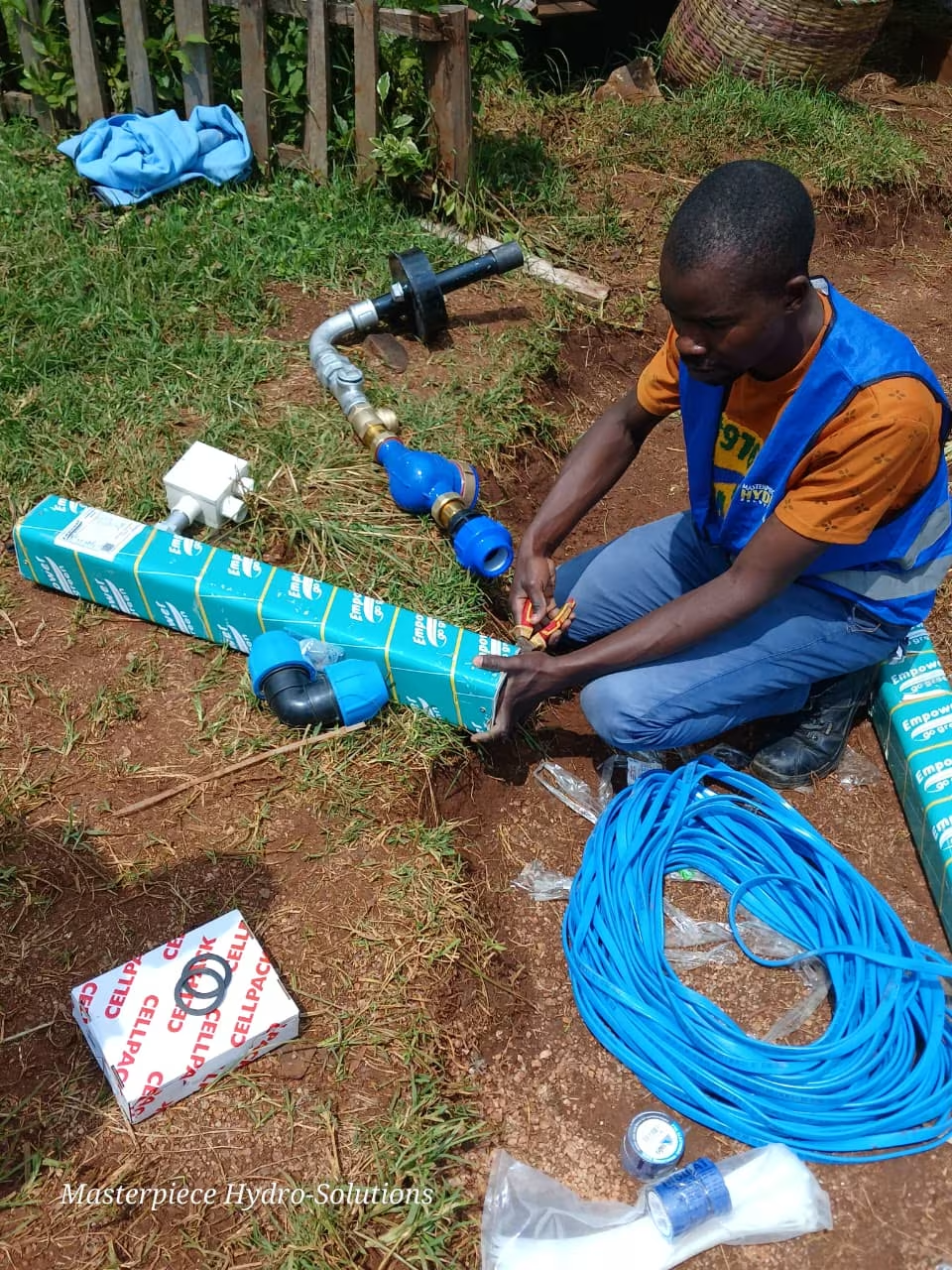
Borehole rising main replacement should follow evidence of the problem and an assessment of the complete installation. Poor delivery at the tank does not prove that the borehole pipe needs replacing. First, ask qualified personnel to investigate. Then define the replacement scope, associated work and acceptance evidence around the findings.
Explore Masterpiece Hydro-Solutions borehole equipping services and request an assessment of the rising main and delivery problem. Share installation records, changes in water output and any previous repair information. Ask what the evidence supports before committing to new pipework.
Describe the symptom without diagnosing it
Start with what changed at the site. For example, water may reach storage more slowly, delivery may fluctuate or the system may stop unexpectedly. Also, identify when the change began. These observations help the practitioner investigate, but they do not establish which component failed.
Next, explain any recent alteration to the pump, destination or power arrangement. A changed duty can affect delivery without proving a pipe defect. Likewise, source conditions or equipment faults can produce similar visible symptoms. The assessment should distinguish these possibilities rather than assume a replacement solves everything.
Do not attempt retrieval or pressure testing to confirm a suspicion. Such work needs qualified personnel and appropriate equipment. The owner can provide records and safe observations while asking the service provider to explain its findings in an accessible written form.
Base borehole rising main replacement on installation records
Gather the original equipment schedule, available construction information and service history. Also, identify the pump model and any recorded installation changes. These details help the practitioner understand what may be present before proposing work. Missing information should remain an explicit assessment issue.
Next, ask which records describe the existing rising main and associated components. A broad pipe label may omit details that matter to the proposed work. The practitioner should confirm what it can establish and explain which findings may only become available during professional investigation.
Borehole rising main replacement needs a clear link between the known installation and proposed scope. If the supplier assumes existing fittings or other equipment remain suitable, ask who verifies that assumption. The quotation should not hide significant dependencies inside the word “replacement”.
Review the required pumping duty
The rising main belongs to a pumping route with a required flow and head. The Grundfos guide to pump selection explains why flow and head matter together. Ask the practitioner to assess the relevant route instead of treating pipework as independent of the pump’s duty.
Also, distinguish drilled depth, pumping water level and pump setting depth. These measurements serve different purposes. A replacement proposal should explain which information supports its assessment. Do not assume that the full borehole depth directly defines every replacement quantity or hydraulic requirement.
If the destination has moved or demand has changed, share that information. A like-for-like replacement may not address a revised service brief. Conversely, changing the arrangement without a reason can add unnecessary work. The practitioner should explain which approach the evidence supports.
Specify borehole rising main replacement by assessed requirements
Ask the provider to identify the proposed material and specification, with its suitability basis. The owner should understand what the supplier offers, but should not select pipe dimensions or pressure requirements from a general article. Qualified personnel must determine an appropriate arrangement.
Next, clarify associated components and retained items. The provider should explain which connections, supports or other elements fall within its work. A pipe-supply figure alone does not define the complete replacement operation. Also, ask how the contractor records approved changes to the original proposal.
Borehole rising main replacement should preserve traceable equipment information. Request the relevant specification references and final installed record. If the supplier proposes a substitute, ask for an explanation of suitability and the commercial effect before approving the change under the contract.
Compare investigation and replacement outcomes
The following table separates decisions that may follow professional assessment. It does not diagnose a borehole or provide retrieval instructions. The appropriate scope depends on the actual findings.
| Assessment finding | Decision to discuss | Evidence needed |
|---|---|---|
| Confirmed defect within the rising main scope | Defined replacement or other assessed remedy | Finding record and proposed work boundary |
| Fault in another component | Address the identified cause | Diagnosis and revised scope |
| Changed delivery duty | Review the complete pumping arrangement | Current flow and head assessment |
| Incomplete installation information | Investigate before finalising commitments | Confirmed records and stated unknowns |
| Several related items need attention | Compare coordinated work with a narrower repair | Separate commitments and acceptance checks |
Next, compare quotations against the same finding. An equipment-only offer and a complete assessed operation do not provide equivalent commercial commitments.
Define retrieval and associated-work responsibilities
Ask who manages any required retrieval and reinstallation work. These activities need qualified personnel and appropriate planning. The owner should understand the commercial boundary without directing lifting methods or handling suspended equipment. Also, identify site access requirements and coordination with other contractors.
Next, ask how the provider handles findings involving the pump, cable or retained components. Their condition may affect the final scope. The contractor should explain the communication and approval process before the operation begins, rather than treat every possible change as pre-authorised.
Also, agree what happens to removed material. The owner may need records or clarification before disposal. A clear arrangement identifies responsibility and avoids assumptions about who retains components. Do not rely on an informal expectation that every removed item automatically has the same status.
Consider an altered-destination scenario
Consider an educational example where an owner notices slower filling after moving delivery to a more distant tank. No actual project or defect is implied. The owner suspects the rising main because the water-service problem appeared after the change.
First, the owner shares the original installation information and revised route. Next, the practitioner assesses the duty and investigates the symptom. The findings may identify a pipe issue or another explanation. The owner then reviews the proposed work against that evidence rather than replacing material solely on suspicion.
This scenario shows why borehole rising main replacement should connect to the complete water route. A changed destination can alter the question the contractor must answer. The useful proposal explains the diagnosed cause, replacement need and expected acceptance evidence without guaranteeing an unmeasured outcome.
Plan water continuity during the work
Explain the site’s essential water needs and available storage. Also, identify whether the work will interrupt the only source. The contractor should describe the expected sequence and relevant uncertainties. Do not assume that a replacement quotation includes temporary water supply or a guaranteed restoration time.
Next, agree how the provider communicates delays or additional findings. The owner needs a decision contact who can review revised scope promptly. A clear process helps manage the interruption without pushing technical decisions onto an unqualified caretaker.
Keep reserve planning separate from the contractor’s technical obligations. Storage may reduce disruption, but usable volume and demand timing matter. If another supply needs arrangement, identify who will manage it. The replacement provider should only carry commitments that the parties have actually agreed.
Review borehole rising main replacement costs by scope
Request separate identification of assessment, material, associated work and commissioning. Also, ask whether the quotation includes transport, access arrangements and handling of removed equipment. Do not compare a pipe price alone with a proposal that includes the complete assessed operation.
Next, identify provisional items and their adjustment basis. The provider should explain how further findings could change quantities or work. Agree who can approve a variation and which records will support the final charge. This keeps uncertainty visible without authorising undefined additional work.
Finally, ask whether VAT forms part of the total and request offered warranty terms. Do not assume that pipe replacement guarantees pump performance or groundwater availability. The commercial commitment should identify the supplied work and the responsible party for questions about it.
Accept the restored arrangement through records
Agree the commissioning questions before work starts. Ask the contractor to explain how it will verify the completed installation through appropriate professional procedures. Owners should not perform pressure tests or direct specialist checks. They can witness understandable outcomes and receive the relevant records.
Next, request water-delivery observations at the agreed destination, with conditions recorded. A brief reading elsewhere may not represent the intended service. Also, distinguish observed performance from predicted daily volume or seasonal reliability. The report should explain any limitation clearly.
Borehole rising main replacement should leave an updated installation record. Keep the assessed specification, approved changes and commissioning information together. If the original delivery problem remains unresolved, ask for an explanation and agreed next step rather than treating the replacement invoice as proof of a complete diagnosis.
Questions about rising main replacement
Does reduced flow prove that the pipe leaks?
No. Several source, pump, power or delivery issues can affect flow. Report the change and request qualified investigation. The contractor should explain what supports its finding. Do not use an assumed leak as the sole basis for ordering replacement material or attempting a pressure test.
Can I order a replacement using drilled depth?
Drilled depth alone does not define every installed quantity or specification. Share available records and ask the practitioner to confirm the relevant arrangement. Also, distinguish pump setting and pumping water level. A clear assessment gives the supplier a better basis than a single depth figure.
Should the pump and cable also change?
Ask what the findings support. Associated work may be appropriate, but the provider should explain the need and separate its scope. A rising main operation does not automatically justify replacing every component. Equally, the quotation should identify retained equipment that still requires suitability assessment.
Will new pipe guarantee the former daily volume?
No replacement can establish that result without considering the source and operating conditions. Ask which defect the work addresses and how the contractor will verify completion. Keep measured delivery separate from future production assumptions. The proposed remedy should remain accountable to the evidence.
What should the final handover contain?
Request the installed specification, relevant quantity record and approved changes. Also, obtain commissioning observations, remaining limitations and a clear service contact. The owner should understand what work the contractor completed and which questions remain open. Keep those records with the broader borehole information.
Request a replacement scope tied to findings
Gather installation records and describe the delivery change accurately. Then request a rising main assessment from Masterpiece Hydro-Solutions. Ask for a diagnosed need, assessed specification and clear handover evidence. Those details make the replacement decision more useful than ordering pipe from an unexplained symptom.