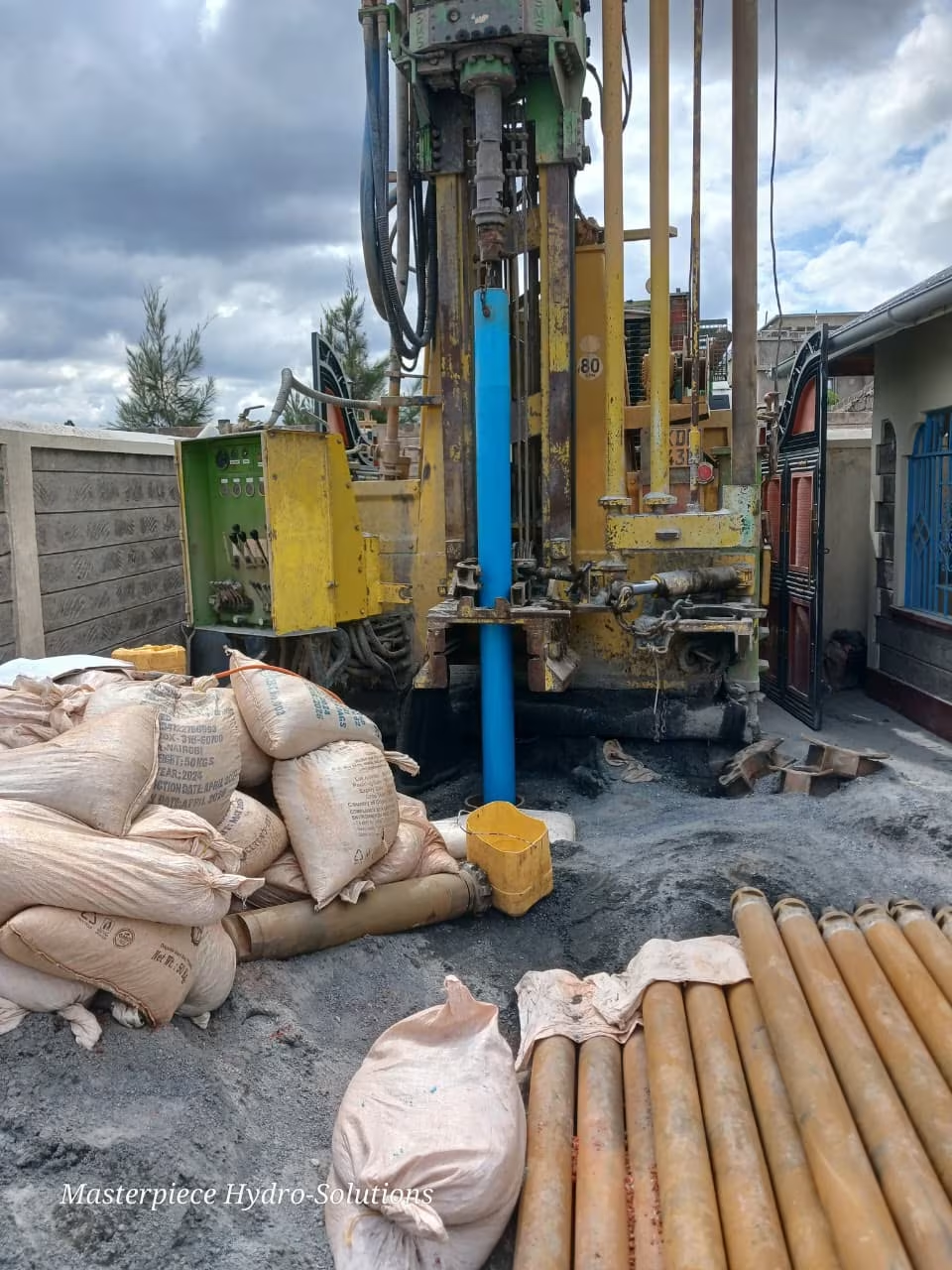
Borehole upgrade budget comparison should place an existing-asset option beside a new-source option serving the same defined need. A repair price and a drilling rate alone cannot establish which complete project costs less. First, identify the required water service. Then compare evidence, scope and uncertainty before interpreting either total.
Explore Masterpiece Hydro-Solutions borehole drilling services and request a defined assessment and comparison proposal. Share existing source records and the current service gap. Ask which investigation must precede a meaningful upgrade estimate and which stages remain unresolved in a new-source budget.
Define one water-service endpoint
State the required daily volume, destination and intended role of the source. Also, identify whether the project supplements another supply. Comparing different endpoints can make one route appear inexpensive simply because it promises less work or a different service.
Next, distinguish current demand from future expansion. Both options should use an explicit brief with assumptions labelled. A larger motor or a newly drilled borehole cannot automatically establish the production needed for every planned activity.
Also, identify the evidence the endpoint requires. Source performance, equipment operation and water suitability answer different questions. The comparison should show which records each option will provide rather than treat one favourable observation as proof of a complete service.
Start borehole upgrade budget comparison with the old asset
Gather construction information, test reports, equipment references and service history. Then ask qualified personnel what the existing installation’s condition and source evidence support. A low-delivery symptom does not itself establish whether repair, rehabilitation or another investigation is appropriate.
Next, identify which findings remain uncertain. An initial estimate should not present undefined remedial work as a confirmed complete solution. Ask what assessment would narrow the decision and how the resulting scope would reach the owner for approval.
Borehole upgrade budget comparison needs a defensible existing-asset baseline. The guide to rehabilitation versus new drilling discusses that underlying decision. Use the budget comparison here to reconcile future commitments once the relevant technical questions are clear.
Define the new-source option fully
A new-source budget may need survey work, permission coordination, drilling, completion information and testing before final equipping. Ask which stages the proposal includes and which remain separate. A per-metre figure alone does not establish a commissioned water supply.
Next, identify provisional quantities and technical decisions. Site assessment and actual source evidence may affect later work. The supplier should explain assumptions and the variation process rather than promise a particular depth, yield or water quality.
Also, keep project-specific authority information current. Consult the Water Resources Authority’s permitting guidance and confirm the relevant requirements directly. Do not insert unverified fees or approval periods simply to make the new-source total appear complete.
Compare complete future commitments
List work the owner would still need to commission under each route. Historical spending can explain the asset history, but the current decision needs a clear view of the proposed future commitments. Do not count an old invoice again as a new contractor charge.
Next, identify common work. A storage or distribution assessment may be necessary under either route. Treat it consistently so one option does not benefit from an unexplained omission. Retained equipment should have a suitability basis rather than an assumed zero-cost status.
Borehole upgrade budget comparison should also identify unpriced requirements. Mark them visibly and state what confirms them. An unknown category is not evidence that the project needs no expenditure there.
Use a borehole upgrade budget comparison worksheet
The following structure helps compare scope without inventing prices. Add actual dated KSh quotations and document references in the working sheet. Each category needs a status and responsibility under both options.
| Category | Existing-asset option | New-source option |
|---|---|---|
| Initial evidence | Condition and relevant performance assessment | Site and groundwater assessment |
| Source-related work | Defined remedy only if findings support it | Defined drilling and construction scope |
| Testing and records | Baseline and outcome evidence | Completion and source-test information |
| Equipment | Assessed retention, repair or replacement | Selection based on new-source evidence |
| Delivery and storage | Current or revised interface | Required route to the same service endpoint |
| Interruption and transition | Practical continuity assumptions | Operation of existing supply during the new project |
Next, reconcile inclusions and exclusions before adding totals. Different package structures can overlap or leave a necessary interface unowned.
Assess what can genuinely remain in use
Identify tanks, power arrangements, controls and other relevant retained items. Ask the qualified provider to assess condition and compatibility. An existing component can remain useful without being suitable for every changed duty.
The Grundfos pump-selection resource explains why required flow and head matter together. Ask the practitioner to assess the actual pumping level, route and destination. A retained motor’s power label does not establish the complete selection basis.
Next, distinguish avoiding a new purchase from avoiding all associated work. A retained item may still need professional review or a defined interface change. The budget should reflect actual scope instead of assume every existing component contributes cost-free capacity.
Keep production and suitability uncertainty visible
Source yield, pump capacity and user demand remain separate under either option. Rehabilitation cannot guarantee universal recovery, while new drilling cannot guarantee groundwater. Ask each proposal to identify its evidence basis and the decisions later findings will inform.
Next, keep water quality separate. Clear water and a successful pump demonstration do not establish suitability for drinking or another use. Appropriate laboratory analysis and qualified interpretation may affect later scope under either route.
Borehole upgrade budget comparison should therefore preserve evidence gates. The owner can compare options while acknowledging what remains unknown. A confident-looking total should not conceal an unsupported technical premise.
Plan continuity and transition fairly
Identify essential demand and usable reserve while work proceeds. An upgrade may interrupt the existing installation, while a new-source project may have a different transition pattern. Ask the providers to explain their practical assumptions instead of inventing a standard restoration period.
Next, clarify any temporary supply category. The owner needs to know who arranges it and whether it forms part of a quotation. Do not assume an equipment or drilling contractor includes emergency water delivery or guaranteed attendance.
Also, identify who approves changed scope after findings. Qualified personnel must handle retrieval, electrical and specialist remedial work. The continuity plan should not depend on owner-performed technical tasks to reduce a headline price.
Use an incomplete-upgrade-quote scenario
Consider an educational example with no actual prices. The owner receives an upgrade estimate based on suspected equipment failure and a new-source drilling proposal. Neither offer yet includes all the evidence and delivery work needed for the same endpoint.
First, the owner commissions or clarifies the relevant assessments. Next, the proposals identify confirmed work, provisional categories and common interfaces. The owner then compares actual commitments and remaining uncertainty rather than rank a repair component against an incomplete new-project figure.
This example shows why borehole upgrade budget comparison needs aligned scope before arithmetic. A correct sum can still mislead when the underlying offers address different questions or omit necessary stages.
Review borehole upgrade budget comparison before commitment
Check quotation validity, tax treatment and provisional adjustment terms. Ask whether each figure includes VAT and retain the written answer. Compare consistent bases rather than mix inclusive and exclusive totals.
Next, identify the acceptance evidence for each route. The supplier should explain what it will demonstrate and record under relevant conditions. Qualified personnel must choose and perform technical checks; owners should receive understandable outcomes without directing hazardous procedures.
Finally, request offered warranty and support terms. The commitment should describe the actual supplied work without guaranteeing every future source condition. Keep assumptions, reports and approved changes together so the final decision remains reviewable.
Questions about new-source and upgrade budgets
Is upgrading always cheaper than drilling again?
No universal conclusion follows from the labels. Compare the condition evidence, complete scope and intended service. An inexpensive component estimate may omit necessary work. Ask for defined proposals and visible uncertainty before interpreting either route as the lower complete budget.
Can I compare repair cost with a per-metre rate?
Not as complete project totals. They may describe different boundaries and quantities. Define the same service endpoint, identify required stages and use actual dated quotations. A rate component needs its scope explained before it enters the comparison.
Should old equipment be treated as free capacity?
Ask qualified personnel to assess its condition and suitability for the proposed duty. Retention may avoid a new purchase without avoiding all related work. The budget should show the actual commitment and any further assessment rather than assume compatibility.
Does either route guarantee the required yield?
No such guarantee follows automatically. Existing-source work and new drilling each need appropriate evidence and clear limitations. Ask what later testing would establish and how findings affect the next decision. Keep desired demand separate from proven source production.
How should temporary water enter the comparison?
Identify the practical interruption under each route and ask who arranges any required alternative. Use an actual quotation where available and mark an unresolved amount unpriced. Also, distinguish a one-off transition requirement from ongoing operation. The options should use the same service expectation, while their interruption patterns may differ. Do not assume either contractor includes temporary supply unless its written scope expressly accepts that commitment.
Request aligned options for the same service
Gather existing records and define the water-service endpoint. Then request a comparison assessment from Masterpiece Hydro-Solutions. Ask for clear future commitments, retained-item assumptions and evidence gates. Those details make the budget decision useful without inventing prices or recovery promises.