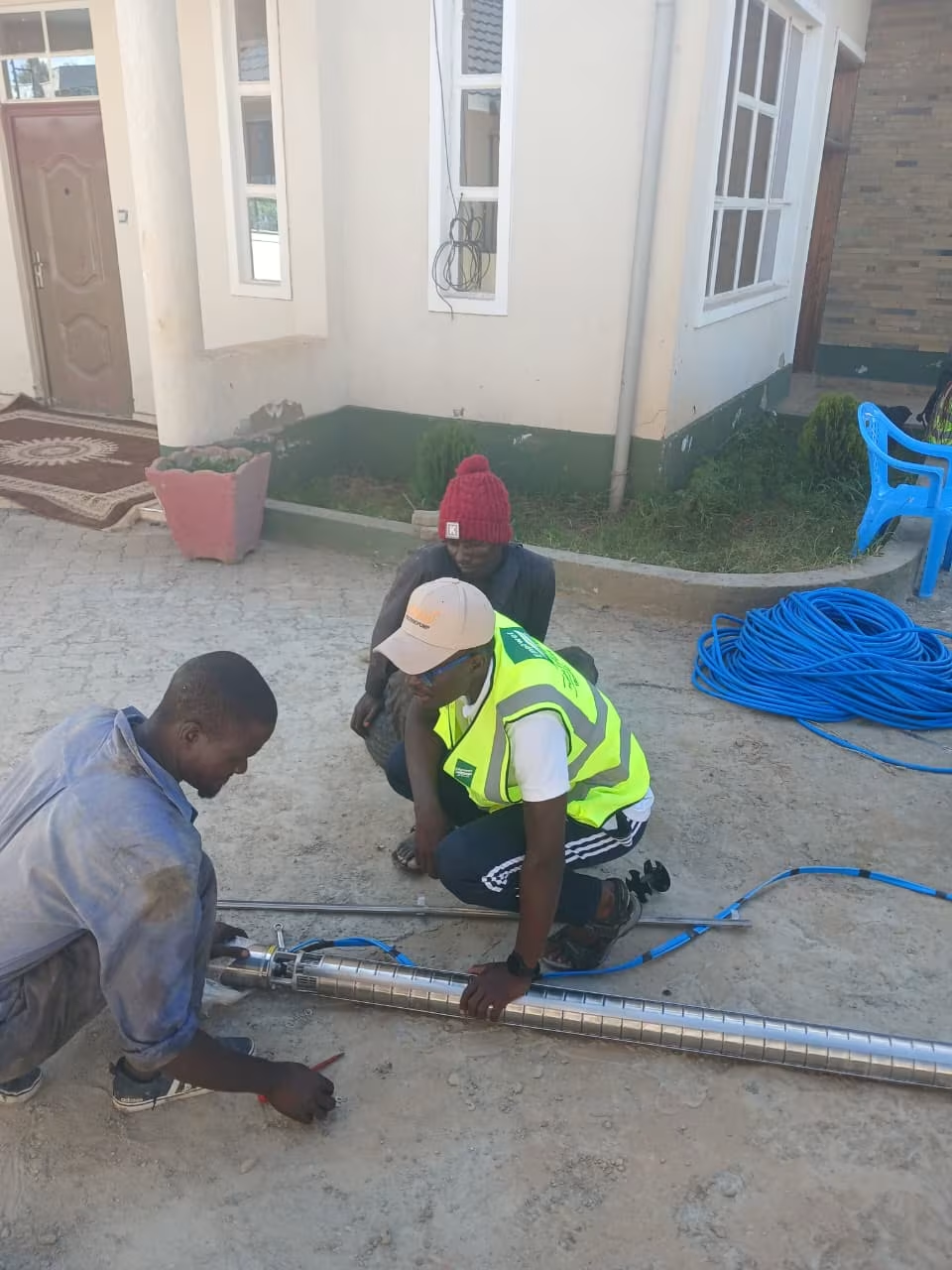
Comparing camera versus pumping tests starts with the question you need answered. A camera can inform visible-condition assessment, while an appropriately defined pumping test can examine performance. Neither automatically replaces the other. First, explain the symptom or decision. Then ask qualified personnel which evidence would usefully reduce the uncertainty.
Explore Masterpiece Hydro-Solutions borehole inspection services and request an assessment of the appropriate investigation scope. Provide the operating history and existing reports. Ask the provider to explain what each proposed activity would establish before you book a package based only on equipment names.
Define the decision rather than the preferred tool
A site owner may want to understand visible internal condition. Another owner may need evidence about reduced water delivery or proposed abstraction. These questions overlap, but they are not identical. The service should follow the decision instead of assume that one familiar test answers every concern.
Next, distinguish a symptom from its possible cause. A slowly filling tank describes an outcome, while a suspected blockage offers an explanation. Share both with the practitioner, but identify which is observed and which remains a hypothesis. This keeps the investigation open to other relevant causes.
Also, explain the next commitment. If you are considering rehabilitation, ask what evidence would justify it. If you are selecting equipment, ask what source and duty information the selection needs. The appropriate scope depends on that decision as well as the visible symptom.
Separate camera versus pumping tests by evidence type
Camera footage provides a visual record of accessible, viewable sections. It can help a qualified assessor describe internal features and identify questions for further work. The US Environmental Protection Agency’s borehole-video overview explains this visual role and its dependence on suitable observation conditions.
A pumping assessment needs a defined performance purpose. Ask whether the proposal concerns source behaviour, installed system output or another specific question. The term “test” alone does not explain its scope. Qualified personnel should determine appropriate procedures and interpret the evidence.
The choice between camera versus pumping tests should therefore follow the missing information. A visual feature does not directly establish sustainable yield. Likewise, a performance figure does not describe every internal condition. The owner needs the evidence relevant to the proposed decision.
Ask what a performance test will actually measure
Request a clear description of the intended observations and resulting report. The National Ground Water Association’s well-inspection advice distinguishes system output, water-level information and motor-related checks within a broader inspection. These are different elements, not interchangeable proof of one complete conclusion.
Next, ask how the proposed scope relates to the existing installation. A short delivery demonstration should not silently become a complete source assessment. Also, identify the operating route and relevant conditions. A reading at one outlet may not describe performance at the site’s actual destination.
Do not direct a pumping procedure from a general article. The owner should understand the purpose, evidence and limits, while qualified personnel select and perform the technical work. A clear scope makes different providers’ proposals easier to compare.
Compare camera versus pumping tests through decisions
The table below connects common questions with evidence and possible switching costs. These are categories to clarify, not verified prices or a universal sequence. The provider must assess what your site actually needs.
| Decision or condition | Evidence to discuss | Cost or disruption question |
|---|---|---|
| Need to examine visible internal condition | Camera coverage and traceable observations | Does access need separate equipment work? |
| Need to assess production or performance | Defined pumping scope and report | What operating period and professional attendance apply? |
| Cause of reduced supply remains unclear | Existing records and targeted qualified investigation | Could an initial review prevent an unnecessary visit? |
| Both condition and performance matter | Coordinated scopes with separate conclusions | Would the sequence cause repeat mobilisation or retrieval? |
| Quality is the main question | Appropriate laboratory analysis and interpretation | Which separate sampling and reporting work is included? |
Next, ask the provider to explain its recommended starting point and what would trigger the other assessment. A useful comparison includes the consequences of changing scope later.
Consider what each option leaves unresolved
A camera may leave a performance question open even when it produces useful images. Restricted access or visibility can also limit the condition evidence. Ask the report to identify those boundaries. Unobserved sections should not become an implied statement that nothing is wrong.
A performance assessment can leave internal condition or water-quality questions unresolved. Its findings also need context. A measured result under stated conditions does not automatically guarantee every future operating period. Ask which conclusions the proposed scope can reasonably support.
Thinking about camera versus pumping tests means comparing the information each method provides. The owner should identify what remains unknown after each option. That makes the next decision more transparent, especially when the initial budget cannot fund every possible investigation.
Review existing records before switching scope
Gather earlier footage, test reports and equipment information before commissioning new work. Also, identify relevant changes since those records. A recent, applicable report may answer part of the question, while an old result from a different configuration may not support the current decision.
Next, ask the provider to explain what new evidence the proposed visit would add. Repeating a service can be justified, but the reason should remain clear. Do not assume that another camera recording or another output figure automatically resolves a disagreement.
Also, identify missing information that a professional records review can clarify. A current site brief and consistent configuration details can improve the investigation. The purpose is to make the work useful, rather than choose a cheaper label without understanding what the omitted evidence would mean.
Work through a changed-tank scenario
Consider an educational example where an owner notices slower filling after moving delivery to a higher tank. The owner initially requests a camera because it seems capable of revealing the cause. No actual project or diagnosis is implied.
First, the practitioner reviews the changed route and existing pump information. The Grundfos pump-selection resource explains why flow and head matter together. That principle makes the changed duty relevant before the provider decides whether visual inspection would add useful evidence.
This scenario shows why camera versus pumping tests requires context. The appropriate next step may involve hydraulic or equipment assessment as well as a defined test. The owner should not choose a tool before explaining the change that created the question.
Account for switching costs without inventing prices
Ask what happens commercially if the first assessment identifies a need for another visit. Relevant categories may include mobilisation, equipment access work, professional attendance and interrupted supply. The quotation should explain the actual scope and any repeat-work assumptions.
Next, ask whether coordinated planning can avoid unnecessary repeated operations. Qualified personnel must determine the suitable sequence. The owner should not combine tasks independently or direct equipment handling to reduce a cost category. A lower apparent price may conceal an unplanned dependency.
Also, keep separate scopes and conclusions even when one provider coordinates the visit. A combined package should explain what camera evidence establishes and what performance evidence establishes. Coordination can improve clarity, but it does not make either method a universal guarantee.
Document the camera versus pumping tests decision
Record the question, existing evidence and reason for the chosen next step. Also, identify what finding would prompt further assessment. This gives the owner a way to review whether the commissioned work answered its purpose, rather than merely confirm that the contractor attended.
Next, agree the deliverables and clarification support. The report should distinguish observations, interpretation and recommendations. If practical conditions limit the work, ask for an explanation and a clear record of what remains unresolved. Do not treat an incomplete observation as a favourable finding.
Finally, identify responsibility for technical access work and water continuity. Owners should not retrieve equipment, perform electrical tasks or introduce chemicals to prepare either service. Qualified personnel must assess requirements and manage the relevant operations within the agreed scope.
Use results to define the next commitment
If the evidence supports a remedial assessment, discuss borehole rehabilitation services through a separate proposal. Ask how the findings support the remedy and which baseline will measure its result. Neither inspection nor a performance reading guarantees recovery.
If the findings support an equipment decision, retain the relevant source and duty evidence. Pump capacity, aquifer yield and user demand remain distinct. A new model should address an assessed requirement rather than become the automatic answer to any unsatisfactory test result.
Also, keep quality decisions with appropriate laboratory evidence and intended use. Clear footage and strong output do not establish potability. The project should connect each conclusion to the evidence that actually supports it, rather than combine several positive impressions into one unsupported assurance.
Questions about choosing the investigation
Which option is always cheaper?
No verified universal comparison applies here. Request quotations for the actual scope, including access work, reporting and any repeat-visit assumptions. Also, compare what each option would establish. An inexpensive service provides limited value if it cannot answer the question that controls the next project decision.
Can camera footage prove the borehole’s sustainable yield?
No. It provides visual evidence within its coverage and visibility limits. Source performance needs an appropriate professional assessment. Ask which measurements and report would address that question. A visible feature or apparent water movement should not become a guaranteed production figure.
Does a strong performance reading prove good internal condition?
Not every condition question follows from output. Ask the practitioner what the assessment establishes and what remains outside its scope. Visual evidence may serve a different purpose. A useful report avoids turning one favourable number into a complete statement about the asset.
Should both services always happen together?
Only if the assessed question and site requirements justify both. Ask the provider to explain the recommended sequence and any practical dependencies. Existing records may answer part of the question. The goal is appropriate evidence, not automatically commissioning every available service.
What should I provide before asking for advice?
Send the symptom history, available reports and current equipment information. Also, explain the decision you need to make and any recent site changes. Label uncertain information. The provider can then propose a useful investigation scope and explain what the chosen work would leave unresolved.
Request evidence matched to the question
Prepare the records and describe the next decision clearly. Then request an investigation assessment from Masterpiece Hydro-Solutions. Ask for the purpose, limits and practical dependencies of each proposed service. A clear camera versus pumping tests comparison connects the chosen method to the actual decision.