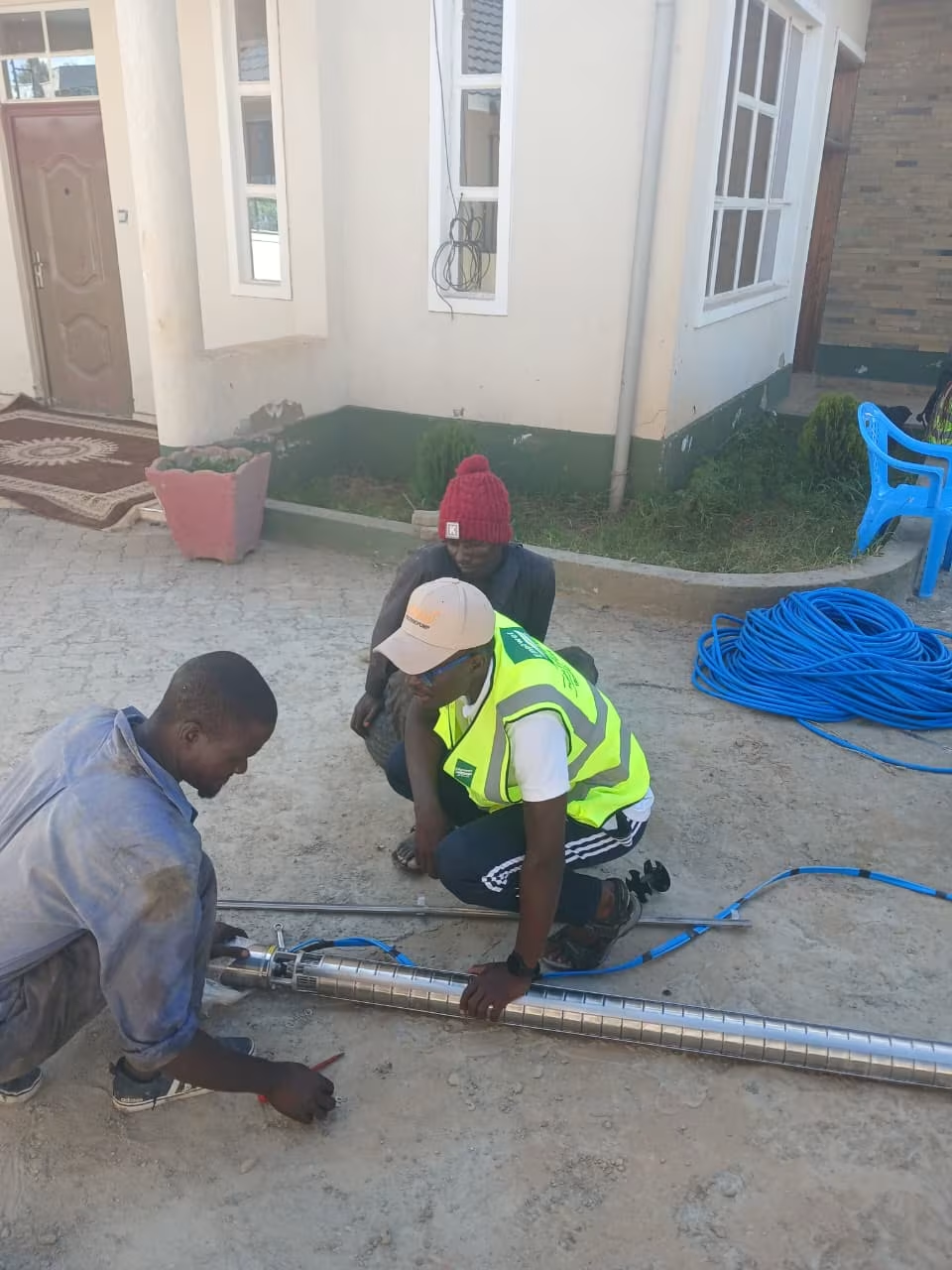
Car wash borehole supply should follow measured business activity and the washing equipment’s required interface. A borehole’s possible output does not automatically establish how many vehicles the business can serve. First, define throughput, simultaneous uses and operating hours. Then assess source evidence, storage and delivery duty before purchasing equipment or expanding capacity.
Explore Masterpiece Hydro-Solutions borehole equipping services and enquire about an assessed car-wash supply scope. Confirm the proposed service for your site. Share actual use records and the washing-equipment requirements so the provider can discuss a relevant arrangement rather than an assumed package.
Measure the operation you actually run
Identify operating hours, active washing positions and other water uses. Also, describe whether activities occur together. The provider needs the real service pattern, not only a daily vehicle target. Different business arrangements can use water differently even with similar customer numbers.
Next, gather available meter or storage records and identify their period. A quiet weekday may not describe the busiest trading period. Likewise, a short peak should not become a full-day average without an explained basis. Label the context of every useful figure.
Also, separate current performance from expansion assumptions. Planned washing positions do not represent measured use. The owner should identify when that proposed addition needs a supply review before relying on the borehole for a larger operation.
Build car wash borehole supply around the equipment interface
Ask the washing-equipment supplier to identify its required water service. Then ask the pumping provider where its responsibility ends. The borehole pump and the washing equipment may serve different duties. A source-to-tank package does not automatically establish the correct service at every machine.
Next, identify who assesses the route between storage and the washing equipment. The owner needs a coordinated arrangement rather than two suppliers each assuming the other owns the interface. Keep the relevant manufacturer requirements with the project brief.
Car wash borehole supply should also distinguish a machine’s rated capability from actual daily consumption. The business’s operating pattern matters. Ask the relevant professionals to explain the demand basis before using a maximum specification as a guaranteed daily requirement.
Check the groundwater production basis
Provide relevant test-pumping results and water-level records. Ask the qualified practitioner what abstraction basis those records support and what uncertainty remains. Source yield, pump capacity and business demand are separate. A larger motor cannot establish sustainable production for more washing activity.
Next, explain any known change since testing. An earlier report may remain useful while requiring review for the current brief. If evidence is incomplete, ask which further assessment would improve the decision. Do not substitute a desired throughput figure for an assessed source capability.
Also, identify whether the borehole supplements another source. The intended role affects reserve and continuity planning. A proposed source should not silently become the assumed answer to every interruption or future business requirement.
Assess the route and required delivery duty
Show the borehole, storage and agreed delivery interface on a current layout. Also, identify relevant elevation information and known route changes. Water observed at the source does not automatically represent delivery at the business’s actual destination.
The Grundfos pump-selection resource explains why flow and head need assessment together. Ask the practitioner to consider pumping lift, delivery elevation, route losses and any required outlet service. Drilled depth alone does not specify a complete package.
Next, distinguish retained equipment from new scope. Ask who assesses the existing tank controls, pipework and other components relevant to the proposal. A new pump does not automatically make the whole business supply suitable for its revised duty.
Compare car wash borehole supply arrangements
The following table helps the owner identify the assessment behind each option. It does not prescribe a washing method or select a universal system. Qualified personnel must assess the actual source and equipment requirements.
| Arrangement to assess | Main question | Limit to keep visible |
|---|---|---|
| Borehole filling useful storage | Can assessed production replenish business use? | Storage does not create groundwater |
| Storage feeding an assessed equipment interface | Who defines downstream duty? | A full tank does not prove every machine’s service |
| Existing source supplemented by groundwater | What role does each source perform? | Interfaces and suitability need professional review |
| Additional washing position | How does simultaneous demand change? | A new target is not measured existing consumption |
| Separately assessed reuse arrangement | Who determines quality and operating requirements? | Reuse should not be assumed within an ordinary borehole scope |
Next, ask why the preferred arrangement suits the brief. A short package label explains less than a clear account of the supplied service and unresolved responsibilities.
Keep suitability and drainage decisions separate
Ask the relevant specialists which water analysis and interpretation the intended use requires. Clear groundwater does not establish suitability for every washing machine or other business activity. The equipment supplier should identify its requirements, while staff drinking needs a separate suitability decision.
Also, identify who assesses drainage and any proposed reuse system. The borehole installation does not automatically include the business’s complete wastewater arrangement. The responsible professionals should identify the applicable scope and current authority questions for the actual site.
Car wash borehole supply should retain those boundaries in writing. Do not choose treatment, chemicals or reuse operating limits from a general procurement article. The appropriate qualified team must assess the water and intended application before additional work becomes a commitment.
Plan storage against trading periods
Describe when the business uses water compared with available pumping periods. A source may replenish storage over a different pattern from customer arrivals. The project needs the daily balance and the service required during busy periods.
Next, distinguish useful operating volume from nominal tank capacity and any protected reserve. Ask the practitioner to explain the assumptions. Storage can help bridge timing, but a persistent shortfall remains unresolved if production repeatedly falls below consumption.
Also, identify who monitors relevant indications. Staff should record observations and report problems rather than change protection settings to keep a queue moving. Electrical work, equipment retrieval and mechanical adjustment require qualified personnel within an assessed scope.
Define the interruption the backup addresses
Power loss, equipment repair and reduced source production create different questions. Ask which event the proposed backup arrangement addresses and which limitations remain. A second power source does not automatically solve a water shortage caused by insufficient sustainable yield.
Next, decide what management will do if the normal supply remains unavailable. Temporary water arrangements or emergency attendance should only become contractor commitments when expressly agreed. Do not assume they form part of an equipment quotation.
Car wash borehole supply also needs a clear reporting and approval route. The operator should know whom to contact and who may authorise service. An immediate trading need should not become informal permission for undefined additional technical work.
Use an additional-position scenario
Consider an educational example where a business adds another washing position after an earlier borehole installation. No actual site or production result is implied. The existing package served the previous operating brief, while the proposed addition changes simultaneous demand.
First, the owner obtains the revised equipment-service requirement and updates the use assumptions. Next, practitioners compare that brief with source evidence, useful storage and retained equipment. They identify any further suitability or distribution assessment before management commits to the larger operation.
This example shows why car wash borehole supply needs a review gate for expansion. A working source and available motor power do not prove spare groundwater or suitable service at a new interface. The decision should follow the revised evidence.
Review car wash borehole supply acceptance
Ask the quotation to distinguish assessment, equipment, interfaces and commissioning. Also, clarify exclusions, tax treatment and offered warranty terms. The commercial commitment should identify what the provider supplies and demonstrates rather than promise a particular business income or unlimited throughput.
Next, agree evidence at the supplied destination. Qualified personnel should choose and perform appropriate technical checks, recording relevant conditions. Owners should receive understandable outcomes without carrying out pressure tests or electrical work themselves.
For authority matters, consult the Water Resources Authority’s permitting guidance and confirm current site-specific requirements directly. The equipment proposal does not itself establish permission for the intended abstraction or settle every other business-related approval question.
Questions about groundwater for a car wash
Can vehicle numbers determine the pump?
They provide context, but actual use, simultaneous operation and equipment duty matter. The source also needs its own evidence. Ask the relevant professionals to define the brief before selecting a package. A universal pump size per vehicle target cannot replace those assessments.
Does the borehole pump directly replace washing equipment?
Do not assume the two serve the same duty. Ask the equipment supplier and pumping practitioner to define the interface. The project may include storage and another assessed delivery arrangement. A running borehole pump does not automatically establish the correct service at every machine.
Will larger storage guarantee a busy day’s operation?
Only an assessed production-and-demand basis can support that decision. Storage helps with timing but must be replenished. Ask for useful capacity and operating assumptions, with a clear interruption response. A larger tank cannot indefinitely cover continuing demand above source production.
What records should management retain?
Keep source information, equipment requirements and commissioning evidence together. Also, retain the measurement boundary, operating instructions and service contacts. These records help explain what the system was assessed to do and which future changes need qualified review.
Enquire with measured business activity
Gather use records, washing-equipment requirements and source evidence. Then enquire about a car-wash supply assessment with Masterpiece Hydro-Solutions. Confirm the site-specific scope. Ask for clear interfaces, realistic storage assumptions and evidence supporting the actual operating brief.