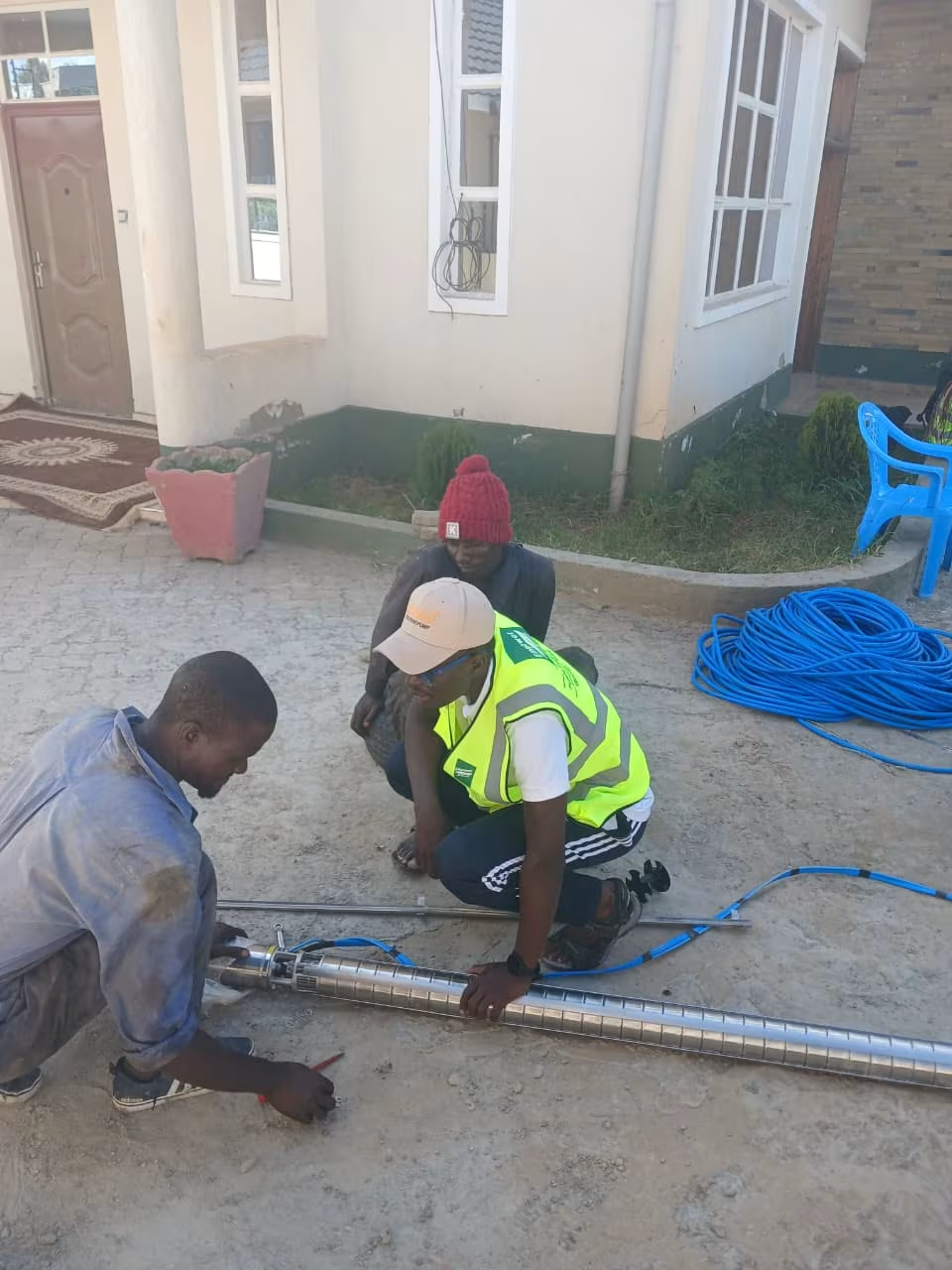
Clinic borehole supply planning should begin with the facility’s own water-management requirements. Source production, building delivery and suitability for a clinical use are separate decisions. First, involve the responsible facility team and relevant qualified advisers. Then define what a borehole-equipping provider can assess, supply and demonstrate within that wider plan.
Explore Masterpiece Hydro-Solutions borehole equipping services and enquire about an assessed clinic supply scope. Confirm the proposed service for your facility. Share the water-service brief and source records without assuming that a general equipment package establishes clinical-use suitability or complete facility readiness.
Let the facility define the required service
Identify the services the clinic actually provides and the water uses the responsible team considers relevant. Also, distinguish existing operations from proposed expansion. The borehole supplier should receive a defined requirement rather than invent a demand figure from patient numbers or a building label.
Next, ask the appropriate facility and engineering professionals to establish the relevant interfaces. A general source-to-storage duty may not describe a specialist use. The project needs clear responsibility for deciding what evidence and service each activity requires.
Also, identify the decision the proposed work supports. The clinic may need an initial source review, equipment replacement or a coordinated supply project. A specific brief helps the provider explain its scope without turning an enquiry into an unsupported assurance about the whole facility.
Start clinic borehole supply planning with facility records
Gather available water-use records and explain their period and boundary. A total may include cleaning, staff facilities and other activities together. Ask the relevant team whether further separation would improve the brief. Do not treat a number without context as a complete operating requirement.
WHO’s practical tool for assessing WASH in health-care facilities places assessment and improvement planning within the facility’s wider responsibilities. Use that principle to coordinate the borehole project with the appropriate management process. A pump installation is only part of the information the facility may need.
Clinic borehole supply planning should preserve the distinction between measured use and future assumptions. If the records are incomplete, ask which assessment would support the next decision. Do not invent a precise demand standard to make the equipment comparison appear final.
Establish the source production basis
Provide relevant test-pumping results and water-level records. The qualified practitioner should explain the abstraction basis and uncertainty. Source yield, pump capacity and facility demand remain different. A larger motor cannot establish sustainable groundwater production that the evidence does not support.
Next, identify known changes since the available testing. An earlier record may remain useful while requiring review for the current project. Ask what further evidence would materially improve the decision before the facility relies on the source for another service.
Also, state whether the borehole supplements another supply. Its intended role matters to the operating plan. A proposed source should not silently become the sole assumed answer to every interruption or future facility requirement.
Assess the complete delivery interface
Show storage, intended destinations and known route information on the current layout. Also, identify relevant elevations and any service requirements confirmed by the appropriate professionals. Water reaching a tank does not automatically establish the required building or specialist-use interface.
The Grundfos pump-selection resource explains why required flow and head matter together. Ask the pumping practitioner to assess lift, elevation, route losses and relevant outlet duty. Drilled depth alone cannot specify a complete installation.
Next, clarify which existing components the provider proposes to retain. Their condition and compatibility need assessment. A new borehole pump cannot automatically establish that every downstream component remains suitable for the facility’s brief.
Coordinate clinic borehole supply planning responsibilities
The following table helps the project identify decisions and responsible people. It does not prescribe clinical procedures or water-quality limits. The facility’s qualified team must determine the requirements relevant to its services.
| Decision area | Question to resolve | Evidence or responsibility |
|---|---|---|
| Facility water brief | Who confirms actual activities and priorities? | Responsible facility team and relevant advisers |
| Groundwater production | What abstraction basis does the source support? | Appropriate tests and qualified interpretation |
| Pumping duty | What service reaches the agreed destination? | Assessed route and manufacturer selection basis |
| Use suitability | Who confirms evidence for each intended application? | Appropriate quality and facility specialists |
| Interruption response | Who owns the continuity decision? | Facility plan and named contacts |
| Operating handover | Who retains records and reports changes? | Clear asset and service-management responsibilities |
Next, resolve gaps before the equipment order. A supplier’s successful installation should not leave another necessary decision without an identified owner.
Keep water suitability distinct from pump operation
Clear groundwater and a running pump do not establish suitability for drinking or any clinical application. Appropriate laboratory evidence and qualified interpretation for the intended use guide that decision. The provider should state which quality-related services, if any, its proposal includes.
Next, ask the responsible facility team how the new source will enter its wider water-management process. The pumping provider should not substitute a general statement of cleanliness for that assessment. Any additional specialist scope needs clear ownership and approval.
Clinic borehole supply planning should therefore keep quality decisions visible after commissioning. A favourable observation at one stage is not an unlimited assurance about every later condition. The facility needs an appropriate review process rather than reliance on the installer’s initial demonstration alone.
Define the continuity question before choosing backup
Ask the facility team to identify the interruption scenarios relevant to its operation. Power loss, pump repair and insufficient source production are different. A backup power arrangement may address an outage without solving every water-service problem.
CDC’s emergency water-supply planning guide for healthcare facilities describes assessing water use, response capabilities and supply alternatives. Use that planning principle with the responsible professionals. This article does not define the clinic’s clinical response or substitute for its facility plan.
Also, ask what the equipment proposal actually supports. Reserve assumptions, useful storage and interface duties should remain explicit. Do not treat the presence of backup in a quotation as a guarantee that every facility activity can continue under every interruption.
Plan technical work and site coordination
Tell the provider about access, current site activity and relevant management contacts. Qualified personnel must determine safe working and technical requirements. The facility should coordinate its own responsibilities and identify who can approve a changed commercial scope.
Next, ask how the contractor will communicate limitations or additional findings. The owner needs an evidence-based explanation and a clear approval process. Do not assume an initial estimate authorises every later change to retained equipment or the supply arrangement.
Also, keep technical operation with qualified personnel. Staff should understand normal indications and reporting responsibilities, not attempt electrical changes, retrieval or unassessed treatment. The project needs a service route that fits the facility’s management arrangements.
Use a proposed-expansion scenario
Consider an educational example where a clinic proposes an additional service area after an earlier borehole installation. No actual facility or water result is implied. The existing package was assessed for the earlier brief, while the expansion introduces new operating questions.
First, the responsible facility team defines the revised water requirements with appropriate advisers. Next, the practitioners compare those requirements with source evidence, retained equipment and the delivery arrangement. They identify any further quality or continuity assessment before the facility commits to the new service assumption.
This example shows why clinic borehole supply planning needs a review gate. A working source can remain useful without proving suitability or capacity for every future activity. The next decision should follow the revised facility brief and relevant evidence.
Review clinic borehole supply planning acceptance
Ask the provider to define commissioning evidence for its actual scope. The record should identify equipment, observed delivery and relevant conditions at the agreed interface. Qualified personnel should select and perform technical procedures. The facility needs understandable outcomes and a clear list of incomplete items.
Next, distinguish a measured observation from a forecast of future supply. One demonstration cannot guarantee all later source and operating conditions. Keep the equipment result separate from the facility’s quality and continuity decisions.
For authority matters, consult the Water Resources Authority’s permitting guidance and confirm current project-specific requirements directly. Also, clarify exclusions, tax treatment and offered warranty terms. The commercial commitment should match the assessed work without implying universal facility approval.
Questions about a clinic groundwater project
Can the installer determine all clinical water requirements?
The responsible facility team and relevant specialists must define those requirements. The borehole provider should explain the scope it accepts and any information it needs. A general pumping package does not automatically establish suitability for every clinical use or complete facility readiness.
Does a favourable water appearance establish suitability?
No. Appropriate laboratory evidence and qualified interpretation for intended use guide that decision. Clear water and successful pumping answer different questions. Ask the facility team who owns quality assessment and how the proposed source enters its wider management process.
Will backup power guarantee uninterrupted service?
No universal guarantee follows from that feature. Ask which event the arrangement addresses and what remains unresolved. Equipment failure and source shortfall are different from power loss. The facility’s responsible professionals should assess continuity alongside the actual proposed system.
What should the handover contain?
Retain source information, installed equipment references and commissioning records. Also, identify limitations, operating instructions and service contacts. The facility should know which decisions remain outside the pumping scope and who is responsible for them. Technical tasks must remain with qualified personnel.
Enquire with the facility-led brief
Gather the responsible team’s requirements, layout and source records. Then enquire about a clinic supply assessment with Masterpiece Hydro-Solutions. Clinic borehole supply planning needs an explicit service boundary. Ask for clear interfaces, evidence-based equipment decisions and a handover that fits the facility’s wider responsibilities.