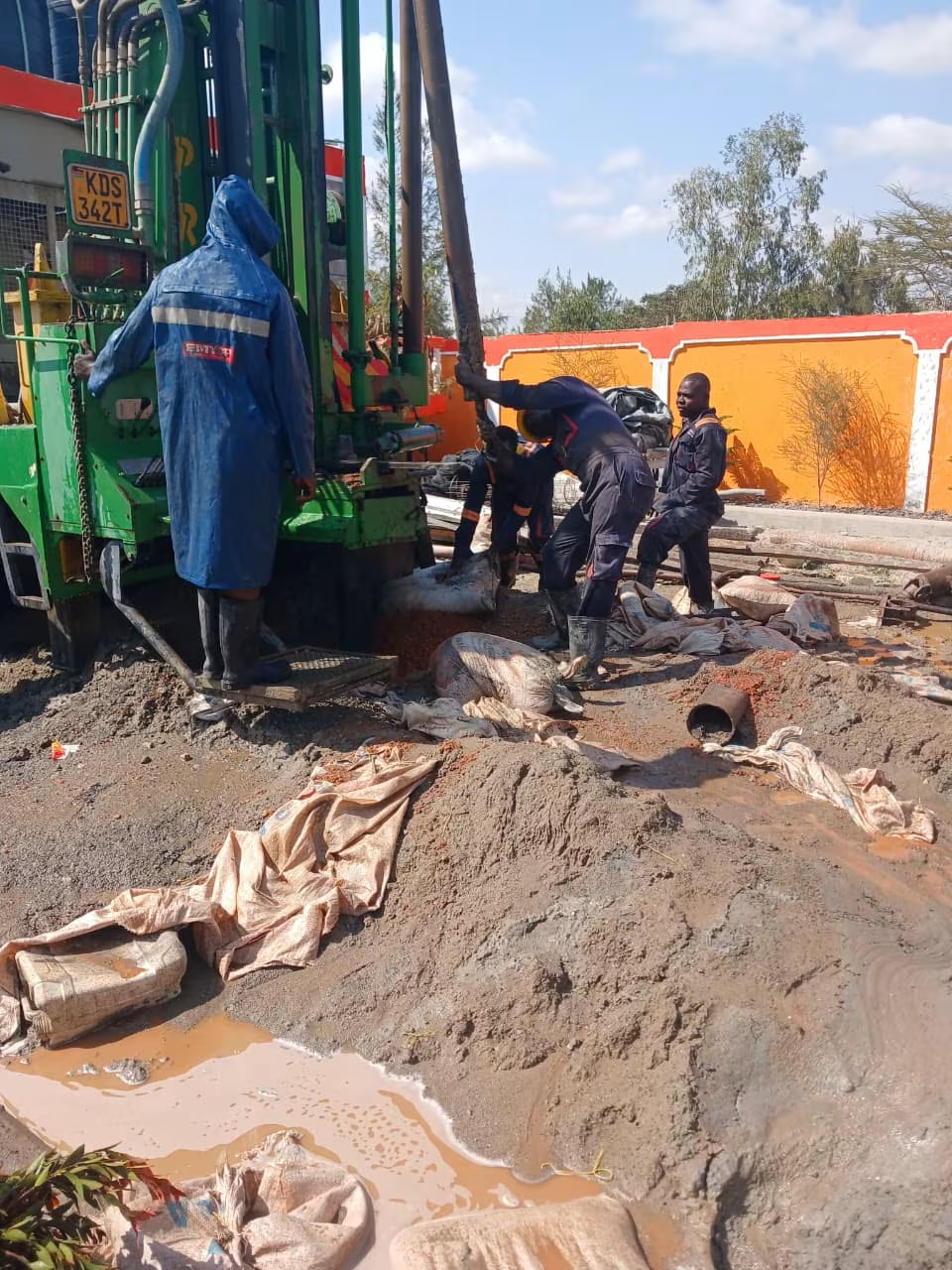
Commercial development borehole drilling needs coordination with the building programme before a rig reaches site. A promising drilling location may conflict with foundations, access routes or future maintenance. First, define the water requirement and the proposed work area. Then connect the drilling scope with the development’s construction and operating responsibilities.
Explore Masterpiece Hydro-Solutions borehole drilling and request a development-specific assessment. Share the site plan, intended use and available survey records. This guide helps developers and project managers compare scope, access and handover evidence without treating drilling as a guaranteed complete water supply.
Define commercial development borehole drilling by project stage
Separate construction water needs from the occupied development’s future demand. Site works may require a temporary supply arrangement, while shops, offices or accommodation create a different long-term brief. Also, identify who provides demand information at each stage. A contractor cannot infer future water use simply from the building’s floor area.
Next, describe phased occupancy and any uncertain tenants. A restaurant, office and workshop can have different water needs. Mark provisional assumptions clearly. This allows an assessor to compare the initial requirement with later expansion rather than design around a single unexplained allowance. Keep any essential reserve or continuity requirement in the brief too.
Put the proposed location on the current site plan
Use a drawing that reflects the latest development layout. Identify buildings, access routes, planned storage and known services. However, a drawing does not replace qualified site checks. Ask the relevant professionals to assess the proposed position and coordinate it with the wider design. The owner should not attempt to choose a technical location alone.
Also, consider the completed development rather than only today’s open ground. A position accessible before construction may become difficult after paving, fencing or occupation. Ask how future inspection and equipment access will work. Preserving a practical maintenance route can matter long after the drilling team has left.
Coordinate commercial development borehole drilling access
Tell bidders about gates, route restrictions and active construction areas. Next, identify the person who controls deliveries and site movements. The contractor should assess the access needed for their equipment and support vehicles. Avoid promising access based on a car visit or a photograph that omits turning and working space.
Also, discuss how the drilling programme interacts with other trades. A shared route may serve concrete deliveries, excavations or occupied premises. Agree a coordination process and report changes early. The project manager needs a realistic interface plan, while qualified contractors remain responsible for their methods and technical safety arrangements.
Check survey evidence and permission responsibilities
Ask what hydrogeological evidence supports the proposed drilling target and what uncertainty remains. The hydrogeological survey service provides a relevant assessment route before drilling decisions. A recommendation should identify its assumptions; it cannot guarantee the final yield, water quality or completed depth.
Consult WRA’s permitting guidance about current site requirements. Its process distinguishes construction authorisation from a subsequent water permit. Also, assign responsibility for applications, supporting records and communication. A general promise to handle approvals needs a written boundary and cannot guarantee an authority’s decision.
Compare commercial development borehole drilling scope
Ask for an itemised scope that identifies what the drilling price covers. Casing, mobilisation, testing and completion records may need separate treatment. However, do not assume every quotation uses the same boundary. Compare equivalent tasks and ask the contractor to explain how site findings can change quantities or scope.
| Scope area | Evidence to request | Development interface |
|---|---|---|
| Mobilisation and access | Assessed route and working-area assumptions | Who coordinates shared site movements? |
| Drilling and casing | Clear quantities, specifications and variation basis | Who approves changes during the work? |
| Testing | Defined tests, reports and exclusions | When can equipment assessment begin? |
| Completion evidence | Construction records and site identification | Who adds the records to the development file? |
| Later equipping | Separate assessed scope and responsibility | Who connects source delivery to building storage? |
Agree how casing decisions become documented
Ask the contractor to explain the proposed casing scope and which decisions depend on encountered conditions. The buyer needs clear descriptions and records, rather than a universal specification copied from another site. Also, identify who can approve a justified change and what evidence must accompany the request.
Keep the financial and technical decisions connected. A variation should identify the finding, proposed response, quantity and cost basis. However, a project manager should not substitute a commercial preference for qualified technical assessment. The aim is accountable decision-making, with a traceable record of what the team installed and why.
Work through a phased-development example
Consider an educational scenario involving a development with an initial occupied demand of 12 cubic metres daily. Later tenants may increase that requirement to 20 cubic metres. These are arbitrary planning assumptions, not demand allowances for commercial property. Present both stages to the assessor rather than hide the later requirement inside a general expansion margin.
Assume subsequent assessment supports average delivery of three cubic metres per hour under stated conditions. Producing the first stage’s daily volume would require four operating hours. Producing the later assumed volume would require more than six hours at that average. However, the calculation does not establish sustainable yield or suitable operating hours.
Commercial development borehole drilling should therefore lead into testing and an equipment assessment before the owner promises the later service level. The project may need revised storage, supplementary supply or a different assessed arrangement. A completed hole is an important project stage, but it does not settle every future water-supply requirement.
Keep storage and distribution boundaries explicit
Identify the intended tank destination and who designs the delivery arrangement. A distant or elevated storage point affects the later pumping duty. Also, distinguish source-to-tank delivery from distribution within the development. A drilling quote should not silently carry responsibility for tenant pressure or internal plumbing performance.
Ask when the storage layout must become final for equipment assessment. If architects or other teams move a tank, tell the water-project assessor. That change may alter the duty even though the drilled borehole remains unchanged. Keeping those interfaces visible helps avoid incompatible assumptions between civil, building and water-supply packages.
Make completion records part of development handover
Agree the expected record package before work starts. It should clearly identify the site and describe the completed construction, with relevant test reports linked separately. Next, assign someone to check that the records match the actual project. Missing or contradictory information needs clarification before the file passes to facilities management.
Retain the current version alongside approvals, equipment records and support contacts. Also, record later modifications. Commercial development borehole drilling becomes easier to manage when the facilities team can understand the original construction basis. A new manager should not need to reconstruct the installation from invoices and photographs alone.
Plan the transition from construction to occupation
Nominate the person who accepts the drilling records and the person who manages future water supply. They may belong to different organisations. Also, explain remaining testing, quality assessment and equipment tasks before occupation. Clear water appearance cannot establish suitability for drinking or another intended tenant use.
Confirm warranty boundaries and any excluded work in writing. Ask whether VAT is included and how final quantities will be reconciled. Finally, agree how outstanding matters remain visible during the wider development handover. A water-project issue should not disappear inside a building completion checklist that treats all services as already commissioned.
Questions developers commonly raise
Can we drill before the final building layout?
Ask the relevant professionals to assess that sequence and its consequences. Future structures, access and storage destinations may affect the decision. Commercial development borehole drilling needs coordination with the current plan and known future constraints. An open site today does not establish a suitable long-term arrangement.
Does the drilling quote include a working water supply?
Only the written scope can answer that. Drilling, testing, equipping, storage and internal distribution may form separate packages. Therefore, identify the acceptance boundary for each one. A completed borehole does not automatically demonstrate a commissioned supply at every tenant outlet.
Can we select the pump before drilling finishes?
Early planning can identify needs, but final selection requires relevant source and duty evidence. Avoid treating an initial equipment allowance as a confirmed model recommendation. Also, tell the assessor about the final tank destination. The later pumping design should reflect the completed and tested source.
How should the project handle unexpected conditions?
Agree a variation process before mobilisation. The contractor should explain the finding, proposed response and cost basis. The authorised project representative should record decisions promptly. Commercial development borehole drilling benefits from clear responsibility because verbal changes can create disputes during a busy construction programme.
What should accompany the first enquiry?
Send location, current site drawings, intended uses and available survey records. Include access constraints, programme interfaces and phased demand. Also, identify planned storage and the project contact. Mark unknowns clearly so the assessor can define the work needed before a reliable proposal.
Issue a coordinated drilling brief
Bring the demand scenarios, site layout, access assumptions and completion requirements into one brief. Name the people who approve variations and receive handover records. Finally, identify later testing and equipment responsibilities. This makes commercial development borehole drilling a coordinated part of the development programme.
Request a commercial project assessment from Masterpiece Hydro-Solutions with those details. Ask for explicit drilling and casing scope, exclusions and record deliverables. A reviewable proposal connects the site work with the evidence the future facilities team will need.