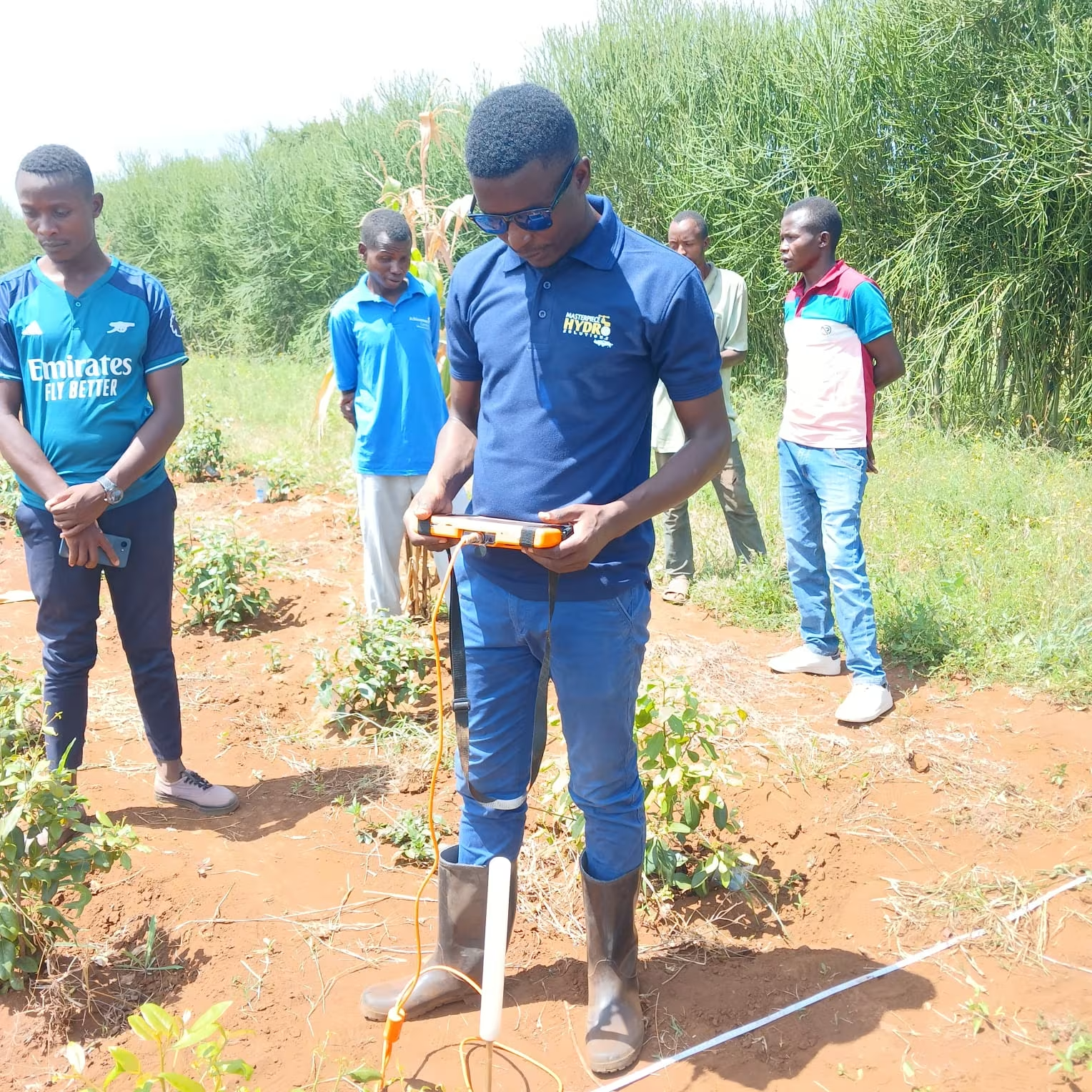
A community groundwater survey needs a shared brief before anyone chooses a drilling point. Residents, institutions and project supporters may expect different services from the same source. Therefore, record demand, decision authority and uncertainty together. A technically useful report cannot resolve expectations that the community has never discussed.
Masterpiece Hydro-Solutions offers hydrogeological surveys. To discuss a shared project, request an assessment using a community project brief. Describe the proposed users, intended uses and available land information. Also, identify the person authorised to coordinate the enquiry.
Start the community groundwater survey with users
First, list the groups the project hopes to serve. Households, a school and a market may have different daily patterns. Their needs can overlap, but their priorities may differ during a shortage. Ask representatives to describe those needs before combining them into one demand figure.
Next, distinguish existing users from possible future connections. A preliminary idea for expansion should not appear as confirmed current demand. Also, record whether the project expects individual connections, shared collection points or another arrangement. These choices shape the supply brief without predicting the source’s eventual capacity.
Finally, state which needs take priority if the assessment identifies limitations. The survey cannot promise sufficient groundwater for every proposed use. However, an agreed priority list helps the community interpret later evidence. It also supports a more focused discussion of alternatives.
Collect demand evidence without creating false precision
Existing meter records, storage observations and reliable supply records can inform the brief. Identify what each record measures and which users it includes. For example, a school record may exclude nearby households that collect water informally. A single total can conceal that difference.
Also, ask about seasonal changes and unusual demand. Temporary events, school terms or livestock movements may affect the pattern. Record those factors separately instead of presenting one busy day as normal use. The assessor needs context to judge the usefulness of the information.
Where data remains unavailable, label the planning assumption and its source. Do not manufacture a precise community demand figure from uncertain attendance estimates. Instead, ask what further information would improve the brief. Honest uncertainty helps the report remain useful when project details change.
Assign community groundwater survey decisions clearly
| Decision | Community input | Record to keep |
|---|---|---|
| Project purpose | Users and priority uses | Agreed service brief |
| Site enquiry | Available land and access contacts | Location and permission questions |
| Survey instruction | Authorised representative and accepted scope | Written instruction and proposal |
| Report discussion | Questions from relevant user groups | Clarification notes and unresolved items |
| Further investigation | Budget and decision authority | Approved next-step instruction |
| Drilling commitment | Evidence, requirements and funding review | Separate decision record |
This table describes practical coordination rather than a universal governance rule. Your organisation may need additional formal processes. Therefore, ask the appropriate authority or adviser about current requirements. Keep technical acceptance separate from the community’s decision to commit funds or accept contractual obligations.
Give one coordinator a defined role
A named coordinator can gather information and arrange discussions. However, that role should not automatically include every financial or technical decision. State what the person may instruct and what requires wider approval. Also, provide an alternative contact when the coordinator is unavailable.
Next, agree how the survey team receives changes to the brief. Informal instructions from several representatives can create conflicting expectations. Use one current written brief and retain earlier versions. The coordinator can collect questions without replacing professional judgement or the agreed approval process.
Also, plan how members will receive the findings. A short meeting can support understanding, but the full report should remain available to the responsible project team. Avoid reducing a qualified recommendation to a message that water is guaranteed. The uncertainties need to travel with the recommendation.
Review land and access as project dependencies
Identify the proposed land and the people who can discuss access. A community’s interest in a location does not establish permission to survey or construct there. Therefore, ask the appropriate parties what permission and documentation the project needs. Seek suitable advice if rights or ownership remain uncertain.
Also, describe the practical approach to the site. Include controlled entrances, shared tracks and known restrictions. The survey stage and later drilling may need different access arrangements. Do not assume that allowing a survey visit settles every later construction question.
A community groundwater survey brief should identify these dependencies without pretending they are already resolved. Ask the assessor which uncertainties prevent a useful instruction. Then assign a person to obtain the missing information. This keeps location discussions grounded in an actual project pathway.
A scenario with households and a school
Imagine a community group proposes one source for households and a nearby school. Household representatives focus on evening collection, while the school needs daytime supply. A donor asks for a survey immediately. However, the project has not agreed how it will describe demand or prioritise essential uses.
First, the coordinator gathers separate records and notes the limits of each set. Next, representatives agree a current-user brief and list possible expansion separately. The survey instruction then states the intended purpose without promising that the source will meet every requirement. The assessor can explain the remaining uncertainty.
After receiving the report, the group records its questions and any proposed next step. It does not announce a confirmed water supply based on a favourable recommendation alone. Drilling, testing, water quality and later delivery assessment still need appropriate decisions. The community retains a traceable project history.
Ask for a report that supports group discussion
The report should identify the assessed location, brief, evidence and recommendation clearly. Ask how it distinguishes observations from interpretation and unresolved assumptions. Also, request an explanation that non-specialist representatives can understand. Clear language helps the community discuss the findings without simplifying away important limits.
Next, ask what further evidence the recommendation expects before later decisions. A survey does not establish the final pump capacity or drinking suitability. The report should help the buyer understand the sequence. Avoid treating an indicative depth or location as a complete water-system design.
Finally, record questions about the report rather than editing its findings informally. If clarification changes the recommendation, request a controlled written update. Keep the version that informed each decision. This prevents different representatives from relying on different summaries of the same assessment.
Keep approval responsibilities visible
The Water Resources Authority permitting guidance describes an application, construction authorisation and a subsequent water permit. Ask WRA about the current requirements affecting the proposed community project. Identify who will coordinate the required information and follow-up.
Also, distinguish assistance with documents from authority approval. A supplier may help prepare information without controlling the decision. Do not promise a fixed approval date or imply that construction authorisation permits abstraction. Ask the authority to confirm the applicable sequence before committing to later activity.
The community groundwater survey should sit within that broader sequence. Its findings can inform the next discussion, but they do not replace approvals or later testing. Keep authority correspondence with the report so the project team can review both together.
Plan the next funding decision honestly
A survey payment does not fund every stage of a water scheme. Therefore, distinguish assessment, drilling, testing, equipping, storage and distribution in the project plan. Ask which stages need new evidence before pricing. Avoid presenting an early survey recommendation as a fully costed operational scheme.
Also, discuss who will consider ongoing operation and maintenance arrangements. Those questions influence the intended service and future responsibilities. However, they do not justify selecting equipment before the necessary source evidence exists. Ask qualified personnel to explain later design and operating requirements.
For the next construction enquiry, see Masterpiece Hydro-Solutions borehole drilling. Carry forward the survey, community brief and unresolved questions. A separate stage decision helps the group review uncertainty before committing further resources.
Questions about a community groundwater survey
Can one survey promise enough water for everyone?
No survey can guarantee a particular groundwater result. Describe the intended users and demand honestly, then ask how the findings relate to that brief. Drilling and testing provide further evidence. Also, discuss priorities before the community assumes every proposed connection will be possible.
Should every representative instruct the assessor directly?
A defined communication route usually makes coordination clearer. Representatives can contribute questions through the agreed process. However, the project should state who may change scope or commit funds. Practical coordination does not replace any formal governance or authority requirements applying to the organisation.
What if the project has little demand data?
Tell the assessor which records exist and which estimates remain uncertain. Ask how to improve the brief before relying on it. Do not invent detailed figures to make the project appear ready. A clearly labelled assumption can support discussion without pretending to be measured demand.
Does a favourable report justify announcing success?
Communicate the actual stage and its limitations. A recommendation to investigate further differs from a confirmed operational water supply. Explain the remaining decisions, including drilling, testing and water-quality assessment. This helps members understand progress without creating expectations that the available evidence cannot support.
What should the group retain after the assessment?
Keep the accepted brief, report, clarification responses and relevant project documents. Also, save the decision record explaining the next instruction. A community groundwater survey becomes more useful when later teams can trace the assumptions. Do not rely only on a meeting summary or one person’s memory.
Prepare the shared brief before the survey
A useful community groundwater survey begins with agreed users, priorities and decision authority. It also identifies land questions and missing demand evidence. Gather those details before accepting a survey scope. Then review the findings as one stage in a wider, uncertain water project.
Send Masterpiece Hydro-Solutions your community survey enquiry. Include the proposed site, current users and authorised coordinator. Request a clear assessment scope that identifies deliverables, dependencies and the questions the report will address.