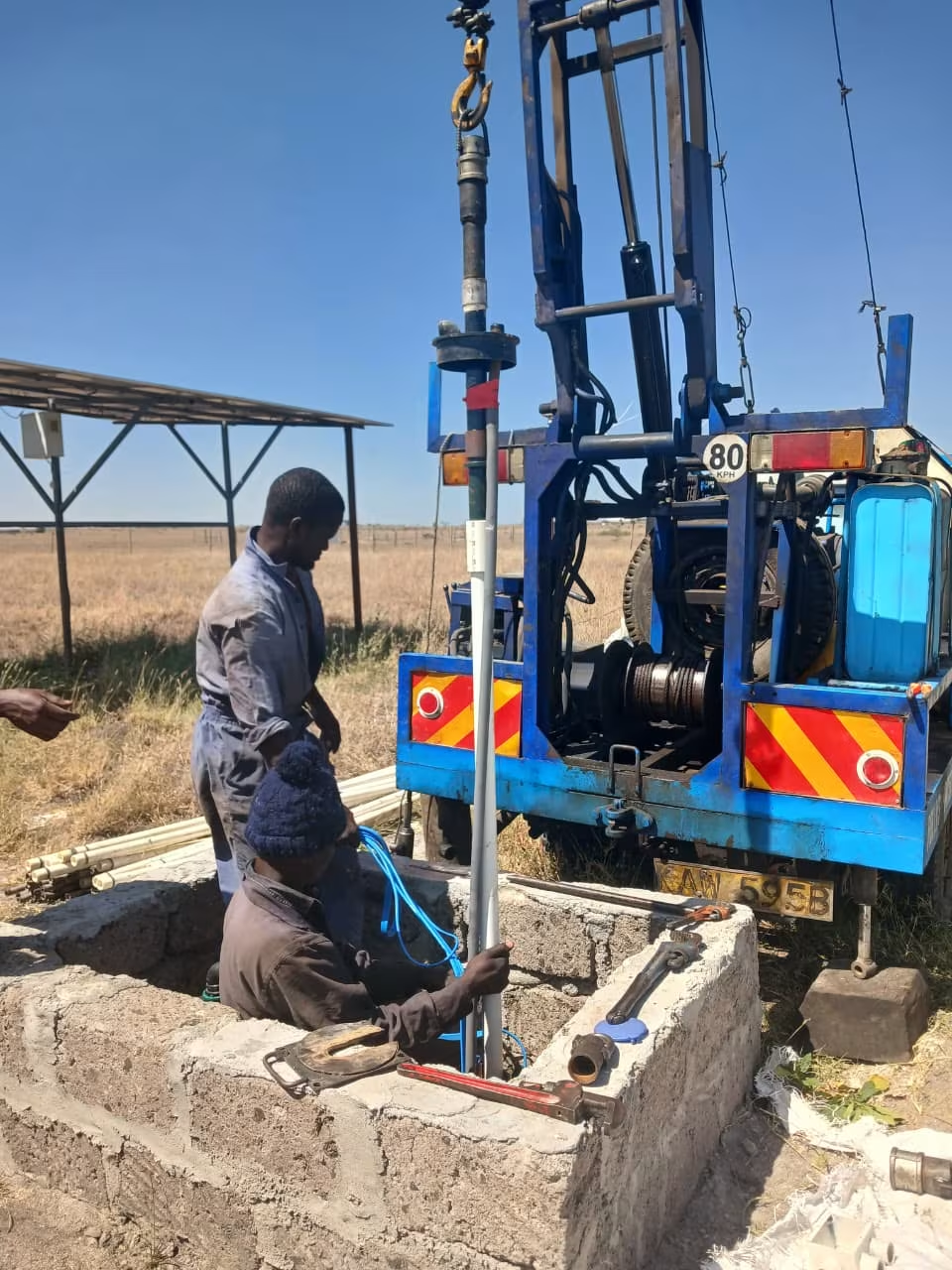
Construction site borehole supply needs a brief that changes with the work programme. Water for site activities, staff facilities and a later occupied development may involve different requirements. First, define the current stage and intended endpoint. Then assess source evidence, temporary delivery interfaces and the responsibilities that continue after construction.
Explore Masterpiece Hydro-Solutions borehole equipping services and enquire about an assessed construction-site supply scope. Confirm the proposed service for your location. Share the programme, water-use categories and available borehole records before asking the provider to price equipment or temporary connections.
Separate the work stages and water uses
Identify activities that currently need water and those planned for a later stage. Site welfare, cleaning and construction processes should remain distinct categories. The appropriate project professionals must determine the relevant requirements. Do not assume a general site total establishes suitability for every task.
Next, describe when those activities overlap. A short busy period can create a different service requirement from the daily volume. Ask the project team to identify the actual interfaces, rather than use a single average as the complete equipment brief.
Also, distinguish recorded consumption from a contractor’s estimate for future works. Both can inform planning if their basis remains clear. The pumping provider should know which figures represent observed use and which need review as the programme develops.
Base construction site borehole supply on source evidence
Send the relevant test-pumping results and water-level information. Ask the qualified practitioner what production basis those records support. Source yield, installed pump capacity and site demand describe different things. A construction programme cannot create groundwater simply by requiring a larger daily volume.
Next, explain whether the borehole already operates or remains a proposed source. A planned borehole cannot be treated as an available service before the relevant evidence exists. The project should retain a clear decision point before relying on it for water-dependent activities.
Construction site borehole supply should state its uncertainty openly. If records remain incomplete, ask what assessment would usefully resolve the gap. Do not let an initial equipment estimate become a guaranteed production commitment without a defensible source basis.
Define temporary destinations and delivery duty
Show where water must arrive during the current work stage. Also, identify proposed storage and known route changes. A temporary outlet near the borehole and a later elevated destination may create different duties. The provider needs the actual route and required service.
The Grundfos pump-selection guide explains why flow and head matter together. Ask the practitioner to assess pumping lift, delivery elevation, route losses and any required outlet pressure. Drilled depth alone cannot determine the complete equipment selection.
Next, ask which later destinations the proposed pump would also serve. A temporary arrangement should not silently become a permanent design. The contractor should identify what the present scope supports and which future changes require qualified review.
Assign quality decisions to the appropriate professionals
Identify the intended use before interpreting water analysis. Water for staff drinking and water for a particular construction process are different questions. The relevant professionals should determine the required evidence and suitability. A successful pump demonstration cannot establish every use.
Also, do not assume clear groundwater meets a material or process specification. Ask the responsible engineer or specialist to confirm what assessment applies. The borehole installer should state any quality-related service it includes rather than inherit all process approval responsibilities by implication.
Next, identify how the project will communicate those decisions to site operators. A simple source label cannot explain every restriction or approval. The appropriate team should define and manage the arrangement, while qualified personnel handle any treatment or technical modification.
Coordinate construction site borehole supply interfaces
Use this table to define the boundaries between the water provider and project contractors. It does not prescribe site methods or technical standards. The qualified team should assess the actual works and intended uses.
| Interface | Decision to agree | Record to retain |
|---|---|---|
| Source to temporary storage | What filling service does the supplier accept? | Assessed duty and included route |
| Storage to construction activity | Who defines the required delivery? | Relevant contractor’s service brief |
| Source to staff facilities | Who confirms suitability and management? | Appropriate quality evidence and responsibilities |
| Temporary to permanent system | Which items remain and need reassessment? | Transition scope and approved changes |
| Work interruption to alternative supply | Who manages continuity arrangements? | Named contacts and practical assumptions |
Next, resolve gaps before mobilisation. Different contractors can complete their own equipment deliveries while leaving an essential connection or responsibility unowned.
Plan for moving access and competing works
Explain how site access will change as construction progresses. Delivery routes, stored materials and other contractors may affect professional water-system work. The provider should assess its practical requirements, while project management coordinates the access it controls.
Next, identify who authorises changes near the borehole installation. A later contractor should not alter the assessed arrangement without the appropriate review. Keep the relevant layout and service information available so the project can recognise a potential interface issue early.
Construction site borehole supply also needs an identifiable operator. Staff turnover and changing subcontractors can leave normal monitoring unclear. Name the person who records observations, reports faults and coordinates qualified service. Avoid depending on one worker’s undocumented knowledge.
Set realistic continuity expectations
Describe which interruption would affect the work most. Power loss, equipment repair and insufficient production need different responses. Ask what the proposed backup addresses and what remains unresolved. A second power source does not solve every water-service risk.
Next, identify useful reserve storage and the demand it is intended to bridge. The tank’s label capacity does not automatically establish usable reserve. The practitioner should explain operating assumptions, while project management confirms priorities and any alternative supply arrangement.
Also, keep those arrangements separate from unverified service promises. Ask whether temporary water delivery or emergency attendance forms part of any contract. Do not assume the borehole supplier includes them because the site relies on water for its programme.
Use a temporary-to-permanent scenario
Consider an educational example where a borehole initially fills a ground-level site tank. Later, the completed development needs service at a different destination. No actual project or result is implied. The original temporary duty does not automatically describe the finished building’s requirement.
First, the project team defines the permanent water-service brief. Next, the qualified practitioners compare it with source evidence and retained equipment. They identify any changed route, control or quality question. The owner reviews a transition proposal before treating the temporary package as the permanent solution.
This example shows why construction site borehole supply needs a planned endpoint. Early equipment can remain useful without being universally suitable. The transition decision should follow the final duty and evidence rather than an assumption that working equipment needs no further review.
Review construction site borehole supply quotations
Ask the proposal to distinguish assessment, equipment, temporary interfaces and commissioning. Also, identify any work intended for the permanent system. The description should explain what the contractor supplies now and which later decisions remain provisional.
Next, clarify exclusions, tax treatment and the variation process. Ask how the provider handles changed destinations or additional demand. The project needs clear approval authority and supporting evidence before a revised requirement becomes an additional commercial commitment.
Construction site borehole supply should also have a record schedule. Retain the equipment references, assessed route and operating instructions with the project file. These documents help the permanent operator understand what was installed and what still requires assessment at handover.
Accept each stage against its own brief
Agree the commissioning evidence for the supplied stage. The contractor should identify the destination, observed service and relevant conditions. Qualified personnel must perform technical procedures. Owners should not conduct electrical work, pressure testing or equipment retrieval to verify a package.
Next, distinguish measured operation from predicted daily production. One visit cannot guarantee every future source or power condition. Ask the handover to explain limitations and outstanding items. A temporary demonstration should not become unexplained evidence of the final system.
For authority matters, consult the Water Resources Authority’s permitting guidance and confirm current project-specific requirements directly. Ask who coordinates relevant information. An equipment quotation does not itself establish the permission position for the proposed abstraction or later activity.
Questions about construction-stage water
Can one package serve construction and final occupation?
It may be possible only after the relevant professional assessment. Define both duties and identify which equipment the supplier proposes to retain. Temporary and permanent destinations can differ. The quotation should explain the transition boundary rather than assume an early operating package meets every final requirement.
Does a daily volume figure determine the pump?
No. The provider also needs flow, head and operating timing, alongside source evidence. Short-period activities can create a different duty from a daily average. Ask the project professionals to define the relevant interfaces before comparing equipment proposals.
Who approves water for construction processes?
The responsible engineer or appropriate process specialist should determine the applicable evidence and suitability. Staff drinking needs a separate assessment. The borehole installer should clarify its quality-related scope. Clear water and a running pump do not establish compliance with every intended use.
What should the permanent operator receive?
Provide the equipment schedule, current layout and relevant source and commissioning records. Also, identify modifications made during construction and any unresolved transition work. The operator needs a clear service boundary and fault-reporting route, rather than inherit an undocumented temporary arrangement.
Enquire with the work-stage programme
Gather the source records, programme and temporary and permanent water requirements. Then enquire about a construction-site supply assessment with Masterpiece Hydro-Solutions. Confirm the available service scope. Ask for clear stage boundaries, qualified interfaces and usable handover evidence before ordering equipment.