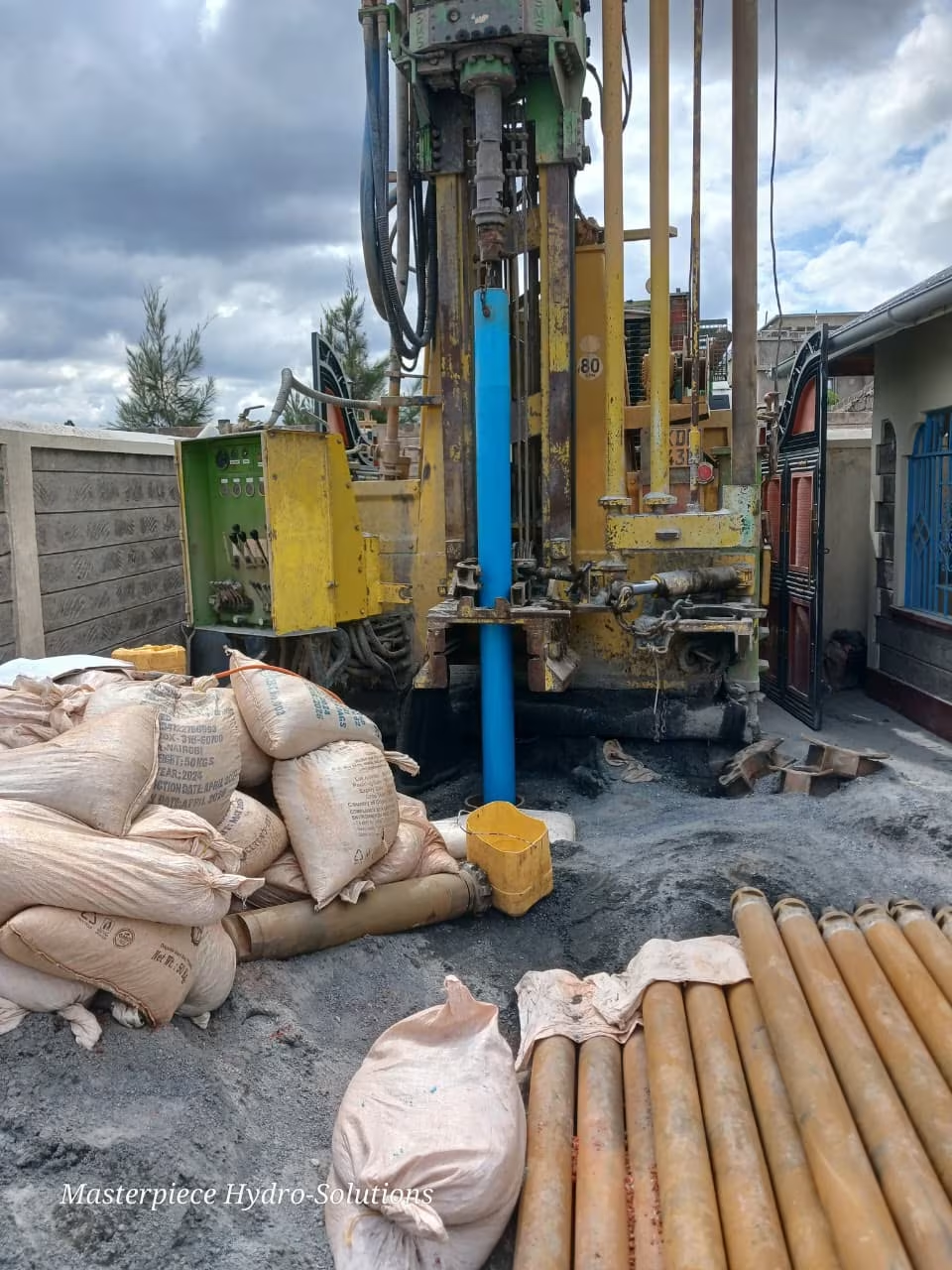
Drilling equipping contractor handoff needs a clear receiving brief when different providers deliver the source and install the pumping system. Closing the drilling stage does not mean every equipment decision is resolved. Ask what the incoming qualified installer needs and identify which remaining questions belong to construction, source assessment or the intended pumping duty.
Explore Masterpiece Hydro-Solutions borehole drilling services and request a project enquiry with defined next-stage records. Confirm the available scope. Tell the provider if a separate company will equip the borehole so the handover discussion can address the receiving party’s actual information needs.
Ask the receiving contractor what it must decide
The incoming provider may need to assess equipment selection, retained interfaces or another defined task. Ask it to state that scope and the information it requires. A generic request for a complete borehole file may not identify which missing record currently prevents a responsible proposal.
Give it the intended water destination and demand brief alongside the source records. The construction evidence describes the completed source arrangement, while the owner’s brief describes the service it wants. Neither should be silently substituted for the other.
Keep the receiving contractor’s questions specific. It may need clarification from a report author or confirmation of an asset reference rather than a repetition of drilling work. Ask what decision each requested item will support before commissioning additional assessment.
Structure drilling equipping contractor handoff around three files
The construction file should hold the qualified provider’s relevant records of the completed borehole. Ask its author to explain material gaps or inconsistencies. The owner should not attempt physical verification through retrieval, equipment lowering or other hazardous activity.
The source-assessment file should retain the actual test or assessment findings with their conditions and limitations. A summary figure may need the full report behind it. Ask the receiving provider whether the available evidence is suitable for its proposed use rather than assuming any number labelled yield is sufficient.
The operating brief should state the intended demand, destination and relevant existing arrangements. Label future assumptions clearly. If the owner has changed its requirements after drilling, preserve that revision separately from the historical source evidence.
Assign each receiving question to the right party
| Receiving question | Likely evidence source | Scope distinction |
|---|---|---|
| What construction was recorded? | Qualified drilling provider’s final records | Construction evidence is separate from pump selection |
| What source performance was assessed? | Relevant test or assessment author | Findings retain their conditions and uncertainty |
| What water service is now required? | Owner’s current operating brief | Demand is not evidence of source capacity |
| Which equipment suits the proposed duty? | Qualified equipping assessment | Selection needs the complete relevant duty basis |
| What current project requirements apply? | Appropriate authority or qualified adviser | Stage completion does not replace external requirements |
These categories can overlap in discussion without becoming one undifferentiated obligation. A provider should explain its own contribution and what it needs from another party. The owner can then coordinate the evidence rather than guess who is responsible.
Close drilling items independently where the evidence supports it
If the agreed drilling records and work are complete, a later equipment-design question does not automatically mean the drilling stage remains unfinished. Review the actual scope and accepted completion terms. Equally, do not use the separate equipping appointment to conceal a missing output that the drilling provider promised.
Maintain an outstanding-item list tied to the original commitments. A missing report should remain assigned to its agreed delivery route. A newly requested equipment review should have its own scope. This helps avoid both providers assuming that the other has accepted a task neither actually included.
Where a contractual completion question is disputed, preserve the technical facts and seek appropriate advice. A ready-for-next-stage discussion can identify useful evidence without deciding every payment or liability issue between the parties.
Use drilling equipping contractor handoff to protect duty assumptions
The Grundfos pump selection lesson considers source, flow, head, power and control. That gives the receiving provider a broader decision basis than drilled depth or a desired motor rating alone. Ask how its proposal uses the available source evidence.
Keep pump capacity distinct from sustainable source yield. A selected pump capable of a particular delivery does not prove that the borehole can support it. Also keep destination demand separate from the conditions under which source performance was assessed.
Ask the installer to state what it adopts from external reports and which assumptions it needs confirmed. Receipt of a report is not the same as an explained acceptance for a particular selection task. Record material clarifications before approving equipment.
Check project and water-quality questions separately
The Water Resources Authority permitting guidance distinguishes construction authorisation from later permitting and associated evidence. Ask the relevant authority or qualified adviser what the current project process requires. Do not treat a completed drilling invoice as confirmation that every later use requirement is satisfied.
Water quality also needs its own appropriate evidence. A construction record or pumping observation does not establish suitability for drinking or another intended use. Ask who will arrange relevant sampling, analysis and interpretation where needed, and keep that scope explicit.
Do not assume the equipping provider includes every administrative or quality task merely because it installs a pump. Ask for its actual inclusions and exclusions. Assign unresolved matters before describing the overall water-supply project as ready for users.
A missing report delays equipment selection
Consider a hypothetical borehole with completed drilling records and a separate testing attendance. The owner appoints an equipment supplier, but that supplier receives only a message summarising the test result. It requests the full report before accepting the duty inputs. The owner interprets this as a demand to repeat drilling.
The useful next step is to identify the actual missing evidence. Ask the appointed delivery contact to supply the report promised under the testing scope. The receiving installer can then explain whether that file answers its question or whether another defined assessment is needed.
If further review is proposed, state why and what it would establish. Keep it separate from the completed drilling stage unless a specific construction issue has been identified. Avoid an automatic conclusion that every handover gap requires new field work.
Agree communication across separate appointments
Identify the authorised contacts for technical clarification and owner approval. Ask how reports can be shared appropriately between the relevant providers. The owner should not rely on shortened verbal summaries when an important qualified finding can be supplied in its original form.
Clarify the actual terms for additional assistance from the drilling or assessment provider. Some questions may fall within an agreed clarification commitment; others may be new work. Request a defined proposal where necessary rather than assume unlimited support or accept an unexplained fee.
Keep equipment orders aligned with resolved inputs. If an important assumption remains open, ask the receiving provider what commitment it can responsibly make. The owner should not use a desired installation date to turn an unconfirmed duty into an accepted specification.
Complete drilling equipping contractor handoff with an indexed baseline
Retain the construction records, relevant source evidence and current operating brief together with a short index. Include clarifications and open questions. A future service provider should be able to distinguish original observations, later interpretations and approved equipment decisions.
When equipping is complete, add the actual installed schedule and agreed completion evidence. This creates continuity between stages without implying that the drilling provider supplied every later item. The owner’s asset history should show which party produced each important record.
Questions at the transition to equipping
Does a completed drilling stage mean a pump can be ordered immediately?
Ask the qualified receiving provider whether its selection inputs are sufficient. Construction completion and duty definition are different matters. Missing source evidence, a changed demand brief or an unresolved interface may require clarification before the installer can accept a particular proposal.
Who should explain a testing report?
Use the report’s qualified author or an explicitly appointed reviewer for material interpretation. A contractor forwarding the file may not have accepted that role. Preserve the original findings and identify any separate opinion with its own scope and date.
Can the owner provide a single yield number?
Supply the relevant full evidence and context where available. A number without conditions or limitations may not be adequate for the next decision. Ask the installer what it needs and label any missing information honestly rather than presenting a summary as a complete assessment.
What if the providers disagree about readiness?
Ask each to identify the precise missing input or unfinished commitment. One may be discussing drilling closeout while the other means equipment-selection readiness. Resolve that distinction first, then seek a defined qualified review if a material technical disagreement remains.
Does handover guarantee the final water service?
No. It transfers evidence and defines decisions across stages. Source yield, pump duty, destination delivery and quality remain separate questions. Read the actual commitments and findings rather than treating a handover acknowledgement as an unlimited operating guarantee.
For drilling equipping contractor handoff, transfer the evidence needed for the next decision and keep stage boundaries clear. Request a scoped project enquiry with the construction file, source reports and current operating brief before approving the next commitment.