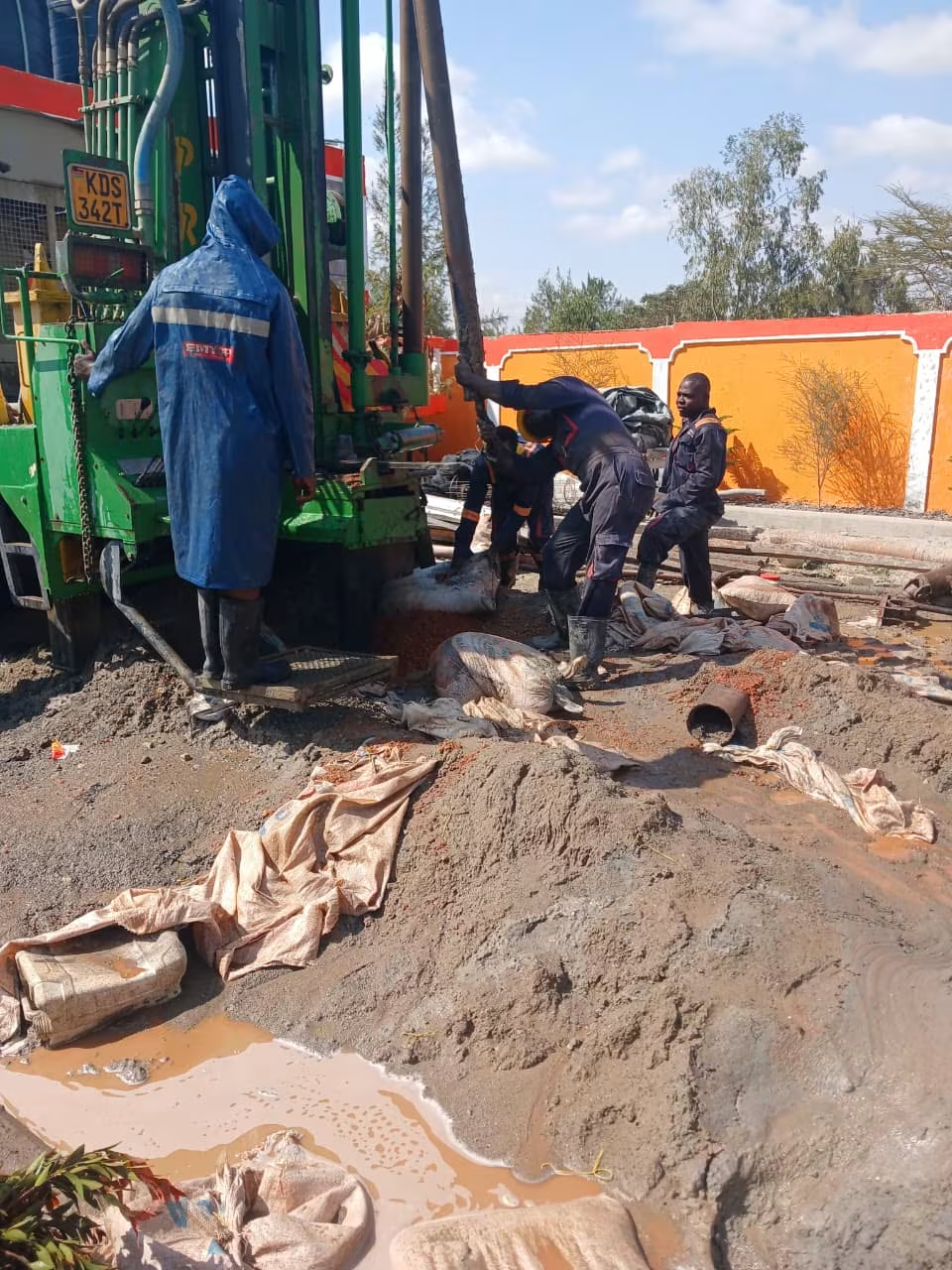
Post drilling demand revision needs a new operating brief when the owner asks for more water before equipping begins. The completed source records remain evidence of what was assessed or observed. They should not be rewritten to match the larger requirement. Ask what further qualified assessment supports the new decision before ordering a higher-capacity pump.
Explore Masterpiece Hydro-Solutions borehole drilling services and enquire about the source records and revised project requirement. Confirm the available assessment scope. Share both the completed drilling evidence and the changed demand brief so the provider can explain which question belongs to the next stage.
Describe the new requirement without changing the old evidence
State what changed after the drilling appointment. The owner may have added another use, expanded an intended development or changed the expected operating period. Use actual demand records where available and label future assumptions as planning inputs. Avoid turning a broad ambition for more water into an unexplained daily total.
Keep the earlier brief alongside the revision. It explains what the drilling and assessment providers knew when they made their recommendations. A later requirement is new information, not proof that the original report promised to satisfy it.
Also identify the intended destination and timing. A larger requirement concentrated in a short period can raise a different service question from the same amount spread across a day. The qualified assessor needs the actual operating brief rather than only the owner’s preferred pump rating.
Anchor post drilling demand revision in the source file
Gather the final construction record, relevant source-assessment evidence and any testing report that was actually supplied. Ask the qualified authors to explain their findings and limitations where necessary. Do not treat the drilled depth alone as a measure of sustainable water production.
Check the asset identity and dates. Records for a neighbouring source or an earlier proposal can be useful background only when labelled correctly. They should not replace evidence for the completed borehole. Keep missing project records visible and request them through the appointed provider’s agreed handover route.
Where the existing evidence does not answer the revised question, ask what additional assessment is useful. Do not assume every demand increase requires repeating all previous work. Equally, do not assume the old evidence is sufficient simply because it contains a confident headline figure.
Separate the inputs to the next decision
| Input | What it describes | What it cannot establish alone |
|---|---|---|
| Completed construction record | The qualified provider’s recorded borehole arrangement | Sustainable supply for a larger future demand |
| Source-performance evidence | Findings within the actual assessment conditions | Every season’s availability without limitations |
| Revised demand brief | The owner’s current intended water requirement | That the source can meet that requirement |
| Proposed pump duty | Selected operating flow and head conditions | Water quality or additional groundwater availability |
| Storage and distribution brief | How water is intended to reach users over time | An unlimited substitute for source production |
The table helps the owner appoint the right review. It should not encourage an unqualified person to calculate a pump selection or source limit from generic rules. Ask the relevant practitioners to explain how the actual inputs support their recommendation.
Do not confuse a bigger pump with more source water
The Grundfos pump selection lesson considers source, flow, head, power supply and control together. That supports a full duty review rather than selection from a larger power label. A pump’s potential delivery does not prove the borehole can sustain it.
Ask the proposed equipping contractor which source evidence it needs and what it can accept from the completed file. If another assessor defines the duty, clarify how the installer will use that evidence. An external report does not remove every remaining equipment and interface question.
Keep quality separate from quantity. A larger usable volume is not a statement that the water suits the intended application. Ask the appropriate qualified adviser what sampling, analysis or other assessment is relevant to the new use before describing the source as suitable.
Use post drilling demand revision to define additional work
Request a proposal that distinguishes review of existing records, new assessment and equipment selection where those tasks are offered. Each should have a purpose and output. The owner can then see whether it is buying clarification of completed evidence or commissioning a genuinely expanded design brief.
Ask for the actual price basis and dependencies. Do not assume a previous drilling payment covers every later demand change, and do not assume a new requirement automatically justifies replacing all equipment proposed so far. Qualified findings should explain the technical consequence.
If items have already been ordered, identify their status and request the supplier’s actual position. Keep any cancellation, alteration or credit proposal separate from the source assessment. Commercial convenience should not turn an unsuitable or unverified duty into an accepted technical commitment.
A planned project adds a second water use
Consider a hypothetical owner who drills for an initial development brief and then adds another substantial water use before installing the pump. The owner asks the equipment supplier to double its original proposal’s delivery description while keeping the completed drilling report unchanged as the justification.
The useful question is whether the source evidence supports the revised requirement under an appropriately assessed arrangement. Ask the qualified providers to identify the new demand assumptions and the evidence they need. The owner should not rewrite an earlier test conclusion or treat the increased requirement as a measured source result.
The review may identify further questions, a revised operating brief or limitations the owner must consider. Record the actual recommendation without promising a particular outcome in advance. If the owner changes the development plan again, preserve that next revision separately rather than silently expanding the accepted capacity description.
Check the implications for project requirements
The Water Resources Authority permitting guidance distinguishes application, construction authorisation and later permitting. Ask the relevant authority or qualified adviser how the changed intended use or requirement relates to the current project process. Do not assume that an internal demand revision automatically updates an external permission.
Assign responsibility for obtaining any needed clarification. The owner, assessor and equipment supplier should know which input remains pending before their next commitment. Avoid describing the source as ready for unlimited use because drilling has finished.
Use current project-specific answers rather than a generic rule about permitted quantities or deadlines. This article does not prescribe abstraction limits, guarantee approval or establish a standard allowance for any building, person, animal or activity.
Close post drilling demand revision with two traceable records
Keep the original source file intact and attach the dated revised demand assessment or brief. The next provider should be able to see what the source evidence says and what the owner now wants. A clear link between them is more useful than a combined summary that hides their different purposes.
Record the approved next-stage scope and remaining limitations. If the owner accepts a reduced service expectation, describe it accurately. If more assessment is needed, identify its question and responsible party. Do not let a provisional enquiry become an assumed promise of a larger supply.
Questions when demand increases after drilling
Can the drilling report be updated to show our new demand?
A new brief or addendum can record the changed requirement honestly, with its actual date and author. It should not alter historical observations to suggest they measured something else. Ask the appropriate qualified professional how to assess the revised question using the available evidence.
Does extra storage solve every supply shortfall?
No. Storage can change the timing of available water but does not create an unlimited source volume. Ask the qualified assessor to consider demand timing, source evidence and usable storage together. Do not assume a larger tank removes the need to review the source and pumping duty.
Must we drill again if demand increases?
Do not decide that from the demand change alone. Ask what the existing evidence supports and which review is needed. Further drilling, altered use or another arrangement would each require its own appropriate assessment and commercial scope rather than an automatic response.
Can a pump supplier guarantee the revised daily amount?
Ask exactly what commitment it proposes and on which evidence and conditions. Pump capacity, source availability and destination delivery are different matters. Avoid converting a selection forecast into an unlimited guarantee or relying on a rating without the full duty basis.
What if we lack reliable demand records?
Label the current figures as estimates and explain the activities behind them. Ask a qualified adviser what information would improve the brief. Do not invent standard consumption figures or present an uncertain planning total as measured use merely to obtain a confident quotation.
Who should receive the revised brief?
Share it through the authorised project route with the relevant assessors and receiving equipment provider. Identify which decisions it supersedes. Keep the original documents as history so the parties can distinguish a changed owner requirement from an error in earlier evidence.
For post drilling demand revision, preserve what the source records established and define what the owner now requires. Request a scoped enquiry using both sets of information before approving equipment for the expanded brief.