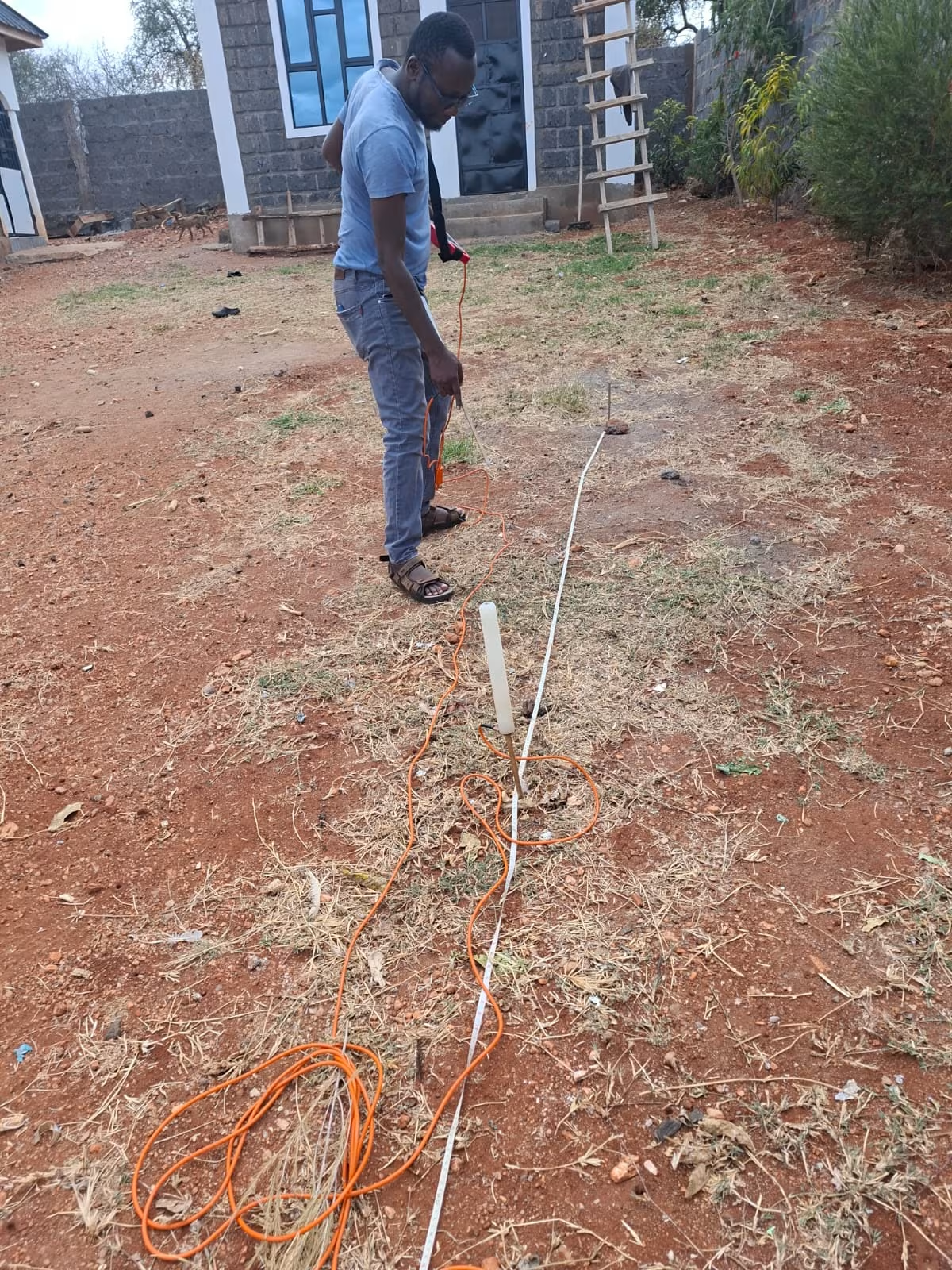
Dry borehole reassessment begins with evidence from the unsuccessful attempt, not a promise of a better point. The first investigation has produced information that deserves careful review. Therefore, gather the drilling and testing records before commissioning another survey. A new location cannot guarantee the result the first attempt missed.
Masterpiece Hydro-Solutions offers hydrogeological surveys. To discuss the next assessment, send an enquiry with your existing borehole records. Ask which information the proposed scope will review and whether further field work is appropriate. Do not assume every unsuccessful attempt needs the same response.
Start dry borehole reassessment with the actual outcome
First, explain what the term dry means in your case. Perhaps drilling found no useful water, or later testing indicated inadequate yield. Alternatively, water quality may prevent the intended use. These are different findings, so the assessor needs the specific evidence behind the description.
Next, separate measured information from memories of the drilling day. A statement that water appeared briefly may not establish sustainable production. Likewise, a disappointed owner’s label may not describe the technical conclusion accurately. Ask for the relevant report and qualified interpretation.
Also, restate the original intended use. A source might fail to meet a large irrigation requirement without matching an informal description of no water. The next assessment should understand that distinction. This helps avoid solving the wrong problem through another drilling instruction.
Collect the first attempt’s full evidence
Gather the original survey, location reference, drilling progress and construction information. Include available development, testing and water-quality records. Also, retain the final outcome explanation and any approved changes. The next assessor needs to understand what happened, not merely where the contractor parked.
Mark missing records clearly. Do not reconstruct precise depths or observations from uncertain memory. Instead, ask the original parties for the available information. If some evidence cannot be obtained, tell the new assessor. Its absence may limit the conclusions a review can support.
Next, identify whether the drilling point differed from the initial recommendation. Provide the actual location and the reason for any change where known. Avoid assuming that two nearby points represent the same assessed conditions. Qualified personnel should interpret the relevance of the difference.
Organise dry borehole reassessment questions
| Evidence area | Question for the assessor | Uncertainty to retain |
|---|---|---|
| Original survey | What did the recommendation assume? | Survey interpretation does not guarantee water |
| Actual location | Did the work follow the assessed point? | Location differences need professional interpretation |
| Drilling record | What information did the attempt reveal? | Incomplete records may limit conclusions |
| Testing | What does the measured result establish? | Brief observations may not establish sustainable yield |
| Intended use | What requirement did the result fail to meet? | Demand and source capacity remain distinct |
| Further work | Which question would another assessment address? | A new attempt still carries outcome uncertainty |
This structure keeps the review focused on evidence rather than blame. It does not decide contractual responsibility for the first attempt. If payment or performance obligations remain disputed, seek suitable advice using the accepted agreement. The technical next-step discussion needs its own clear scope.
Avoid treating more depth as the default answer
Owners may assume that an unsuccessful attempt simply stopped too soon. However, a deeper hole does not automatically produce a useful source. Ask what evidence would support further drilling and what uncertainties remain. Qualified professionals need to assess the actual findings before recommending continuation.
Also, do not treat a nearby alternative point as a guaranteed remedy. A different location can change the assessment question without removing geological uncertainty. Ask why the proposed investigation targets that point and what information it expects to add. The explanation should remain specific to the project.
Dry borehole reassessment can also identify reasons to pause rather than spend immediately. Missing records, unresolved demand or uncertain site information may need attention first. A useful scope explains the next decision, including what it cannot establish. It should not promise success to justify another attempt.
Separate the technical review from a dispute
A new assessor can review relevant technical evidence within an agreed scope. However, that work does not automatically determine whether the original contractor met every contractual obligation. Ask what the review will address and what requires separate advice. Avoid asking one report to decide every issue.
Next, keep factual questions precise. For example, ask whether the available records support a stated technical conclusion. That differs from asking whether someone must refund all project costs. If responsibility remains disputed, preserve original documents and communications for the appropriate adviser.
Also, avoid instructing the assessor to prove a preferred accusation. A useful review can identify gaps or uncertainty without establishing wrongdoing. The buyer benefits from an evidence-led explanation even when it does not provide a simple verdict about the first attempt.
A scenario involving incomplete testing records
Imagine an owner reports a dry borehole after seeing some water during drilling. The available file includes the survey and an invoice, but no clear testing report. The owner wants a second point immediately. However, the next assessor cannot yet explain the first source’s actual measured performance.
First, the owner requests the available progress, construction and testing information. Next, the assessor distinguishes documented findings from missing evidence. It then explains whether additional investigation of the existing source, a new survey or another step could answer the project question. The scope remains conditional on the evidence.
This example does not suggest that every unsuccessful borehole needs more testing. Instead, it shows why dry borehole reassessment starts with the file. A repeated survey may not address the main uncertainty if the first attempt’s outcome has never received a clear technical explanation.
Update the project brief before further work
The intended use may have changed since the first survey. Therefore, describe current daily demand, priority uses and available alternatives. Also, identify whether the owner still proposes the same buildings, tank location and distribution arrangement. The reassessment should answer today’s decision rather than an outdated brief.
Next, explain the budget decision without asking the assessor to guarantee value. You may need to decide whether another investigation warrants further commitment. Ask which information could change that decision and which uncertainties cannot be removed. A useful recommendation can support caution as well as continuation.
Keep any later equipment discussion separate from proving source capacity. A larger pump or more solar panels cannot create sustainable groundwater that the source lacks. Qualified personnel should assess the actual cause and appropriate options before anyone proposes an equipment remedy.
Check current authority requirements for the next step
The WRA permitting guidance explains an application, construction authorisation and a subsequent water permit. Ask WRA how current requirements apply to the unsuccessful source and any revised proposal. Do not assume that a previous authorisation covers every new location or further activity.
Also, ask who provides the necessary completion information and communicates the original outcome. The existing borehole needs an appropriate site-specific professional close-out plan where relevant. Do not attempt closure, structural alterations or other construction work from general online advice.
Dry borehole reassessment should carry these questions forward rather than ignore the first source. If the project proceeds to another drilling stage, request a new scope aligned with the current documents. For that enquiry, see Masterpiece Hydro-Solutions borehole drilling.
Agree a useful reassessment output
- State the original outcome using the available evidence.
- List the reports and records the assessor reviewed.
- Identify missing information and its effect on the conclusions.
- Explain how the first attempt changes the current understanding.
- Separate possible next steps from guaranteed outcomes.
- Describe the purpose of any proposed field investigation.
- Keep authority and site close-out questions visible.
- Record the decision that the owner must make next.
Also, request an explanation of what would trigger a further review. New records or corrected location information may change the assessment. Keep the resulting update with the original file. This helps later teams understand why the next decision differed from the first recommendation.
Questions about dry borehole reassessment
Does a dry attempt make another survey pointless?
Not necessarily, but the next work needs a clear purpose. Ask what the unsuccessful attempt revealed and which uncertainty remains. A new survey may address a relevant question, or another assessment may be more useful. The decision depends on the actual evidence and intended use.
Can another survey guarantee a new water point?
No assessment can guarantee a particular water result. Ask how the proposed work improves understanding and what limits remain. Do not equate a confident recommendation with assured groundwater. Any later drilling and testing will provide further evidence rather than fulfil a guaranteed prediction.
Should I deepen the existing borehole first?
Do not assume further depth is the correct response. Qualified personnel need to assess the available records, site and relevant requirements. Ask for the reason, scope and uncertainty behind any continuation proposal. This article does not recommend a depth or construction action.
What if I cannot obtain the drilling records?
Tell the proposed assessor exactly what information remains available. It should explain the resulting limits and any suitable next investigation. Avoid inventing missing details from memory. The absence of records may affect what the review can conclude about the first attempt.
Will the review decide who pays for the first borehole?
A technical scope does not automatically settle contractual responsibility. Payment questions need the accepted terms and circumstances, with appropriate advice where necessary. Keep that issue distinct from planning the next investigation. This lets the assessor address the technical question without an assumed legal verdict.
Use the first attempt to inform the next decision
Useful dry borehole reassessment explains the evidence, gaps and remaining choices. It avoids treating another location or greater depth as an assured remedy. Gather the first attempt’s records and restate the intended use. Then request a scope that addresses the actual uncertainty.
Send Masterpiece Hydro-Solutions your reassessment enquiry. Include the original survey, actual location and available drilling results. Ask which review or field assessment could support your next decision, with its limitations clearly stated.