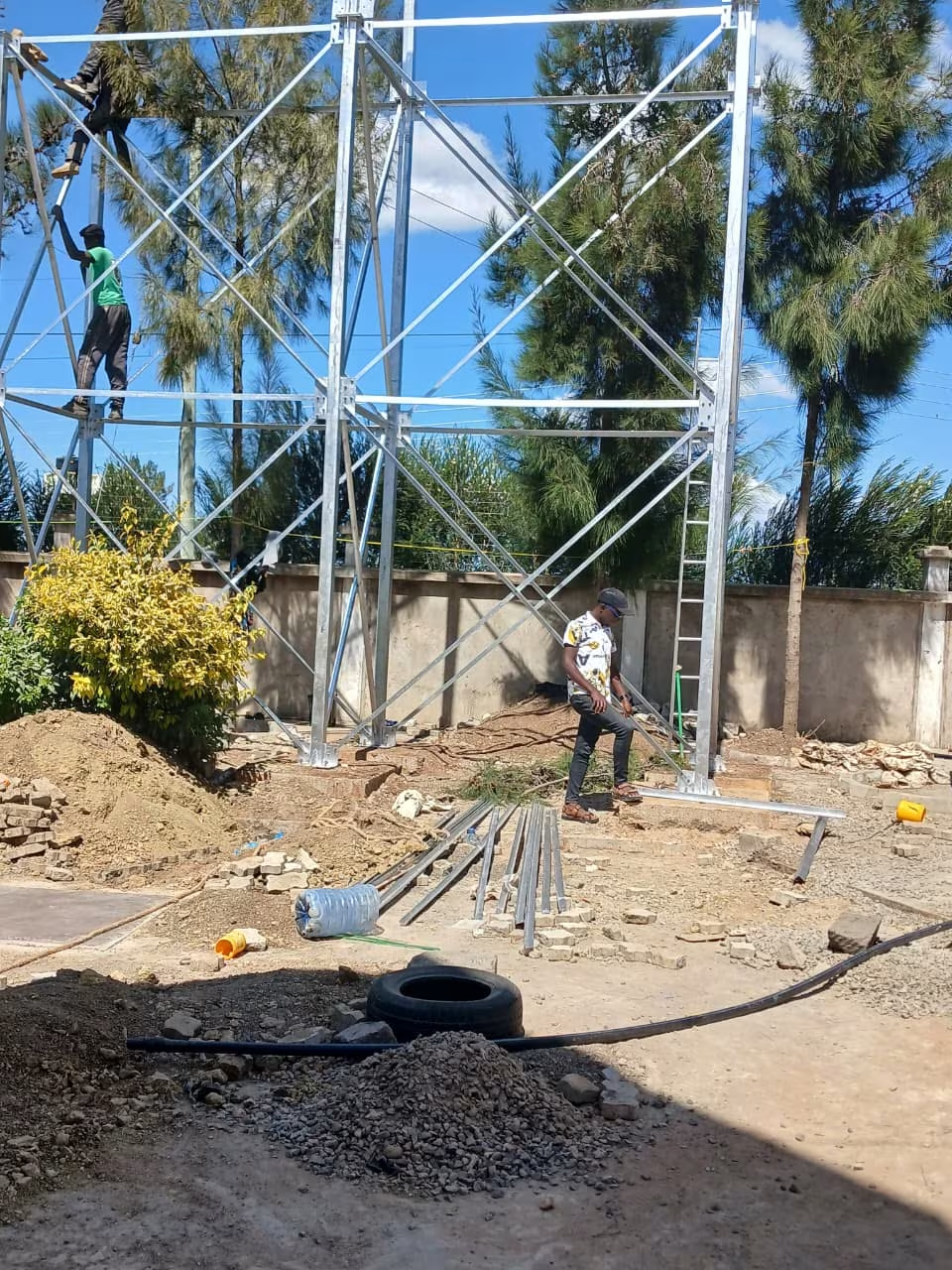
Elevated tank pump selection requires the complete delivery duty, not just the height of the tank. The pump must move the required water from the pumping level through the actual route. First, establish the source evidence and destination. Then ask a qualified practitioner to explain the flow and head used for selection.
Explore Masterpiece Hydro-Solutions borehole equipping services and request a pump-duty assessment for your elevated tank. Send the available test-pumping report, tank information and intended use. Ask for a selection proposal that connects the equipment to the real filling requirement.
Identify the destination before comparing pumps
Describe the tank the borehole will supply and how the site uses that storage. Also, distinguish an existing installation from a proposed structure. The assessor needs the relevant elevation and delivery route, rather than a broad statement that the tank stands above ground.
Next, identify the filling point and any agreed service requirement at that destination. Different reference points can create misleading comparisons. Ask the practitioner to use a consistent basis throughout the assessment so the owner can understand what each height represents.
Also, explain whether the borehole will supply other destinations. A proposal for one tank does not automatically serve several outlets with different duties. The operating arrangement should identify which destinations run together and which need separate assessment before the supplier finalises equipment.
Start elevated tank pump selection with measured levels
Drilled depth, pump setting depth and water level are different measurements. The static water level describes one condition, while the pumping level reflects water level during the relevant operation. Ask which records support the proposed duty and whether they suit the intended abstraction.
Next, review the test-pumping information with the practitioner. The installed pump’s capacity and the borehole’s sustainable production are not interchangeable. A pump that can deliver more water does not establish that the source can support that output over the required period.
Elevated tank pump selection should therefore show both the source basis and the hydraulic requirement. If the existing records leave uncertainty, ask what additional assessment would resolve it. Do not replace missing pumping-level information with drilled depth simply because that figure is easier to find.
Understand the whole head requirement
Total dynamic head accounts for pumping lift, delivery elevation, friction and any required outlet pressure. The practitioner must assess those components together. The Grundfos pump-selection learning resource explains why required flow and head belong together when selecting a pump.
A tank’s height alone omits the lift from the pumping water level. Conversely, using the full drilled depth as the lift can misrepresent the duty. Ask the designer to explain the reference levels clearly. That explanation should remain understandable without turning the owner into the hydraulic designer.
Also, the route matters. Pipework and fittings affect the duty at the required flow. Do not assume that two tanks at a similar elevation create identical pumping requirements. Their delivery routes and operating arrangements may differ, so the selection needs the actual site information.
Separate useful filling time from peak flow
Tell the provider how much water the tank must receive and when it must receive it. A daily volume requirement differs from a desired instantaneous filling rate. Also, identify demand that continues while the tank fills. The operating brief should account for both production and concurrent use.
Next, explain the available power arrangement and any limits on operating periods. Solar output varies, while other power arrangements have their own operating context. A pump’s maximum stated flow does not prove the daily volume delivered to the elevated destination.
Elevated tank pump selection should connect its proposed duty to realistic operating assumptions. Ask which figures come from measurements and which represent planning estimates. If filling periods remain uncertain, the designer should explain how that uncertainty affects the proposed water service.
Review elevated tank pump selection evidence
The following table separates the information needed for a useful equipment decision. It supports a discussion with qualified personnel rather than a method for selecting or installing a pump yourself.
| Selection input | Evidence to request | Mistake to avoid |
|---|---|---|
| Source capability | Relevant test-pumping assessment | Using motor capacity as proof of yield |
| Pumping level | Clear measurement and operating context | Substituting drilled depth |
| Tank destination | Consistent elevation and filling-point reference | Using an unspecified tank height |
| Delivery route | Assessed route and flow-dependent losses | Comparing elevation alone |
| Water requirement | Daily volume and intended filling period | Multiplying a brief peak reading by a full day |
| Equipment choice | Manufacturer selection evidence at the proposed duty | Ranking pumps only by motor power |
Next, ask the provider to identify unresolved inputs before it confirms the package. A written assumption is easier to review than an invisible guess.
Use a reference-level example carefully
Consider an educational example with an assumed pumping level 60 metres below a chosen ground reference. Suppose the tank filling point sits 12 metres above that same reference. The vertical difference is 72 metres. These figures illustrate reference levels; they do not describe a recommended site arrangement.
That 72-metre difference is not automatically the complete total dynamic head. The qualified designer must also assess friction and any required outlet pressure. Furthermore, the example does not specify a suitable flow or prove available source production. Those questions need their own evidence.
This distinction helps elevated tank pump selection remain transparent. The owner can follow the components without choosing a pump from a simplified sum. Ask the supplier to explain the complete assessed duty and identify the manufacturer evidence supporting the proposed equipment.
Check the effect of an altered tank
If the site moves or raises the tank, tell the practitioner before ordering equipment. The revised destination may change the duty. Also, disclose a longer pipe route or additional outlet. An old selection does not automatically cover a changed delivery arrangement.
Next, ask whether an existing pump remains suitable under the revised conditions. The assessment should compare the required flow and head with the equipment’s relevant performance information. A larger motor is not a universal answer, and a new controller cannot correct every hydraulic mismatch.
Also, review whether the new arrangement changes filling times and reserve behaviour. Water storage needs a clear operating brief. The pump assessment should connect to that brief, while structural and downstream distribution questions remain with the appropriate qualified professionals.
Define the proposal beyond the pump model
Ask the provider to identify the proposed pump and associated installation scope. Also, clarify controls, power interfaces and the delivery route included in the quotation. A model number alone does not define the complete work required to supply the tank.
Next, request separate identification of retained equipment and new items. If the proposal assumes that existing components remain suitable, ask who will verify that assumption. This reduces uncertainty about additional work discovered after the owner has committed to the main package.
Elevated tank pump selection should result in an explainable commercial proposal. Ask about exclusions, relevant warranty terms and tax treatment without assuming any particular entitlement. The written scope should show what the supplier accepts responsibility for delivering and demonstrating.
Accept performance at the agreed destination
Agree how the contractor will demonstrate delivery to the intended tank. A flow observation at a different outlet may not represent the selected duty. Therefore, the commissioning record should identify the route, destination and relevant operating conditions.
Also, ask for a demonstration of the agreed tank-control relationship. Qualified personnel should manage technical checks and safe working arrangements. The owner needs to understand normal indications, reporting responsibilities and any unfinished item, rather than perform electrical or pressure-testing tasks.
Finally, distinguish measured commissioning observations from long-term production assumptions. One demonstration cannot establish seasonal yield or every future filling day. Request a clear explanation of limitations and the operating records that would help investigate later changes in water delivery.
Questions about elevated tank pump selection
Can I choose a pump from the tank height alone?
No. The duty also involves pumping lift, route losses and any required outlet pressure. Flow matters as well. Share the source records and destination details with a qualified practitioner. Ask for the complete selection basis rather than matching a single advertised height to the tank.
Does a deeper borehole always need a larger pump?
Drilled depth alone does not establish the pumping duty. The pumping water level and required destination matter, alongside flow and other head components. Also, available yield may limit abstraction. Ask the provider to explain those measurements separately before discussing an equipment size.
Will the elevated tank guarantee pressure at every outlet?
The downstream service needs its own assessment. Tank location, water levels and distribution conditions influence what users receive. Explain the required outlet service to the designer. Do not assume that successful borehole-to-tank filling proves suitable pressure throughout the property or irrigation system.
Should I buy extra pump capacity for future expansion?
Describe the expansion and its timing, then request an assessed comparison. Additional capacity must still suit the source and operating duty. The practitioner should explain the implications of serving present and future needs. A general desire for spare capacity does not establish a suitable equipment choice.
Does successful filling establish water quality?
No. Pumping performance and water suitability are different questions. Appropriate laboratory analysis and intended use guide quality decisions. Clear water in storage does not establish potability. Ask which later assessment is appropriate rather than treating an operating pump and full tank as a quality guarantee.
Request a selection matched to the full route
Gather your test-pumping information, tank reference levels and filling objective. Then request an elevated-tank duty assessment from Masterpiece Hydro-Solutions. Ask for clear source assumptions, manufacturer selection evidence and destination-based acceptance. Those details connect the pump purchase to the actual water service the site needs.