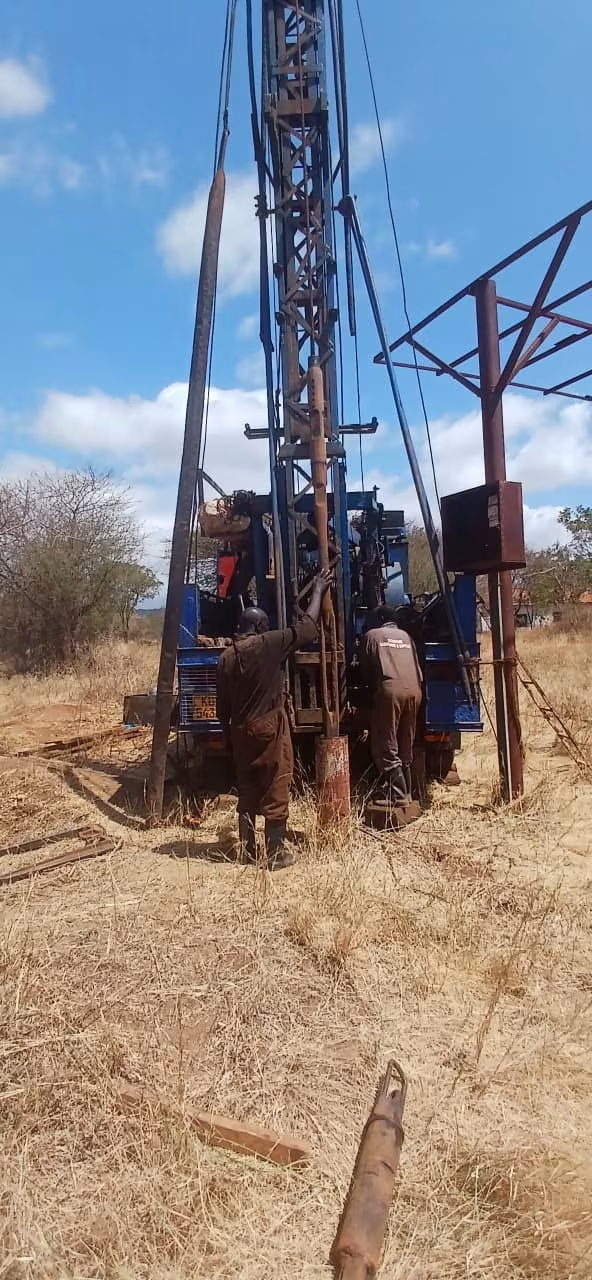
Factory borehole drilling needs a clear industrial water brief before a contractor can propose a useful project. Process demand, production timing and water-quality requirements can differ from ordinary domestic supply. Therefore, define the intended result and the evidence needed to accept it before comparing drilling totals.
This guide helps Kenyan factory owners and procurement teams organise those decisions. For the service, see Masterpiece Hydro-Solutions borehole drilling or request an industrial water-project assessment. Share the plant’s operating requirements and identify information that still needs professional assessment.
Define the actual industrial use
First, list the activities the source should support. These may include production, cleaning, cooling, staff use or other requirements defined by the plant. Do not assume one water-quality specification or supply priority applies to every activity.
Ask the responsible process and quality personnel to identify relevant requirements. The drilling contractor needs that brief rather than an instruction to provide water for an unspecified factory. Also, clarify whether the project is a primary source, a supplementary source or an assessed contingency option.
Next, identify the boundary of the proposed contract. A completed source supplying a raw-water tank differs from a complete system delivering suitably treated water to a production process. Record which tasks and interfaces belong to each responsible party.
Build the factory borehole drilling demand brief
Gather available meter readings, shift schedules and records of unusual demand. Also, explain whether the factory operates continuously, by shifts or during variable production campaigns. Daily volume alone may not describe the peak periods the supply must support.
Separate measured consumption from planning estimates. If a new production line is proposed, describe its requirement as a separate scenario supported by the responsible technical adviser. Do not quietly combine future demand with current operation and present the total as a measured figure.
Factory borehole drilling should connect the demand assessment with source uncertainty. The project’s intended use does not prove that a new borehole will provide the required quantity or quality. Keep those questions visible during procurement.
Arrange source assessment before equipment commitments
A hydrogeological assessment supports the drilling decision, but its recommendations have limits. Ask which evidence informs the proposed location and interpretation. Also, clarify what drilling, construction records and testing will need to establish.
Review hydrogeological survey services as a distinct project stage. A recommended drilling depth is not a final pump duty, a guaranteed yield or proof of industrial water suitability.
Next, agree a formal review after source completion and relevant tests. Procurement can then assess whether the actual evidence supports proceeding, changing the scope or reviewing alternatives. This avoids committing to a complete equipment package based only on early assumptions.
Map authority and internal approval responsibilities
WRA’s permitting guidance distinguishes authorisation to construct abstraction works from the subsequent water permit process. Ask the authority to confirm current requirements for the site, intended use and project stage.
Also, identify who manages external enquiries, who prepares supporting records and who approves internal spending. A factory’s procurement, engineering and operations teams may have different responsibilities. The project needs a clear route for decisions that affect programme, design or scope.
Do not assume a contractor’s package guarantees every approval. If assistance is included, describe the actual deliverables and remaining owner obligations. Factory borehole drilling should retain a clear record of unresolved requirements before mobilisation.
Plan the site interface with ongoing production
Explain access routes, delivery windows and areas that must remain operational. The contractor should assess gates, turning space, overhead constraints and the proposed work area. Also, identify existing services and ask how their positions will be confirmed before work.
Next, agree how the work area interfaces with factory traffic, staff movement and other contractors. Qualified personnel should assess the necessary site controls and responsibilities. Avoid treating a marked point on a map as proof that the rig and associated work can operate there safely.
Include material storage, runoff, waste and reinstatement in the scope discussion. These tasks can affect occupied industrial sites and should not disappear between the drilling contract and the plant’s facilities responsibilities.
Keep water quantity and quality evidence separate
A source’s measured delivery does not establish suitability for a manufacturing process. Ask the relevant technical team to define the quality evidence and interpretation needed for each intended use. Sampling should have clear identity, date and responsible parties.
If treatment is proposed, it should respond to appropriate test results and process requirements. Do not assume that clear-looking water or a new borehole is suitable for production, cleaning or drinking. The treatment scope needs its own design and acceptance boundaries.
Also, distinguish the raw-water supply obligation from downstream treatment and distribution. A useful procurement brief names the delivery points and the evidence each supplier must provide at those interfaces.
Use a shift-demand example
Consider an educational planning scenario with assumed daily demand of 30 cubic metres. Suppose 20 cubic metres is required during one operating period and 10 cubic metres during another. These figures illustrate timing; they are not process-water standards or predictions for a real factory.
First, ask how source production and useful storage could support that pattern under assessed conditions. Next, identify any critical peak flow or pressure requirements that the daily total does not explain. The responsible designer should assess the complete operating arrangement.
Factory borehole drilling should not treat a high-capacity pump as proof that the source or storage can meet every shift. Keep demand, sustainable production and equipment capacity distinct when reviewing the example and actual proposal.
Connect source results with the proposed pumping duty
After testing, ask for the proposed flow and head together. Pumping water level, delivery elevation, friction and outlet pressure require consistent reference points. Drilled depth or motor power alone cannot define the actual duty.
Grundfos’s pump-selection guidance explains this relationship. Ask the contractor to identify the exact proposed model and relevant manufacturer information rather than relying on a generic pump description.
For associated installation work, review borehole equipping services. Clarify which controls, connections, tests and records form part of the equipment contract and which depend on separate plant work.
Set procurement milestones against evidence
Use staged decisions that reflect what the project has actually established. Ask each supplier to identify the records supporting its work and the conditions required before the next stage. Also, define who reviews those records for the owner.
| Milestone | Evidence to review | Decision before progressing |
|---|---|---|
| Project brief | Demand, process requirements and contract boundary | Whether the proposed source-development scope addresses the real need |
| Drilling readiness | Assessment information, access plan and authority position | Which outstanding conditions require resolution |
| Source completion | Construction records, pumping information and relevant quality results | What further supply or treatment assessment is needed |
| Equipment approval | Duty point, exact models and interface schedule | Whether the proposal matches the accepted brief |
| Final acceptance | Commissioning evidence and complete handover pack | Which obligations are complete and which remain outstanding |
Compare complete commercial scope
A factory borehole drilling quote should identify its actual construction, testing and record deliverables. Also, list mobilisation, site works and exclusions clearly. Separate the source-development price from equipping, treatment, storage and distribution where those form different contracts.
Confirm VAT treatment, quote validity and how additional work will be authorised. If a hidden condition changes the proposal, ask for the finding, recommended response and cost effect before approving the variation. A general contingency line does not replace a change-control process.
Also, review which supplier coordinates interfaces. A single package can contain gaps, while several contracts can work if responsibilities and acceptance evidence remain clear.
Prepare operations and maintenance handover
Name the responsible operator, maintenance contact and person authorised to approve technical changes. The factory should receive equipment identities, available as-built information, test records, warranty terms and operating guidance.
Qualified personnel should explain authorised controls and fault escalation. Operators should not bypass protection or improvise electrical, lifting or treatment work. Safe observations and consistent logs can instead support a qualified investigation.
Finally, agree how planned servicing affects production and reserve supply. Any promised attendance or support period should appear in the written agreement. Keep outstanding items visible rather than treating the first flow of water as complete acceptance.
Frequently asked factory questions
Can a borehole meet a factory’s full requirement?
That depends on assessed source performance, demand, quality and the complete supply arrangement. Describe the intended process and operating pattern first. The fact that water is found does not prove that every industrial requirement has been satisfied.
Should treatment be included in the drilling price?
It depends on the agreed contract boundary and available evidence. Treatment recommendations need appropriate quality results and process requirements. Ask which assessment, equipment and acceptance responsibilities belong to each supplier rather than assuming inclusion from a package label.
Can work proceed while the plant operates?
The contractor and responsible site personnel need to assess access, working areas and interfaces. Identify the operations that must continue and any constraints. Do not promise a universal arrangement or work period before the actual site has been reviewed.
What should procurement compare between bids?
Compare common scope, evidence, responsibilities, exclusions and staged acceptance. Check price only after confirming that the bids address the same brief. A lower total may describe less work, while a higher total still needs a clear justification.
What starts a useful industrial enquiry?
Provide the county, plant operating pattern, intended water uses and available consumption records. Also, identify existing storage and source information. Label unknown process requirements or measurements so the assessment can address them explicitly.
Request a factory supply brief with clear interfaces
Useful factory borehole drilling connects source uncertainty with process demand and reviewable procurement decisions. First, define use, quality requirements and contract boundaries. Next, agree evidence at each stage. Finally, specify commissioning, operator guidance and ongoing support responsibilities.
Request a factory borehole assessment from Masterpiece Hydro-Solutions. Share the supply problem and the plant information already available. The next step is a site-specific scope that explains assumptions, interfaces and acceptance conditions.