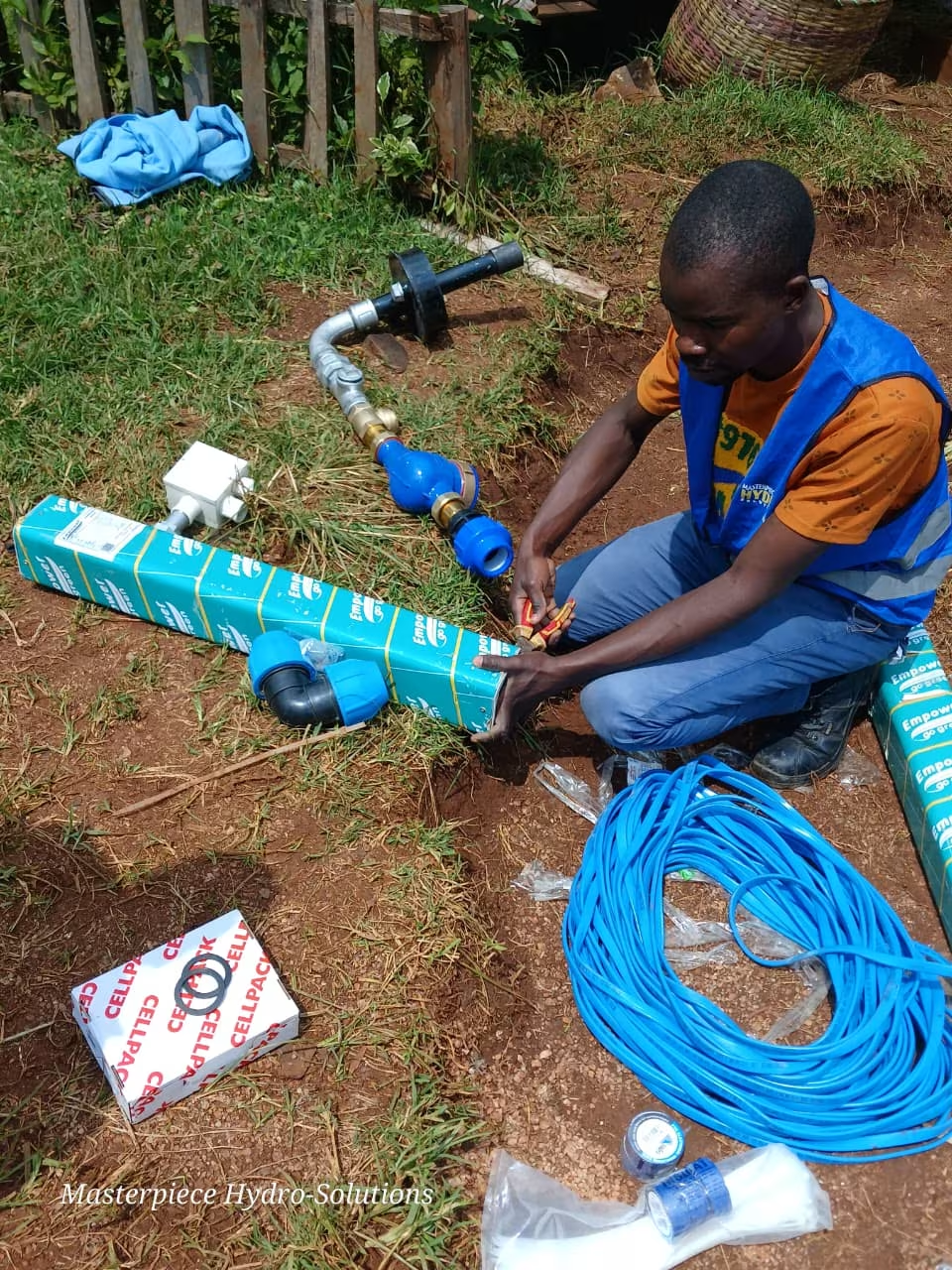
Flower farm groundwater supply should connect the proposed borehole to a clear production and water-service brief. Growing blocks, storage and any separate post-harvest uses may need different assessments. First, identify the actual demand pattern. Then ask qualified practitioners whether source evidence and the proposed equipment support the operation you intend to run.
See Masterpiece Hydro-Solutions borehole equipping services and enquire about an assessed flower-farm supply scope. Confirm the service arrangement for your site. Send source records, the current block layout and relevant irrigation requirements before requesting a final equipment package.
Divide the brief by production area
Identify the blocks operating now and any areas reserved for expansion. Also, describe which areas may need service together. Total farm area alone does not establish the required pump duty. The irrigation specialist should define the relevant interface and operating pattern.
Next, distinguish measured use from production assumptions. An established block may have useful operating records, while a planned block only has a design brief. Label those differences. The pumping provider should not treat every planned activity as a verified current demand.
Also, tell the team which parts of the plan remain flexible. A staged development may allow evidence to inform later commitments. Clear decision points help the owner avoid assuming that an initial borehole assessment proves capacity for every proposed growing area.
Build flower farm groundwater supply around the calendar
Describe the periods when the operation needs the source most and explain the basis. Also, identify simultaneous water uses rather than hide them inside an annual average. The project needs to understand both daily volume and short-period service requirements.
Next, share available records with dates, units and operating context. A source total, tank-filling record and block-level irrigation figure do not necessarily measure the same boundary. Ask the practitioners to explain how those records fit together before they calculate a supply assumption.
Flower farm groundwater supply planning should also state what happens outside the main production pattern. Maintenance periods or new activities can change the brief. The owner should identify them, while the relevant specialists determine their technical water-service requirements.
Assess the borehole as a source
Provide relevant test-pumping information and water-level records. Ask the qualified assessor what abstraction basis those records support and what uncertainty remains. Source yield differs from the pump’s capacity and from the farm’s desired demand. Keep those figures separate in the proposal.
Next, identify the actual pumping level and delivery destination. The Grundfos pump-selection resource explains why flow and head must inform selection together. The provider should assess the whole route rather than choose a package from acreage or motor power alone.
If source evidence does not support the intended brief, ask which further assessment would help. A larger array or a different controller cannot create groundwater. The project may need a revised operating or expansion decision before final equipment selection.
Separate growing and other quality requirements
Identify each intended water use and ask the appropriate specialists which laboratory evidence it needs. Irrigation and a separate post-harvest process should not automatically inherit the same suitability conclusion. The project needs explicit quality responsibilities rather than a general promise of clean water.
FAO’s agricultural water-quality guidance discusses analysis for irrigation-related problems. Use that principle to request assessment relevant to your actual crop and system. It does not justify adopting a universal treatment or chemical programme from a general article.
Also, keep source quality separate from equipment operation. Clear water and strong flow cannot establish suitability for every intended process. Ask who interprets the results and how any resulting additional scope will be assessed and approved.
Compare flower farm groundwater supply interfaces
The table below helps a project manager identify the information each specialist must provide. It does not prescribe a growing method or select an irrigation system. The actual brief and professional assessments remain essential.
| Interface | Question to resolve | Evidence to retain |
|---|---|---|
| Source to pumping arrangement | What abstraction and duty basis applies? | Relevant test information and selection explanation |
| Pump to storage | What destination and filling service form part of the scope? | Route, operating assumptions and commissioning record |
| Storage to growing blocks | Who defines block flow, pressure and timing? | Irrigation duty and responsibility schedule |
| Source to separate process use | Which quality assessment applies? | Laboratory evidence and qualified interpretation |
| Existing operation to expansion | What finding permits the next commitment? | Current brief and defined review point |
Next, assign ownership of every interface. The farm should not assume the borehole installer also designs all growing and processing activities.
Use storage to manage timing honestly
Storage can help connect borehole production with field demand, but it needs a valid replenishment basis. Ask the provider to explain useful capacity rather than rely only on nominal tank volume. Also, identify any reserve that management intends to protect.
Next, account for water drawn while storage refills. A peak pump observation does not describe the complete daily balance. If repeated consumption exceeds assessed production, additional storage cannot resolve the continuing shortfall indefinitely.
Flower farm groundwater supply should state whether the borehole serves storage only or also supplies another interface. This distinction affects both duty and control responsibilities. Ask the qualified team to assess the actual arrangement before treating stored water as guaranteed service at every block.
Define the interruption the backup addresses
Identify whether the concern involves power, equipment or source production. A backup power arrangement may address one category without solving the others. Ask the provider to explain the remaining limitations. A broad continuity label should not become an unsupported promise of uninterrupted water.
Next, management should identify essential activities and flexible timing with the relevant production advisers. The pumping provider needs that brief but should not invent crop-management decisions. A useful reserve plan connects operational priorities with the assessed water available.
Also, name the person who reviews low-storage or fault indications. The handover should explain reporting rather than encourage staff to change protection settings. Electrical, mechanical and treatment work needs qualified personnel within an appropriate assessed scope.
Consider a new-block scenario
Consider an educational example where a flower farm wants to add a block beyond the original delivery route. No actual farm or result is implied. The existing pump fills current storage, but the new block has a different location and proposed operating schedule.
First, the irrigation specialist defines the revised service requirement. Next, the pumping practitioner compares the new duty and daily volume with source evidence and retained equipment. The team identifies any additional quality or storage questions. The owner then reviews the findings before committing to expansion.
This example shows why flower farm groundwater supply needs a staged decision. A working source and available motor capacity do not establish that every new block can receive suitable water at the required service. The proposal must connect the revised brief to evidence.
Review flower farm groundwater supply proposals
Ask for a scope that identifies assessment, selected equipment and the included delivery interface. Also, name retained components and other suppliers. If the provider assumes existing storage or controls remain suitable, clarify who will verify that assumption.
Next, request exclusions, provisional decisions and the variation process. The project should know what findings can change scope and who may approve additional work. Ask about tax treatment and offered warranty terms without assuming a guarantee of crop results or source recovery.
Flower farm groundwater supply also needs a clear record schedule. Retain the equipment basis, relevant quality advice and operating assumptions together. If the layout or production plan changes, the team can identify which earlier conclusions still apply and what needs professional review.
Accept delivery under recorded conditions
Agree suitable commissioning questions before work finishes. The provider should demonstrate the supplied service at the agreed interface and record relevant conditions. Qualified personnel must select and perform technical procedures. The owner can request understandable outcomes without conducting pressure or electrical tests.
Next, distinguish observed delivery from a prediction of future production. One demonstration does not guarantee performance throughout every season or operational pattern. Ask the handover to explain limitations and useful monitoring responsibilities.
Also, identify open items and the next action for each. A completed equipment delivery is different from an unresolved interface. The final record should show what the contractor supplied, what it verified and which decisions remain with other professionals or farm management.
Questions about flower-farm water planning
Can borehole output alone define irrigation capacity?
No. The project also needs the growing-system duty, route and operating pattern. Daily volume and short-period flow are different questions. Ask the irrigation and pumping specialists to coordinate their requirements. Source capability should remain tied to relevant test evidence rather than a desired production area.
Should all farm uses share one quality conclusion?
Identify the actual uses and request appropriate professional assessment. Irrigation and another process may need different evidence or interpretation. A favourable result for one purpose does not automatically establish every other use. The quotation should make those quality responsibilities explicit.
Will a larger tank guarantee the next block’s supply?
Only an assessed production-and-demand plan can support that decision. Storage can help with timing but cannot create groundwater. Ask how the source replenishes useful capacity and what reserve assumptions apply. The new route and field duty also need professional review.
What should I send with the first enquiry?
Provide the current layout, relevant test-pumping records and intended production stages. Also, share irrigation requirements and identify separate water uses. Label estimates and planned changes. The provider can then explain whether a site assessment fits its service scope and what information it needs next.
Enquire with the block-level requirements
Gather the source evidence and current production brief. Then enquire about a flower-farm supply assessment with Masterpiece Hydro-Solutions. Confirm the proposed scope and availability. Ask for coordinated interfaces, clear limitations and a staged equipment decision before making new water-dependent commitments.