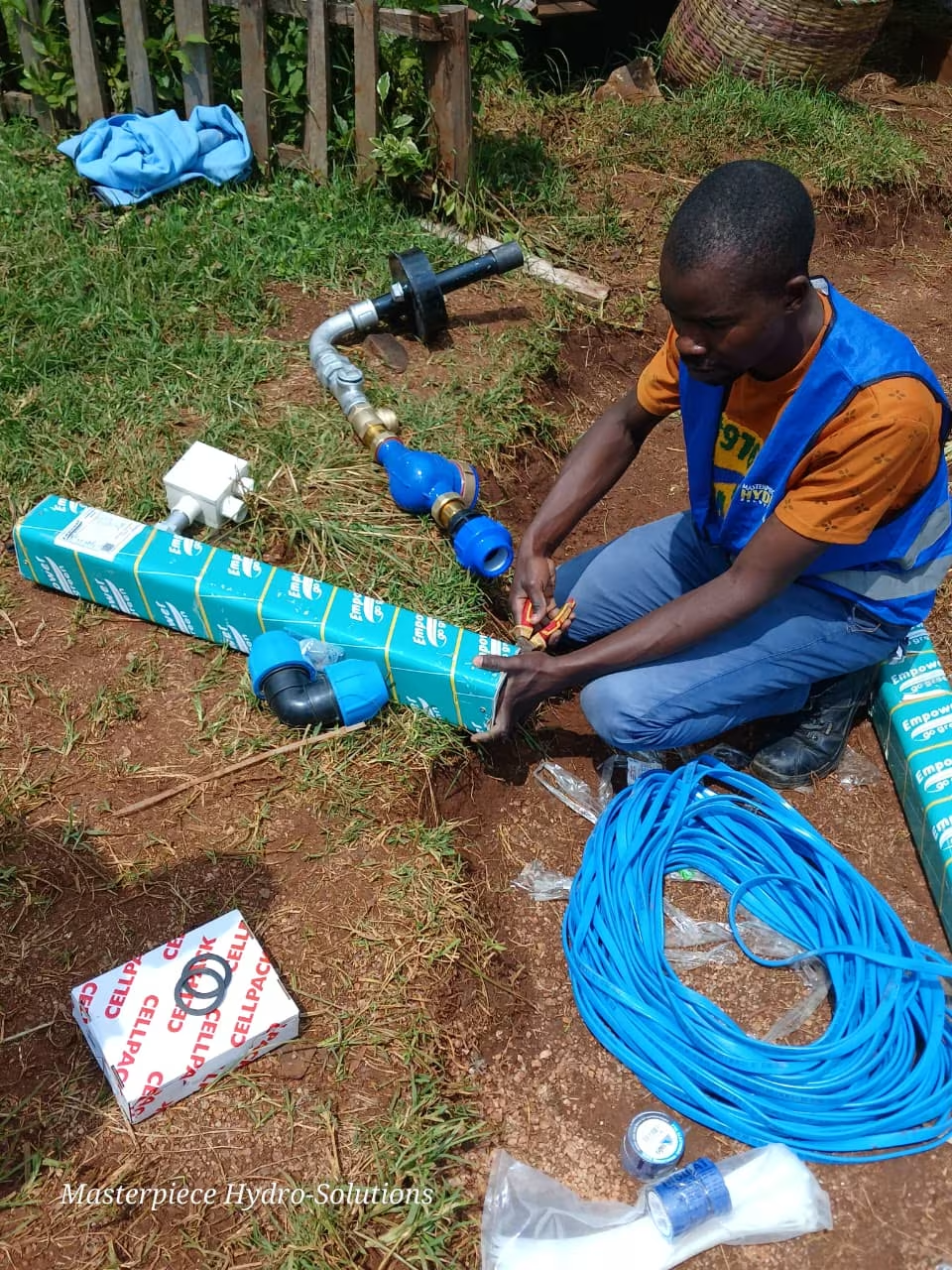
Gated community borehole supply needs a shared service brief, not only a pump specification. Occupied homes, common facilities and reserve expectations can create different requirements. First, define the service the community intends to manage. Then assess whether the source, delivery arrangement and operating responsibilities support that commitment.
Explore Masterpiece Hydro-Solutions borehole equipping services and enquire about a community supply assessment. Confirm the proposed scope for your development. Share available source records, the current layout and the management brief before asking the provider to recommend equipment or a continuity arrangement.
Agree the community’s service boundary
Describe which homes and common areas the source should serve. Also, identify whether the borehole supplements another supply. A project that supports shared storage has a different boundary from one expected to provide a particular service at every property.
Next, distinguish current occupation from later additions. Empty plots and planned buildings may matter for future design, but they do not represent measured present consumption. The provider needs a clear demand brief with those assumptions labelled.
Also, ask who confirms the service objective on behalf of the community. A caretaker, manager and committee may have different authority. The supplier should receive one agreed brief rather than several informal instructions that imply conflicting commitments.
Build gated community borehole supply from evidence
Provide relevant test-pumping results and water-level records. Ask the qualified practitioner what abstraction basis they support. Source yield, pump capacity and community demand remain separate. A new motor cannot prove the groundwater available for additional homes or common uses.
Next, gather operating logs where available. A source total, storage record and resident-use figure may describe different measurement boundaries. Ask the team to explain their relationship before treating one as a complete community water balance.
Gated community borehole supply should state where uncertainty remains. If useful records are missing, ask what current assessment would help the decision. Do not fill a gap with a precise demand assumption that nobody can explain or verify.
Separate homes from common-area demand
List common facilities and activities that use water. Cleaning, landscaping or another shared use may have a different timing from household demand. The relevant professionals should define any specialist requirement, while management identifies what actually occurs on the site.
Next, describe which uses overlap during busy periods. A daily total does not establish every short-period service requirement. Ask the provider to assess the intended operating arrangement rather than choose equipment from the number of homes alone.
Also, identify priorities during a constrained period. The community should make that management decision through its agreed process. The equipment provider needs the resulting brief but should not invent allocation rules or promise that every use can continue under every interruption.
Assess the full route to storage and users
Show the source, tanks and intended delivery destinations on a current plan. Also, identify known route changes and elevation information. A borehole outlet reading is not automatically evidence of the service available at a distant home.
The Grundfos pump-selection resource explains why required flow and head must inform selection together. Ask the practitioner to assess pumping lift, delivery elevation, route losses and the relevant outlet requirement. Drilled depth alone does not define the complete duty.
Next, clarify who accepts downstream distribution responsibility. The borehole supplier may serve storage while another specialist assesses resident delivery. A clear interface prevents a full tank from becoming the unexplained endpoint of a project intended to serve the community.
Assign gated community borehole supply responsibilities
The following table helps management identify the decisions and records that need an owner. It does not prescribe governance rules or establish contractual authority. The community must confirm its actual arrangements.
| Responsibility | Question to agree | Useful record |
|---|---|---|
| Demand brief | Who confirms current and planned users? | Dated service assumptions |
| Source operation | Who reviews the assessed abstraction basis? | Relevant source and operating records |
| Quality decisions | Who arranges qualified assessment? | Appropriate analysis and interpretation |
| Reserve use | Who confirms priorities during interruption? | Agreed continuity brief |
| Fault response | Who reports and authorises service? | Contacts and approval process |
| Later expansion | Who requests professional review? | Updated layout and demand information |
Next, resolve unowned tasks before equipment selection. A successful supplier installation does not automatically establish the community’s ongoing operating arrangement.
Make monitoring useful to management
Decide which observations help management understand supply. Meter totals, tank behaviour and interruption reports can describe different aspects. Ask the provider what the proposed arrangement measures and how staff should record it. A display without a clear purpose may produce little useful information.
Next, identify the measurement boundary. Water leaving the borehole and water used by homes may differ over a period because storage changes or other uses occur. Do not treat one meter as proof of every resident’s consumption without an appropriate accounting arrangement.
Gated community borehole supply needs a practical review process for those records. Name who checks them and how an unusual pattern becomes a service enquiry. The caretaker should report observations rather than diagnose a fault or alter technical settings.
Keep quality and source blending decisions separate
Successful pumping and clear water do not establish drinking-water suitability. Appropriate laboratory analysis and qualified interpretation for intended use guide that decision. The proposal should identify any quality-related service it includes and which responsibilities remain elsewhere.
If another source also supplies the development, tell the practitioner. The combined arrangement needs professional assessment of its interfaces and management. Owners should not improvise connections or assume a shared tank resolves every suitability question.
Next, identify who retains quality records and responds to concerns. Management needs an accessible process after handover. A favourable result at one stage should not become an unsupported promise about every future operating condition or change to the supply arrangement.
Plan reserve around a defined event
Ask whether the concern is power loss, pump repair or reduced production. Each event has a different response. A compatible backup power arrangement may address an outage without solving equipment damage or insufficient sustainable yield.
Next, assess useful storage and the demand it bridges. Nominal tank capacity does not automatically equal usable reserve. The practitioner should explain operating assumptions, while community management confirms priorities and any alternative supply arrangement.
Gated community borehole supply should not promise continuous service merely because backup appears in the quotation. Ask which interruption the design addresses and what remains. Qualified personnel must handle electrical, mechanical and protection changes; operators should not bypass safeguards to satisfy an immediate demand.
Consider an additional-common-use scenario
Consider an educational example where a community adds a new shared water use after the original equipment installation. No actual development or performance result is implied. Earlier records described occupied homes and existing facilities, not the proposed addition.
First, management updates the demand brief and service priorities. Next, the relevant specialists define the new interface. The pumping practitioner then reviews source evidence, storage and retained equipment. The community decides the next step using that assessment rather than assume the earlier package includes spare capacity.
This example shows why gated community borehole supply needs a review route for change. A working installation can meet its original brief without establishing every later use. The management record should connect new commitments to evidence and clear responsibility.
Review gated community borehole supply proposals
Ask the quotation to separate assessment, equipment, installation and commissioning. Also, identify the boundary around storage, distribution and existing components. The description should explain what the supplier accepts responsibility for demonstrating.
Next, clarify exclusions, tax treatment and offered warranty terms. Ask how changed demand or additional findings become an approved variation. Do not assume the contract includes unlimited expansion, emergency attendance or guaranteed groundwater regardless of source conditions.
For authority questions, consult the Water Resources Authority’s permitting guidance and confirm current site-specific requirements directly. Identify who coordinates relevant information. An equipment proposal does not itself establish the permission position for the intended abstraction.
Questions about shared community supply
Can the pump be selected from the number of homes?
Home numbers provide context, but the project also needs actual demand, common uses, source evidence and delivery duty. Ask the qualified team to explain those bases. A universal pump size cannot account for every layout, storage arrangement or operating pattern.
Does a full tank prove service at every house?
No. Downstream distribution needs an assessed requirement and clear responsibility. Ask where the borehole supplier’s commitment ends and who verifies resident service. A successful source-to-storage demonstration should not become unsupported evidence about every outlet.
Should the caretaker change settings during shortages?
The caretaker should report the pattern through the agreed route. Qualified personnel must assess technical changes. A shortage can involve source production, equipment, storage or demand. Bypassing protection or experimenting with settings does not establish the cause and should not form the continuity plan.
What should management receive at handover?
Keep source records, installed equipment references and commissioning evidence together. Also, obtain normal-use instructions, reporting contacts and open items. The management team should understand the assessed service boundary and which future changes require professional review.
Enquire with the shared service brief
Gather the layout, current-use records and management responsibilities. Then enquire about a gated-community supply assessment with Masterpiece Hydro-Solutions. Confirm scope and availability for the site. Ask for clear interfaces, realistic reserve assumptions and an understandable operating handover.