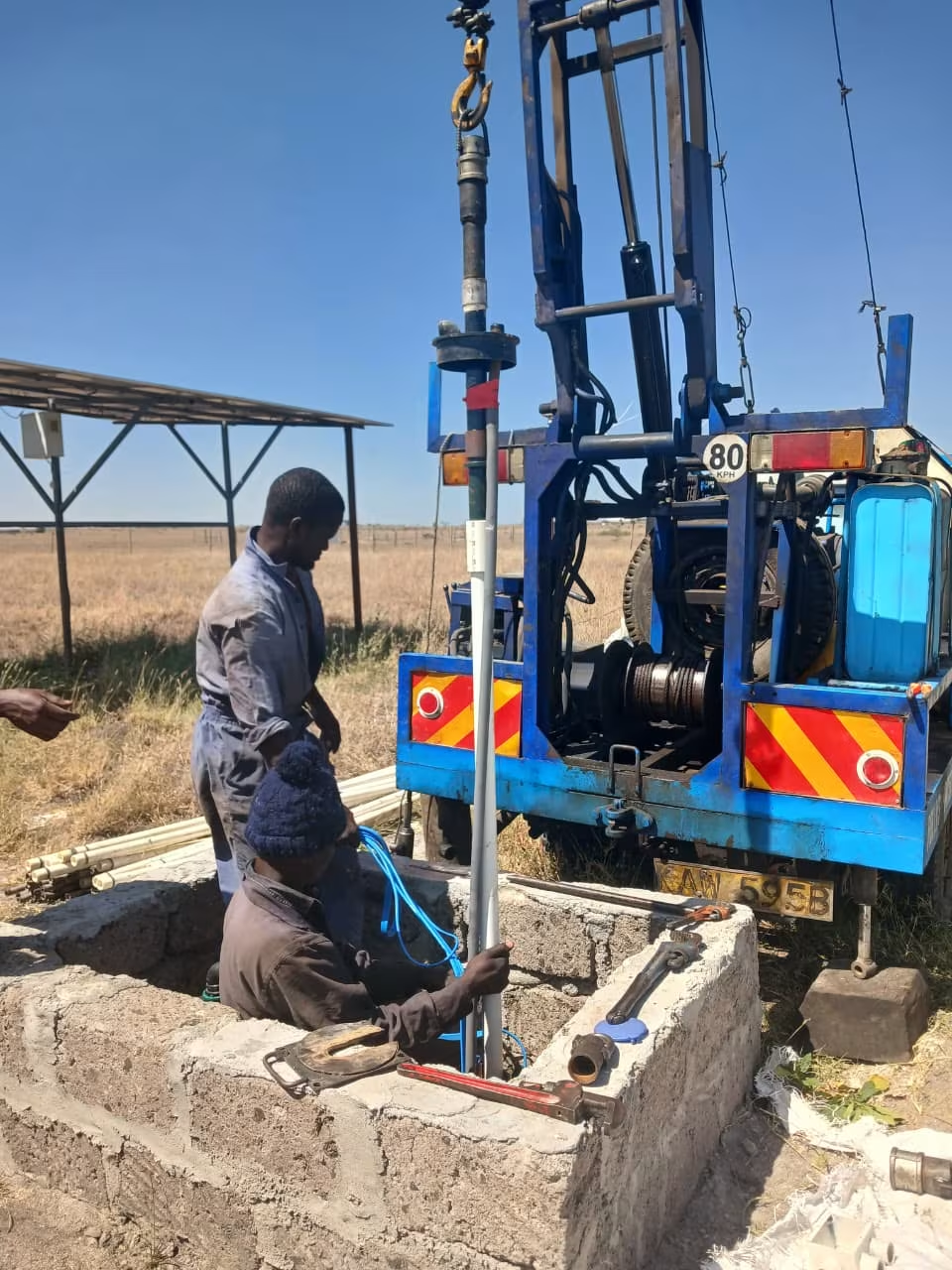
Greenhouse borehole supply planning should start with the growing system’s water-service brief. A borehole’s possible production does not automatically match the flow, timing or quality needed inside the greenhouse. First, identify those requirements with the appropriate specialists. Then assess whether source evidence, equipment and storage can support the intended operation.
Review Masterpiece Hydro-Solutions borehole equipping services and enquire about a greenhouse water-supply assessment. Confirm the proposed scope and availability for your site. Send the irrigation brief and existing borehole records so the discussion addresses the growing operation rather than an assumed standard package.
Describe the greenhouse operation before selecting equipment
Identify the houses currently in use and those still planned. Also, describe whether their irrigation periods overlap. The pumping provider needs the actual service pattern, not simply the total greenhouse area. A qualified irrigation specialist should establish the relevant flow and pressure requirements.
Next, distinguish ordinary production from occasional operational activities. System cleaning or another separately assessed use may create a different demand pattern. Record those needs rather than assume they disappear within a daily average. Their timing can affect the equipment and storage brief.
Also, tell the provider which figures come from measured records. Future crop choices and proposed expansion remain planning assumptions. Label them so the assessment can explain what the present scope supports and which later decisions need review.
Use greenhouse borehole supply planning to reconcile time
The irrigation system may need short delivery periods at a particular duty, while the borehole produces over another operating pattern. These are different questions. Ask the practitioners to explain how the proposed arrangement connects source production with the greenhouse’s required service windows.
Storage may help separate production timing from demand timing. However, the source must still replenish the water used. A tank cannot correct a continuing volume shortfall indefinitely. Ask the provider to explain useful capacity, replenishment assumptions and any protected reserve.
Greenhouse borehole supply planning should keep peak duty and daily volume visible together. An adequate daily total does not automatically establish the required short-period service. Conversely, a strong peak reading does not prove the system delivers enough water across the actual operating day.
Establish what the source evidence supports
Share the relevant test-pumping report, water-level information and known changes since testing. The assessor should explain the proposed abstraction basis and its uncertainty. Sustainable source production, pump capacity and user demand remain separate even when a supplier quotes them in the same proposal.
Next, distinguish pumping water level from drilled depth and pump setting. The Grundfos pump-selection resource explains why required flow and head matter together. Ask the practitioner to assess the full route and destination rather than choose equipment from greenhouse size alone.
If the records do not support the intended production brief, ask what further assessment would help. Do not treat more panel capacity or a larger motor as proof that groundwater availability will increase. The next commitment should follow the evidence.
Give water quality a separate decision route
The growing system needs an appropriate quality assessment for its intended use. FAO’s guidance on greenhouse vegetable production discusses irrigation-water quality as a distinct planning issue. This supports asking qualified crop and water specialists which analysis and interpretation the particular operation needs.
Do not infer suitability from clear water or a successful pump demonstration. Also, do not choose treatment, chemical additions or operating limits from a general article. The relevant specialists should interpret the laboratory evidence and explain any implications for the growing system.
Next, identify who owns that decision. The borehole installer and greenhouse supplier may have different scopes. A complete proposal should show who supplies the required quality evidence and who confirms whether the intended use needs further assessment.
Compare greenhouse borehole supply planning arrangements
Use the following table to discuss appropriate options. It does not prescribe an irrigation design or rank packages. The qualified team must assess the source, growing-system duty and actual site conditions.
| Arrangement to assess | Useful question | Remaining limit |
|---|---|---|
| Direct supply to the assessed irrigation interface | Can the source and pump serve that operating duty? | Daily source capability still needs evidence |
| Borehole filling useful storage | Can production replenish the required greenhouse volume? | Storage does not create groundwater |
| Storage with separate irrigation delivery | Who assesses the downstream flow and pressure? | Both stages need a clear responsibility boundary |
| Staged addition of greenhouse houses | What finding allows the next capacity commitment? | A future plan is not measured demand |
| Existing supply with an assessed supplementary source | Which role should each source perform? | Compatibility and quality decisions remain explicit |
Next, ask why the preferred option suits the brief. A package label offers less clarity than an explanation of the service it can provide.
Coordinate the greenhouse and borehole specialists
Ask the greenhouse supplier to identify the required water interface. Then ask the pumping provider to explain its delivery commitment at that point. A borehole outlet reading is not automatically evidence of service within the growing system. The interface needs an agreed location and duty.
Also, clarify responsibility for any intervening storage, delivery route and controls. Different contractors may complete their individual tasks while leaving a coordination gap. The owner should identify who reviews the complete operating arrangement and who answers a system-level question.
Greenhouse borehole supply planning benefits from one current information pack. Keep the layout, equipment assumptions and specialist requirements together. If a house moves or the growing plan changes, tell the relevant practitioners before ordering equipment.
Plan backup around a defined interruption
Describe which interruption concerns the operation. A power outage, insufficient production and an equipment fault are different events. Ask what the proposed reserve or backup arrangement addresses and what remains unresolved. Avoid using “backup” as a promise of continuity under every condition.
Next, identify essential activities and flexible operating periods with the appropriate growing-system adviser. The pumping provider should not invent crop-management decisions. The owner needs a continuity brief that respects both the assessed water supply and the actual production requirements.
Also, define who monitors storage and reports faults. A system with suitable equipment still needs an operator who understands its indications. Qualified personnel should handle electrical and mechanical changes; owners should not bypass protection to maintain a growing schedule.
Work through an additional-house scenario
Consider an educational example where a grower plans another greenhouse after an earlier borehole installation. No actual farm or source result is implied. The original equipment brief described the existing houses, while the new house changes the intended operating pattern.
First, the grower obtains a revised irrigation duty and demand brief. Next, the practitioners compare that requirement with source evidence and the installed arrangement. Their findings may support staged operation, further assessment or another defined change. The grower does not assume spare motor power proves spare groundwater.
This example shows why greenhouse borehole supply planning needs a review point before expansion. An installation can perform its original task without establishing suitability for every future addition. The decision should connect new demand to measured evidence and a clear operating plan.
Review greenhouse borehole supply planning before commissioning
Ask the contractor to propose suitable commissioning evidence for the supplied scope. The record should identify the destination, observed delivery and relevant conditions. Qualified personnel must choose and perform technical procedures. The owner can ask for clear outcomes without directing pressure or electrical tests.
Next, distinguish a measured observation from a forecast of future daily production. Solar conditions and actual operating periods can change delivery. The handover should state its assumptions and limitations rather than turn one favourable demonstration into a seasonal guarantee.
Also, retain the installed equipment schedule, operating explanation and fault-reporting route. Any incomplete check needs a stated next step. A useful handover connects the borehole equipment to the greenhouse brief and identifies responsibilities beyond the contractor’s boundary.
Greenhouse borehole supply planning also needs a clear record of the irrigation interface supplied by another contractor. Ask who confirms that the receiving equipment is ready for the agreed demonstration. If that equipment remains incomplete, the pumping report should state the limitation. This prevents a temporary test arrangement from becoming unexplained evidence of the finished greenhouse service.
Questions about greenhouse groundwater supply
Can a supplier select the pump from greenhouse area?
Area provides context, but the equipment needs a defined duty and source evidence. Ask the irrigation specialist for the relevant flow, pressure and timing requirements. The pumping provider must also assess the route and pumping level. A universal pump size per greenhouse cannot replace those decisions.
Does storage remove the need for adequate yield?
No. Storage can change when water becomes available, but production must replenish consumption. Ask for a clear daily balance and useful capacity basis. A persistent deficit remains unresolved even if a larger tank postpones the shortage. Keep reserve assumptions visible in the operating plan.
Who should decide whether the water suits the crop?
Use appropriate laboratory evidence and qualified interpretation for the intended growing operation. The relevant crop and water specialists should explain suitability and any further assessment. A pump installer may have a different scope. Do not infer crop suitability from water clarity or successful filling alone.
Should a new house use the existing supply automatically?
Request a review of the changed demand and duty. The earlier installation may only support its original brief. Share the expansion plan before committing to equipment or water-dependent production. The qualified team should explain what the source evidence supports and which assumptions need further work.
Enquire with the growing-system brief ready
Gather the irrigation requirements, source records and expansion assumptions. Then enquire about a greenhouse supply assessment with Masterpiece Hydro-Solutions. Confirm availability and scope for your site. Ask for a clear interface, realistic operating assumptions and evidence-based acceptance before committing to a package.