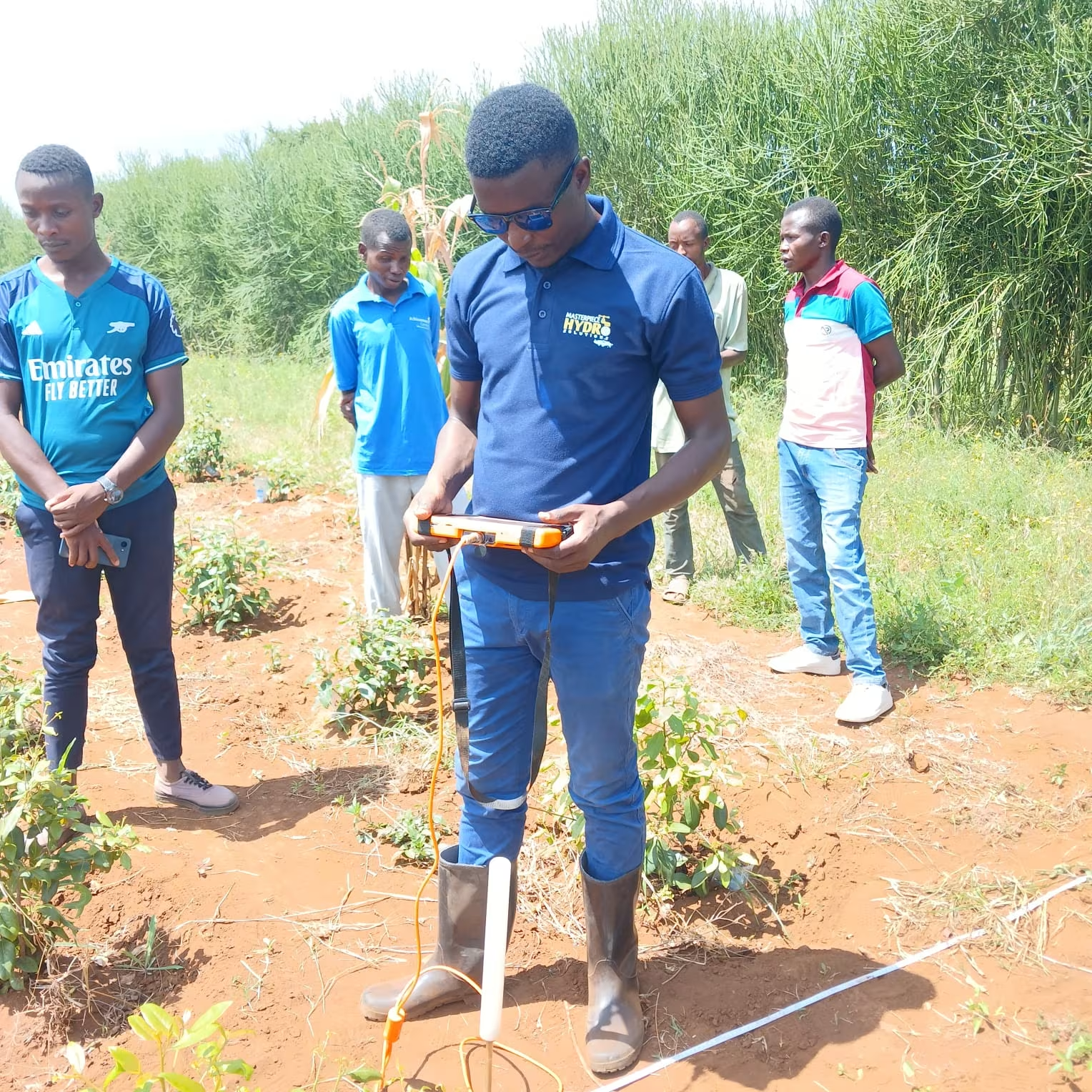
Groundwater monitoring record keeping helps future professionals understand what changed, when and under which conditions. A folder of isolated readings can lose much of its value if units, source identity or references are unclear. First, define the purpose of the record. Then agree which ordinary observations and qualified measurements the actual project needs.
Explore Masterpiece Hydro-Solutions hydrogeological surveys and request a monitoring-related assessment enquiry. Ask what professional assessment scope may be available. This guide concerns evidence management, not instructions for downhole measurement, electrical testing or a universal monitoring schedule.
Start groundwater monitoring record keeping with a purpose
Identify the question the record should help answer. The owner may need a dependable operating history, a baseline for future assessment or information requested for a particular project. Also, distinguish routine context from a current fault investigation. Different purposes can require different evidence and professional interpretation.
Ask the responsible assessor to explain which observations are useful and who should obtain them. Owners can retain ordinary operating information without attempting specialist measurements. A clear responsibility plan prevents a useful record system from becoming an invitation to open electrical equipment or introduce objects into a borehole.
Give every entry a reliable asset identity
Identify the borehole, observation location and destination where relevant. Also, distinguish several sources feeding shared storage. A meter reading without its location may describe a different part of the supply than a later reader assumes. The file should connect observations with the actual arrangement at that time.
Keep equipment and route changes in a linked history. A new pump, moved tank or altered distribution route can affect later interpretation. Groundwater monitoring record keeping should preserve these events rather than present every reading as if the installation remained unchanged throughout the record period.
Keep units and reference points explicit
Record units exactly and ask professionals to explain unfamiliar labels. Drilled depth, static water level, pumping water level and pump setting depth are different terms. The owner should not compare them as though they measure the same feature. An unexplained depth figure may be less useful than a clearly identified gap.
Agriculture and Agri-Food Canada’s monitoring guidance explains the value of consistent measurement references. Use that principle to ask about your records, without importing its schedules as universal Kenyan requirements. Qualified personnel should establish the actual measurement approach for the site.
Use a groundwater monitoring record keeping table
The table identifies information categories rather than technical procedures. Ask the professional which fields the actual purpose needs. Also, identify whether the entry comes from ordinary operation, a qualified measurement or a later interpretation. Keeping those categories clear helps prevent a summary from overstating what was observed.
| Record field | What to preserve | Why the context matters |
|---|---|---|
| Identity | Source and observation point | Different assets or locations may not support comparison |
| Date and time | When the observation occurred | Sequence and related events remain traceable |
| Observation | Original value or factual note with units | A paraphrase can lose measurement meaning |
| Reference | Professionally identified measurement basis | Different reference points may change interpretation |
| Operating context | Relevant runtime, destination and demand changes | A figure alone may not explain service conditions |
| Responsibility | Observer, preparer and source document | Later readers can request clarification appropriately |
| Interpretation | Professional explanation and limitations | Observation should remain distinct from diagnosis |
Separate flow, volume and operating time
A flow figure describes water over a time interval, while a cumulative volume concerns an amount. Record what a device or report actually displays rather than guess its meaning. Also, distinguish actual operating time from the hours equipment was merely available. These differences affect how a professional interprets a daily supply account.
For an educational example, an assumed average delivery of two cubic metres per hour over five operating hours gives ten cubic metres, or 10,000 litres. That arithmetic does not establish sustainable source supply or a recommended operating period. It simply shows why both rate and time belong with a volume calculation.
Work through a fictional record comparison
Consider an educational property with readings before and after a tank relocation. The numbers appear different, but one entry omits its destination and another uses an unexplained unit. These assumptions illustrate record management, not a real source change or a diagnosis requiring corrective work.
First, the owner retains the original entries and asks the relevant preparers for clarification. Next, the project history identifies the route change. The professional can then explain which comparisons remain useful and what uncertainty persists. The owner should not silently convert values or overwrite the earlier context to produce a tidy trend.
Groundwater monitoring record keeping supports the decision because it preserves the evidence behind the chart or summary. A numerical pattern does not identify its cause by itself. The file should let the professional ask the next useful question rather than imply that every difference is source deterioration.
Keep routine observation distinct from technical diagnosis
Operators can record interruptions, visible indicators and significant changes in ordinary use. Qualified personnel should explain what those observations mean and perform technical testing. A control indication or a low tank is a fact to report, not proof of one particular pump, source or electrical fault.
Ask for an escalation route and the information useful with a concern. Do not bypass protection or alter settings to make a record match a preferred value. A dependable history should describe what happened, including interruptions and uncertainty, rather than encourage an owner to create unassessed operating conditions.
Connect monitoring information with equipment duty
If the arrangement changes, keep the relevant equipment assessment beside the operating file. Required flow and head belong together in selection, as the Grundfos resource explains. A later flow reading cannot by itself establish whether the pump suits an altered route or destination.
The borehole equipping service provides a separate enquiry route where equipment questions arise. Keep source supply, installed capacity and demand distinct. A larger motor cannot create groundwater, and a new monitoring file does not establish an unsupported water availability guarantee.
Keep quality and authority records separately identifiable
Water quality needs appropriate analysis and advice for intended use. Clear appearance or stable quantity readings do not establish drinking-water suitability. Retain laboratory records with their sample context and explanation. The wider project file can link quality and operating information without treating them as interchangeable evidence.
Use WRA’s official guidance to frame any current site-specific reporting or authority questions. Ask what records the actual project needs. Do not copy another owner’s schedule or submission practice as a universal requirement. Preserve official responses with the proposal they concern.
Manage versions without erasing history
Keep original records and identify corrections clearly. If a professional explains an error, retain the reason and current version. Also, distinguish an issued report from a working summary. Future readers need to know whether a value changed because of new evidence, a corrected entry or an altered installation.
Nominate the role that maintains the file and arranges transfer when management changes. Backups and readable formats help preserve access. Groundwater monitoring record keeping should remain useful beyond one person’s private notes. A concise index can connect observations, source documents and later professional explanations.
Questions owners ask about monitoring files
Should every borehole use the same monitoring schedule?
Ask qualified advisers and the relevant authority what the actual purpose and project require. This guide gives no universal interval. Groundwater monitoring record keeping should fit the source, evidence needs and responsibilities rather than copy a schedule without understanding its applicability.
Can the caretaker measure water levels personally?
Qualified personnel should define and carry out appropriate technical measurement. Owners can preserve records and ordinary operating observations. Do not introduce objects or equipment into the source to complete a checklist. Ask which professional task would resolve a missing value safely and usefully.
Does a lower reading prove the source is deteriorating?
No single number establishes that conclusion. Ask whether the location, units, reference and operating conditions support comparison. A professional should explain significance and uncertainty. The record helps investigation but should not present an automatic cause or corrective method.
What if the earlier data is incomplete?
Retain what exists and mark gaps honestly. Ask what current assessment can establish and how future records should improve comparability. Do not invent old measurements or remove uncertain entries merely to create a smooth trend. An honest baseline remains useful.
What should accompany a monitoring enquiry?
Send the source identity, available records, file purpose and known arrangement changes. Include relevant reports and ordinary operating context. Finally, identify the responsible contact. This helps the provider define an appropriate assessment without assuming a particular monitoring service is already confirmed.
Request a record plan that supports future decisions
Use groundwater monitoring record keeping to preserve identity, observations and context separately from interpretation. Ask which professional measurements and ordinary records the project needs. Finally, maintain versions and responsibilities. A useful file supports clearer later assessment without pretending a trend alone provides a diagnosis.
Request a monitoring-related assessment enquiry from Masterpiece Hydro-Solutions. Explain the purpose and records available. Ask which professional assessment scope may be available and how the proposed evidence would support a traceable future decision.