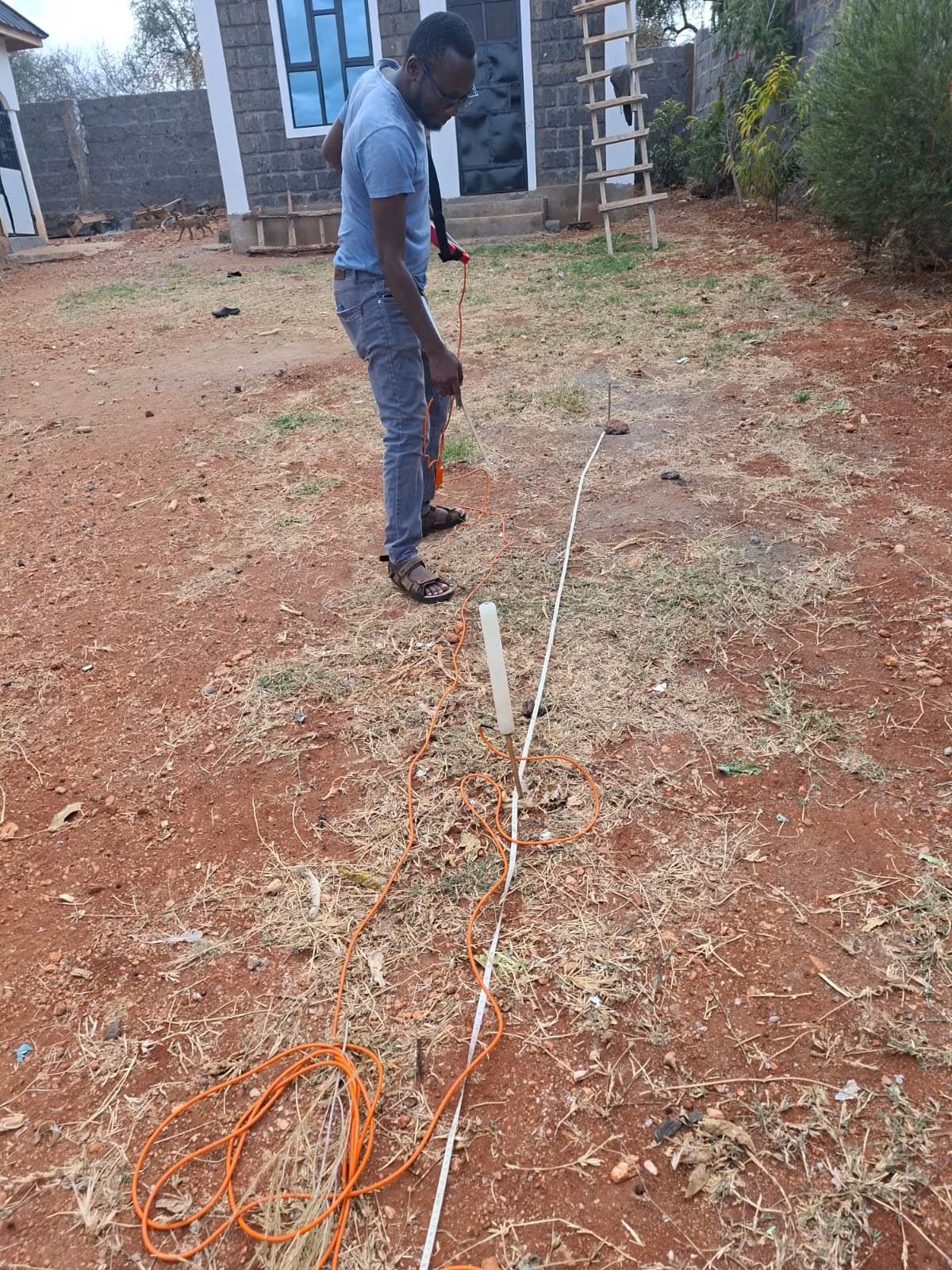
A groundwater survey before drilling helps organise evidence and uncertainty before the owner commits to construction. Its recommendation does not guarantee the depth, yield or quality of a future borehole. First, understand what the assessment investigated and what its findings support. Then consider practical constraints and the further evidence needed for a drilling decision.
Explore Masterpiece Hydro-Solutions hydrogeological surveys and request a decision-focused assessment. This guide explains how buyers can use a pre-drilling report. It focuses on the decision to proceed, investigate further or revise the project, rather than compare survey fees or rank providers.
Define the groundwater survey before drilling question
Explain what the owner needs to decide. The question may concern one proposed property, alternative positions or whether a project merits further spending. Also, describe intended water use and known constraints. A technically detailed assessment can still disappoint if it answers a different question from the one the owner faces.
Next, separate the water requirement from the preferred outcome. Wanting enough water for a planned activity does not establish available source supply. The assessor needs the demand context, but should explain where evidence supports or limits the project. A useful report helps the owner consider an unwelcome finding as well as a favourable one.
Distinguish evidence, interpretation and recommendation
Ask the preparer to explain these three layers separately. Evidence describes the information and observations considered. Interpretation explains what the responsible professional infers from them. Recommendation connects that interpretation with a proposed next step. Keeping the layers visible helps the owner understand the reasoning without pretending to independently certify the technical work.
Also, ask where the report relies on assumptions or incomplete information. Those limits should remain visible beside the conclusion. A recommended target is not the same as a confirmed drilling result. The owner should know which later observations could support, change or challenge the initial interpretation.
Read groundwater survey before drilling limits carefully
A survey cannot guarantee a successful borehole or establish drinking-water suitability before the relevant evidence exists. Therefore, ask what remains uncertain about the eventual construction and supply. Avoid translating a recommendation into a promised daily volume. That daily volume requires its own source assessment and operating context.
Also, distinguish uncertainty from an error. A report can explain limitations honestly and still support a useful decision. Conversely, confident language cannot remove an unresolved evidence gap. Ask the professional to describe the significance of the uncertainty and whether more information could materially improve the decision.
Use neighbouring information in its proper role
Existing borehole records and local accounts may provide background where relevant and reliable. However, a neighbour’s successful supply does not guarantee the same outcome on your property. Identify the source, date and site behind each piece of information. The assessor should explain how it contributes to the evaluation and where its relevance ends.
Do not let an anecdote silently become a design input. For example, an owner may remember that another borehole produced plenty of water without knowing the test conditions. That recollection should remain clearly labelled. A groundwater survey before drilling should organise evidence quality rather than give every supplied statement equal weight.
Compare the next decisions, not just possible targets
The owner may have more than one sensible response to the findings. A report discussion should help compare those responses and identify their consequences. Use the table to structure that conversation. It does not replace professional judgement or create a universal threshold for deciding whether to drill.
| Possible decision | Question to resolve | Record to retain |
|---|---|---|
| Proceed to a drilling scope | Does the recommendation address the intended site and constraints? | Report basis, limitations and agreed next steps |
| Gather more information | Which gap could materially change the decision? | Defined further assessment question and scope |
| Consider another position | What evidence and practical factors support comparison? | Reasoned alternatives and their limitations |
| Revise the water project | Can demand or supplementary supply change the brief? | Updated demand and continuity assumptions |
| Postpone commitment | Which unresolved issue prevents a sound decision now? | Outstanding actions and responsible people |
Check the recommended position against the real site
A proposed target needs a practical site discussion. Identify current buildings, access restrictions, known services and future plans. Ask the relevant professionals to coordinate those constraints. An owner should not move a recommended position informally because another part of the property looks easier to reach.
If the position changes, ask whether the existing assessment remains relevant or needs revision. Also, consider the completed property rather than only today’s access. Future structures can affect inspection and equipment work. These questions connect the groundwater survey before drilling with a usable long-term installation, rather than a target marked in isolation.
Work through an illustrative decision meeting
Consider a fictional owner planning a new water project on a partly developed property. The survey report recommends a position, but a future building route overlaps its access area. The report also identifies a gap in the supplied background records. These are educational assumptions, not findings from an actual project.
The owner should first ask the assessor to explain the significance of both issues. The site constraint may require coordination with the building team, while the evidence gap may need a defined further task. Neither issue automatically proves the project should stop. However, ignoring both would make the eventual drilling brief less clear.
Next, record the agreed actions and the people responsible. If the team proposes another position, ask what assessment supports it. Finally, approve a current decision brief rather than rely on the original report alone. The meeting has value because it makes the evidence, constraints and remaining decisions explicit.
Keep the demand scenario separate from source confirmation
Describe the daily water requirement and important busy periods. Mark estimates clearly and distinguish future expansion. However, those demand figures express what the owner wants, not what an untested borehole can provide. The report discussion should identify how later drilling and testing will inform the source side of the project.
Storage can help manage timing after the source assessment, but it cannot create groundwater or cure a permanent deficit. Also, solar equipment does not establish yield. A groundwater survey before drilling should lead into separate, evidence-based decisions about construction, abstraction, equipment and storage rather than promise a complete supply from one recommendation.
Use the groundwater survey before drilling to brief contractors
When the owner decides to seek construction proposals, provide the current survey report and relevant clarifications. Identify the recommended position and any agreed changes. Also, describe access, intended use and the expected completion records. The borehole drilling service offers a later enquiry route for that defined stage.
Ask the drilling team how they will record encountered conditions and communicate findings that affect the scope. A report recommendation should inform construction planning, while actual site findings still need accountable decisions. Keep a variation process in writing so technical and commercial changes remain traceable during the work.
Keep approvals and quality decisions distinct
Consult WRA’s permitting guidance about current site-specific requirements. A survey recommendation does not itself authorise construction or abstraction. Also, identify who will prepare supporting records and communicate with the authority. Avoid treating a provider’s promised assistance as a guarantee of approval.
Water quality needs appropriate evidence for the intended use. Clear appearance after drilling cannot prove drinking-water suitability. Plan suitable laboratory analysis and advice at the relevant stage. The pre-drilling report can identify questions, but the owner should not treat it as a substitute for testing water from the completed source.
Make a decision note future teams can understand
Record what the owner decided and why. Include the current report version, unresolved uncertainties and any conditions attached to proceeding. Also, retain explanations given after the report. This helps later contractors and managers distinguish a professional recommendation from the owner’s commercial choice to accept a particular level of uncertainty.
If the project pauses, preserve the file rather than restart from a remembered conclusion later. Changes in the site or intended use may need reassessment. A groundwater survey before drilling remains most useful when readers can identify its original scope and understand which later decisions changed that context.
Questions buyers ask before drilling
Does a recommended target guarantee water?
No. It expresses a recommendation based on the assessment and its limitations. Ask the preparer to explain the reasoning and remaining uncertainty. Later drilling and testing provide different evidence. The owner should understand those stages before turning a recommendation into a spending commitment.
Can we choose a different point after the survey?
Ask the responsible professional to assess the proposed change. Practical convenience alone does not establish that another position carries the same interpretation. Also, document the reason for moving. A revised recommendation or further work may be necessary depending on the site and existing assessment.
Should the report state a guaranteed final depth?
A pre-drilling recommendation cannot guarantee the completed outcome. Ask how the proposed investigation or construction scope handles actual findings. The groundwater survey before drilling should make uncertainty clear rather than offer a universal depth promise that removes the need for later observation.
What if the report leaves us unsure about proceeding?
Identify the exact question that remains unanswered and ask whether further information could resolve it. Also, compare postponement, revised demand or another assessed option. Uncertainty deserves an explicit decision. It should not disappear because the owner feels pressure to proceed after paying for a report.
What information should an initial assessment include?
Provide the location, intended use, available site plans and existing records. Explain access restrictions and future development plans. Finally, state the decision you need to make. Clear input helps the provider define a useful assessment and identify where further information remains necessary.
Request a report that supports a clear decision
Ask for findings, interpretation, limitations and practical next steps in understandable form. Check the recommendation against the actual site and record the unresolved questions. Finally, carry the current assumptions forward. That makes a groundwater survey before drilling useful beyond the day the report arrives.
Request a pre-drilling assessment from Masterpiece Hydro-Solutions with your site records and intended use. Ask how the proposed work will support your decision and explain uncertainty. A sound next step follows the evidence while keeping construction, testing and permission responsibilities clear.