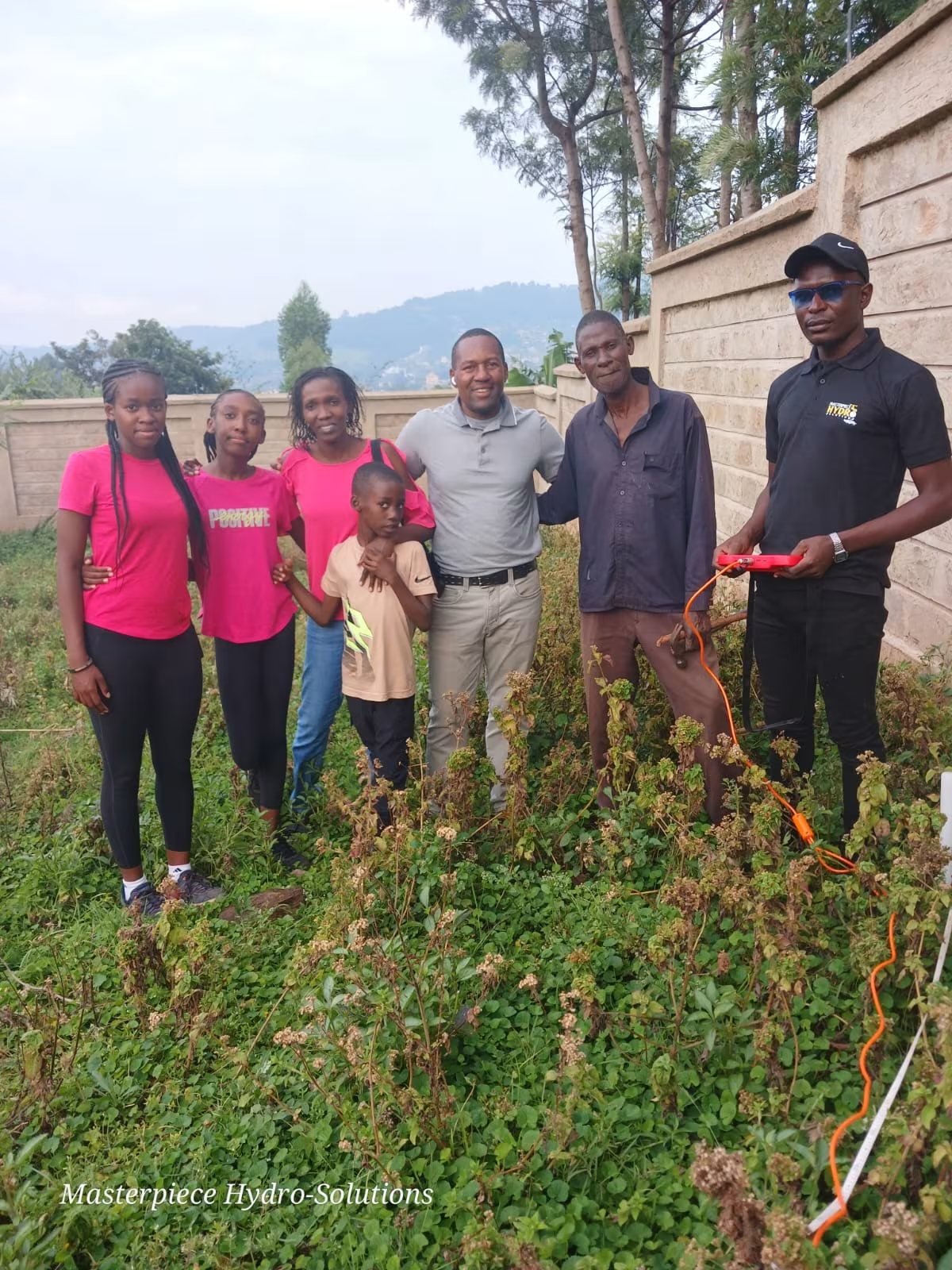
Hydrogeological survey company selection should focus on useful evidence, accountable interpretation and clear limits. A confident promise or impressive equipment photograph cannot show whether a report will support your decision. First, ask what the provider will investigate and explain. Then compare how each proposal connects site findings with a practical next step.
Explore Masterpiece Hydro-Solutions hydrogeological surveys and request an assessed survey scope. This guide helps Kenyan buyers evaluate providers on their proposed work and reporting. It does not rank companies, invent qualifications or suggest that any survey can guarantee groundwater.
Start hydrogeological survey company selection with your decision
Describe the decision the report must support. You may need to assess a proposed site, compare feasible positions or understand whether further investigation makes sense. Also, explain intended water use and any constraints on access. A provider needs that context before defining a useful assessment boundary.
Next, identify what you already know. Existing reports, borehole records or property plans may inform the work, depending on their relevance and reliability. However, do not treat information from another property as a guarantee for your own. Ask the provider how they will assess supplied records and identify gaps rather than simply repeat them.
Compare proposed methods through their purpose
Ask each provider to explain why their proposed approach suits the decision and site. The buyer does not need to select technical instruments personally. Instead, request an understandable account of what the work can investigate, what evidence it produces and what limitations affect the interpretation.
Also, ask how field observations and existing information will connect in the final assessment. A list of equipment offers little value without that explanation. If two proposals use different approaches, ask each provider to explain the scope difference. Compare the decision support they offer rather than assume that a longer equipment list means better work.
Use a hydrogeological survey company selection scorecard
A scorecard can organise evidence without hiding important gaps. Use simple descriptions such as missing, partial and clearly explained. However, do not let several strong answers compensate for one critical uncertainty about responsibility or deliverables. Keep the written responses with your comparison so the final choice remains reviewable.
| Evaluation area | Evidence to request | Useful buyer question |
|---|---|---|
| Scope fit | Response to your actual site and decision | What question will the assessment answer? |
| Method explanation | Purpose, evidence and limitations | Why does this approach fit the brief? |
| Accountability | Named responsible people and roles | Who interprets findings and signs the report? |
| Report usefulness | Anonymised structure or deliverable outline | Can an owner distinguish findings from recommendations? |
| Uncertainty | Clear assumptions and unresolved questions | What will remain unknown after the work? |
| Follow-up | Defined explanation and correction process | How will we resolve unclear conclusions? |
Check who takes professional responsibility
Ask for the people responsible for fieldwork, interpretation and final reporting. They may have different roles, but the provider should explain the arrangement. Also, request relevant current credentials and verify them with the appropriate issuing authority. Avoid inferring a qualification from a company name, sales title or photograph.
Clarify whether the provider uses subcontractors and who remains accountable for the delivered report. The invoice, agreement and support contact should make responsibility clear. Hydrogeological survey company selection benefits from this practical check because an owner needs a route for questions after fieldwork ends, not merely a contact who arranged the visit.
Ask to see report structure without exposing clients
A provider may share an anonymised example or a detailed report outline with appropriate consent and confidentiality. Ask to see how the document identifies the site, describes work, presents findings and explains recommendations. Also, look for visible assumptions and limitations. A polished cover does not establish a useful technical narrative.
Read the example as an owner rather than attempt your own technical certification. Can you tell what the team observed and what they inferred? Does the recommendation connect with stated evidence? If important conclusions depend on unexplained terms, ask how the provider will explain them during your own handover.
Test the treatment of uncertainty
Ask every bidder the same question: what can your assessment not guarantee? A useful answer should distinguish a recommended target from a confirmed drilling result. Actual yield, completed depth and water quality need their own evidence. Confidence should come from a transparent explanation, rather than a promise that removes uncertainty from the sales conversation.
Also, ask what happens if findings do not support the owner’s preferred location. The provider should describe a clear reporting process and possible next decisions. Hydrogeological survey company selection should reward honest limitations because they help the buyer decide whether to proceed, investigate further or revise the project.
Compare two illustrative proposals fairly
Consider an educational comparison between two fictional proposals, without assuming either reflects a real company. Proposal A promises a short field visit and a report but leaves the assessment question unclear. Proposal B identifies the site boundary, explains the work purpose and lists assumptions that need confirmation. Their totals alone would not reveal these differences.
First, ask Proposal A’s provider to clarify the missing scope. Next, ask Proposal B’s provider how the report will address a practical access restriction. Both providers should receive a chance to respond to the same final brief. The purpose is a fair evidence comparison, rather than treating one attractive document as automatically superior.
Finally, compare the revised deliverables and responsibility statements. If either proposal still promises guaranteed water, ask for clarification of the claim. A useful provider explains uncertainty and later testing needs. The owner should retain those answers with the decision record instead of relying on verbal assurances.
Check references for relevance and consent
Ask whether the provider can offer references for comparable assessment work, with the client’s permission. Focus on communication, report clarity and support after delivery. Also, ask whether the original brief matched the type of decision you face. A reference for unrelated construction work may reveal little about survey reporting.
However, a satisfied former client cannot guarantee your site’s groundwater outcome. Keep the reference in its proper role. It can help assess how the provider manages work and explains findings. Hydrogeological survey company selection should still rest on your actual scope, accountable people and a clear account of evidence limitations.
Clarify handover and later drilling boundaries
Ask whether the quoted work includes a report discussion and responses to reasonable clarification questions. Next, identify whether submission support or later site work sits outside scope. Consult WRA’s permitting guidance and ask the authority for current requirements relevant to your site. A provider should not promise approval.
Also, keep survey interpretation separate from the commercial decision to drill. The borehole drilling service offers a later enquiry route once the project reaches that stage. A report recommendation should remain understandable even if the owner asks another qualified contractor to assess the drilling scope.
Record your hydrogeological survey company selection
Write a short decision note explaining why the selected proposal fits the brief. Include unresolved assumptions, agreed deliverables and the responsible contact. Also, preserve revised quotations so the team can identify the version it approved. This avoids a later dispute between an early sales description and the final agreement.
Before payment, confirm scope, exclusions, VAT treatment and variation approval. The lowest total may represent less work, while a higher total still needs justification. Hydrogeological survey company selection should connect the spending decision with the evidence and explanation you expect to receive, without inventing a price threshold for quality.
Questions buyers ask about provider evaluation
Which company is best for every site?
A universal ranking would ignore different briefs, access constraints and reporting needs. Compare providers against the actual decision you face. Also, verify accountability and relevant current credentials. The strongest proposal for your project explains its work and limits clearly rather than relying on a broad best-company claim.
Does sophisticated equipment prove a better survey?
Equipment needs a suitable purpose, competent use and accountable interpretation. Ask the provider to explain those connections. A photograph or instrument list alone cannot show report usefulness. Therefore, compare what the method will contribute to your decision and what uncertainty remains afterwards.
Should a provider guarantee water before we appoint them?
A survey cannot establish a guaranteed drilling outcome or drinking-water quality. Ask how the recommendation follows the evidence and what later work will test it. Hydrogeological survey company selection should value transparency about uncertainty, especially when the owner’s investment decision depends on the report.
Can we compare proposals that use different scopes?
First, ask both providers to respond to a common final brief. Record remaining differences explicitly. Some differences may be justified, but they should not disappear inside the totals. An equivalent scope makes the comparison more useful and helps identify which proposal leaves essential work unpriced.
What should the first enquiry include?
Send location, intended water use, available records and known access constraints. Explain the decision the report must support. Also, state what you do not know. That gives the provider a basis for proposing an assessment rather than returning a generic package with unclear boundaries.
Request evidence you can review
Prepare one brief and one evaluation sheet before contacting providers. Ask about method, responsible people, report structure and uncertainty. Finally, agree how the team will explain findings. Those steps make hydrogeological survey company selection a reviewable decision instead of a contest between promises.
Request a survey assessment from Masterpiece Hydro-Solutions with that brief. Ask for a clear scope and deliverable outline before comparing proposals. Keep the final decision tied to useful evidence, accountable reporting and an honest explanation of what the assessment can establish.