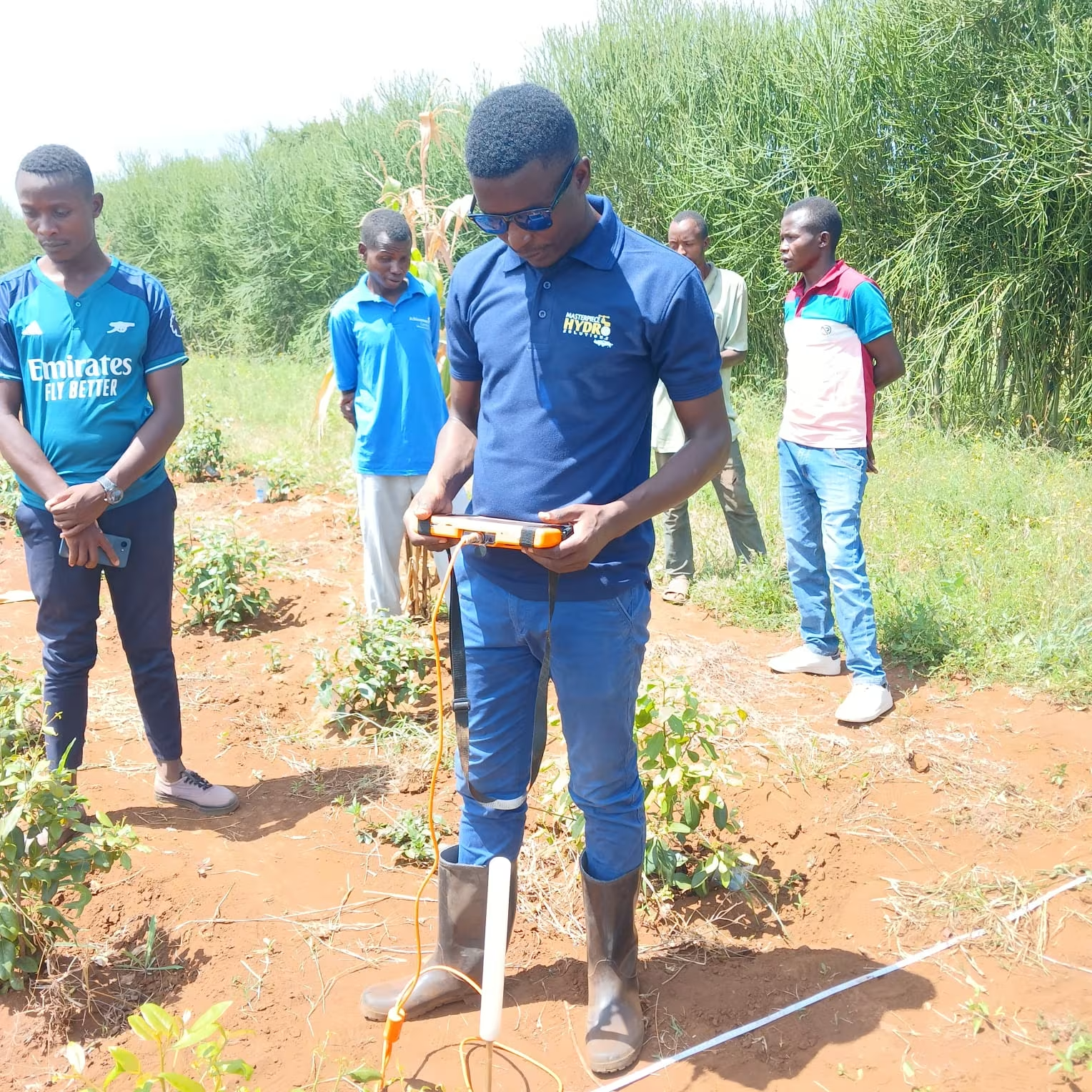
Hydrogeological survey cost becomes meaningful when you know which work the quotation covers. A low total may exclude interpretation, report discussion or necessary site access arrangements. First, compare scope before comparing the amount payable. Then identify the assumptions that could change the final invoice or leave another task for the owner.
Explore Masterpiece Hydro-Solutions hydrogeological surveys and request a site-specific itemised assessment. This guide explains cost boundaries and quote comparison. It does not invent Kenyan survey price bands, offer a universal package rate or treat survey spending as a guarantee of water.
Define hydrogeological survey cost by the assessment boundary
State the property and decision the assessment must address. One clearly defined site differs from a request to compare several parcels or alternative project areas. Also, explain known access constraints. The provider should identify which work responds to that brief and which additional questions would require a revised scope.
Next, separate the survey from later drilling, test pumping and equipment work. Those activities may need separate assessments and quotations. A survey total should not imply a complete operational supply unless the agreement explicitly defines a wider package. Keeping the boundary clear lets the owner budget for later decisions without assuming they are already funded.
Ask what sits inside the professional work
A useful quotation explains the work behind the deliverables. Ask about reviewing available information, planning fieldwork, collecting evidence, interpreting findings and preparing the report. However, do not prescribe a technical method solely to reduce the quote. The responsible professional should explain why the proposed approach fits your site and question.
Also, ask whether the price includes a discussion of the report and reasonable clarification. A document that nobody explains may leave the owner unable to use its conclusions. Compare the quality of the promised handover, rather than measure value only by field hours or report page count.
Compare hydrogeological survey cost line by line
Use a shared comparison sheet even if providers organise their quotations differently. Record included work, exclusions and unresolved questions. Next, request clarification rather than fill gaps with assumptions. A complete comparison may show that an apparently expensive proposal covers work another provider has left for a later invoice.
| Cost boundary | Ask the provider | Why it affects comparison |
|---|---|---|
| Site coverage | Which property or assessment area does the quote cover? | Different boundaries can represent different work |
| Fieldwork and travel | What visit and access assumptions support the total? | Unstated logistics may create additional charges |
| Interpretation and report | Which deliverables follow the fieldwork? | Collection alone does not explain a recommendation |
| Follow-up | What explanation or clarification is included? | Owners need to understand the decision implications |
| External charges | Which payments fall outside professional fees? | Separate responsibilities prevent double counting |
| Changes and taxes | How are variations approved and is VAT included? | The payable amount needs a clear basis |
Distinguish travel assumptions from field scope
Ask whether mobilisation and travel appear within the total or separately. Also, identify access assumptions that could require another visit. A location name alone may not describe the final route or site entry arrangements. The provider needs enough information to assess logistics without inventing a universal county surcharge.
If the owner changes the visit after arrangements are final, ask how the agreement handles that change. Likewise, clarify what happens if access is unavailable on arrival. The purpose is a fair written process. An open-ended charge for any inconvenience is difficult to compare, while an unexplained all-inclusive label may conceal important limits.
Compare report deliverables rather than page counts
Ask for an outline that identifies site information, work undertaken, findings, interpretation, limitations and recommendations. The exact report needs to fit the assignment. However, a long report can still leave the central decision unclear. Look for the connection between evidence and advice, not a promise of a particular document length.
Hydrogeological survey cost should also identify the deliverable format and current version. If the owner needs copies for other project participants, say so before appointment. Ask how the provider handles factual corrections and later changes to the brief. Correcting an error and commissioning new work should have distinguishable processes.
Work through an illustrative quote comparison
Consider two fictional proposals for the same property, without assigning invented prices. Proposal A lists a field visit and a short report. Proposal B also identifies review of supplied records, an explanation meeting and a clearly bounded clarification stage. Their totals cannot support a fair comparison until the owner understands these differences.
First, ask Proposal A’s provider whether interpretation and report discussion sit inside its fee. Next, ask Proposal B’s provider which follow-up requests would count as new work. Both should respond to the same intended decision. A lower total may remain good value, but the reasoning needs evidence rather than assumptions about what is included.
Finally, compare the clarified deliverables and outstanding owner tasks. Hydrogeological survey cost is then a scope decision as well as a spending decision. The owner can identify whether another specialist, additional visit or later assessment still needs funding instead of discovering the gap after the report arrives.
Keep authority charges separate and verifiable
Ask whether any external payment appears in the quotation and who receives it. A professional service fee and an authority charge have different recipients and purposes. Also, request an understandable basis for any amount collected on your behalf. Keep receipts and references with the project records.
Consult WRA’s permitting guidance and confirm current site-specific requirements and charges directly. Do not rely on an unverified fee list. The provider should explain whether submission support sits within its scope, while the authority remains responsible for its own decisions.
Agree payment milestones that match deliverables
Ask which payment stages the provider proposes and what each stage represents. The appropriate arrangement depends on the agreement; there is no universal percentage in this guide. Also, identify the document version and scope that the owner approves. This helps both parties distinguish agreed work from a later request.
Record how variations need authorisation before additional work starts. A useful variation identifies the changed brief, proposed task and cost basis. Hydrogeological survey cost should remain traceable when the owner adds another parcel or changes the assessment question. Avoid treating every new request as automatically included in the original fee.
Consider the decision value without buying promises
The assessment supports a decision under uncertainty. It does not guarantee a productive borehole, final depth or drinking-water quality. Therefore, judge value through the relevance of the work, accountable interpretation and clear limitations. A fee linked to an unsupported water promise does not make that promise technically reliable.
Also, keep later project costs outside the survey comparison unless they genuinely form part of the same agreed scope. The borehole drilling service provides a later enquiry route. A decision to investigate does not obligate the owner to drill immediately or accept an equipment recommendation without further evidence.
Prepare a budget with visible unknowns
List confirmed scope and unresolved items separately. For example, access arrangements or the need to examine another area may remain uncertain at first enquiry. Ask the provider what information would resolve each item. This is more useful than inserting an invented contingency percentage and presenting the resulting total as a site quotation.
Keep quote validity, VAT treatment and exclusions visible in the approval note. Also, identify who can authorise changes. Hydrogeological survey cost becomes easier to control when the project team knows which decisions affect scope, instead of assuming the original total covers every question that arises later.
Questions about hydrogeological survey cost
What is the standard survey price in Kenya?
A reliable comparison needs the site and scope. This guide does not claim a universal price or market average. Request itemised proposals against the same brief. Also, compare deliverables and exclusions so a headline amount does not hide a materially different assessment.
Is the cheapest quotation automatically poor value?
No. It may fit a clearly bounded assignment, or it may leave important work outside scope. Ask for clarification before judging. Hydrogeological survey cost should relate to the work and accountable reporting you need. A higher total still needs a clear explanation.
Does the fee include all approval expenses?
Only the written scope can answer that. Ask which external payments and submission tasks it includes. Also, confirm current authority requirements directly. Do not assume that paying the provider guarantees approval or removes the owner’s responsibility to understand the project process.
Should we pay for another visit if the site changes?
Review the agreed change process and ask what new work the revised brief requires. A second property or altered assessment area may change scope. However, the provider should explain the task and cost basis before proceeding. Keep the approved revision with the original quote.
Can a survey fee guarantee the later drilling result?
No. A survey recommendation remains an interpretation with limits. Later drilling, testing and water analysis provide different evidence. Ask the provider to explain the uncertainty clearly. Value comes from useful decision support, not from treating professional spending as a guarantee of groundwater.
Request a comparison you can approve
Prepare one brief, then compare site coverage, fieldwork, interpretation, reporting and follow-up. Keep external charges and later project stages visible. Finally, agree the change process. These steps make hydrogeological survey cost a reviewable part of the project budget rather than an unexplained package total.
Request an itemised survey assessment from Masterpiece Hydro-Solutions with your site details. Ask for inclusions, exclusions and the evidence the report will provide. A useful proposal lets you understand what you are buying and which decisions remain for later stages.